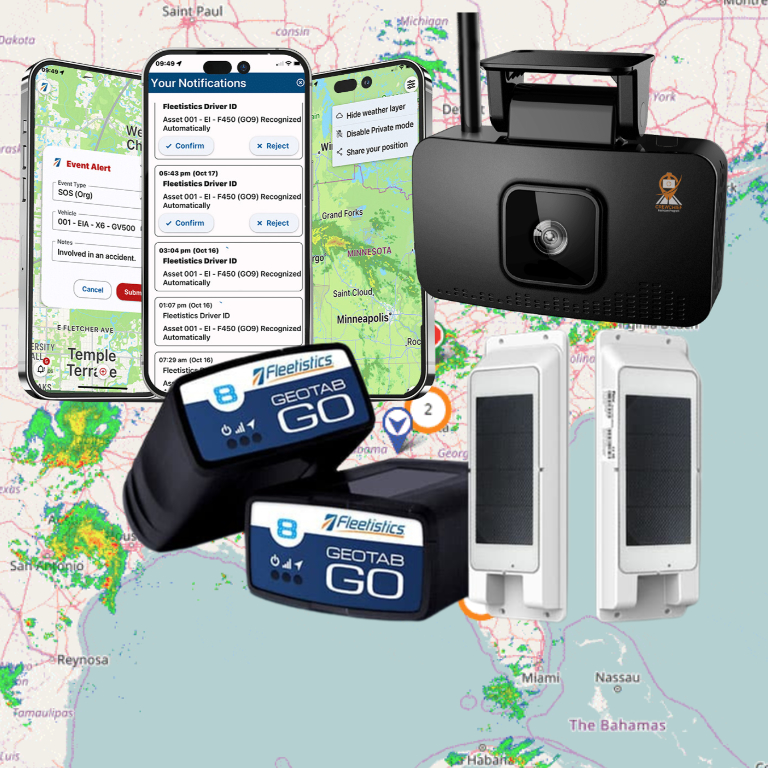

Learn how telematics improves fleet management through safety, productivity, maintenance, fuel, and compliance decisions for a more accountable operation.
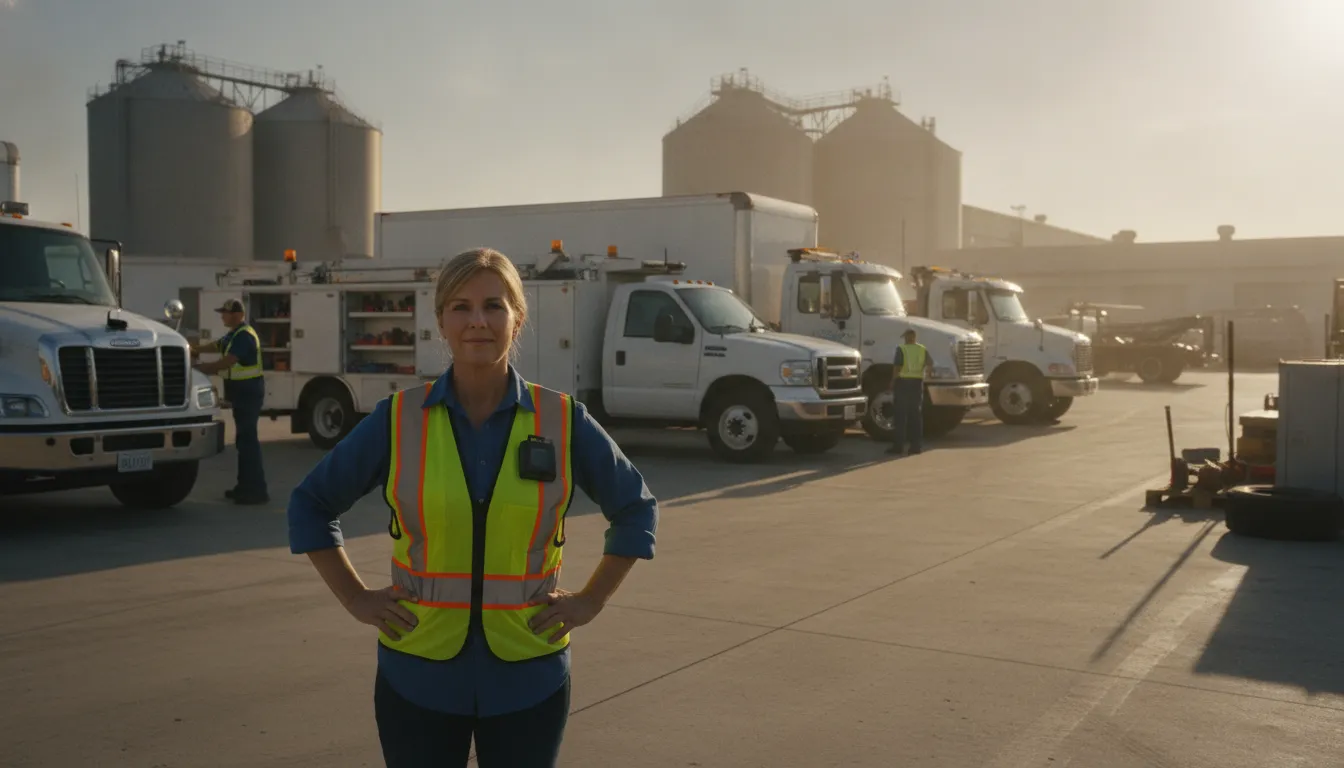
Telematics improves fleet management when it connects vehicle location, diagnostic, driver-behavior, alert, and analytics data. You can then identify patterns, respond to exceptions, and measure whether operational changes improve safety, productivity, maintenance, fuel use, or compliance. The results depend on the hardware, software configuration, and management practices behind the program.
The value comes from closing the loop between visibility and action. Once relevant signals reach the people responsible for daily operations, telematics can support more consistent decisions without forcing every fleet into the same configuration. Here is how that decision loop works in practice.
Talk with Fleetistics about your fleet-management goals
How does telematics improve fleet management in daily operations?
Telematics improves fleet management by turning vehicle and driver data into a repeatable operating process: you collect relevant signals, identify patterns or exceptions, take a targeted action, and measure what changes. The system may show where an asset is, what its diagnostics indicate, how it is being operated, and which alerts need attention. The management value comes from using that information to make a better decision, not from visibility alone.
For example, a fleet manager can review location data, engine diagnostics, driver-behavior information, alerts, and analytics in one operational view. That can help the team decide which vehicle needs attention, which route or assignment requires review, or which behavior warrants coaching. It also gives managers a more consistent way to compare recurring issues instead of relying only on driver reports or scattered spreadsheets.
The distinction between visibility and outcomes matters. Telematics can reveal an exception, such as an unexpected vehicle movement or a recurring diagnostic pattern, but it does not automatically resolve the cause. Someone still needs to confirm the context, assign the appropriate response, and follow up. A useful workflow might connect an alert to a maintenance review, a dispatch decision, a safety conversation, or a policy update.
The quality of those outcomes depends on the configuration behind the system and the practices around it. Hardware determines which data an asset can provide. Software determines how that data is organized, alerted, and reported. Your team determines whether the information leads to timely action. That is why fleet analytics for better decisions should support a defined operational question rather than produce dashboards that no one uses.
Fleetistics approaches telematics as part of a modular fleet-management solution. With the right combination of capabilities and implementation support. You can start with the decisions that matter most to your operation and expand the workflow as your needs become clearer.
How telematics improves fleet safety
Telematics improves safety by turning driving events into specific coaching opportunities. A configured system can identify patterns such as hard braking, rapid acceleration, and seatbelt use, then give fleet managers a consistent way to review what happened and respond. The GSA lists these coaching alerts as telematics capabilities, but the value comes from the management process around them.
Which safety signals should you act on?
Start with signals that connect to a clear operating standard. A single harsh-braking event may need context, while repeated events on the same route, vehicle, or shift may justify a focused coaching conversation. Use fleet safety analytics and coaching to move from a raw alert to a pattern, documented discussion, and follow-up review. Hardware, configuration, road conditions, and management practices all affect what the system can reveal.
How does telematics add incident context?
When a collision or serious event occurs, location history, driving signals, and available vehicle data can help establish a clearer timeline. The GSA includes accident reconstruction among listed telematics capabilities. That information can support a fair investigation, while still requiring supervisors to consider witness accounts, roadway conditions, and other evidence.
How do you build driver trust?
Safety monitoring works better when employees understand what is collected, why it is collected, who can access it, and how reviews are handled. Provide transparent notice, use a written driver policy, and invite questions before rollout. California fleet policy guidance connects telematics with employee safety, reinforcing the importance of governance rather than treating monitoring as surveillance alone. Be precise about system scope. Telematics should not be presented as automatically detecting falls, tilts, immobility, or man-down events unless the selected hardware and configuration specifically support those capabilities.
How can telematics improve productivity and utilization?
Productivity improves when you can see how fleet resources are actually being used, then adjust schedules, routes, and assignments based on evidence. Telematics can provide real-time location, trip history, geofencing, automated mileage reporting, and other operational data that helps you replace guesswork with a clearer view of daily activity.
For example, location data can show whether a vehicle is positioned where the day’s work requires it. Geofences can help you review arrivals and departures at customer sites, depots, or service areas. Trip history adds context when a route takes longer than expected, a vehicle makes an unplanned stop, or work is being distributed unevenly across the fleet. The U.S. General Services Administration identifies real-time location, trip history, geofencing, and automated mileage reporting as telematics capabilities that support fleet operations: GSA telematics guidance.
How do you measure utilization?
Utilization is more useful when it is measured against your operating model rather than treated as a single universal target. Review miles traveled, days used, and number of trips by vehicle, asset, service area, or time period. A vehicle with few trips may be available for reassignment, while one with frequent activity may need a different schedule, additional capacity, or closer maintenance planning. These signals are among the data elements listed by GSA.
Routing and service visibility connect the data to action. Dispatchers can respond to changing conditions, managers can compare planned work with completed trips, and operations teams can investigate recurring delays. For fleets that need a stronger view of where vehicles are and how they move, automatic vehicle location can provide a practical foundation for operational decisions.
The result is not an automatic productivity guarantee. Hardware, software configuration, route complexity, and management follow-through all affect outcomes. Use telematics to identify patterns, make a specific operational change, and measure whether that change improves service coverage or resource utilization.
How does telematics support maintenance and vehicle health?
Telematics turns vehicle-health information into maintenance decisions you can schedule and document. Depending on the installed hardware and available integrations, the system may report fuel use, battery voltage, oil life, coolant temperature, tire pressure, and fault data. These signals help you identify a vehicle that needs attention before a routine inspection or an unexpected issue takes it out of service. The U.S. General Services Administration identifies these engine measurements and vehicle fault data as telematics capabilities.
Maintenance reminders add a planning layer to that visibility. You can configure reminders around mileage or engine hours, then connect them to inspections, work orders, and service records. That makes it easier to see what is due, assign responsibility, and keep a consistent history for each vehicle or piece of equipment. A reminder alone does not complete the repair. Your maintenance process, technician capacity, and selected software determine whether the alert becomes a completed service event.
From diagnostics to preventive workflow
A practical workflow starts by collecting the signals relevant to your fleet. You then review exceptions, such as a fault code, declining oil life, or a temperature reading outside the expected range. The next step is to assess urgency, plan service around routes or operating commitments, and record the action taken. This approach supports telematics-informed maintenance planning without assuming that every alert requires immediate downtime.
Configured maintenance management can also help you compare recurring issues across vehicles, locations, or equipment types. Fleetistics supports maintenance management, diagnostics, and reporting as part of a broader modular platform. The right setup depends on which data your assets expose, the workflows your team already uses, and how much service history you need to manage in one place.
Can telematics reduce fuel waste and improve routing?
Telematics can help you reduce avoidable fuel waste by showing where fuel-related behavior occurs, then giving your team a repeatable way to respond. The goal is not to promise a fixed percentage of savings. It is to establish a defensible baseline, identify exceptions, and measure whether operational changes improve performance over time.
Start with the baseline. Depending on the installed hardware and available vehicle data, you may be able to review fuel usage, engine measurements, trip activity, and excessive idling. Government fleet guidance identifies fuel usage as a telematics data element, while California guidance specifically recognizes excessive-idling reduction as a policy area. Compare vehicles or routes in similar operating conditions rather than treating every difference as a driver issue.
Next, investigate the exceptions. A vehicle that idles for unusually long periods may require a coaching conversation, a scheduling adjustment, or a legitimate operational explanation. A route with repeated delays, unnecessary mileage, or missed service windows may call for revised dispatch practices or an alternative route. Fleetistics includes fleet fuel economy metrics as part of a broader approach to fuel monitoring and route optimization.
Close the loop with coaching and measurement. Share clear findings with drivers and supervisors, provide transparent notice about how vehicle data is used, and focus coaching on specific behaviors rather than broad assumptions. After the change, compare the same measures against the original baseline. This turns fuel monitoring from a dashboard exercise into an ongoing improvement process, while recognizing that results depend on configured hardware, software, route conditions, and consistent management practices.
How does telematics support compliance and accountability?
Telematics can give your team a more consistent way to document vehicle activity, review exceptions, and follow up on operational issues. Automated mileage reporting, dashboards, trip history, and custom reports help organize records for management review. These tools support accountability, but they do not replace applicable regulations, written policies, or the judgment of a qualified manager.
For fleets operating commercial motor vehicles in applicable interstate or long-haul contexts, hours-of-service requirements are especially important. The Federal Motor Carrier Safety Administration explains that HOS rules set limits on on-duty time and required rest periods to help drivers remain awake and alert. FMCSA also states that, in general, carriers and drivers operating CMVs must comply with the HOS regulations in 49 CFR 395. Review the current requirements at FMCSA’s hours-of-service guidance.
That scope matters: not every fleet needs an electronic logging device or the same compliance workflow. Start by identifying which rules apply to your vehicles, drivers, routes, and jurisdictions. Then configure the appropriate hardware and software to support the records your team must maintain.
How do reports turn activity into accountability?
A dashboard can show mileage, trips, locations, and exceptions in one place, while custom reports help managers review patterns over time. For example, a manager may compare reported mileage with assigned work, investigate an unusual trip, or confirm that a vehicle was used within an approved operating area. The value comes from pairing reliable data with a defined review process and documented follow-up.
For a broader process covering documentation and operational review, see Fleetistics’ guide to fleet compliance and inspection records. Telematics can make information easier to find, but accountability still depends on clear expectations, trained staff, and timely management action.
How should you evaluate telematics for your fleet?
Start with the decisions you need to improve, not with a list of devices or features. A useful evaluation asks whether the system fits your fleet mix, captures the right data. Connects with your existing workflows, and gives managers a practical way to act on exceptions. Telematics can reveal location, diagnostics, driver behavior, alerts, and performance patterns, but outcomes still depend on configured hardware, software, and consistent management practices.
Use questions like these to connect each signal to a measurable operational response.
Telematics evaluation questions and next actions.
| Management question | Useful telematics signal | Next action |
|---|---|---|
| Where are vehicles, equipment, or watercraft, and are they being used as planned? | Current location, trip history, geofences, mileage, days used, and trip counts. | Compare planned work with actual utilization, service coverage, and idle assets. |
| Which vehicles need attention before a small issue becomes downtime? | Fault data, battery voltage, oil life, coolant temperature, tire pressure, and engine hours. | Assign maintenance work, set reminders, and review recurring faults against downtime. |
| Where can safety coaching be specific and fair? | Hard-braking, rapid-acceleration, seatbelt, and incident information. | Review context with the driver, document coaching, and measure whether behaviors change. |
| Can managers act on the data without creating another disconnected system? | Dashboards, reports, alerts, API connections, and workflow integrations. | Test the highest-value workflow with the people who will use it every day. |
Check fit, governance, and implementation before you commit
Confirm that the hardware supports every asset type you operate and that the software covers the workflows you actually manage. Including maintenance, fuel monitoring, routing, safety, compliance, and analytics. A modular approach lets you begin with the most urgent use cases and expand as your team develops confidence, rather than paying for complexity that no one uses.
Governance matters just as much as coverage. Define who can view data, how alerts are reviewed, how long records are retained, and how drivers are informed when behavior data is part of the program. Set a baseline before rollout, then track operational measures such as response time, maintenance completion, utilization, or coaching follow-through. This separates useful improvement from activity that merely produces more dashboards.
Fleetistics combines telematics with safety, compliance, analytics, maintenance, fuel, routing, and implementation support. As a Geotab partner, Fleetistics helps you evaluate the right configuration, advocates for your requirements, and supports implementation. The relationship is consultative and partner-led, not a direct Geotab purchasing path. Review these GPS tracking deployment considerations before defining your rollout.
Talk with Fleetistics about the right telematics configuration for your fleet.
Frequently Asked Questions
How does telematics work in fleet management?
A telematics device collects information such as vehicle location, diagnostic data, and selected driver-behavior signals. The data moves to a cloud platform where you can review alerts, patterns, trip history, and reports, then use those findings to guide operational decisions.
What are the main benefits of telematics for fleet management?
Telematics gives you a clearer view of safety, productivity, maintenance, fuel use, routing, and compliance workflows. The practical benefit comes from turning that visibility into action, such as coaching a driver, scheduling service, investigating an exception, or adjusting a route.
Can telematics help reduce fuel use and idle time?
Yes. A configured system can help you identify fuel-use patterns, excessive idling, and route exceptions. You can compare those signals with your operating baseline, address the cause through routing or coaching. And measure whether the change improves performance without relying on an unsupported savings guarantee.
How does telematics support vehicle maintenance?
Depending on the hardware and software configuration, telematics can provide engine diagnostics, fuel and battery information, coolant temperature, oil-life data, and tire-pressure signals. Maintenance teams can combine those inputs with mileage- or engine-hour-based reminders to plan preventive work and reduce avoidable downtime.
What should you consider before choosing a telematics system?
Start with the decisions you need to improve, then evaluate the hardware, data coverage, integrations, alerts, reporting, employee-notice process, and support model required to make those decisions. A modular approach lets you match capabilities to your fleet instead of paying for a one-size-fits-all configuration.
Take the next step with a fleet-management evaluation
Telematics works best when the data, hardware, workflows, and goals fit the way your fleet operates. A focused conversation can help you identify practical starting points and build a modular plan without committing to tools you do not need.
Contact Fleetistics to discuss a modular telematics fit for your fleet.
Previous article: Turn fleet data into decisions. | Next article: Fleet telematics implementation fit..