
Maintenance becomes harder to control when schedules live in spreadsheets, repair requests arrive through separate channels, and diagnostic signals are not connected to service records. A structured workflow gives fleet managers one place to see what is due, what needs attention, and what happened after the work was completed.
Fleet maintenance management software organizes preventive-service schedules, work orders, diagnostic information, alerts, service history, and reporting so operators can assign maintenance, document decisions, and review vehicle or equipment needs more consistently. The right configuration depends on fleet mix, operating conditions, and the integrations your team relies on.
Feature evaluation is more useful when it follows the actual maintenance process. Trace the workflow from the first reminder or fault signal through assignment, completion, and reporting. Start by examining the layers the software should bring together.
Talk with Fleetistics about your fleet maintenance workflow
What Should Fleet Maintenance Management Software Include?
A useful maintenance platform should connect the decisions that happen before, during, and after service. When evaluating fleet maintenance management software, look beyond a reminder calendar. The system should help your team identify what needs attention, assign the work, document what happened, and use the resulting data to improve future planning.
Preventive schedules and work orders
Start with the scheduling layer. A buyer should be able to define service triggers by time, mileage, engine hours, odometer readings, or other asset-specific criteria. The software should show what is due soon, what is overdue, and which vehicles or equipment are awaiting maintenance. It should also turn a maintenance need into an actionable work order with an assigned owner, priority, status, due date, notes, parts, labor, and completion record.
Ask whether the workflow supports both recurring preventive work and unexpected repairs. A system that only creates reminders may still leave the team managing assignments and closeout in email or spreadsheets. Review the fleet maintenance scheduling and work orders capabilities separately, including how service completion updates the next due interval.
Diagnostics, alerts, and service history
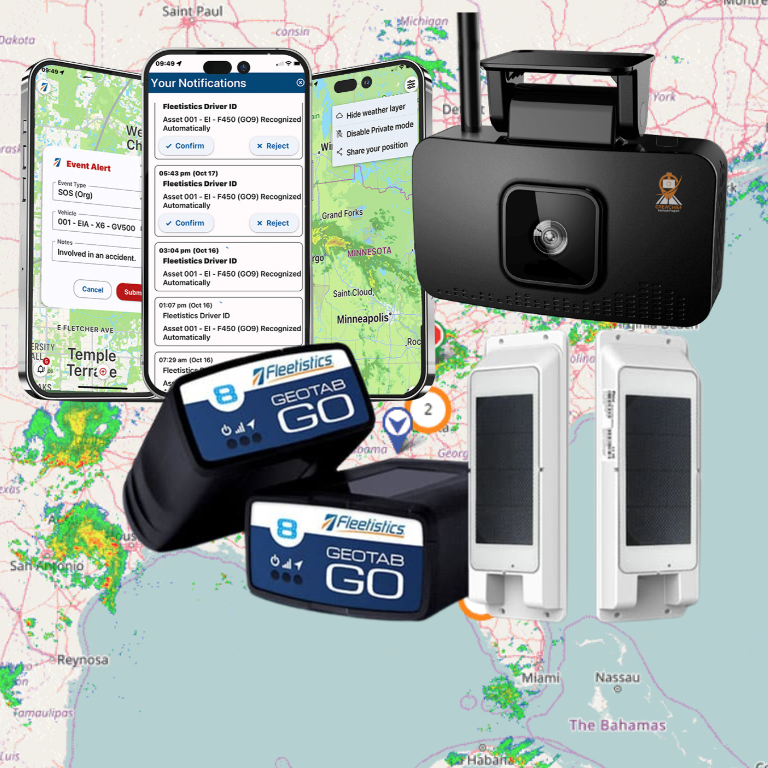
Diagnostics and alerts should turn incoming vehicle data into a maintenance decision, not simply add more notifications. Evaluate whether the platform can receive engine or fault information, distinguish urgent exceptions from routine items, and route an alert to the person responsible for review. Fleetistics PRO lists engine diagnostics and exceptions and alerts among its capabilities, while technical materials describe OBD-II diagnostic data. Confirm the applicable tier, hardware, and configuration before assuming a specific signal is available for every asset.
Every completed job should leave a usable service history. Look for records that connect the asset, issue, diagnostic signal, work order, repair action, date, mileage or hours, and out-of-service period. That history helps a manager recognize recurring failures and prepare for an upcoming service conversation instead of reconstructing events from disconnected files. It also gives technicians and supervisors a shared record when responsibility changes.
Reporting, integrations, permissions, and data access
Reporting should answer operational questions such as which assets are awaiting maintenance, how long work remains open, where recurring issues appear, and whether preventive tasks are being completed on schedule. Dashboards are useful when they support action, so assess filters, export options, historical retention, and whether different roles can see the information relevant to their work. Fleetistics describes configurable data retention and archival for historical analysis, but the exact configuration should be confirmed during evaluation.
Finally, review how the software fits your existing systems. An open API or maintenance integration may reduce duplicate entry, but compatibility, implementation effort, permissions, and ownership still need confirmation. Fleetistics offers modular platform tiers, so do not assume every capability is included in every plan. Once these layers are clear, evaluate the scheduling rules and work-order process in detail.
How Does Preventive Scheduling and Work-Order Control Reduce Delays?
A useful maintenance workflow turns service requirements into visible, assigned actions before a vehicle or piece of equipment becomes unavailable. When evaluating software, look for a process that connects scheduling triggers with work-order ownership, technician communication, escalation, and documented closeout. The goal is not to assume every fleet needs the same configuration. It is to confirm that the system can reflect how your assets are actually operated and maintained.
- Define the triggers that should create a maintenance task. Start with the service intervals your team already manages, then determine which can be automated. Time-based triggers support inspections or services due every set number of days. Mileage and odometer triggers fit road vehicles whose wear is closely related to distance. Engine-hour triggers are important for equipment, vocational vehicles, and assets that may accumulate operating time without traveling far. Fault-code triggers can bring attention to diagnostic conditions that need review. Ask whether each trigger can be configured independently, combined with other conditions, and assigned to the right asset group.
- Set reminders with enough lead time. A reminder should give the team time to schedule labor, source parts, coordinate with a vendor, or plan a replacement vehicle. Evaluate whether the system distinguishes upcoming work from overdue work and whether it can notify the appropriate owner without flooding every user with alerts. The best reminder window depends on the asset, service type, and operating schedule, so configurable timing is more useful than a single fixed rule.
- Create a work order that contains the operational context. A useful work order should identify the asset, requested service, trigger, priority, due date, and current status. It should also leave room for symptoms, inspection findings, parts information, and vendor or technician notes. This context prevents a driver or supervisor from having to repeat the same explanation across emails, spreadsheets, and phone calls. Review whether users can attach notes or supporting records and whether the workflow preserves an understandable history of changes.
- Assign responsibility and define escalation. Every open task needs an owner, even when outside vendors perform the physical work. Check whether work can be routed by location, asset type, shop, technician, or maintenance category. Then define what happens when an assignment is not accepted, a due date is approaching, or a high-priority issue remains open. Escalation rules should make the next action clear to a supervisor or operations leader rather than simply creating another unassigned notification.
- Coordinate the service event. Before work begins, confirm the planned appointment, asset availability, parts status, and vendor or technician instructions. A system that supports maintenance administration and integrations may help connect scheduling and work-order information with the broader operating process, but the specific integrations and configuration should be verified for the selected tier. Keep the record practical: include the information needed to complete the work without turning every task into an administrative burden.
- Close the work order with evidence. Closeout should record what was completed, when it was completed, who performed it, and any follow-up action. Capture updated mileage or engine hours where relevant, along with parts, labor, inspection results, and unresolved recommendations. Require a reason when work is deferred or a task is canceled. This creates a more reliable service history and helps prevent recurring issues from disappearing into an overdue queue.
For a closer look at the workflow elements to compare, review fleet maintenance scheduling and work orders. During a software evaluation, test the complete path with a real preventive-service example and a real fault-code scenario. Confirm that the system can move each task from trigger to reminder, assignment, escalation, service notes, and verified closeout without relying on disconnected manual steps.
How Do Diagnostics, Alerts, and Service History Work Together?
Diagnostic data is useful only when it leads to a clear maintenance decision. A fault signal, inspection result, or service reminder should enter a workflow that identifies its urgency, assigns responsibility, and records what happened next. That connection turns isolated data points into a maintenance history that operators can use when planning future work.
Start with triage, not notification volume
Not every alert deserves the same response. A fleet team can prioritize an issue by considering severity, vehicle availability, and the action owner. A critical engine signal on an active revenue vehicle may require immediate review, while a lower-priority condition can be grouped with scheduled service. The important question is not whether the system can generate alerts, but whether the team can distinguish urgent exceptions from routine follow-up.
Depending on the selected tier and configuration, real-time engine diagnostics may use OBD-II data to surface vehicle conditions for review. Treat that capability as an evaluation point rather than assuming it is included in every deployment. Ask which vehicles, data sources, fault conditions, and notification rules are supported, and how a manager acknowledges or escalates an alert.
Close the loop through service records
Once an alert becomes a work item, the record should follow it through inspection, assignment, repair, and closeout. Capture the originating signal, the affected asset, the decision made, the work performed, and any follow-up required. This makes the history more useful than a list of disconnected repair invoices. It can show whether an issue was resolved, deferred, repeated, or associated with time spent out of service.
A durable record also improves conversations between fleet managers, technicians, drivers, and outside service providers. Before selecting fleet maintenance management software, confirm whether completed work can be tied to the asset and retained in a format your team can review. Fleetistics technical materials describe configurable data-retention policies and archival for historical analysis, but the applicable settings depend on the implementation. Confirm retention periods, permissions, export options, and any archival costs during evaluation.
For a related explanation of how diagnostic information can support a broader maintenance strategy, review predictive fleet maintenance alerts. That resource is adjacent to this workflow. It should not be read as a guarantee that every diagnostic signal will predict a failure or produce a specific maintenance result.
Over time, the combined record supports better questions: Which alerts recur on a particular asset? Which repairs remain open too long? Which vehicles are repeatedly unavailable? Those answers depend on disciplined closeout and consistent data, not on diagnostics alone.
How Should You Compare Reporting and Integration Features?
A useful comparison starts with the information your maintenance team needs to capture, not with a list of software features. Ask whether the system can connect vehicle and equipment data to service records, work orders, costs, assignment status, and out-of-service dates. Treat repair history, preventive-maintenance notifications, mileage, assignment status, and repair costs as distinct data fields. That is a practical reminder to test the completeness of the record, not just the appearance of the dashboard.
Use the questions below when reviewing fleet maintenance management software. Ask the vendor to demonstrate each workflow with your own vehicles, equipment, user roles, and reporting requirements.
| Area to compare | What to verify | Why it matters |
|---|---|---|
| Data capture | Can the system record mileage, engine hours where relevant, diagnostic signals, service dates, work-order details, parts, costs, and out-of-service status? Can technicians and drivers add information without duplicating records? | Incomplete or inconsistent inputs make reports difficult to trust and can hide recurring maintenance issues. |
| Integration and API access | Which telematics, accounting, dispatch, ERP, and maintenance connections are available? Is an API or integration option supported for your selected platform tier, data fields, and workflow? | Integration can reduce rekeying, but the connection, permissions, mapping, and implementation effort must be confirmed for your environment. |
| Dashboards and reports | Can managers filter by vehicle, asset type, location, status, date range, cost category, and maintenance type? Can they see overdue work, open work orders, trends, and exceptions? | Reports should help an operations leader decide what needs attention, not simply display more data. Review fleet maintenance reporting dashboards for dashboard context. |
| Permissions | Can administrators separate technician, driver, supervisor, finance, and read-only access? Are changes attributable to a user, with appropriate approval or audit controls? | Role-based access protects records while allowing each person to complete the part of the maintenance workflow they own. |
| Export and retention | What can be exported, in which formats, and on what schedule? How long are service records, diagnostic history, attachments, and report data retained? Can retention be configured? | Retention and export policies affect audits, resale decisions, lifecycle analysis, and continuity when systems or vendors change. |
| Implementation and support | Who maps fields, configures alerts, tests integrations, trains users, and monitors the first reporting cycle? What support is available after launch? | A technically capable platform still needs a workable rollout. Confirm the configuration and support model instead of assuming every tier or connection is turnkey. |
Fleetistics describes APIs and integrations with business systems, including maintenance platforms, as part of its broader platform options. Availability should be confirmed against the proposed configuration, data requirements, and selected tier. You can also review the wider integrated fleet management software context before requesting a demonstration. The strongest evaluation is one where the vendor shows a complete path from data capture to report, then explains who maintains that path after implementation.
How Do You Evaluate Fit Across Fleet Types?
Start with the work your organization must control, not with a list of features. A municipal fleet may need clear service accountability across vehicles and equipment, while a field-service operation may prioritize availability, technician schedules, and fast access to maintenance history. A transportation operator may focus on mileage and diagnostic triggers. Construction and utility teams may need to manage equipment hours, attachments, or assets that do not follow a standard vehicle cycle.
The right fleet maintenance management software should reflect those differences through configurable workflows and modular capabilities. Ask whether the system can separate asset types, assign the maintenance triggers that make sense for each one, and give each responsible team the information it needs. Avoid assuming that a workflow designed for highway trucks will fit watercraft, heavy equipment, service vans, and passenger vehicles without adjustment.
Match the workflow to the asset
For mixed vehicle fleets, compare support for mileage, time, engine hours, odometer readings, and diagnostic events. A vehicle team may organize inspections and recurring service by miles, while equipment managers may rely more heavily on hours of operation. Watercraft and specialized assets may require different inspection intervals, service records, and availability rules. The evaluation question is not whether every possible trigger exists. It is whether your chosen configuration can represent the maintenance decisions your teams already make and improve the ones they currently track manually.
Field-service organizations should test how maintenance status affects dispatch. Can a coordinator see that an asset is due for service before assigning it to a customer visit? Transportation teams should examine how work orders, fault alerts, and service history support vehicle availability without creating unnecessary notifications. Construction operators should evaluate whether equipment records remain useful when assets move between jobsites. Public-sector teams should consider permissions, approval steps, documentation, and reporting requirements across departments.
Scale the system without forcing one operating model
Small operators often need a straightforward way to schedule service, document completed work, and understand recurring costs. Larger or enterprise organizations may need multiple asset groups, roles, integrations, reporting views, and implementation support. Those are different levels of complexity, not proof that one group needs a completely separate maintenance philosophy.
Use a representative sample during evaluation: include a few common vehicles, an exception-prone asset, and at least one equipment or watercraft category if applicable. Track how easily users create a work order, assign ownership, record completion, review history, and report costs. For a broader cost-control view, use fleet maintenance cost benchmarks as a resource for organizing the questions your own records should answer.
This keeps the discussion distinct from a small-business buying guide or a truck-specific maintenance framework. The goal is to verify fit across your actual asset mix, jurisdictions, teams, and operating priorities. Fleetistics supports modular fleet-management configurations for vehicle, equipment, and watercraft operators, but specific capabilities and integrations should be confirmed for the tier and workflow under consideration.
What Should a Practical Evaluation Include?
A software evaluation should test the maintenance workflow your team will actually use. Start with the problems that prompted the search. Are services being missed because reminders are inconsistent? Are work orders difficult to assign? Does the maintenance team lack a complete record when a vehicle returns for another repair? These questions create a better evaluation than a feature checklist alone.
First, define a representative group of vehicles or assets. Include the vehicle types, operating patterns, and service conditions that make your fleet different. If you manage equipment or watercraft in addition to vehicles, confirm the hardware and data requirements for each asset type. Fleetistics supports fleets of vehicles, equipment, and watercraft, with modular platform options that can be matched to the operating model.
Next, document a baseline. Useful measures can include scheduled services completed on time, overdue work, vehicle availability, response time, repeat repairs, administrative effort, and the completeness of service records. The baseline does not need to be complicated. It needs to make the evaluation measurable and tied to a real operating problem.
Then test the complete path from signal to action. Create or import a maintenance schedule, trigger a reminder, assign a work order, add notes, attach the relevant service information, and close the work. Review the record afterward. A system that produces alerts but leaves the next action unclear will not solve the workflow problem.
Implementation deserves the same attention as software features. Ask who configures vehicle and asset data, how users are trained, how permissions are managed, and what support is available after launch. Fleetistics has served fleets since 2001 and documents 24/7 support as part of its service model. The team can also help evaluate the role of Geotab technology and the configuration that fits the customer.
For an ordinary fleet, use 30 days as the standard evaluation period. A 60-day evaluation is appropriate only when the fleet context is verified as government or extremely large. Use the period to test representative workflows, not to collect disconnected feature demonstrations.
Finally, review the results with the people who will use and manage the system. Identify which capabilities are essential, which require configuration, and which belong in a later phase. A practical fleet maintenance management software decision should make the next maintenance action clearer, preserve useful history, and support decisions without forcing every fleet into the same platform design.
Discuss your fleet maintenance software evaluation with Fleetistics
Frequently Asked Questions
What is the best fleet maintenance tracking system?
The best system is the one that matches your maintenance workflow, asset types, service triggers, users, and reporting needs. Evaluate preventive schedules, work orders, diagnostic data, alerts, service history, integrations, permissions, support, and the ability to export or retain records.
How do maintenance reminders work?
Reminders can be organized around time, mileage, engine hours, odometer readings, inspection results, or diagnostic conditions, depending on the platform and configuration. Confirm which triggers are available, who receives the notice, how due work is prioritized, and how a completed service event closes the reminder.
Can fleet maintenance software connect with GPS tracking?
Many fleet platforms connect maintenance workflows with telematics data, but the exact connector, API fields, refresh rate, and responsibilities vary. Confirm that the selected hardware and software can provide the mileage, engine, location, or fault information your maintenance team actually needs.
Can I export or retain service records?
Ask how the system stores inspection results, work orders, invoices, parts, labor notes, diagnostic events, and completion dates. Confirm retention settings, user access, export formats, and whether historical records remain available when an asset changes assignment or leaves the fleet.
What should I measure during a software evaluation?
Start with a baseline for scheduled-service completion, overdue work, vehicle availability, response time, administrative effort, repeat repairs, and the quality of maintenance records. Use a representative group of vehicles or assets, then judge the system by whether it improves visibility and follow-through on the problems you identified.
Talk With Fleetistics About Your Maintenance Workflow
The right fleet maintenance management software should fit your vehicles, equipment, service process, data needs, and operating goals. Fleetistics can help you evaluate the capabilities and configuration that make sense for your organization.
Contact Fleetistics to discuss your fleet maintenance needs.