
A missed snow route, an idling public works truck, or a vehicle sitting in a maintenance bay longer than planned can quickly become a budget and service problem. A government fleet management platform gives agencies the real-time control to see what is happening across vehicles, drivers, equipment, and field operations before small issues become public-facing disruptions.
The right platform does more than place dots on a map. It connects location data, driver behavior, maintenance status, fuel activity, inspection records, and operational workflows so fleet leaders can make better decisions with the resources they already have. For cities, counties, school districts, utilities, and state agencies, that visibility supports safer service, stronger accountability, and more defensible spending.
What a Government Fleet Management Platform Should Solve
Government fleets operate under different pressures than many private fleets. Fleet managers may support several departments with different mission priorities, vehicle types, operating hours, funding sources, and reporting requirements. Public works may need to dispatch crews after a storm while parks staff manage seasonal equipment and inspectors travel throughout the jurisdiction. Each department needs service reliability, but the fleet team also needs one reliable operational picture.
A capable platform should reduce the gaps between dispatch, maintenance, safety, finance, and field operations. That starts with knowing where vehicles and assets are, but it should extend to the decisions that affect cost and service delivery.
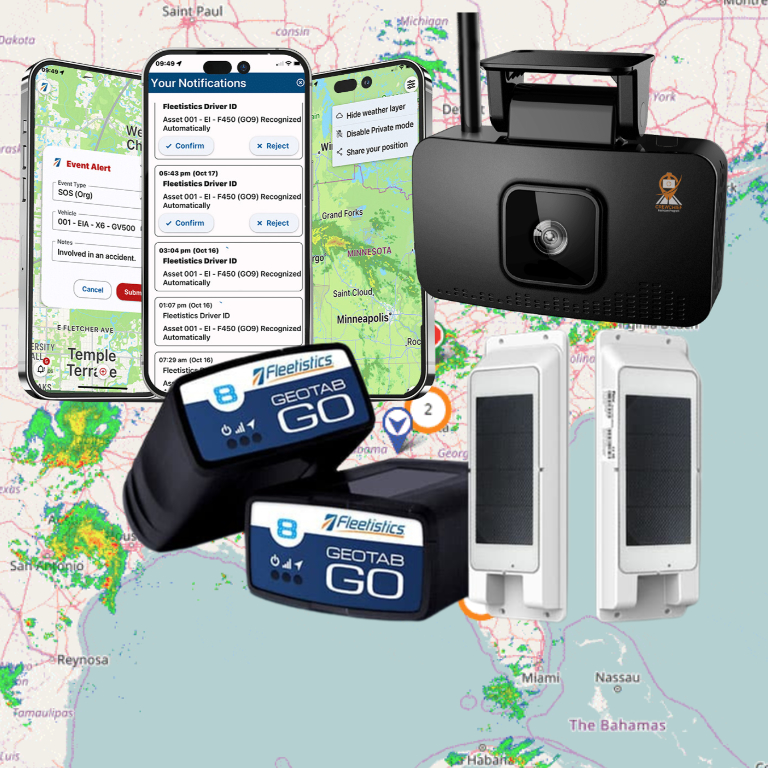
For example, GPS and telematics data can show whether a truck was actually at a work location, how long it remained there, and whether excessive idling occurred. Maintenance tools can identify overdue preventive service before a vehicle becomes unavailable. AI-enabled dashcams can give safety teams context around harsh driving events and collisions instead of forcing them to rely on incomplete reports. Digital inspection workflows can replace paper forms that are difficult to locate, review, and audit.
The goal is not to collect more data. The goal is to give supervisors usable information that helps them protect public assets and keep essential services moving.
Start With the Operational Problems, Not the Feature List
A common purchasing mistake is starting with a long list of technology features. Agencies often end up paying for capabilities that do not match the daily work of their departments, or they choose a basic tracking tool that cannot support future requirements.
Start by identifying the operational problems that have measurable consequences. Fuel spend may be climbing without a clear explanation. Vehicles may be replaced based on age rather than actual utilization and condition. Supervisors may spend hours calling drivers for location updates. Maintenance staff may be working from disconnected spreadsheets. Safety managers may have limited evidence when investigating complaints or incidents.
Then define what improvement should look like. If fuel control is the issue, measure idle time, unauthorized use, route efficiency, fuel-card exceptions, and engine fault activity. If vehicle availability is the issue, measure overdue preventive maintenance, downtime days, repeat repairs, and shop turnaround time. If safety is the priority, establish a baseline for speeding, harsh braking, distracted driving events, and preventable collisions.
This approach keeps the procurement focused on results. A platform should be evaluated by whether it can help an agency reduce avoidable cost, improve response times, document compliance, and operate with greater confidence.
Build a Platform That Fits Different Departments
Few government fleets are truly uniform. A single organization may operate sedans, patrol vehicles, transit vans, refuse trucks, snowplows, utility vehicles, trailers, generators, mowers, and specialized equipment. The right technology approach recognizes that every asset does not need the same device, workflow, or level of reporting.
A light-duty administrative vehicle may only need location, mileage, and basic utilization data. A public works truck may need engine diagnostics, route history, idle reporting, driver identification, and maintenance alerts. High-risk or high-visibility vehicles may benefit from AI video, incident reporting, and configurable safety coaching. Non-powered assets such as trailers and equipment may need lower-cost asset tracking rather than a full telematics installation.
That flexibility matters for budget control. Agencies should not have to deploy enterprise-grade hardware and subscriptions to every asset when a simpler option will meet the operational need. At the same time, selecting a platform that can expand avoids the cost and disruption of replacing it when departments need deeper analytics, mobile workflows, or integrations.
Fleetistics supports this type of staged deployment with platform options that range from essential visibility to enterprise-level fleet intelligence and custom API-connected workflows. The practical advantage is the ability to begin where the operational need is strongest, then add capabilities as the program proves value.
Prioritize Data Governance and Security Early
Government fleet data can involve sensitive operating patterns, employee information, incident video, and location records. Security and governance should be part of the platform evaluation from the beginning, not a final checklist after a vendor has been selected.
Ask how data is stored, who can access it, and how permissions can be managed by department, role, and location. A fleet director may need visibility across the organization, while a supervisor may only need access to assigned vehicles and drivers. Agencies should also understand data retention options, audit trails, export capabilities, and how the provider handles user authentication.
Video requires particular attention. AI dashcams can be valuable for resolving disputed incidents, identifying risky behavior, and protecting drivers from false claims. However, the agency should establish clear policies for event review, coaching, retention, and access. The technology is more effective when drivers understand its safety purpose and supervisors apply policies consistently.
Open APIs and integrations also deserve careful review. Fleet data becomes more useful when it can connect with work order systems, ERP platforms, fuel-card programs, dispatch tools, and other systems already used by the agency. But integration should solve a defined workflow problem, not create another technology project with no operational owner.
Make Maintenance a Core Requirement
Vehicle downtime is expensive even when it does not appear as a single line item. A broken vehicle can delay inspections, extend overtime, force rentals, disrupt routes, or limit the agency’s ability to respond during an emergency. That makes maintenance management one of the highest-value components of a connected fleet program.
The platform should help maintenance teams schedule preventive service by mileage, engine hours, date, or other triggers that fit the asset. It should also capture driver vehicle inspection reports, repair histories, fault codes, work orders, and parts-related information in a format technicians and managers can use.
Telematics can add another layer of control by identifying diagnostic trouble codes and operating conditions before a driver reports a problem. It will not replace a skilled technician or a disciplined shop process. It can, however, help the maintenance team prioritize attention and prevent avoidable roadside failures.
For agencies with mixed equipment, confirm that the system can manage both on-road vehicles and specialized assets. Engine-hour-based maintenance is often more meaningful for generators, mowers, pumps, and off-road equipment than mileage alone.
Plan for Adoption, Not Just Installation
A device installation is the start of the project, not the finish line. The value of a government fleet management platform depends on whether dispatchers, drivers, supervisors, technicians, and leadership use the information consistently.
Before deployment, establish who will own each workflow. Decide who reviews idle reports, who follows up on overdue inspections, who handles safety events, and who maintains vehicle and driver records. If no one owns the response process, alerts become background noise and the platform becomes another underused dashboard.
Training should be role-specific. Drivers need to understand mobile apps, inspection expectations, and the purpose of the program. Supervisors need practical reports and coaching guidance. Maintenance teams need confidence in the work order and service workflows. Executives need a concise view of utilization, operating cost, safety, and fleet availability.
A phased rollout is often the most practical approach. Start with a department, vehicle class, or problem area where results can be measured quickly. Use that deployment to refine policies, reporting, and installation processes before expanding across the fleet. This is especially useful for agencies balancing procurement requirements, union considerations, and limited internal IT resources.
Measure Results That Leadership Can Defend
The strongest fleet programs translate operating data into outcomes that finance leaders, elected officials, and department heads can understand. Location history alone is not an outcome. Reduced unauthorized use, lower idle time, fewer preventable crashes, faster completion of inspections, improved preventive maintenance compliance, and lower downtime are outcomes.
Create a baseline before implementation, then review performance at regular intervals. A useful scorecard may include fuel consumption, idle percentage, vehicle utilization, maintenance compliance, out-of-service days, speeding events, safety incidents, and administrative hours saved. The exact mix depends on the agency’s mission.
Avoid expecting immediate gains from every module. Route optimization may produce fast savings in a high-volume field operation, while maintenance improvements may build over several service cycles. Dashcam programs can reduce risk, but their success depends on fair policies and timely coaching. The technology should support operational discipline, not be treated as a substitute for it.
The best next step is to select one costly operational blind spot and make it visible. When the fleet team can show how better data keeps vehicles available, crews safer, and taxpayer-funded assets under control, expansion becomes a practical decision rather than a technology leap.