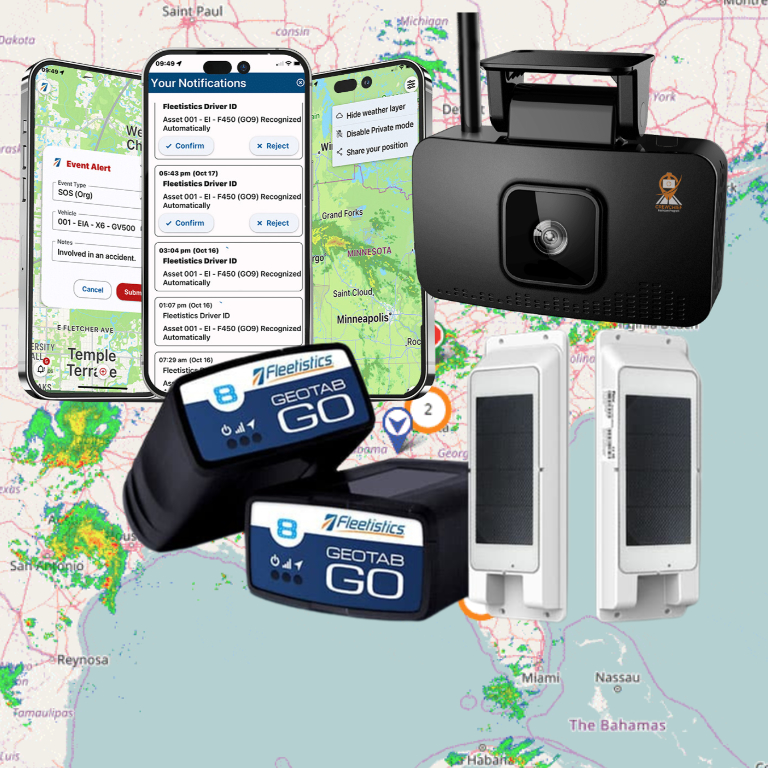


A route that looks efficient at 6:00 a.m. can become the most expensive route in the fleet by noon. Heavy rain slows service calls, crosswinds affect high-profile vehicles, ice closes secondary roads, and flash flooding can strand drivers and equipment. Weather aware route planning software gives fleet operators a way to account for those changing conditions before a delay becomes a safety event, missed appointment, or overtime problem.
For commercial, government, and field-service fleets, the goal is not simply to avoid bad weather. Some trips cannot wait. The operational objective is to make informed decisions early, select safer alternatives when they exist, and keep dispatch, drivers, and customers working from the same information.
What Weather-Aware Route Planning Actually Does
Traditional route optimization focuses on distance, drive time, stops, vehicle capacity, and sometimes traffic. Those inputs remain essential, but they do not explain whether a route is appropriate for the conditions a driver will face along the way.
Weather-aware planning adds forecast and condition data to routing decisions. Depending on the system and configuration, it can help dispatchers identify risks such as precipitation, snow accumulation, ice, high winds, poor visibility, extreme heat, flooding, or storm activity. The platform can then support a different route, a revised departure time, a stop sequence change, or a decision to pause the trip altogether.
That distinction matters. A route planner should not treat every weather alert as a reason to reroute. A brief rain shower may have little impact on a light-duty service vehicle traveling local roads. The same forecast may require a different response for a loaded box truck, a utility crew towing equipment, or a driver operating on mountain passes. Effective planning combines weather intelligence with vehicle type, load, road restrictions, driver schedules, and customer commitments.
Why Weather Delays Create Larger Fleet Costs
The direct cost of a weather disruption is often easy to see: additional miles, extra fuel, overtime, or a missed delivery window. The larger cost is usually operational uncertainty.
When dispatch learns about a road closure after a driver is already committed to a route, they may need to make decisions using phone calls, incomplete location data, and outdated arrival estimates. Customers receive late notice. Nearby jobs are reassigned inefficiently. Drivers spend more time idling or searching for detours. A small weather event becomes a day of exceptions.
Weather-related risk also reaches beyond productivity. Reduced traction and visibility raise the likelihood of harsh braking, speeding to recover time, lane-departure events, and collisions. For fleets with regulated drivers, delays can affect hours-of-service planning and increase pressure near a driver’s available-duty limit. For public-sector fleets, poor route decisions can interrupt critical services when communities need them most.
A connected fleet platform helps operators replace reactive calls with real-time control. GPS location, vehicle status, traffic conditions, driver communications, and route plans should work together so the operations team can see which vehicles are exposed, which jobs are at risk, and which response makes business sense.
The Core Capabilities to Look For
Weather data alone is not a routing strategy. When evaluating weather aware route planning software, fleet leaders should focus on how the technology turns conditions into operational action.
Route optimization that respects fleet constraints
The system should optimize more than the shortest path. Look for support for time windows, service duration, driver schedules, vehicle capabilities, customer priority, territories, and road restrictions. A detour that saves five minutes is not useful if it sends a vehicle onto a road unsuitable for its size, load, or operating policy.
For field-service fleets, the best plan may be to move appointments within the same service territory and keep technicians closer to a secure operating area. For delivery fleets, it may mean prioritizing early stops before conditions deteriorate. The right action depends on the work, not just the map.
Live location and exception visibility
A forecast is valuable before departure, but fleets also need to manage the route after wheels are moving. Live GPS tracking shows which drivers are approaching an affected area and which ones have already been delayed. Dispatch can compare planned versus actual progress and decide whether to reroute, notify a customer, or assign another nearby vehicle.
This visibility is especially important when conditions change quickly. A planned route can remain the right route at departure and become unacceptable an hour later. Operators need a clear view of exceptions rather than a screen full of vehicles with no indication of priority.
Driver communication that does not add distraction
Route changes only help if drivers receive them quickly and can act on them safely. Mobile workforce tools can support dispatch-to-driver communication, updated job details, navigation instructions, and status updates without relying on informal texts or repeated calls.
The process should be simple: dispatch identifies the exception, communicates the approved plan, and the driver confirms status when safe to do so. Avoid creating a workflow that expects drivers to study weather maps while operating a vehicle. The technology should reduce distraction, not create another screen to manage.
Safety and compliance context
Weather planning should connect with safety management. Telematics data and AI-enabled dashcams can help identify behaviors that become more dangerous in poor conditions, including following too closely, harsh braking, speeding, and distracted driving. Managers can use that information for focused coaching instead of broad reminders that do not change behavior.
For fleets managing ELD requirements, route disruptions should also be visible alongside available driving time and duty status. A dispatcher who can see both a storm delay and a driver’s remaining hours is better positioned to make a compliant decision before the situation becomes urgent.
Build a Weather Response Process Around the Technology
Software delivers the most value when the fleet has defined decision rules. Start by identifying the conditions that materially affect your operation. A plumbing contractor in Florida may prioritize lightning, heavy rain, and flooding. A regional carrier in the Midwest may focus on ice, snow, wind, and visibility. A utility fleet may need protocols for all of them.
Set thresholds that trigger a review, not necessarily an automatic cancellation. For example, a high-wind warning may require dispatch approval for trailers, bucket trucks, or vehicles carrying elevated loads. A flash-flood alert may trigger a review of routes near known low-water crossings. Clear rules help dispatchers act consistently and give drivers confidence that safety decisions are supported by management.
Next, assign ownership. Dispatch may monitor active routes, while a safety manager establishes operating policies and maintenance confirms vehicle readiness. Supervisors need authority to delay noncritical work when conditions exceed the fleet’s limits. Without clear ownership, warnings can be seen by everyone and acted on by no one.
Finally, document what happened. Review delayed routes, added miles, driver events, customer impacts, and the response taken. Over time, these reports reveal patterns: routes that repeatedly flood, service areas that need different scheduling, or vehicle classes that need more conservative weather rules.
Avoid the Common Implementation Mistakes
The first mistake is treating weather intelligence as a standalone dashboard. If dispatchers must switch among weather sites, GPS screens, spreadsheets, and driver messages, the response will still be slow. Prioritize a connected workflow where location, routing, communications, and reporting support one another.
The second is relying on static routes. Recurring routes are useful, but they should not become untouchable simply because they worked last month. Seasonal conditions, construction, and changing customer schedules require periodic review.
The third is measuring only miles saved. Reduced mileage matters, but weather-aware planning can also protect on-time performance, lower collision exposure, prevent unnecessary idling, reduce customer-service escalations, and help preserve driver time. These outcomes should be part of the ROI conversation.
Start With the Routes That Carry the Most Risk
You do not need to redesign every route on day one. Begin with the work that has the highest weather exposure, the most costly service failures, or the narrowest delivery windows. Establish a baseline for arrival performance, unplanned miles, idle time, weather-related incidents, and overtime. Then test the new process through a season or operating cycle.
Fleetistics can support that progression with modular fleet technology that connects GPS tracking, route optimization, driver workflows, safety tools, and operational analytics. A smaller fleet may begin with essential visibility and routing controls, while a larger organization can integrate weather-response workflows into a broader fleet-management environment.
Bad weather will always create variables that no route plan can eliminate. The fleet advantage comes from seeing those variables early, applying sound operating rules, and giving drivers practical direction before the road makes the decision for them.