
.A
DOT fleet compliance is not a binder you assemble once before an inspection. It is a repeatable operating process that connects the rules applying to your vehicles and drivers with daily inspections, hours-of-service records, training, maintenance, and documented corrective action.

DOT fleet compliance means identifying the federal, state, and operation-specific requirements that apply to your fleet, then creating evidence that those requirements are followed. In the United States, FMCSA hours-of-service rules generally govern commercial motor carrier operations, but ELD obligations depend on the operation and applicable exemptions. So a local or short-haul fleet should not assume it needs the same equipment as an interstate carrier. See the FMCSA hours-of-service guidance for the controlling federal framework.
Contact Fleetistics for a compliance-focused fleet management consultation.
The practical starting point is an applicability review. Once you know which rules govern each vehicle, route, driver, and jurisdiction, you can build workflows that make inspections, records, exceptions, and reviews easier to manage.
What does DOT fleet compliance include?
DOT fleet compliance is a repeatable management system for identifying the rules that apply to your operation. It puts those rules into daily driver and vehicle workflows, maintains required records, and reviews exceptions before they become recurring problems. It is not a single device, dashboard, or annual paperwork exercise. The exact requirements depend on factors such as the vehicles you operate, the work they perform, the drivers involved, and the jurisdictions in which they travel.
For a US operation subject to Federal Motor Carrier Safety Administration (FMCSA) rules, the process commonly begins with hours of service (HOS). HOS rules define the maximum time a commercial driver may remain on duty, including driving time, and specify required rest periods. In general, carriers and drivers operating commercial motor vehicles must follow the HOS requirements in 49 CFR Part 395. Review the FMCSA hours-of-service guidance when confirming the rules for your operation.
What should the compliance system cover?
- Rule identification: Determine which federal, state, provincial, or local requirements apply before selecting technology or writing procedures. ELD obligations, for example, depend on the operation and applicable exceptions. An ELD should not be treated as a default requirement for every local-service or short-haul fleet.
- Vehicle and driver workflows: Build practical routines for inspections, defect reporting, driver qualification, training, hours-of-service tracking where applicable, and escalation when an exception appears.
- Records and evidence: Keep documentation organized so a manager can show what was completed, who reviewed it, what issue was found, and how it was corrected. Digital records can reduce manual handling, but the carrier remains responsible for the process.
- Regular review: Assign an owner to review alerts, inspection findings, hours-of-service exceptions, maintenance concerns, and training records. A review cadence turns compliance from reactive paperwork into an operating discipline.
The strongest programs connect these steps to the broader way a fleet plans work, manages people, and measures performance. Fleet managers can use a fleet management framework to align compliance controls with daily operations instead of creating a disconnected checklist. Technology may support ELD, DVIR, IFTA, alerts, and documentation workflows, but it should make the process more consistent, not replace sound judgment, current regulatory review, or accountability.
How do you determine which DOT rules apply?
Start with the operation, not the software. DOT fleet compliance depends on how vehicles are used, what they carry, where they travel, and who operates them. Build an applicability map for each vehicle and driver, then confirm the result against current federal, state, or other applicable jurisdictional guidance before setting policies or configuring technology.
-
Classify the vehicle and its use
Record the vehicle type, gross vehicle weight rating, combination weight, and whether it is used on public roads. Then describe the actual work: transporting property, carrying passengers, moving equipment, or performing local service. Cargo type matters as well, especially when the operation involves hazardous materials or other regulated loads. Do not treat every vehicle in a mixed fleet as subject to the same requirements.
-
Map the route and jurisdiction
Determine whether the vehicle crosses state lines or operates only within one state. Interstate and intrastate operations can involve different requirements, and state rules may apply even when a federal rule does not. If your organization operates in Canada or Mexico, document those jurisdiction-specific obligations separately rather than extending US assumptions to every vehicle.
-
Confirm the driver’s status and recordkeeping duties
Identify whether the driver is operating a commercial motor vehicle and whether the role, vehicle, cargo, or passenger operation creates additional qualification or recordkeeping requirements. Keep the driver profile connected to the vehicle and route assignment. This makes it easier to evaluate hours of service, or HOS, which govern maximum on-duty and driving time plus required rest periods. In general, carriers and drivers operating commercial motor vehicles must follow the applicable 49 CFR Part 395 requirements. See the FMCSA hours-of-service guidance for the controlling US reference.
-
Evaluate ELD applicability separately
Electronic logging device, or ELD, obligations vary by operation and exemptions. A local or short-haul fleet must not assume an ELD is required simply because it operates commercial vehicles. Review the operation’s record-of-duty-status requirements, short-haul conditions, vehicle characteristics, and other applicable exceptions. FMCSA explains the rule and its scope in its general ELD information and its guidance on who is exempt from the ELD rule. Confirm the facts for each operation before purchasing or assigning ELD hardware.
-
Document the decision and review it when operations change
For each vehicle group, write down the applicable HOS, ELD, inspection, driver, cargo, and jurisdiction rules, along with the source and the person responsible for review. Revisit the map when routes, vehicle types, cargo, drivers, or service areas change. Technology can support the resulting workflow, but it does not replace the applicability decision. For practical guidance on matching ELD and HOS tools to your operation, review Fleetistics’ ELD and HOS compliance resources.
How should fleets manage inspections and DVIR records?
A dependable inspection process turns a driver’s observations into a documented maintenance decision. Assign responsibilities based on the vehicle, operation, and applicable U.S. requirements, then make every report easy for the next person in the workflow to review. A Driver Vehicle Inspection Report (DVIR) should not become a form that disappears into a shared folder.
- Set the inspection responsibility. Define who completes each applicable inspection, what condition requires a report, and how drivers submit it. The process should reflect your fleet’s vehicles and jurisdictions rather than assume one inspection schedule applies everywhere. FMCSA provides guidance on inspection, repair, maintenance, and DVIR requirements in its inspection and DVIR guidance.
- Capture the defect clearly. Require the driver to identify the vehicle, date, location or component involved, and a useful description of the condition. Photos, diagnostic information, or notes can add context, but software should support the record, not replace the driver’s inspection judgment. A checklist prompts attention, but it cannot determine whether a vehicle is safe to operate in every circumstance.
- Triage safety-critical concerns immediately. Route each defect to a qualified reviewer who can decide whether the vehicle may continue, needs a temporary control, or must be placed out of service. Do not let dispatch pressure turn an unresolved safety concern into an informal exception. Confirm the disposition before the vehicle returns to service.
- Assign and document the repair. Give the issue an owner, priority, and status. Record the work performed, parts or service details when relevant, and the person who verified the result. If the original defect is not reproducible, document the inspection and disposition instead of silently closing the report.
- Close the loop before release. Connect the completed repair or review to the original DVIR, then make the release decision visible to dispatch and the driver. A manager should be able to distinguish an open defect from a corrected one without searching across email, paper forms, and separate maintenance systems.
- Retain evidence according to applicable rules. Keep DVIRs, repair records, and related approvals in an organized, access-controlled system. But do not apply a universal retention period without confirming the applicable federal, state, provincial, contract, and operation-specific requirements. Build your retention policy around the actual rule and preserve an auditable history of decisions.
Fleet software can make this loop more consistent with digital DVIRs, alerts, assignments, and searchable records. It remains a control layer, not a substitute for trained people, sound maintenance judgment, or verification of the rules governing your operation.
How can drivers follow compliance workflows every day?
A reliable driver workflow makes compliance part of the route, not a separate administrative task. Start each shift with a dispatch-readiness check: confirm the assigned vehicle, route, cargo, required credentials, and any instructions that apply to the operation. The fleet manager should make exceptions visible before departure, rather than expecting drivers to discover them on the road.
Begin with vehicle and duty-status checks
Complete the required inspection. Drivers should perform the applicable pre-trip check, document defects through the fleet’s inspection process, and understand who receives the report. A defect that could affect safe operation should be escalated immediately. The vehicle should not return to service until the responsible manager or maintenance team confirms the required corrective action.
Record the correct duty status. Hours of service (HOS) rules address maximum on-duty and driving time, along with required rest periods. Drivers subject to those rules should record duty-status changes accurately and review their available hours before accepting additional work. See the FMCSA hours-of-service guidance for the controlling US requirements.
Electronic logging device (ELD) use is operation-specific. It is not automatically required for every local or short-haul driver. Determine applicability from the vehicle, operation, jurisdiction, record-of-duty-status requirements, and any applicable exception. Then provide the driver with a written process for logs, edits, supporting documents, and roadside inspections. Keep the detailed ELD and HOS compliance resources aligned with that applicability decision.
Close the loop on exceptions
Escalate, review, correct, and document. A missed inspection, log edit, late arrival, equipment defect, or other exception should have an assigned owner and a defined response. Review patterns with the driver privately and constructively, provide refresher training when needed, and record the corrective action and follow-up date. Written policies and consistent coaching help drivers understand what good compliance looks like on the next shift.
Managers can reinforce this routine with driver checklists, alerts, and exception reports, but technology does not replace supervision or judgment. For practical ideas on connecting safety expectations with daily operations, see safer fleet operations.
What records should a fleet review before an audit?
A pre-audit review should test whether each required record is complete, current, easy to retrieve, and connected to a documented action when an issue appears. Use the FMCSA Motor Carrier Safety Planner to confirm the requirements that apply to your operation, then assign an owner for each record category.
| Record category. | Owner. | Review cadence. | Evidence to retain. |
|---|---|---|---|
| Driver qualification and training. | Safety or HR manager. | At onboarding, after changes, and on the required recurring schedule. | Qualification file, license or medical documentation, road-test evidence, training completion, and review notes. |
| Inspections and repairs. | Maintenance manager. | Continuously, with a weekly exception review. | Driver Vehicle Inspection Reports (DVIRs), defect escalation, repair orders, parts or service records, and return-to-service approval. |
| Hours of service and ELD, where applicable. | Compliance manager or dispatcher. | Daily exception review and periodic record audit. | Records of duty status, supporting documents, edits or annotations, violations, and corrective actions. |
| Incidents and corrective actions. | Safety manager. | After every incident, with a monthly trend review. | Incident report, investigation, photographs or related evidence, coaching, root-cause findings, and closure. |
| Policies and policy updates. | Operations or compliance leader. | At least annually and whenever operations or rules change. | Current approved policy, revision history, employee acknowledgment, and communication or training record. |
Do not apply one retention period to every file. Retention depends on the record, operation, and applicable rule, so document the basis for each schedule and verify it against current guidance. For a faster management view, pair the record review with relevant fleet insight metrics, such as open defects, overdue training, unresolved exceptions, and repeat incidents.
How can technology support DOT fleet compliance?
Technology can make a compliance program more consistent, visible, and easier to document. It cannot replace the carrier’s responsibility to identify applicable rules, train drivers, review exceptions, correct defects, and confirm that records are complete.
Connect vehicles, drivers, and exceptions
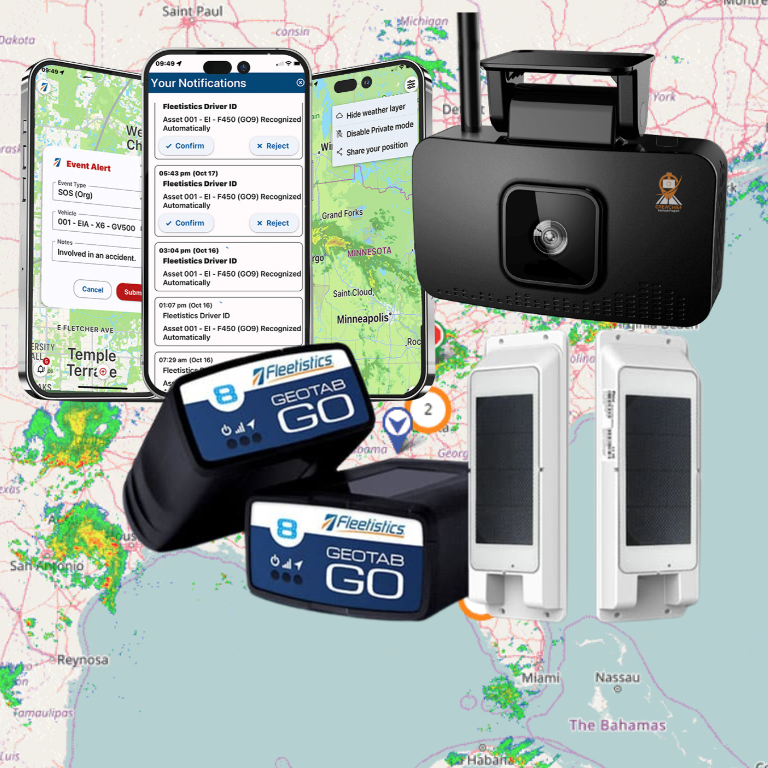
Real-time tracking gives managers a record of vehicle activity, while driver identification connects that activity to the person operating the vehicle. Configurable alerts can flag issues for review, such as unexpected movement, excessive idling, or a driving event that warrants follow-up. Engine diagnostics add another layer of visibility by helping maintenance teams identify vehicle conditions before they become unresolved operational problems.
A useful system should turn those signals into an exception workflow. Assign an owner, document the review, record the corrective action, and close the issue only after someone verifies the result. Reporting tools such as fleet insight metrics can help managers monitor trends instead of relying on disconnected spreadsheets.
Use digital inspections and ELD tools where they apply
Digital driver vehicle inspection reports (DVIRs) can standardize pre-trip and post-trip workflows, capture defects, and route repair needs to the appropriate person. If a defect affects safe operation, your process must address it before the vehicle is placed back in service. The software records the workflow, but a qualified manager still needs to make and document the operational decision.
Electronic logging device (ELD) functionality belongs only in the workflows where the operation and driver are subject to the applicable hours-of-service rules. It is not a default requirement for every local or short-haul fleet. Review current ELD and HOS compliance resources and confirm applicability against current FMCSA guidance before configuring a program.
Retain evidence and keep people accountable
Configure data retention around your records policy and the requirements that apply to your operation. Preserve inspection records, driver activity, alerts, maintenance follow-up, training documentation, and exception reviews in a way that makes them searchable during an audit. Fleetistics brings Geotab experience together with implementation, training, and ongoing support, but it remains a technology and service partner, not a regulator.
Contact Fleetistics for a compliance-focused fleet management consultation.
Frequently asked questions about DOT fleet compliance
What are the main DOT fleet compliance requirements?
The requirements depend on the vehicles, drivers, cargo, routes, jurisdictions, and operation. A practical program usually maps applicable rules, inspections, maintenance, driver qualification and training, hours-of-service processes where applicable, records, and corrective actions. Confirm the current requirements with FMCSA and any applicable state or local authority before finalizing your policy.
Do all local or short-haul fleets need an ELD?
No. ELD applicability depends on the operation and available exemptions. A local or short-haul fleet should not assume it needs an ELD simply because it operates commercial vehicles. Review the current FMCSA ELD exemption guidance, document the applicability decision, and revisit it when the operation changes.
What should a fleet do before a DOT compliance review?
Run a structured record review. Confirm that required driver, inspection, repair, hours-of-service where applicable, training, incident, and policy records are complete, current, searchable, and tied to corrective actions. Assign an owner to every gap, set a due date, and retain evidence of closure. Use current FMCSA guidance to confirm which records and timelines apply.
How much does DOT fleet compliance cost?
There is no single responsible price because cost depends on fleet size, vehicles, jurisdictions, workflows, existing systems, training needs, and the tools that actually apply. Start by identifying the required process, then evaluate the people, technology, implementation, and maintenance effort needed to operate it consistently. A fleet management consultation can help clarify the scope before comparing solutions.
What happens if a fleet fails a DOT compliance review?
The response depends on the findings and the authority reviewing them. Treat the result as a corrective-action plan: understand each finding, assign an owner, address safety-critical issues first, document the correction, and verify that the underlying process changed. Do not assume software alone resolves a finding, and confirm the required response with the reviewing authority or qualified compliance counsel.
Build a DOT fleet compliance process that lasts
A durable compliance process connects applicable rules with inspections, records, driver workflows, reviews, and documented corrective action. Contact Fleetistics for a compliance-focused fleet management consultation.