
.
A route plan can look efficient on a map and still fail in the field when a truck lacks capacity. A customer changes a service window, or dispatch cannot communicate a late adjustment. A useful evaluation therefore starts with operating reality, not a feature checklist.
Fleet route optimization software should help you assign stops to appropriate vehicles, sequence visits, account for constraints, and give your team measurable ways to compare planned work with completed work. The right choice depends on your fleet, service model, data, and selected plan. Treat mileage, time, on-time performance, and ROI as outcomes to validate against a representative baseline, not promises.
Contact Fleetistics to discuss your fleet needs.
Start by defining the operational problems the system must solve first, from delivery density to field-service complexity, before testing individual routing features.
What Should Fleet Route Optimization Software Solve First?
Start with the operating problem, not the feature list. Fleet route optimization software should help you decide which work belongs on each vehicle’s route and the order in which stops should be completed. In vehicle-routing terms, that means assigning orders to routes and sequencing visits while meeting service requirements and managing fleet operating costs. The same model can apply to deliveries, pickups, service calls, or inspections, so define the work your fleet must coordinate before comparing tools.
That definition creates a useful buyer boundary. You are evaluating route-planning software when your challenge involves stop assignment, visit order, vehicle availability, or coordination across multiple routes. You are not necessarily solving the same problem as a basic navigation app, a static map, or a dispatch screen that only displays locations. Those tools may support the operation, but they do not automatically determine how a set of jobs should be distributed and sequenced.
The “orders” in a routing model can mean more than deliveries. They may represent a pickup, a service call, or an inspection visit. That distinction matters because the right evaluation criteria depend on the work your fleet performs.
Delivery fleets need stop and order control
For a delivery operation, ask whether the software can represent the actual delivery workload. The practical questions include how orders are assigned across vehicles, how stops are sequenced, and how dispatchers can review the resulting routes before work begins. Capacity, operating schedules, and customer commitments may determine whether a mathematically shorter route is usable in practice. Treat route quality as a fit question, not as a promise of automatic mileage reduction.
Service fleets need visit context
For HVAC, landscaping, pest-control, and other field-service businesses, the route must support visits rather than only drop-offs. Fleetistics identifies these field-service businesses as an audience seeking operational productivity, while also serving transportation and logistics operators coordinating delivery and service routes. A useful demonstration should therefore use representative service calls and show how the workflow handles the realities of your day. Include the difference between a scheduled appointment and a simple delivery stop.
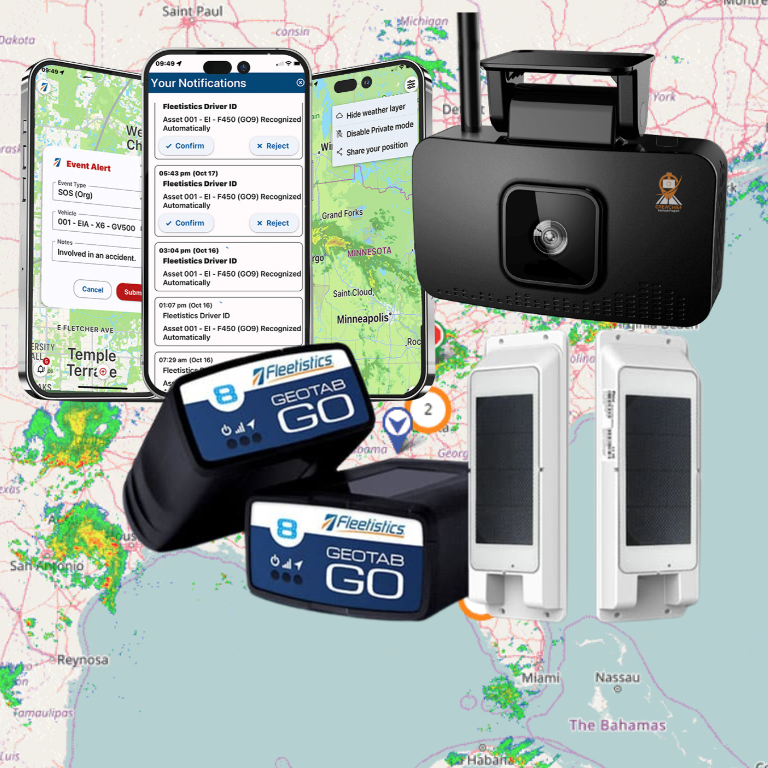
Fleetistics lists route optimization as an available platform option, alongside capabilities such as dispatch, custom reporting, alerts, route history, and API access. Availability can depend on the selected plan, so confirm the exact fit for your fleet before assuming a capability is included. You can review Fleetistics’ route optimization solutions and discuss whether the configuration matches your delivery or service model. Fleetistics serves customers across the United States, Canada, and Mexico, so the evaluation should begin with your routes, operating constraints, and service geography.
Which Route Constraints and Service Windows Matter?
A convincing demo should use your operating rules, not a generic map with a few sample stops. Bring a representative day of orders and ask the provider to configure each constraint below. The objective is to see whether the proposed fleet route optimization software can model your work accurately before you judge the route it produces.
- Can it respect vehicle capacity? Test the actual capacity measure that matters to you, such as weight, volume, pallet count, equipment type, or a combination. Ask what happens when one order would exceed the remaining capacity. The system should make the tradeoff visible instead of quietly assigning an infeasible stop.
- Can it distinguish order types? Include deliveries, pickups, inspections, and service visits in the same test if your fleet handles more than one kind of work. Ask whether each type can carry its own service duration, required equipment, skills, or handling rules.
- Can it enforce service windows? Add early, narrow, and flexible customer windows. Then ask the presenter to show which stops become late when the model cannot satisfy every request. A useful evaluation shows the conflict and the decision behind the revised sequence.
- Can it model depot start and end rules? Test a fixed warehouse opening time, loading or unloading duration, flexible departure options, and a required return time. Route profiles may include depot service times, starting-time rules, capacity, and workday constraints, so these should be demonstrated rather than assumed.
- Can it protect the driver’s workday and breaks? Enter the normal shift length, required meal break, and any local scheduling rules. Ask whether break timing is treated as a hard constraint, a preference, or an exception that dispatch must resolve manually.
- Must every route return to the depot? Compare a closed route that ends at the starting depot with an open route that finishes elsewhere. If vehicles need to refuel, reload, secure equipment, or hand off paperwork, test those events as part of the route.
- What is the optimization objective? Ask for separate results that prioritize mileage and drive time. Travel distance and drive time are different measures, and the right choice depends on your cost model, traffic exposure, labor rules, and customer commitments. Confirm which objective is being optimized and which constraints take priority when they conflict.
Document the inputs, exceptions, and acceptance criteria from the demo. That record gives your team a fair basis for comparing plans and identifying which capabilities need confirmation before implementation.
How Should Software Handle Live Route Changes?
A route plan is only useful if dispatchers can respond when the day stops matching the morning forecast. In a demonstration, ask the provider to begin with a realistic schedule, then introduce one disruption at a time. The goal is not to watch a polished animation. It is to see what information changes, who approves the change, and how the revised plan reaches the people responsible for completing the work.
Test the conditions that change travel time
Start with a traffic slowdown on a route that includes several time-sensitive visits. Travel time can vary by time of day and vehicle type, so a truck, van, and passenger vehicle may not produce the same practical schedule. The underlying routing model should make those assumptions visible rather than treating every vehicle as interchangeable.
Ask exactly where dynamic information is used. Does traffic affect the initial sequence, turn-by-turn guidance, a later reoptimization, or only the estimate shown to dispatch? This distinction matters because a tool can display current conditions without automatically rebuilding the route. Treat the answer as a configuration and workflow question, not evidence of a guaranteed capability.
Introduce operational exceptions
Next, add a rush job after the route has started. Then mark a visit as failed, call out one driver, and move a customer’s service window. For each event, watch whether the system proposes a revised sequence, identifies affected stops, preserves required constraints, and shows the dispatcher the tradeoff before anything changes. A useful demo should also show what happens when no feasible insertion exists. The correct response may be an escalation, reassignment, or customer notification rather than a silently altered promise.
Finally, clarify dispatcher control. Can a person accept, reject, or edit a recommendation? Is the original plan retained for comparison? Are drivers told only what they need to act on? Treat every demonstrated workflow as a test result for that configuration, not a guaranteed Fleetistics capability. Confirm live-change, dispatch, alert, and route-history availability for the platform tier and operating model you are considering.
Will Drivers and Dispatchers Actually Use It?
A route plan only creates value when the people responsible for executing it can understand and act on it. Evaluate the experience from both sides of the operation: drivers need clear, timely instructions, while dispatchers need enough visibility to identify exceptions and support the field without creating unnecessary work.
Test the daily driver experience
Ask drivers to complete representative tasks during a controlled trial. Can they find the next stop, understand changes, report a completed visit, and continue working when connectivity is inconsistent? Watch for battery drain, crashes, confusing navigation, excessive taps, or messages that compete with safe driving. A short trial with actual users is more informative than a polished demonstration.
Define feedback criteria before the trial begins. For example, record whether drivers can complete common tasks without coaching, how often they request clarification, and which steps slow down service. Include different experience levels, vehicle types, territories, and shifts so the feedback reflects your fleet rather than a single power user.
Confirm dispatcher visibility and implementation support
Dispatchers should be able to see the operating status they need, recognize exceptions, and communicate next steps through the selected configuration. Ask the provider to demonstrate a normal workday as well as a late arrival, failed visit, driver absence, or changed customer window. The goal is not to promise that every platform handles every scenario identically. It is to expose the decisions your team would make and the information available at each point.
Also clarify the rollout plan. Ask who supports data migration, whether you can run current and new processes in parallel, what training is included, and how issues are escalated after launch. Fleetistics combines Geotab technology with implementation and support services, but route optimization and related dispatch capabilities should be confirmed for your selected plan. You can compare platform tiers and capabilities before finalizing the trial scope.
Choose adoption criteria alongside efficiency metrics. If users cannot complete core tasks reliably, a theoretically strong route model will not survive production. Use the trial findings to adjust training, configuration, or plan selection before expanding.
How Do You Compare Mileage, Time, and Reporting?
A useful evaluation separates what the routing model measures from what your operation actually needs to improve. Travel distance and drive time are different measures, so do not treat fewer miles as an automatic sign of a better route. Compare both against a representative baseline, then add service quality and exception visibility to the review.
Use this compact framework to keep the comparison consistent.
| Metric | Baseline | Test method | Decision signal |
|---|---|---|---|
| Mileage per completed stop | Typical miles per comparable stop. | Match demand and stop count. | Shows distance efficiency without sacrificing completed work. |
| Drive time | Typical time by route and vehicle. | Compare equivalent periods and traffic conditions. | Shows whether mileage changes usable drive time. |
| On-time service-window performance | Current share of visits within the promised window. | Keep the same window definitions throughout. | Shows whether efficiency protects customer commitments. |
| Route completion and exceptions | Completed, missed, rescheduled, or changed stops. | Review route history and dispatch interventions. | Shows whether the plan works in live operations. |
| Reporting and decision access | Current reports, alerts, history, views, and API workflows. | Request a plan-specific demo, export test, and sample report. | Confirms whether managers can verify results and act. |
Fleetistics identifies transportation and logistics operators coordinating delivery and service routes as a core audience. Its platform combines Geotab technology with implementation and support services, but capabilities such as reporting, route history, dispatch, alerts, and API access depend on the selected plan. Confirm each one during evaluation rather than assuming it is universal.
For a broader measurement framework, review fleet management analysis and the practical guidance on fleet insight metrics. Use the results to identify operational fit, not to claim guaranteed mileage, time, or savings outcomes.
What Integrations and Plan Limits Should You Check?
A route plan is only useful when it can exchange dependable data with the systems your team already uses. Before a demo, document where customer, vehicle, stop, driver, work-order, and completion data originate. Then ask the vendor to show the complete path into and out of the platform.
Can you document the API and preserve your data?
Review the API documentation, authentication method, rate limits, available objects, webhooks, export formats, and error handling. Ask whether you can retrieve route plans, status changes, completed stops, exceptions, and historical records without relying on screenshots or manual exports. Also confirm data ownership, retention, backup, and portability. An integration that works in a demo but cannot support reliable exports or monitoring may create a new operational dependency.
Fleetistics describes an open ecosystem with free API access and more than 300 integrations. Treat that as a starting point for technical validation, not a promise that every integration fits every workflow. Ask for the specific connector, API endpoint, or implementation path your team would use.
Where do geography and operational complexity create limits?
Test the conditions that make your routes difficult: multiple depots, cross-border work, rural coverage, dense urban stops, mixed vehicle types, recurring routes, narrow service windows, and last-minute additions. A platform may handle a simple route set well while requiring a different configuration, workflow, or service tier for a larger and more complex operation. Ask how many vehicles, stops, users, territories, and simultaneous planning scenarios each selected plan supports.
Do not accept vague claims about scale. Request a roadmap for your actual geography and operating model, including what happens when a route exceeds normal limits. Confirm which capabilities are included, optional, or dependent on the chosen tier. Fleetistics lists dispatch, custom reporting, alerts, route history, API access, and route optimization among platform capabilities, but feature availability should be checked against your fleet and selected plan. You can compare fleet management platform capabilities before making that request.
Finally, ask who owns implementation, integration testing, training, and post-launch support. Fleetistics combines Geotab technology with support and implementation services, which can matter when a routing project involves more than software configuration. Require honest answers about current limitations, planned improvements, and workarounds before you commit.
How Can You Validate ROI Before Expanding?
A disciplined evaluation separates a useful operating signal from an attractive projection. Whether you coordinate delivery routes, service calls, or a mixed fleet, measure the workflow you actually expect the software to improve. Treat modeled savings as a planning estimate and observed results as evidence that still needs context.
- Set a representative baseline. Record several normal operating periods before changing the workflow. Include mileage per completed stop, route completion, on-time service-window performance, driver and dispatcher time, overtime, exceptions, and adoption. Capture the fleet mix, number of stops, service area, vehicle availability, and other conditions that could change the result. A baseline built only from an unusually difficult week will distort the decision.
- Define the comparison before the evaluation starts. Compare equivalent periods and operating conditions, such as similar route volume, season, staffing, traffic patterns, and customer demand. Keep the definitions stable. If one period measures planned mileage while another measures actual mileage, the apparent improvement may reflect the reporting method rather than the routing process.
- Test the complete operating loop. Track mileage, time, service windows, completed work, exceptions, and user adoption together. Review whether dispatchers can handle changes and whether drivers consistently follow the process. If the selected platform tier supports route history, reporting, alerts, or dispatch tools, confirm the exact capability and data fields during the evaluation rather than assuming they are universal. Fleetistics lists these capabilities as plan-dependent options in its platform comparison.
- Use a standard 30-day evaluation for ordinary fleet contexts. This period can expose routine variation without implying a guaranteed result. Fleetistics supports transportation, logistics, and field-service operators, so the test should reflect the relevant work, such as delivery stops, HVAC appointments, landscaping jobs, or pest-control visits. Telematics data can support operational analysis, while predictive methods estimate what may happen. That estimate is not the same as a measured outcome.
- Make a measured go/no-go decision. At the review, compare the baseline with the evaluation period, document exceptions, and separate observed changes from modeled benefits. Expand only when the results meet pre-agreed acceptance criteria without creating unacceptable workload, service, safety, or adoption problems. If evidence is mixed, adjust the configuration or run a narrower follow-up rather than treating the software as a guaranteed source of savings. Fleetistics combines Geotab technology with implementation and support, which can help you interpret plan fit and next steps.
Contact Fleetistics to discuss your evaluation plan
Frequently Asked Questions
What does fleet route optimization software do?
It helps you plan and evaluate routes against real operating constraints, such as vehicle capacity, service windows, depot rules, driver schedules, and changing work orders. A useful system should also help dispatchers review route history and compare planned work with completed stops, rather than treating the first suggested route as the final answer.
How is AI used in route optimization?
AI and other predictive methods can analyze historical and current operating data to support routing decisions. Estimate conditions, and identify patterns that may affect service times or route performance. Treat these outputs as decision support, not certainty. During a demo, ask how the system explains changes, handles incomplete data, and lets a dispatcher override an unsuitable recommendation.
Which features are essential for route optimization software?
Start with constraint handling, service-window management, live-change workflows, driver communication, route completion visibility, reporting, and integrations with the systems you already use. Dispatch, alerts, route history, custom reporting, and API access may be available by plan, so verify each capability for the tier and operating model you are evaluating.
How do I choose the best route optimization app for my fleet?
Choose the option that fits your fleet’s routes, vehicles, work rules, data sources, and adoption needs, rather than selecting an app from a generic ranking. Test it with representative routes and measure mileage per completed stop, on-time service-window performance, route completion, idle time, overtime, and driver or dispatcher adoption against a comparable baseline.
Can route optimization software prove ROI before rollout?
It can help you test a business case, but no platform should be assumed to guarantee savings. Establish baseline measurements, run a controlled evaluation under comparable conditions, document implementation and adoption costs, and review observed results separately from modeled outcomes before expanding.
Ready to Evaluate Route Optimization for Your Fleet?
A practical evaluation can help you test route constraints, service windows, driver communication, reporting, and measurable baseline changes against your actual operating needs. Fleetistics can help you discuss those requirements and determine whether the platform and plan fit your fleet. Contact Fleetistics to discuss your route-optimization requirements and define a responsible next step for evaluating platform fit.