
Safer driving and lower operating waste rarely come from a single device or dashboard. They come from a repeatable management process. It helps leaders see what is happening, respond consistently, and measure whether daily decisions are improving.
A driven fleet is a connected operating model. It links clear safety and efficiency goals with GPS visibility, driver coaching, maintenance, routing, analytics, and regular review. The technology creates useful signals. Policies, transparent communication, and driver buy-in turn those signals into better decisions. The right approach can scale from a small operation to a large fleet. Tools and workflows should match vehicle mix, operating risk, and business priorities.
Start by defining what better performance means for your operation. Establish the baseline needed to recognize progress. From there, strong programs build accountability without treating monitoring as a substitute for trust, coaching, or sound judgment.
What makes a driven fleet safer and more efficient?
A safer, more efficient driven fleet starts with an operating plan, not a tracking purchase. Define what the program should improve. Establish a baseline and connect daily decisions to those goals. Depending on your operation, that may mean reducing preventable incidents, unauthorized stops, idle time, route inefficiency, fuel waste, disputed service records, or maintenance disruptions.
Set measurable goals before selecting tools
Record current performance before changing the process. Useful baseline measures include preventable incident frequency, harsh-driving events, idle time, fuel use, on-time service, vehicle downtime, inspection completion, and maintenance response time. Segment the data by vehicle type, route, location, shift, or operating group when those differences affect the result. A baseline gives managers something more useful than a general impression. It shows whether the fleet is improving.
Fleetistics can support small-business fleets and larger enterprise operations through graduated platform tiers. The measurement plan should fit the operation’s size and risk profile. A small field-service fleet may begin with driver accountability and maintenance visibility. A much larger or mixed fleet may need more detailed analytics, integrations, and review workflows. The principle is the same. Choose a manageable set of indicators, assign owners, and review them consistently.
Put expectations in writing
Technology cannot replace a clear fleet policy. Write down expectations for vehicle use, safe driving, authorized stops, inspections, maintenance reporting, incident response, and data access. Explain what information is collected, why it is collected, who can see it, and how it will be used. A sample driver policy can help organize those decisions, but each employer should adapt its policy to its vehicles, jurisdictions, work rules, and operating risks.
Transparent notice is part of the safety program. Give employees a practical explanation before monitoring begins, provide an opportunity for questions, and distinguish coaching from discipline wherever the policy allows. Resources for introducing GPS tracking to drivers can support that communication. When drivers understand how data protects people, improves planning, and identifies training needs, they are more likely to participate in the process.
Turn visibility into accountability
Tracking alone only shows what happened. A management program defines what happens next. Review exceptions, investigate context, coach consistently, document follow-up, and measure whether behavior or operations change. GPS visibility, behavior detection, alerts, diagnostics, routing, maintenance workflows, and fuel analysis are most valuable when they feed that closed loop. Without policy, employee understanding, and accountable follow-through, a dashboard can create information without creating safer or more efficient work.
How do visibility and coaching improve daily fleet performance?
Visibility becomes operationally useful when it helps a team decide what to review, who needs support, and which policy or process needs clarification. GPS data can show location, route progress, stops, and recurring exceptions. Behavior alerts can bring attention to speeding, harsh braking, or extended idling. These signals are not a verdict on a driver. They are prompts for a consistent review process.
For example, an AI dashcam may surface a following-distance concern, seatbelt issue, distraction, or lane-departure event, depending on the selected configuration. A manager can review the context and compare it with the fleet’s safety policy. The appropriate response may be coaching, additional training, a policy reminder, or no action. This makes driver behavior monitoring part of management rather than a stream of disconnected notifications.
From passive tracking to managed visibility and coaching
| Passive tracking | Managed visibility and coaching |
|---|---|
| Collects location data primarily for occasional lookups. | Defines reviewable exceptions and assigns ownership for follow-up. |
| Alerts arrive without a shared response standard. | Managers verify context, apply policy consistently, and document next steps. |
| Drivers may see monitoring as hidden surveillance. | Leaders explain the purpose, data use, notice, and limits before rollout. |
| Individual events remain isolated from broader trends. | Teams review recurring patterns and use coaching to reinforce safer practices. |
Make driver understanding part of the safety loop
Employee understanding is a governance requirement, not a communications afterthought. Before implementation, explain what is collected, why it matters, who can access it, how long records are retained, and how reviews connect to existing policies. A clear sample driver policy can help leaders document expectations, while introducing GPS tracking to drivers provides a starting point for transparent conversations and buy-in.
Keep the loop repeatable: set a safety objective, monitor relevant exceptions, review context, coach respectfully, and measure whether the pattern changes. Use the smallest set of alerts that supports the objective. Too many unprioritized notifications can bury the events that deserve attention. With clear notice and consistent follow-through, visibility becomes a shared operating tool that supports drivers and gives managers better information for daily decisions.
Which workflows should a driven fleet connect?
Efficiency improves when operational workflows share information instead of creating separate islands of data. A route plan should inform dispatch, dispatch activity should provide context for idle and fuel review, and vehicle condition data should influence maintenance scheduling. The goal is not to collect every available metric. It is to connect the few inputs that help your team make faster, better decisions.
Start with route and dispatch coordination
Connect route planning with dispatch so managers can compare the planned work with what is happening in the field. Live vehicle location, stop progress, exceptions, and service changes give dispatchers a practical view of which jobs need attention. For a field-service fleet, that may mean adjusting the next assignment. For a construction or public-sector fleet, it may mean coordinating equipment and vehicles around changing site needs.
Keep the workflow appropriate to the operation. A small local fleet may need simple location visibility and exception alerts. While a larger or more complex operation may need deeper route optimization, user permissions, and integration with scheduling or work-order systems.
Turn idle, fuel, and diagnostics data into action
Review idle time and fuel activity alongside route conditions, vehicle type, weather, job requirements, and driver feedback. A high-idle event is a prompt to investigate, not automatic proof of poor performance. The same principle applies to engine diagnostics. Prioritize alerts by severity, assign ownership, and record whether the issue was inspected, repaired, or intentionally deferred.
Maintenance workflows should connect diagnostic signals with service history, inspection requirements, parts planning, and vehicle availability. A predictive fleet maintenance approach may be useful for operations that have enough data and process maturity to act on condition-based insights. Other fleets may begin with scheduled maintenance reminders and basic diagnostic alerts.
Use analytics in a regular management cadence
Analytics becomes useful when it leads to a recurring decision. Use fleet analytics software to bring key measures into one review, then examine exceptions by route, vehicle group, location, or operating team. A weekly review can focus on unresolved alerts, route variance, idle trends, and upcoming maintenance. A monthly review can look for recurring patterns, policy changes, training needs, and technology gaps.
Fleet size and operating risk should determine the cadence and level of detail. A five-vehicle business does not need the same reporting structure as a multi-site fleet. But both benefit from assigning an owner, documenting the decision, and checking whether the action improved the original problem. That closes the loop between visibility and operational improvement.
What technology should you evaluate for a driven fleet?
The strongest technology decision starts with the operating problem, not a feature list. Use this checklist to evaluate whether a platform can support your vehicles, workflows, people, and next stage of growth.
- Define the system of record. Decide where vehicle, driver, asset, maintenance, route, and event data should live. A connected platform should turn visibility into action across safety, dispatch, maintenance, and fuel management instead of creating another isolated dashboard.
- Choose hardware for the work each vehicle performs. Match devices and sensors to vehicle type, operating environment, required visibility, and installation constraints. GPS tracking hardware that works for a route-based service fleet may not provide the right data for heavy equipment or mixed assets. Treat hardwired and other configurations as tradeoffs, not automatic upgrades.
- Confirm data quality before expanding the program. Test location accuracy, trip activity, ignition status, diagnostic data, driver assignments, alerts, and reporting intervals. Ask how the system handles gaps, incorrect assignments, and exception review. Reliable decisions require data that operations teams can interpret consistently.
- Map integrations to real workflows. Identify which systems need vehicle status, event, maintenance, dispatch, or customer-service data. Fleetistics supports free APIs, real-time streaming, webhooks, SDKs, and more than 300 partner integrations. Confirm what can be connected now, what requires configuration, and what your team will own after launch.
- Set event ownership. For every alert or exception, name the person responsible for reviewing it and the action that follows. This includes unsafe driving, unauthorized stops, maintenance conditions, route deviations, or excessive idling. An alert without an owner becomes notification noise.
- Plan governance and employee communication. Document what is monitored, why it is collected, who can access it, and how it informs coaching or investigations. Share the policy before deployment and invite questions. Resources such as a guide to introducing GPS tracking to drivers can help establish transparent expectations and buy-in.
- Pilot by use case. Start with a defined objective, such as reducing unauthorized stops, improving maintenance follow-through, or strengthening coaching. Test the workflow with a representative group of vehicles and drivers, then adjust alerts, permissions, reports, and escalation rules before expanding.
- Train the people who use the data. Drivers need clear expectations, while dispatchers, managers, technicians, and administrators need role-specific instruction. Evaluate whether the provider offers implementation support, professional installation, remote implementation, and training rather than leaving your team to assemble the process alone.
- Establish ongoing support and scale requirements. Confirm how issues are escalated, how new vehicles are added, and how the platform will adapt as needs change. Fleetistics offers graduated platform tiers, 24/7 support, and integration capabilities that can be matched to the operation. Select the tier that fits your current use case while preserving a practical path for growth.
How should you measure a driven fleet program?
Measurement should show whether daily operating behavior is moving toward the outcomes your fleet actually needs. Start by defining a small set of goals, such as fewer preventable incidents, less idle time, more reliable arrival windows, better maintenance completion, or lower fuel waste. Then connect each goal to a metric, an owner, and a review action.
Separate leading indicators from lagging outcomes
Leading indicators show whether the program is being used consistently and whether corrective work is happening. Examples include the number of behavior exceptions reviewed, coaching conversations completed, overdue maintenance items, idle-time events, route deviations, and inspection tasks closed. These measures help managers intervene before a safety or cost problem becomes a larger result.
Lagging indicators show the business outcome over time. Track preventable incidents, injury or damage events where appropriate, fuel consumption, overtime, maintenance cost, vehicle downtime, missed service windows, and customer complaints. Avoid treating one metric as a complete verdict. A reduction in idle time is useful, for example, but it should be considered alongside service reliability and driver safety.
Build a useful baseline before changing the program
Record the current state for a defined period before introducing new policies, coaching routines, or technology changes. Document the measurement window, vehicles included, operating conditions, and how each metric is calculated. This makes later comparisons more credible and prevents normal seasonal changes, route changes, or fleet turnover from being mistaken for program results.
Segment the data so averages do not hide the real operating pattern. Compare routes, vehicle classes, depots, shifts, and use cases such as local service, delivery, construction, or public-sector operations. Review driver-level information carefully and use it for coaching and support, not public scorekeeping. Transparent notice and employee understanding help make the measurement process credible.
Use a consistent review cadence
Review leading indicators weekly or at the cadence that fits your operation. Use a monthly or quarterly review for lagging outcomes, trends, and financial effects. Assign a next action to each material exception, then check whether the action changed the result. A connected fleet program should link visibility to coaching, routing, maintenance, and fuel decisions rather than collecting dashboards without follow-through.
For context, the City of Seattle case study describes a documented example involving a 4,100-vehicle fleet and documented fuel savings. That case study demonstrates what measurement can reveal at scale; it is not a forecast or promise for another fleet. Your own baseline, operating conditions, and implementation discipline determine the result.
Where can Fleetistics support a driven fleet strategy?
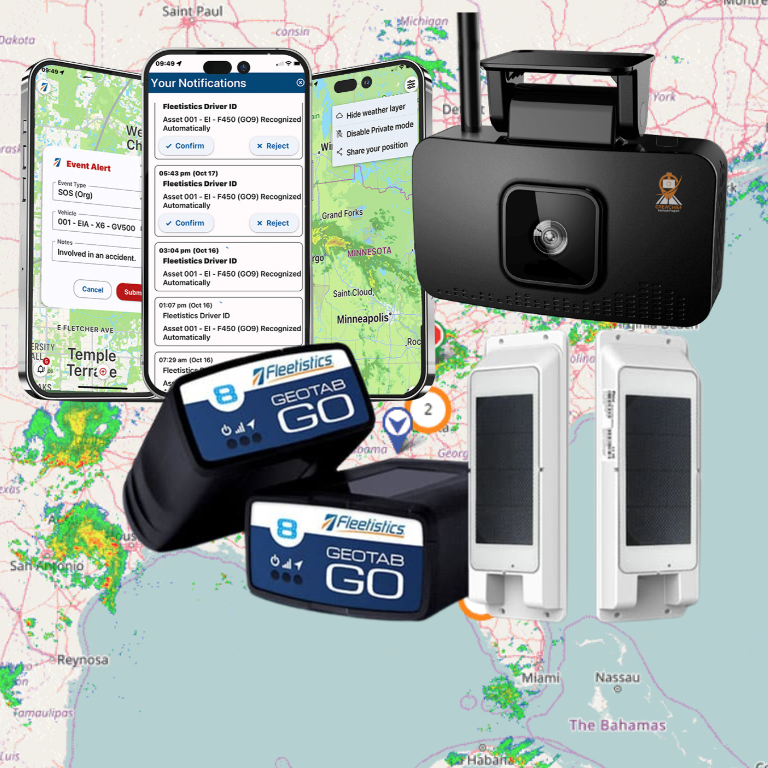
Fleetistics supports a driven fleet strategy with Geotab-powered GPS tracking and telematics, combined with implementation, training, and ongoing support. The goal is not to add another disconnected dashboard. It is to help your team connect vehicle visibility with safer driving, better decisions, and repeatable operating workflows.
Real-time GPS provides the location context needed to manage routes, stops, service activity, and exceptions. Behavior detection and coaching triggers help identify events that deserve review, while diagnostics and alerts give maintenance and operations teams earlier visibility into vehicle conditions. Depending on your fleet’s needs, the platform can also support routing, maintenance workflows, and fuel-efficiency analysis.
How does the technology connect to your existing operation?
A useful fleet platform should work with the systems your team already relies on. Fleetistics offers free APIs, real-time data streaming, webhooks, and SDKs, along with access to more than 300 integrations. That gives your organization options for connecting telematics data with dispatch, maintenance, payroll, customer service, analytics, or other operational tools.
This integration layer matters when you want fleet information to become part of a decision rather than remain isolated in a tracking portal. For example, a route exception can prompt an operational review. A diagnostic alert can enter a maintenance workflow, and fuel or idle data can support a broader efficiency conversation. The appropriate connection depends on your goals, existing systems, and governance requirements.
Can the solution fit a fleet that is still growing?
Fleetistics uses graduated platform tiers so the technology and reporting approach can match the fleet’s size, vehicle mix, operating risk, and internal resources. A smaller operation may begin with practical accountability and visibility, while a larger organization may need deeper analytics, custom integrations, streaming data, and more structured implementation support.
Fleetistics also provides professional installation, remote implementation, training, custom development capabilities, and 24/7 support. Those services help move a project from hardware selection to daily use. With attention to driver communication, manager workflows, and the way your team will act on the data.
To evaluate the right combination of tracking, safety, maintenance, integrations, and support, start by comparing the capabilities to your operating model rather than choosing features in isolation. Compare fleet management platforms based on the decisions you need to improve and the systems you need to connect.
Frequently Asked Questions
What should a fleet address first to improve safety?
Start with a written safety policy, clear driver expectations, and a baseline of incidents, risky behaviors, vehicle condition, and route performance. Then use visibility tools to identify exceptions and pair each finding with timely, respectful coaching. Fatigue also deserves a formal control process because it affects the ability to drive safely and can be influenced by long hours, shift work, and insufficient sleep. Source: CDC/NIOSH guidance.
How can a fleet use tracking without damaging driver trust?
Explain what the organization collects, why it collects it, who can access it, and how the information will be used. Give drivers a chance to ask questions, publish the policy, and focus coaching on observable behaviors and consistent standards rather than surveillance alone. Transparent notice and employee buy-in make the technology part of a fair operating process.
Is a connected operating model practical for a small fleet?
Yes, but the starting point should match the fleet’s size, vehicles, routes, and risks. A smaller operation may begin with GPS visibility, driver behavior alerts, maintenance reminders, and a simple review cadence, then add integrations or deeper analytics as its needs grow. Fleetistics can align the platform and reporting approach with that progression.
Which results should a fleet measure?
Track both leading indicators, such as coaching completion, inspection compliance, maintenance status, idle time, and route exceptions, and lagging indicators, such as incidents, downtime, fuel use, and service reliability. Set a baseline, segment results by vehicle or route where useful, and review trends consistently. Treat documented case-study outcomes as examples, not promises of universal savings.
Build a More Connected Fleet Operation
A safer, more efficient fleet starts with a clear operating model and technology matched to the work. Contact Fleetistics to discuss your goals, current systems, and a practical path for evaluating fleet visibility, coaching, maintenance, routing, and analytics.