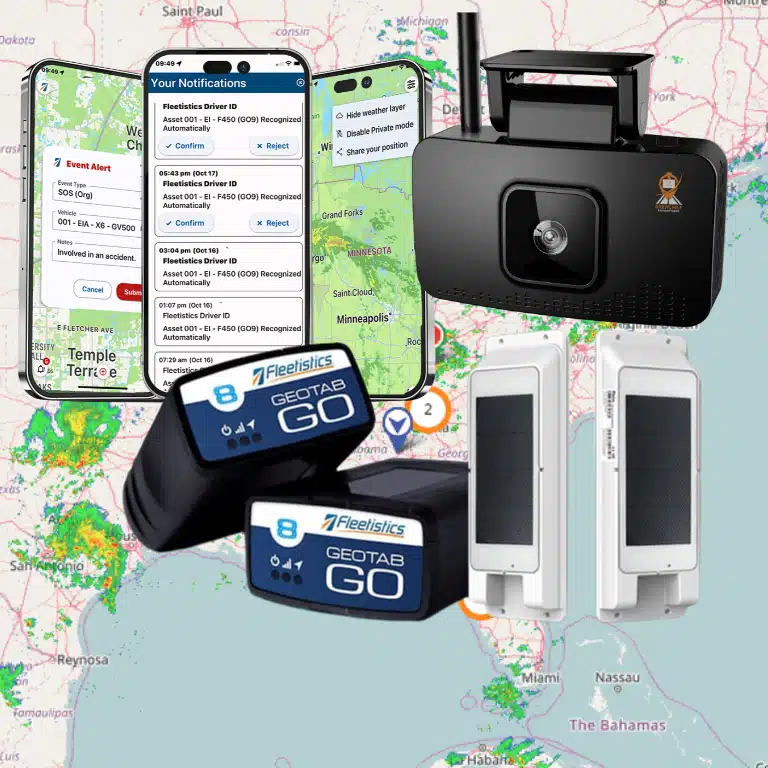
Insurance conversations are stronger when they are based on a clear record of what happened on the road, not only on assumptions about fleet risk. Telematics can help you connect vehicle data, driver behavior, coaching activity, and incident documentation in one measurable safety process. Some insurers recognize the value of telematics systems in reducing risk, and advising them that you have a safety program based on a system such as Geotab may be considered in your rate calculation.
Understanding how telematics reduces fleet insurance costs starts with a careful distinction: telematics does not guarantee a premium discount or a favorable claim decision. It can help your team identify risky patterns, coach drivers, document management actions, and organize relevant evidence for informed discussions with your broker or insurer.
Talk with Fleetistics about a measurable fleet safety program
The value depends on the data you collect, the actions your managers take, and what an insurer recognizes. Before evaluating possible insurance implications, establish exactly which safety and vehicle signals your telematics program can measure.
What Does Telematics Measure Before You Discuss Insurance?
GPS tracking is one part of telematics. A GPS device can show where a vehicle is, where it has been, and how a trip progressed. Broader telematics combines location data with information from the vehicle’s onboard systems, creating a more useful view of how the vehicle is operated, maintained, and exposed to risk.
For example, the U.S. General Services Administration identifies real-time location, trip history, and geofencing as telematics data elements. It also lists vehicle and engine information such as fuel usage, battery voltage, oil life, coolant temperature, and tire pressure. See the GSA telematics overview for the full list of examples.
Location and trip context
Location records can establish routes, arrival and departure times, stops, mileage, and time spent in designated areas. That context helps you compare planned work with actual operations and investigate what happened around a reported event. It can also show whether a pattern is isolated to a route, shift, vehicle, or operating condition.
Vehicle condition and operating signals
Depending on the hardware and integration, telematics can collect engine fault information, fuel and idling signals, diagnostic readings, and maintenance-related indicators. These measurements help maintenance and operations teams identify exceptions before they become recurring downtime or safety concerns. They are not a substitute for inspections or sound maintenance procedures.
Safety events and driver behavior
Configured systems may record speeding, hard braking, rapid acceleration, cornering, seatbelt use, and other safety events. Some fleets add video or advanced sensors for additional context. Reviewing these events over time gives managers a baseline for coaching and accountability. Explore fleet safety analytics metrics to connect event data with broader safety-program decisions.
The result is a measurement layer, not an automatic insurance outcome. Use the data to identify patterns, take documented action, and then ask your broker or insurer which information they recognize.
How Telematics Reduces Fleet Insurance Costs Through Safer Driving
Understanding how telematics reduces fleet insurance costs starts with the risk-management process, not a promised premium discount. Telematics gives managers a consistent way to see driving patterns, respond to exceptions, and document the actions taken to improve safety. Whether that work affects insurance depends on the policy, broker, insurer, underwriting rules, and the data those parties recognize.
Turn driving events into coaching opportunities
Depending on the hardware and configuration, a telematics system can identify events such as speeding, hard braking, rapid acceleration, quick cornering, and seat belt use. The value is not in collecting alerts for their own sake. It is in reviewing patterns, distinguishing isolated events from repeat behavior, and having a constructive conversation with the driver.
A consistent coaching process can connect each event to a practical expectation. A manager might review route conditions, clarify the applicable safety policy, and agree on a specific behavior to improve. Fleetistics supports this approach with telematics-based driver coaching, which can help turn raw event data into an organized safety workflow.
Reduce repeat events through management action
Risk control becomes more credible when the fleet can show what happened after an alert. Track whether the event was reviewed, whether coaching was completed, and whether similar events declined over time. This does not guarantee fewer collisions or lower premiums, but it gives safety leaders a basis for identifying drivers, routes, or operating conditions that need attention.
Telematics should support, rather than replace, written policies and accountable management practices. A commercial fleet safety program can define escalation rules, coaching responsibilities, record-retention practices, and the metrics reviewed by leadership. That documented process may also give your broker or insurer a clearer picture of how your organization manages risk, subject to their requirements.
Before assuming a discount applies, ask the insurer what telematics data it accepts, how the data must be reported, and whether any program has eligibility conditions. Treat any potential premium impact as an outcome to validate, not a result to promise.
Which Coaching Metrics Should Fleet Managers Track?
A useful coaching program measures behaviors that managers can explain, address, and review over time. Track hard braking, rapid acceleration, speeding where the configuration supports it, and seatbelt use. These events can identify training opportunities, but an isolated alert does not establish a pattern or explain the operating context.
Following distance deserves its own measure because it connects directly to collision risk and driver judgment. Review whether the system can identify unsafe gaps under the conditions you care about, then pair those events with safe following-distance monitoring guidance and consistent coaching expectations.
Measure exposure, not just event counts
Ten speeding events mean something different for a vehicle traveling 200 miles than for one traveling 5,000 miles. Normalize events by miles traveled, trips, driving hours, or another reliable exposure measure. Where possible, segment the results by vehicle, driver, route type, and time period so a high count is not mistaken for a high rate.
- Behavior rate: Compare events per 100 miles, trip, or driving hour.
- Repeat events: Flag recurring behavior by the same driver, vehicle, route, or location.
- Coaching completion: Record whether the discussion occurred, what action was assigned, and when follow-up is due.
- Trend line: Compare weekly or monthly rates after coaching instead of judging success from one alert.
Fleetistics supports telematics-based driver coaching, exceptions, and custom reporting. Use a simple loop: capture the event, identify the pattern, take a documented action, and measure the next period. This turns telematics data into a reviewable safety process and gives insurer conversations clearer operational evidence, without promising a particular premium result.
How Do Incident and Claims Records Strengthen Your Evidence?
A useful incident record connects the event to the surrounding trip, vehicle, and management response. Start with a clear timeline: when the vehicle departed, where it traveled, when an alert or collision occurred, and when the fleet team reviewed the event. GPS and trip history can add context, while event data can show relevant changes in speed, braking, acceleration, or other configured signals.
Keep the evidence organized around the specific incident rather than exporting every available data point. A practical record may include:
- Trip context: vehicle, driver assignment, route, location, and time window.
- Event details: triggered alerts, speed or motion data, and related driver-behavior events.
- Video, when configured: footage from commercial fleet camera systems can add visual context to selected incidents.
- Follow-up: the manager’s review, driver conversation, corrective action, and any supporting report.
For more complex events, reconstruction tools can help your team assemble the available records into a sequence that is easier to review. Fleetistics identifies accident data capture, reporting, and accident reconstruction among its platform capabilities. An AI dashcam incident review may also be useful when your configuration includes video and the event meets your retention or review criteria.
Assign ownership before an incident occurs. Decide who receives alerts, who preserves relevant records, who speaks with the driver, and who prepares information for a broker, insurer, or legal adviser. Set a retention policy that reflects your operational needs, privacy obligations, and the systems you actually use. Review the process periodically so an important record does not disappear because no one knew which team owned it.
Strong documentation can make an incident easier to understand and can support a more informed conversation with the appropriate parties. It does not guarantee a liability finding, claim acceptance, or lower premiums. Insurers and claims teams apply their own rules, so ask what data they recognize and retain the original records without altering the surrounding context.
Book a Demo to review your fleet safety data needs
What Should You Compare Before and After a Telematics Rollout?
A useful comparison starts before installation. Establish a baseline long enough to reflect normal operations, then use the same definitions after rollout. The goal is not to produce a favorable-looking snapshot. It is to see whether visibility, coaching, and follow-through are changing risk-related behavior and documentation quality.
Normalize results by exposure wherever possible. Miles traveled, days used, number of trips, and vehicle availability can change from one period to another. Comparing event counts alone can mislead you when the fleet drove more, added vehicles, or operated in a different season. A consistent exposure measure makes the comparison more useful because it shows whether event rates changed as operations changed.
Before-and-after telematics measurement framework
| Measure | Before rollout | After rollout | What to review |
|---|---|---|---|
| Exposure | Record miles, trips, days used, vehicles, and operating period. | Use the same fields and reporting window. | Compare events per mile or trip, not counts alone. |
| Safety events | Document available incident and behavior records. | Track speeding, hard braking, rapid acceleration, and other configured events. | Look for recurring patterns by vehicle, route, or driver. |
| Coaching actions | Record current policy, coaching frequency, and completion method. | Log who was coached, on what issue, when, and what happened next. | Check whether repeat events decline after documented action. |
| Incidents and records | Review how timelines, reports, and supporting evidence are stored. | Compare incident capture, reconstruction, report completeness, and retrieval time. | Confirm that records are consistent and usable for internal review. |
| Review cadence | Set an owner and baseline review schedule. | Review weekly exceptions and monthly trends, adjusting as needed. | Capture the action taken, responsible owner, and next measurement date. |
Use the results to support a decision loop: capture data, identify exceptions, act, and measure again. For a financial planning view, you can also explore fleet telematics ROI estimates, while keeping any insurance discussion specific to the data and programs recognized by your broker or insurer.
What Should You Ask an Insurer About Telematics Data?
Ask your insurer or broker how telematics may be considered before you design a reporting process around it. The key question is not whether lower costs can be guaranteed. It is whether your carrier recognizes specific safety data, how it evaluates that information, and what documentation it wants to review.
Bring these questions to the conversation:
- Which data fields matter? Ask whether the insurer recognizes measures such as speeding, hard braking, rapid acceleration, seatbelt use, trip history, incident alerts, or video when configured. Do not assume every carrier uses the same fields.
- What time window is useful? Clarify whether the carrier wants a recent snapshot, a consistent history, or comparisons showing trends before and after coaching. Ask how often reports should be updated.
- How should incidents be documented? Confirm whether a timeline containing trip details, behavior events, driver coaching, and available video is useful for the insurer or broker. Telematics can organize relevant records, but it does not determine liability or guarantee claim acceptance.
- What privacy and governance controls are expected? Ask who may access driver data, how long records should be retained, and whether employees must receive notice under applicable policies or laws.
Keep the discussion evidence-led. Fleetistics does not document an insurer discount program or guaranteed premium outcome. A commercial fleet safety program can give your team a structured way to measure behavior, coach drivers, and maintain records, while your insurer determines what it recognizes.
How Can Fleetistics Help You Build a Measurable Safety Program?
A measurable safety program starts with the right combination of data, policies, coaching, and review. Fleetistics helps you evaluate that combination based on your vehicles, drivers, operating environment, and priorities, rather than forcing every fleet into the same configuration.
As a Geotab authorized reseller, Fleetistics can help you assess the hardware, software, and telematics capabilities that fit your operation. You are not simply buying a device. You are working with a partner that can help connect location data, vehicle information, driver coaching, alerts, reporting, and incident documentation to practical safety decisions. Fleetistics also supports organizations operating vehicles and equipment with modular solutions that can grow as requirements change.
The evaluation should be specific and measurable. Define the behaviors and incidents you want to understand, establish a baseline, select the appropriate configuration, and review results with your safety and operations teams. For an ordinary fleet, a 30-day evaluation can provide an initial view of data quality, workflow fit, and coaching opportunities. But it should not be treated as proof of an insurance discount or a guaranteed reduction in claims. Insurance outcomes depend on the carrier, broker, underwriting rules, and data they recognize.
Contact Fleetistics to discuss a measurable safety program built around your fleet.
Book a Demo to plan your telematics evaluation
Frequently Asked Questions
How can telematics help reduce fleet insurance costs?
Telematics can help you identify risky driving patterns, coach drivers, document management actions, and organize incident records. Those practices may support a stronger risk conversation with your broker or insurer, but they do not guarantee lower premiums or fewer claims. Insurance outcomes depend on the carrier, underwriting rules, and data the insurer recognizes.
What data can telematics devices collect from vehicles?
Depending on the hardware and configuration, a system may collect location, trip history, speed, geofence events, vehicle diagnostics, and driver-behavior events. The U.S. General Services Administration lists examples including fuel use, battery voltage, oil life, coolant temperature, and tire pressure: GSA telematics data guidance.
How can driver coaching based on telematics affect fleet risk?
Coaching turns event data into a repeatable management process. You can review patterns such as hard braking, rapid acceleration, speeding, or seatbelt exceptions, then provide targeted feedback and measure whether events trend down. Results depend on consistent policies, fair coaching, driver understanding, and follow-through, not on installing a device alone.
Can telematics guarantee an insurance discount?
No. Telematics may give you clearer safety evidence and incident documentation, but Fleetistics does not promise an insurer discount, premium reduction, claims outcome, or acceptance of specific data. Ask your broker or insurer which records they recognize, whether a formal program applies, and how they evaluate telematics evidence before treating any potential savings as part of your business case.
Ready to Build a Measurable Fleet Safety Evaluation?
Telematics can help you connect safety behavior, coaching activity, incident details, and claims documentation in one review process. The right setup depends on your fleet, operating environment, and the data your insurer recognizes. Contact Fleetistics to discuss a measured telematics and fleet safety evaluation and identify a practical starting point for your team.
Previous: Fleet Safety Analytics | Next: Fleet Driver Coaching Program and Telematics