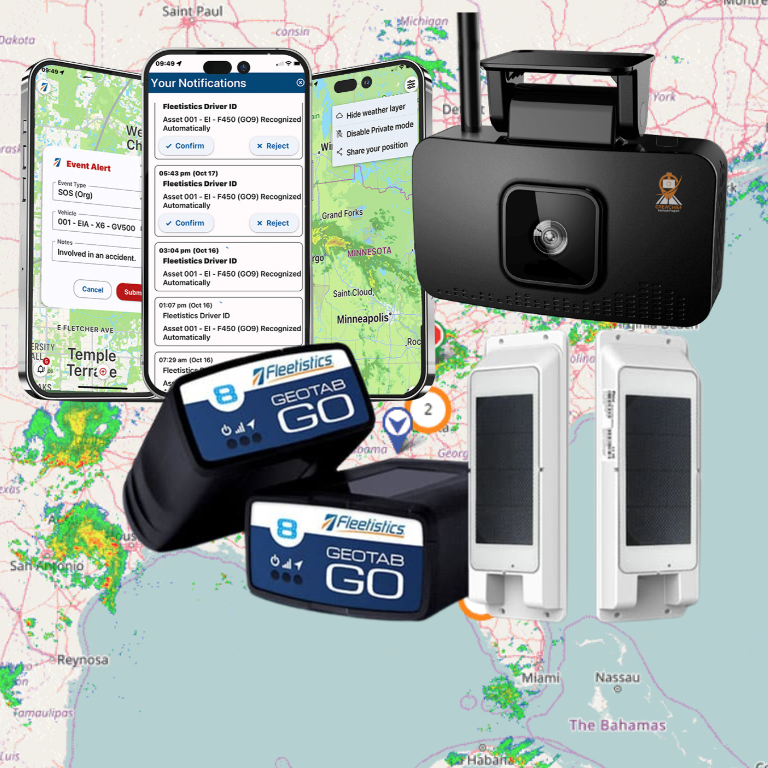
Knowing where a trailer, piece of equipment, or watercraft was last seen is useful, but it may not answer the operational question behind the search. If assets move between job sites, sit unused, or become difficult to reconcile across systems, a connected approach can replace assumptions with a clearer record of location and status.
IoT asset tracking fits when your fleet needs connected visibility for distributed assets and can support the required device, power, connectivity, reporting, and governance model. The right deployment may use wired, battery-powered, cellular, satellite, or solar hardware, depending on the asset and operating environment. It should also deliver information your team can act on, whether through inventory views, alerts, reports, or APIs.
Contact Fleetistics to discuss your asset tracking needs
The decision is not simply whether an asset can be tracked. It is whether the tracking method matches how the asset moves, how often its status matters, and who needs access to the resulting data. Start by defining what connected tracking adds beyond a basic inventory record.
What Is IoT Asset Tracking, and When Does It Matter?
IoT asset tracking connects a physical asset to a tracking device, a communications method, a data platform, and the operational process that uses the information. The device gathers location or other supported status data, connectivity moves that data, and software makes it available for inventory, service, reporting, or integration decisions. The value is not the device alone. It comes from connecting information that may otherwise remain in separate systems.
That distinction matters when your operation manages trailers, equipment, watercraft, or other valuable assets that move between sites or spend time away from a powered vehicle. Instead of relying only on manual check-ins or a last-known spreadsheet entry, you can establish a more consistent record of where an asset was reported and how it fits into your workflow. The right design still depends on the asset, its operating environment, available power, connectivity, and the question you need the data to answer.
How is IoT asset tracking different from vehicle telematics?
A full vehicle telematics deployment is built around a vehicle and can combine vehicle data with driver, maintenance, utilization, or compliance workflows. IoT asset tracking has a different starting point: the asset may not have an engine, a permanent power source, or a driver using it every day. A trailer parked at a yard, a piece of equipment assigned to a job site, or a watercraft may need location visibility without needing the same data set as a road vehicle.
Some operations need both approaches. A connected vehicle can provide vehicle-specific information while a separate asset tracker helps account for equipment that is detached, stationary, or used independently. Treating every asset like a vehicle can add unnecessary complexity, while treating every use case as simple inventory can leave important operational questions unanswered.
When does the investment make sense?
Start with a recurring business problem. IoT asset tracking is worth evaluating when teams spend too much time locating equipment, cannot confidently confirm where an asset was last reported, move assets across multiple locations, or need a shared record for operations and service decisions. Define the required visibility before choosing hardware or connectivity. You may need location inventory, a workflow connection, or a custom data feed rather than a broad vehicle-telematics deployment.
A practical evaluation should also identify who will use the information and what action follows it. That keeps the project focused on measurable operational visibility instead of collecting data without an owner.
Which Trailers, Equipment, and Watercraft Are Good Candidates?
The best candidate for connected tracking is not defined only by what it is. It is defined by the operational question you need to answer. If an asset moves between yards, job sites, storage areas, or customer locations and its last known position affects dispatch, recovery, maintenance, or accountability, it may justify connected visibility.
Start with trailers and distributed equipment that are frequently detached from powered vehicles or left away from a staffed facility. Trailers, generators, machinery, and specialty equipment can be difficult to locate through driver reports or spreadsheets alone. A last-location record and reverse-geocoded position can give your team a practical inventory view, even when the asset is not part of a conventional vehicle workflow. Fleetistics’ overview of tracking non-vehicle fleet assets covers the broader asset categories. Use this guide to decide whether a connected deployment fits your operating model.
When equipment tracking earns its place
Connected tracking is more compelling when an asset has a meaningful replacement cost, moves between multiple locations, is shared by crews, or regularly becomes unavailable because nobody knows where it is. It can also support better utilization decisions. For example, an operations manager may need to identify equipment sitting idle at one location before renting or purchasing another unit. Construction and field-service teams should also consider whether the asset works off-road or lacks a standard vehicle diagnostic connection. In those cases, GPS tracking for heavy equipment may be a more relevant comparison than a vehicle-focused installation.
What about watercraft and stationary assets?
Watercraft can be suitable candidates when an organization needs a more reliable record of where assets were last observed, particularly across multiple storage or operating locations. However, the right deployment depends on the vessel, its power access, operating environment, and connectivity conditions. Do not assume that one device or reporting pattern fits every marine use case. Confirm those requirements during solution design rather than relying on a generic specification.
Stationary assets can also benefit when location changes, unauthorized movement, or inventory accountability matters. MAP is documented for last-location inventory, reverse geocoding, trailers, and stationary assets, making it a reasonable fit when the priority is straightforward operational visibility. If the asset data must feed an existing business application, dispatch system, or custom workflow, evaluate the integration requirement separately from the asset type. The right question is not simply whether an asset can be tracked. It is whether the available data will reach the people and systems responsible for acting on it.
For mixed fleets, group assets by movement pattern, power access, business value, and reporting need before selecting hardware or a platform. That approach avoids forcing trailers, heavy equipment, watercraft, and fixed inventory into the same deployment design.
How Should You Choose Connectivity and Battery Options?
The right tracker depends on how the asset is installed, powered, moved, and serviced. Start with the operating conditions rather than choosing a device category in isolation. A trailer that regularly has access to vehicle power presents a different deployment problem from a generator parked at a remote jobsite, and both differ from equipment that may sit unused for long periods.
Match the power source to the asset
Wired trackers can make sense when an asset has a dependable electrical source and authorized personnel can complete a fixed installation. They may reduce the need for routine battery access, but installation access, wiring protection, and service procedures should be reviewed before deployment. A wired option is not automatically better if the asset has no consistent power source or if installation time is difficult to schedule.
Battery-powered trackers may be more practical for movable or intermittently used equipment. Evaluate how often the asset can be inspected, where the device can be mounted, and who owns battery-service responsibilities. Fleetistics documentation does not authorize a specific battery-life figure, so your evaluation should measure actual performance under your asset’s movement, temperature, reporting, and maintenance conditions rather than relying on a generic promise.
Solar options may deserve consideration when an asset spends time outdoors and mounting conditions support the design. Review orientation, exposure, physical protection, and service access with the deployment team. Fleetistics documents the Geotab Flex Solar Asset Tracker as an available option, but its documentation does not authorize marine-performance claims or a universal battery-life expectation.
Choose connectivity for the environment and reporting need
Cellular GPS trackers can be appropriate when assets operate in areas supported by the selected network and the business needs connected location data. Satellite GPS options may be worth evaluating for different operating environments, but Fleetistics documentation does not authorize a universal coverage figure. Coverage, device placement, terrain, and service availability should be tested where your assets actually work.
For watercraft and other unusual environments, avoid assuming that a tracker is marine-ready simply because it can be mounted on or near the asset. Confirm the device, installation approach, connectivity, and service process for the specific application. Fleetistics supports businesses managing watercraft, but its documentation does not provide marine-performance specifications.
Finally, assess serviceability. Record who installs each device, how a failed unit is identified, where replacement equipment is stored, and how location data reaches the people or systems that use it. The choosing fleet tracking hardware guide can help organize that review. The best option is the one your team can power, connect, maintain, and govern consistently across the asset’s real operating conditions.
What Should IoT Asset Tracking Report?
A useful reporting system should answer operational questions, not simply collect location points. Start with the last known observation: where was the asset last seen, when was it observed, and which asset record does it belong to? That baseline helps your team locate trailers, equipment, or other distributed assets without relying on disconnected spreadsheets or phone calls.
From there, define the status information that changes a decision. Depending on the asset and configuration, that may include whether it is moving or stationary, assigned to a location, overdue for a check, or outside an expected area. Utilization reporting can help you identify assets that are consistently active, underused, or difficult to account for. Maintenance context should connect the asset record with service needs, inspection workflows, or other information your operations team already uses. Do not assume every device or tier produces the same data, however. Reporting frequency and available fields depend on the selected equipment, service, and platform capabilities.
Which reporting and delivery options matter?
For day-to-day operations, alerts and message lists can surface exceptions that need attention instead of requiring someone to review every asset manually. Examples include a location change, an unexpected status, or an asset that needs follow-up. Basic reports may be sufficient for a small inventory, while larger or more complex operations may need custom reports organized around sites, asset classes, utilization, or maintenance responsibilities.
Consider where the information needs to go next. Documented reporting options include Excel integration and automated distribution of PDF or Excel reports by email. That can support scheduled reviews by operations, finance, maintenance, or regional managers. If your team needs to combine asset data with an existing application, API access and integrations may be more appropriate than exporting files. Confirm which capabilities belong to the platform tier under consideration rather than assuming they are universal.
Fleetistics offers different platform approaches for different reporting requirements. Review the available features when you compare tracking platform tiers, then map each report or alert to a specific owner and action. A report is valuable when someone knows what it means, receives it through a usable channel, and can act on the exception it reveals.
How Do You Govern IoT Asset Data?
Good governance starts before you attach a tracker. Define what business question the data answers, who owns the asset record, and which teams need access. A maintenance manager may need location and service history, while a finance or procurement team may need inventory status. Separating those needs helps you avoid collecting data without a clear operational purpose.
Assign ownership and access by role
Document an owner for the asset inventory, the tracking platform, and each downstream integration. Then use role-based access so employees see the information required for their work, rather than giving every user unrestricted visibility. Require multi-factor authentication where available, and consider SSO or Active Directory integration if your organization already manages identities centrally.
Keep an audit trail for important actions, including account changes, permission updates, asset edits, and access to sensitive records. Audit history gives administrators a way to investigate unexpected changes and review whether permissions still match job responsibilities. These are implementation controls to evaluate, not a guarantee of compliance with a particular law or industry standard.
Make identifiers and retention rules consistent
Use a consistent identifier for each tracker and asset, and connect that identifier to the records your teams already use. NIST’s draft supply-chain traceability recommendations discuss unique corporate, product, asset, and part identifiers, along with traceability from design through manufacturing and field use. Read the NIST traceability recommendations when designing your asset-ID structure.
Set a documented retention schedule based on the purpose of the data. Decide what should remain available for operations, what can be archived, and when records should be deleted. Fleetistics documents configurable data retention and archival, so include those capabilities in your evaluation and confirm how they apply to your selected platform tier.
Review vendors, integrations, and security assumptions
Every integration creates another point where asset information can move. Review vendor access, API permissions, authentication methods, data destinations, and the process for removing access when a relationship ends. NIST identifies cybersecurity, trust, supply-chain issues, and policy gaps as IoT adoption challenges. It also lists data management and governance as areas requiring further examination in its IoT Advisory Board report. Use that guidance as an evaluation prompt, not as a claim that any product automatically resolves those risks: NIST’s IoT Advisory Board report.
MAP or BY IoT: Which Approach Fits Your Operation?
The right choice depends on whether you need a ready platform view for asset visibility or the underlying data to power a system your team controls. Both approaches can support iot asset tracking, but they place different responsibilities on your operations, technical, and reporting teams.
| Decision factor | MAP | BY IoT |
|---|---|---|
| Primary fit | Businesses that need asset inventory, last-known location, and practical visibility for trailers or stationary assets. | Businesses with a defined technical use case that want device data and APIs for a custom application or operating system. |
| Interface | Uses platform-based visibility for reviewing asset information and location context, including reverse geocoding. | Does not include a supplied web portal. Your team builds the interface, dashboard, or web portal that users will operate. |
| Data and reporting approach | Supports an inventory-focused workflow for reviewing last location and related asset information within the selected platform tier. | Provides the device, monthly service, and APIs. Your application determines how data is stored, displayed, combined, and reported. |
| Deployment questions | Can your team work effectively with platform visibility for the assets, locations, and review process you have defined? | Who will build and maintain the interface, API connection, authentication, data model, reporting logic, and user support process? |
| Who should choose it? | Operations teams that want a structured way to monitor asset inventory without taking on a custom software project. | Developers, integrators, or organizations with an existing portal that need to incorporate IoT asset data into their own workflow. |
How should you make the decision?
Choose MAP when the operational question is, “Where was this asset last recorded, and how do we review that inventory?” It is a practical fit when your team values platform visibility for trailers, stationary equipment, or other distributed assets and does not want to build the user experience from the ground up.
Choose BY IoT when the question is, “How can we place this device data inside the system we already operate?” The option can make sense when your developers need API access and your organization is prepared to own the interface, integrations, reporting behavior, and ongoing maintenance. Review the Fleetistics IoT data platform for the custom-build context, and compare tracking platform tiers before selecting an approach.
Do not choose based only on the tracker. Define who needs to see the information, what decisions the data must support, and whether your team wants a platform workflow or a custom development responsibility.
How Can You Evaluate an IoT Asset Tracking Deployment?
A useful evaluation connects the tracking technology to an operational decision. Follow a defined sequence so you can compare options based on the assets, people, systems, and outcomes involved, rather than choosing hardware first.
- Inventory the assets. List the trailers, equipment, watercraft, and other assets you need to monitor. Record where each asset operates, how often it moves, who is responsible for it, and what problem currently makes it difficult to locate, use, or secure. Separate frequently moved assets from stationary or rarely connected ones.
- Define the decision or use case. State what the data must help someone decide. That may include finding the last known location of an asset, confirming whether equipment is at a job site, improving utilization, or giving a custom application access to device data. A specific question makes it easier to judge whether basic inventory visibility or a more connected workflow is appropriate.
- Assess mounting, power, and connectivity. Review whether each asset can support a wired, battery-powered, cellular, satellite, or solar tracking option. Consider installation access, maintenance responsibility, operating environment, and where the asset travels. Do not assume one device type will fit every asset or that connectivity will behave identically across every location, especially for remote or marine operations.
- Define reporting and integrations. Identify who needs location, status, alert, utilization, or inventory information, how often they need it, and where it should appear. Depending on the selected tier, reporting may include platform views, message lists, custom reports, Excel integration, automated PDF or Excel email distribution, or API access. Confirm whether your team needs an existing platform workflow or plans to build its own interface.
- Assign governance. Name the owner for device records, user access, retention, and review. Establish role-based permissions, authentication expectations, audit review, and a process for retiring or reassigning devices. Document asset identifiers and ownership so the data remains useful as equipment moves between locations or teams.
- Pilot and review outcomes. Test representative assets and workflows against the original business question. Measure whether people can find the information they need, whether reports reach the right users, and whether the installation and operating responsibilities are practical. For ordinary fleet contexts, Fleetistics’ evaluation process defaults to 30 days when a defined evaluation period is appropriate. Use the review to refine the deployment scope before expanding it.
The right result is not necessarily the most complex deployment. It is the configuration that produces actionable visibility, fits the asset’s real operating conditions, and can be governed over time.
Contact Fleetistics to evaluate your asset tracking options
Frequently Asked Questions
When does IoT asset tracking make sense for a fleet?
It fits when you need more than a periodic inventory check. Consider it for trailers, equipment, watercraft, or other distributed assets whose last known location, movement, status, or utilization affects scheduling, accountability, theft prevention, or customer service. Start with the operational question you need the data to answer, then match the device and reporting approach to that question.
Can one tracker work for trailers, equipment, and watercraft?
Not necessarily. The right choice depends on how each asset is powered, where it operates, how often its location must be updated, and whether it can support a wired, battery-powered, cellular, satellite GPS, or solar device. Fleetistics supports organizations operating vehicles, equipment, and watercraft, but watercraft-specific connectivity, battery, and environmental requirements should be verified during planning.
What should an asset tracking system report?
Useful reporting may include last known location, inventory status, alerts, message lists, and custom or basic reports, depending on the platform tier. You may also need Excel integration or automated PDF and Excel delivery by email. Define who needs the information and where it must go before selecting a device or platform.
What is the difference between MAP and BY IoT?
MAP is suited to inventory and last-location visibility for trailers and stationary assets, with features such as reverse geocoding and platform-based reporting. BY IoT is an API-first option that provides devices, service, and APIs, while your organization builds its own interface or web portal. Choose MAP for ready platform visibility, or BY IoT when a custom application is central to the project.
How should a fleet govern IoT asset data?
Assign an owner for the data, define retention and archival rules, limit access by role, and document how alerts and reports are used. Available controls can include multi-factor authentication options, audit trails, and SSO or Active Directory integrations. Treat these as implementation controls, then review your legal, privacy, and security obligations separately.
Contact Us to Discuss Your IoT Asset Tracking Fit
The right connected tracking approach depends on your assets, power and connectivity conditions, reporting needs, and governance requirements. Contact Fleetistics to discuss a practical fit for your trailers, equipment, watercraft, or custom integration. A consultative conversation can help you clarify which visibility, hardware, platform, and implementation considerations belong in your evaluation.