
Choosing among GPS fleet tracking companies is less about finding the longest feature list and more about proving that the system fits your assets, workflows, and rollout capacity. A provider may look strong in a demonstration yet fall short when coverage, installation, reporting, integrations, or support are tested against daily operations.
The best gps fleet tracking companies can demonstrate dependable coverage, appropriate hardware, useful data, open integrations, and an implementation plan matched to your fleet. Fleetistics takes a consultative, modular approach, combining Geotab technology with reseller-led configuration, training, implementation, and ongoing support.
Contact Fleetistics for a consultative fleet tracking evaluation
That makes the decision a capability and implementation review, not simply a ranking of familiar names. Start by defining the criteria that determine whether a solution remains useful after launch, then test each provider against those requirements.
What should you compare when reviewing GPS fleet tracking companies?
Comparing GPS fleet tracking companies is more useful when you evaluate the operating model behind each platform, not just the feature list on a sales page. Fleetistics belongs at the front of that review because it combines Geotab technology with reseller-led configuration, implementation, training, and support. That model gives you an accountable partner for matching the system to your fleet instead of leaving your team to assemble the right pieces alone.
Use these seven capability layers to test buyer fit:
- Coverage: Can the system support the places and asset types you actually operate, including vehicles, equipment, or watercraft across your service area?
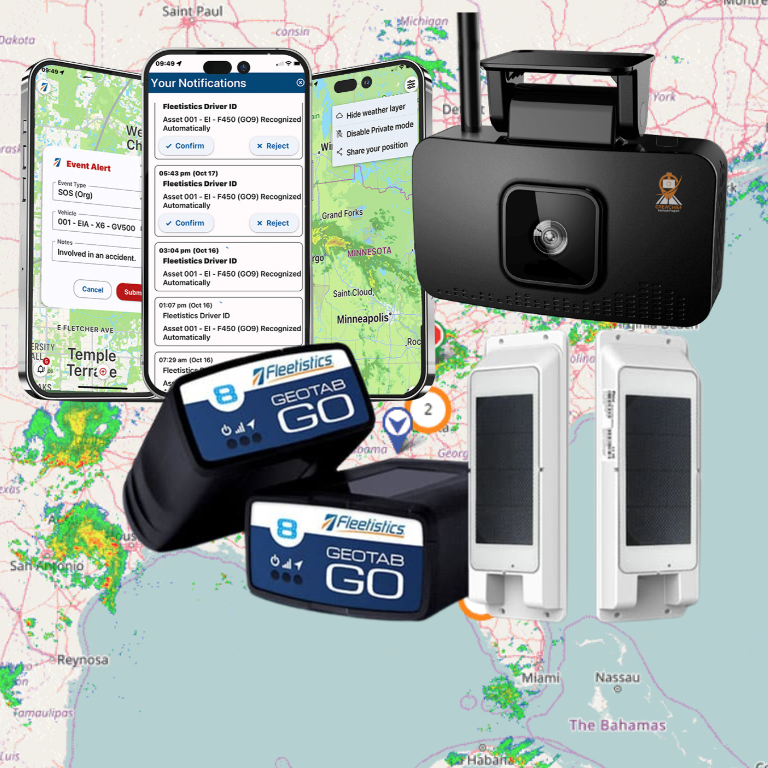
- Hardware: Are the available GPS tracking hardware options appropriate for power availability, installation requirements, and the data you need?
- Data quality: Does location and vehicle-status data arrive consistently enough to support dispatch, safety, utilization, and maintenance decisions?
- Integrations: Can the platform connect with your existing workflows? Fleetistics highlights free APIs and more than 300 integrations, which can reduce the need to isolate fleet data in another system.
- Support: Who configures the solution, answers operational questions, and helps your team interpret the information after deployment? Fleetistics documents 24/7 support.
- Compliance: Does the system address the regulations relevant to your fleet without forcing unrelated features onto local, short-haul, or mixed-asset operations? Interstate fleets should separately evaluate applicable hours-of-service requirements using the FMCSA guidance.
- Implementation: Is there a practical rollout, training, and measurement plan? A modular platform can let you begin with the capabilities that solve the clearest business problem and expand as needs become proven.
This framework also exposes consolidation risk. If you are comparing separate tools for location, maintenance, compliance, and reporting, ask whether a connected platform can reduce duplicate data and administrative handoffs. Then validate the answer with your own vehicles, assets, users, and workflows through Fleetistics’ telematics solution evaluation process. The best choice is not the company with the longest feature list. It is the provider whose coverage, data, support, and implementation approach fit how your fleet operates.
How do coverage and hardware affect provider fit?
A provider can look strong in a demonstration and still be a poor fit if its devices do not work across your actual assets. Start by mapping the fleet, not by choosing a dashboard. A mixed operation may need vehicle tracking for road units, rugged asset tracking for equipment, and devices suited to watercraft. Confirm that the provider can support those asset types in the regions where they operate, including the USA, Canada, and Mexico when that is part of your footprint.
Match the device to the asset and power source
Vehicle hardware may draw from a standard vehicle connection, while trailers, generators, heavy equipment, or marine assets may require different mounting, battery, or power approaches. Ask how long a battery-powered device is expected to operate under your reporting settings and what happens when an asset sits unused. Also confirm whether the device can report reliably when it is stored or operating in challenging conditions. Review the available GPS tracking hardware by use case rather than assuming one device belongs on every asset.
Power availability also affects installation ownership. Determine whether your team, a local installer, or the provider will handle installation, testing, and future device swaps. Clarify what happens when a vehicle is replaced, an asset changes ownership, or a device is damaged. A practical evaluation should include the replacement process, expected lead times, warranty handling, and whether the device can be moved without losing asset history.
Test reporting needs before committing
Reporting intervals should match the operational decision you need to make. Frequent location updates may matter for dispatch or theft response, while less frequent reporting may be adequate for lower-priority equipment and can reduce power demands. Ask how interval settings affect battery life, network use, alerts, and historical playback. Also test what happens when connectivity drops: the device should have a clear approach to storing and forwarding data rather than silently creating gaps.
Finally, review tamper visibility and governance. Confirm whether unplugging, power loss, enclosure opening, or unexpected movement can generate an alert, and identify who receives it. This coverage-and-hardware test is more useful than a generic feature checklist because it exposes installation, maintenance, connectivity, and replacement risks. Those risks determine whether a tracking program will remain dependable after rollout.
How can you test data quality, integrations, and reporting?
A polished dashboard is not enough to compare gps fleet tracking companies. Ask each provider to demonstrate the same workflow with your vehicles, equipment, or other tracked assets. You want to see whether the data arrives reliably, connects to the systems your team already uses. And leads to decisions that can be verified outside the tracking platform.
| Capability | What to test in the demonstration |
|---|---|
| Location freshness | Watch a test vehicle move. Confirm the map, timestamp, address, and trip history update at the interval your operation requires. Ask what happens when coverage is interrupted. |
| Diagnostics | Open an actual vehicle or asset record. Review battery, ignition, fault, odometer, and connectivity information, and identify which readings are hardware-dependent or unavailable for a given asset. |
| Alerts | Create a practical alert, such as unauthorized movement or excessive idling. Confirm who receives it, how duplicates are controlled, and whether the event is retained for later review. |
| Integrations | Trace one event into your dispatch, maintenance, fuel, payroll, or accounting workflow. Require the provider to show the trigger, mapped fields, error handling, and ownership of failed transfers. |
| API and data access | Ask for a sample API response or export using your proposed fields. Clarify authentication, rate limits, historical access, retention, and whether your team can retrieve its own operational data. |
| Dashboards | Have a dispatcher, manager, and executive each complete a defined task. Check filtering, saved views, report scheduling, export formats, and whether a dashboard answers a real operating question quickly. |
| Permissions | Create role-based users and test what each can view, export, edit, or administer. Include a field supervisor and a limited driver-facing role if those users will access the system. |
| Implementation evidence | Request a rollout plan using your asset mix, integrations, and success measures. A credible provider should explain training, testing, data migration, support ownership, and how issues will be documented. |
Fleetistics describes a modular platform with free APIs and 300+ integrations, so ask which combination fits your fleet rather than assuming every connection is necessary. Review the capabilities of its integrated fleet management software against your current workflow, then document pass/fail results for every demonstration test. This makes the decision evidence-based and exposes gaps before implementation, not after a contract is signed.
What support and implementation model should you expect?
A strong provider relationship should make implementation understandable, owned, and measurable. Ask who leads discovery, selects the hardware, configures alerts and reports, trains administrators, and remains accountable after launch. If those responsibilities are unclear, even capable technology can create avoidable delays and inconsistent adoption.
Who owns the rollout?
Fleetistics combines Geotab technology with reseller-led configuration, implementation, training, and support. Fleetistics is a Geotab reseller and implementation partner, not a direct Geotab purchase channel. That distinction matters because your practical relationship should be with a team that can translate fleet goals into the appropriate hardware, workflows, permissions, and reporting structure.
During discovery, expect the provider to review your vehicle and asset mix, operating regions, user roles, current systems, and priority outcomes. Confirm how the implementation plan handles GPS tracking hardware, installation coordination, data migration where applicable, and integration testing. Fleetistics uses a modular approach, so the rollout should be matched to your fleet rather than treated as a one-size-fits-all deployment.
What should onboarding and training cover?
Training should be role-specific. Dispatchers may need location, utilization, and exception workflows, while managers may focus on dashboards, maintenance signals, safety events, and scheduled reports. Administrators should understand user permissions, alert thresholds, data retention, and how to request configuration changes. Ask for written materials and a defined escalation path, not just a single product demonstration.
Employee communication is part of implementation, especially when tracking affects drivers or field teams. Explain what is collected, why it is collected, who can access it, and how the information will be used. Fleetistics offers driver buy-in guidance and a written driver policy that can support a transparent rollout. Adapt those resources to your policies and local requirements rather than presenting tracking as a surprise.
How does support continue after launch?
Define the milestones for installation, configuration, pilot use, user training, broader rollout, and post-launch review. For an ordinary fleet, a 30-day evaluation is the standard starting point. A 60-day evaluation may be appropriate for a verified government or extremely large fleet context, but it should not be applied universally. After launch, ask how urgent issues are escalated, how reporting changes are requested, and whether support is available outside business hours. Fleetistics documents 24/7 support, giving buyers a concrete service expectation to confirm during the evaluation.
How should compliance and fleet context shape the decision?
Compliance should match the fleet’s actual operating context. GPS visibility can support many businesses, while compliance tools address specific vehicle types, routes, and regulations. Treat compliance as one comparison layer, not as a reason to select a platform that adds workflows your team does not need.
Separate tracking needs from ELD requirements
Local-service, construction, utility, and short-haul fleets may need location visibility, driver safety workflows, inspections, or asset utilization without needing every long-haul compliance feature. An interstate operation should separately evaluate hours-of-service and ELD requirements that apply to its drivers and routes. Confirm which compliance tools are available for the selected configuration, who maintains the rules, and how records can be reviewed during an audit.
Ask each provider to demonstrate the compliance workflow with a realistic user role. Can a driver complete the required inspection? Can a supervisor identify an exception? Can an administrator retrieve the record and understand what happened? These tests reveal more than a compliance label on a feature sheet. For relevant hours-of-service questions, review the FMCSA hours-of-service guidance alongside your own compliance responsibilities.
Match the platform to the operating model
Fleet context also includes asset mix, operating regions, user count, reporting needs, and growth plans. A mixed fleet may need vehicle telematics for road units, separate hardware for equipment, and a different power strategy for watercraft. A public-sector buyer may need procurement guidance, while a field-service company may prioritize dispatch, arrival communication, and employee buy-in.
Fleetistics uses a modular approach and serves businesses operating vehicles, equipment, and watercraft across the USA, Canada, and Mexico. Evaluate the configuration that fits the current operation, then ask how the platform can expand when a proven need emerges. The right comparison reduces unnecessary complexity while preserving a path to the capabilities your fleet may require later.
How do you evaluate a provider without overbuying?
A structured evaluation helps you compare providers on evidence instead of presentation quality. Use the same assets, users, workflows, and success measures for each demonstration. Keep the scope narrow enough to produce a decision, but representative enough to expose the operational issues that matter.
- Define the decision. Write down the problem you need to solve, such as unreliable location visibility, excessive administrative work, weak maintenance follow-through, or disconnected systems. Identify the people who will use the data and the business result they need.
- Select representative assets. Include the vehicle types, equipment, watercraft, routes, operating regions, and power conditions that make your fleet different. Do not evaluate only the easiest asset to install.
- Set measurable checks. Track practical measures such as alert delivery, report completion, user adoption, exception follow-through, record quality, or time spent on a recurring task. Establish the baseline before the evaluation begins.
- Run the complete workflow. Test installation coordination, configuration, permissions, alerts, reporting, integrations, support escalation, and the handoff from an event to a person who must act. Document pass, partial, and fail results.
- Use the appropriate evaluation period. For ordinary fleet customers, 30 days is the standard starting point. A 60-day evaluation is appropriate only when the fleet context is verified as government or extremely large. Do not apply the longer period universally. Fleetistics describes its telematics solution evaluation process as a way to identify fit and expected return before a broader commitment.
- Review adoption and next steps. Ask dispatchers, supervisors, administrators, drivers, and leadership what worked. Separate essential capabilities from later enhancements, then confirm who owns implementation, training, configuration changes, and ongoing support.
This process helps prevent overbuying because every requested capability must connect to an operating requirement. It also gives Fleetistics or another provider a clearer brief for recommending the appropriate hardware, platform tier, integrations, and rollout plan.
Discuss your fleet tracking evaluation with Fleetistics
Frequently Asked Questions
What should I compare among GPS fleet tracking companies?
Compare coverage, hardware fit, data quality, integrations, support, compliance requirements, implementation ownership, and total operating fit. Test each category with representative assets and workflows instead of relying on a generic feature list.
What is the best GPS tracker for fleet tracking?
The best tracker is the one that produces useful, dependable data for the asset and decision you need to manage. Consider power, installation, connectivity, reporting intervals, vehicle or equipment data, alert workflows, support, and integration requirements before selecting a device.
Do all fleets need ELD features in a tracking platform?
No. ELD and hours-of-service tools depend on the fleet’s operating context and applicable regulations. Local-service and short-haul fleets should not assume they need an ELD, while interstate operators should verify the rules and records that apply to their routes and vehicles.
How should I evaluate a fleet tracking provider before committing?
Use a representative group of assets, define measurable success checks, test the full workflow from data capture to action, and document implementation and support responsibilities. For ordinary fleet customers, use a 30-day standard evaluation. A 60-day evaluation is reserved for verified government or extremely large fleet contexts.
Choose a fleet tracking partner that fits your operation
The right GPS fleet tracking companies comparison should end with a clear next step, not a rushed purchase. Fleetistics can help you match vehicle and asset coverage, data needs, integrations, compliance workflows, and implementation support to your operation. Its Geotab reseller and implementation-partner model keeps the evaluation focused on your requirements and the configuration that fits them.