
A winter storm does not wait for a dispatcher to finish a spreadsheet. When snow starts falling during a morning commute, your customers, facilities, and drivers need clear answers: Which routes are open? Which plows are active? Who has treated the highest-priority locations? Snow removal and weather operations succeed when field conditions, vehicle status, and dispatch decisions operate from the same real-time picture.
For commercial contractors, municipalities, property managers, and field-service fleets, winter work is not just about moving snow. It is a time-sensitive service commitment with high operating costs, increased vehicle risk, and limited room for missed details. Fleet technology gives managers the control to respond faster, verify work, protect drivers, and make each storm more profitable.
Why Snow Removal and Weather Create Fleet Pressure
A snow event puts unusual stress on every part of fleet operations. Demand arrives in a narrow window. Drivers may begin shifts before roads are treated, work overnight, or make repeated passes through the same properties. Equipment runs harder, visibility drops, and travel times become less predictable. At the same time, customers expect proof that their lot, sidewalk, or access road was serviced.
The operational challenge is that weather forecasts alone do not tell you what is happening on the ground. A forecast may call for two inches of snow across a metro area, while pavement temperature, wind, accumulation rate, and traffic conditions create very different needs at individual sites. A fleet needs to combine forecast information with vehicle locations, active routes, driver availability, equipment readiness, and service priorities.
That is where GPS tracking, mobile workforce tools, route planning, and operational analytics become practical winter tools rather than back-office software. They turn a broad weather event into manageable work assignments.
Build a Snow Removal and Weather Response Plan Before the Storm
The best time to decide who covers a priority site is not when a customer calls at 4:30 a.m. A repeatable response plan gives dispatchers a clear operating model while leaving room to adjust for actual conditions.
Start by assigning service tiers. Hospitals, emergency access routes, school facilities, distribution centers, and contracted priority customers may require first response. Lower-priority lots, secondary entrances, or sites with later operating hours can follow. Every location should have service instructions, access notes, material requirements, target completion times, and the equipment required to complete the work.
Next, match each route to the right assets. A light-duty pickup with a plow serves a different purpose than a salt spreader, skid steer, sidewalk machine, or heavy truck. Asset tracking helps managers confirm that the right equipment is where it needs to be and prevents dispatching a crew with the wrong capabilities.
A practical winter plan should also define decision thresholds. For example, a forecasted accumulation may trigger pre-treatment, while a confirmed accumulation at specific locations triggers plowing. Freezing rain may require a separate response altogether. The point is not to automate every decision blindly. It is to reduce uncertainty and make escalation criteria consistent across dispatch, operations, and field crews.
Use Geofences to Verify Arrival, Work, and Departure
Geofences create a digital boundary around a customer property, yard, material depot, or municipal zone. When a vehicle enters and exits that boundary, the fleet platform records the event. This produces an objective timeline of service activity without requiring dispatchers to call every driver for status updates.
For snow contractors, geofence reporting can support billing, customer communication, and dispute resolution. If a client questions whether a crew reached the site before business hours, managers can review vehicle arrival, time on location, route history, and departure. It does not replace a documented service ticket where one is required, but it strengthens the operational record.
Geofences also help identify exceptions. A vehicle that passes near a location but never enters the service zone may have missed the site. A truck parked too long at a material yard may signal a loading delay, mechanical issue, or route planning problem. These are issues a manager can address during the event, not after the storm is over.
Dispatch for Changing Conditions, Not Static Routes
Winter routes should have structure, but they cannot be rigid. A traffic collision, rapid temperature drop, closed road, or equipment failure can change the plan in minutes. Real-time vehicle visibility helps dispatchers make targeted adjustments instead of calling multiple drivers to locate the nearest available unit.
Route optimization is especially valuable when crews must cover many geographically dispersed properties. It can reduce deadhead miles, improve response time, and help prioritize the next best stop. But winter routing needs human oversight. The shortest route is not always the safest route for a truck carrying a plow or loaded salt spreader, and a route that looks efficient on a map may be impassable after ice accumulates.
Dispatchers should monitor a small set of live operational indicators during active weather:
- vehicle location and current route status
- arrival and departure events at priority sites
- idling time at yards, depots, and customer locations
- speeding, harsh braking, and other high-risk driving behaviors
- engine faults, battery health, and maintenance alerts
These signals help managers protect both service levels and margins. Excessive idling burns fuel during an already expensive event. Unplanned detours add miles and labor hours. A high-risk driving alert can identify a driver who may need immediate coaching before a minor incident becomes a collision or property-damage claim.
Protect Drivers During the Highest-Risk Shifts
Snow removal crews often work when visibility is low, roads are slick, and fatigue is building. The fleet manager’s responsibility is not limited to getting equipment dispatched. It includes creating a safer operating environment for drivers who may be backing frequently, working around parked vehicles, and driving long hours in difficult conditions.
AI-enabled dashcams can provide useful context when an incident occurs. Video and event data can distinguish between a driver behavior issue, poor road conditions, or the actions of another motorist. More importantly, coaching can be based on actual driving events instead of assumptions. Common winter coaching topics include following distance, speed for conditions, backing procedures, intersection awareness, and distraction prevention.
Hours-of-service requirements may not apply equally to every snow operation, but fatigue management still matters. Managers should understand the rules that apply to their fleet and establish internal practices for long shifts, relief coverage, rest, and check-ins. A successful storm response is not worth a preventable crash on the final run.
Vehicle inspections also deserve more attention in winter. Drivers should document plow mounts, lights, hydraulics, tires, spreader components, fluid levels, and safety equipment before heading out. Digital vehicle inspection reports make defects visible to maintenance teams quickly and create a record that work was completed. A failed hydraulic line or dead battery is easier to fix before the route starts than during peak service demand.
Control Material, Fuel, and Overtime Costs
Snow work can generate revenue quickly, but it can also hide cost leakage. Fuel use rises with idling, low-speed operation, repeated stops, and equipment loads. Salt and deicing material can be expensive, particularly when crews make unnecessary passes or spread beyond the scope of work. Overtime can climb when routes are poorly balanced or teams spend too much time traveling between sites.
Fleet data helps operations leaders separate unavoidable storm costs from correctable waste. Compare route miles, idle time, labor hours, and service duration by location, crew, and event type. Look for properties that consistently take longer than planned, routes that require frequent reassignment, or trucks that use significantly more fuel than comparable units.
The answer may be as simple as changing route sequence, staging equipment closer to demand, or revising a site’s service instructions. In other cases, the data may reveal that a vehicle needs maintenance, a crew needs training, or a contract no longer supports the labor and material required. Those are decisions that protect margin before the next storm, not after winter is over.
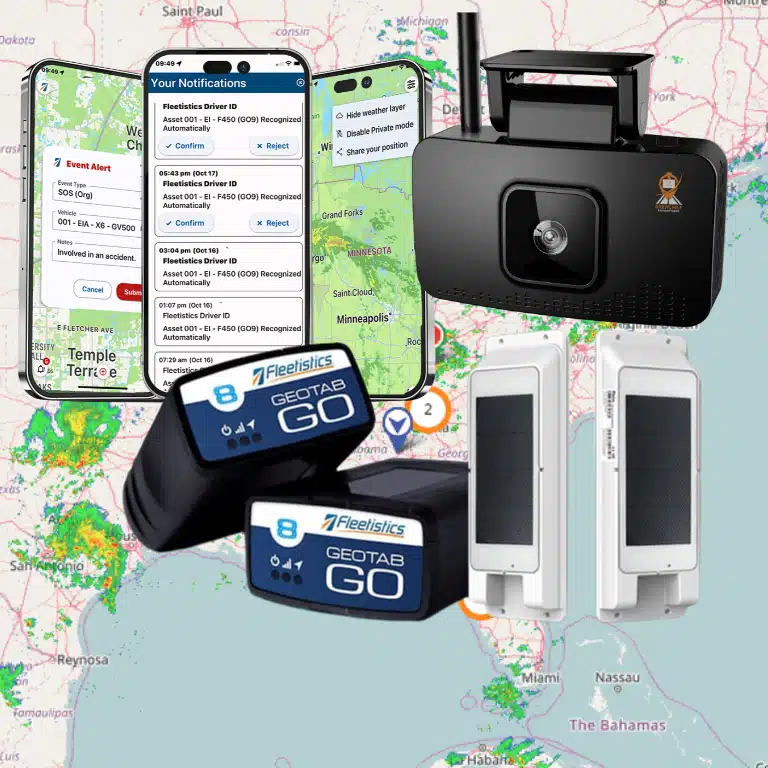
Fleetistics can support this connected approach through configurable GPS tracking, asset monitoring, mobile workflows, maintenance tools, AI video, and analytics that fit the size and complexity of the operation. A small contractor may start with dependable location visibility, while a large municipal or multi-branch operation may need integrations, tailored reporting, and role-based controls.
Turn Winter Documentation Into Better Customer Service
Customers rarely want a technical explanation of weather patterns. They want confidence that their property is safe, accessible, and receiving the service promised. Accurate operational records make that confidence easier to provide.
After each event, create a service record that connects the weather trigger, dispatch time, vehicle activity, site arrival, work completed, and any exceptions. When conditions require repeated visits, document each one. If a gate was locked, a vehicle blocked access, or conditions required a return trip, record that as well. Clear documentation reduces billing disputes and gives account teams the facts they need when customers ask questions.
Over time, those records become a planning asset. You can estimate labor and material needs more accurately, identify sites with recurring access issues, and set more realistic service expectations. The fleet becomes easier to manage because every storm teaches the operation something useful.
The next weather event will still bring uncertainty. Your response does not have to. Build visibility before the first flake falls, give dispatchers live control during the storm, and use the data afterward to make the next route safer, faster, and more profitable.