
Public works fleet management is the coordinated process of keeping municipal vehicles, equipment, crews, routes, and records ready to deliver essential services. A practical program connects daily visibility with preventive maintenance, storm readiness, driver accountability, public reporting, and a procurement plan that can scale as the community changes.
Book a Demo to Evaluate Public Works Fleet Management
For a public works director or fleet manager, the goal is not simply to see where a truck is. The goal is to make defensible decisions about which assets are ready, which routes need attention, where resources are being used, and how the department can prove service delivery.
What does public works fleet management include?
Public works fleet management brings vehicle operations, equipment control, maintenance, workforce coordination, safety, and procurement into one repeatable operating system. It can cover road maintenance trucks, snowplows, salt spreaders, street sweepers, refuse vehicles, utility trucks, trailers, generators, and other powered or non-powered assets.
A strong program helps a department answer six practical questions every day:
- Which vehicles and equipment are available for assignment?
- Which assets are due for inspection, service, or repair?
- Where are crews working, and which routes or jobs are complete?
- How much time, fuel, material, and mileage did each activity require?
- Which safety or utilization patterns need coaching or a policy change?
- Can the department support its budget, purchasing, and public-service decisions with reliable records?
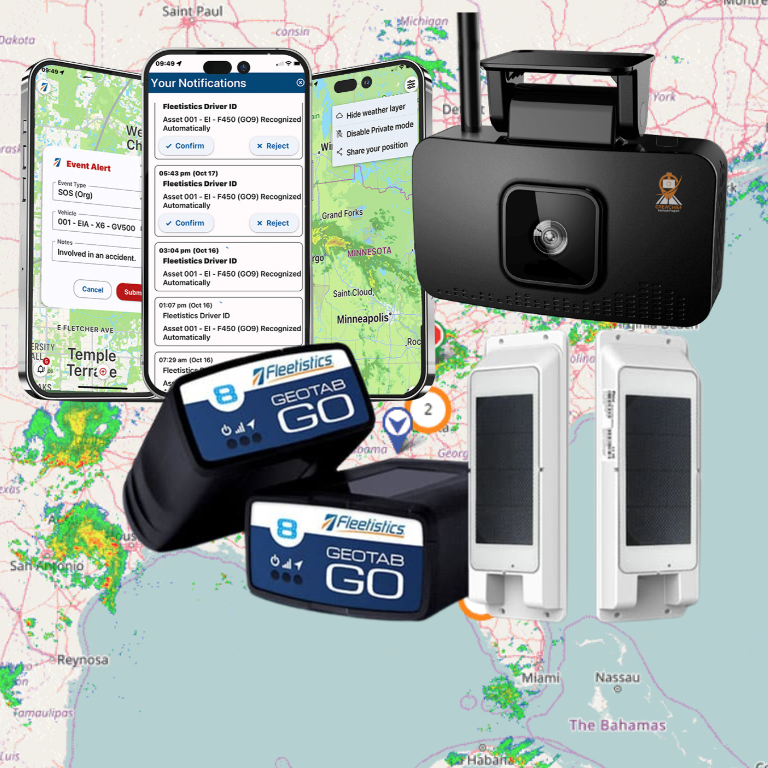
This is broader than GPS location alone. A connected platform such as the Geotab-powered ecosystem supported by Fleetistics can combine vehicle data, diagnostics, telematics, reporting, and integrations. The correct configuration depends on the department’s fleet mix, existing systems, staffing, and public-service priorities. Review the Fleetistics public works fleet management solution for the commercial capabilities that can support this operating model.
How should a municipality organize a mixed public works fleet?
Mixed fleets create management risk because different assets work under different conditions. A pickup used for inspections does not have the same readiness requirements as a snowplow, refuse truck, sweeper, water-service vehicle, or trailer-mounted generator. Start with an asset register that describes the work each unit performs, the equipment it carries, and the conditions in which it operates.
Build an operational asset register
Record the unit identifier, vehicle or equipment type, department, home location, assigned crew, replacement age, service history, seasonal role, and critical attachments. Include assets that are easy to overlook, such as spreaders, plows, trailers, pumps, and generators. The register should distinguish owned, leased, shared, reserve, and out-of-service equipment.
Then group assets by mission instead of only by body type. Useful groups may include road maintenance, stormwater, sanitation, parks, building services, inspections, emergency response, and seasonal operations. Mission-based groups make it easier to compare availability and cost without pretending every asset has the same duty cycle.
Define availability and utilization consistently
Agree on what available means. A truck may be physically present but not dispatchable if it needs a safety inspection, has a known defect, lacks an attachment, or is waiting for a qualified operator. Separately track scheduled hours, engine hours, miles, idle time, job-site time, and out-of-service time. Consistent definitions prevent a department from overstating capacity or replacing equipment based on incomplete data.
Asset tracking can extend the same discipline to non-vehicle equipment. If the department needs a deeper treatment of this use case, see Fleetistics’ guide to tracking non-vehicle equipment.
What should a public works maintenance program measure?
Municipal maintenance should protect readiness, not just record completed work orders. The most useful maintenance program connects inspections, diagnostic data, service intervals, repair history, parts, and downtime to the asset’s actual operating conditions. That gives managers an earlier view of risk and a clearer basis for budget requests. For a related technology application, see Fleetistics’ predictive fleet maintenance guide.
Track a small set of metrics consistently:
| Maintenance metric | What it reveals | Management action |
|---|---|---|
| Preventive maintenance compliance | Whether scheduled service is completed on time. | Resolve overdue work before seasonal demand. |
| Unplanned downtime | How often failures remove an asset from service. | Identify repeat failures and replacement candidates. |
| Mean time to repair | How quickly a failed unit returns to service. | Improve parts, technician, and vendor planning. |
| Repair cost by asset and mission | Where maintenance spend is concentrated. | Compare repair economics with replacement timing. |
| Inspection defect closure | Whether reported issues are resolved and documented. | Escalate safety-critical defects and repeat findings. |
| Readiness at shift start | How many assigned units are dispatchable. | Rebalance reserve assets and crews before work begins. |
Use alerts and diagnostics to prioritize work, but keep a human review in the process. A diagnostic code is a signal, not a complete repair instruction. A supervisor should consider the asset’s duty, current symptoms, inspection results, and manufacturer guidance before taking it out of service or returning it to work. Pair this process with a written fleet safety program that defines review and escalation.
Talk With a Fleet Management Consultant
How can public works fleets prepare for snow and storm response?
Storm response is a readiness exercise that starts before the forecast. Public works leaders need an accurate view of road-worthy vehicles, trained operators, attachments, fuel, materials, communications, and priority routes. A fleet platform can support this work, but the response plan must define who makes decisions and what information crews need at each stage.
Before the event
- Confirm which plows, spreaders, utility trucks, generators, and support vehicles are ready.
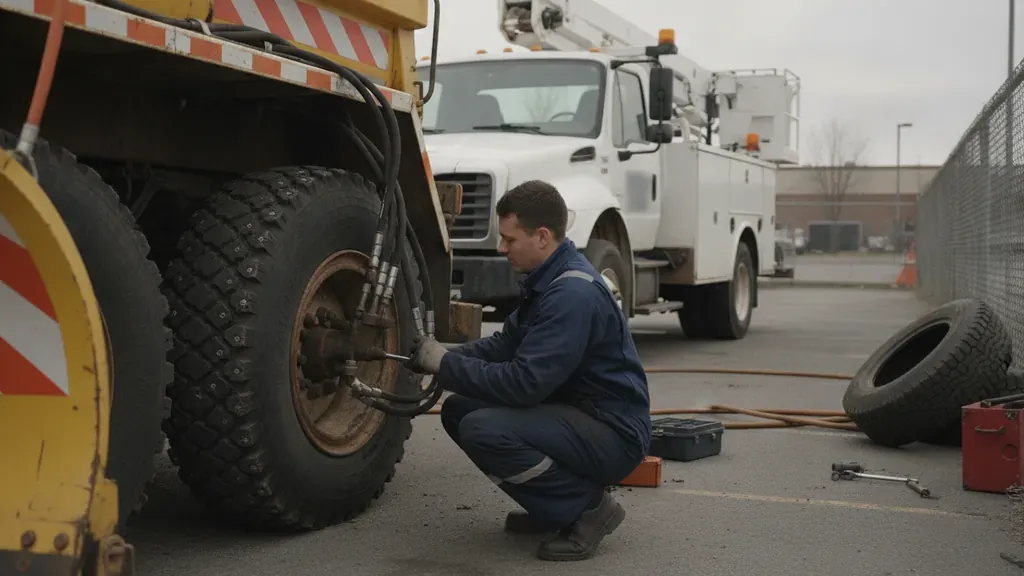
- Verify that seasonal attachments, sensors, lights, tires, fluids, and hydraulic systems are inspected.
- Review route assignments, priority corridors, depots, refueling points, and backup units.
- Check that operators know the communication, escalation, and safety procedures.
- Set a baseline for material levels and define how usage will be recorded.
- Test location, status, and reporting workflows before conditions deteriorate.
During the event
Use live location and status information to coordinate coverage, identify stalled or delayed units, and redirect resources when conditions change. Keep reports focused on decisions: which priority routes are complete, where a crew needs support, which unit has a problem, and when a supervisor should redeploy equipment.
The Federal Highway Administration describes weather-responsive management as a decision-support process that uses weather and road information to improve operations. Public works departments can apply that principle by combining forecast information with fleet location, route status, material use, and asset readiness. Read the FHWA guidance on decision support for road weather management.
After the event
Close the loop with a short after-action review. Compare planned routes with completed routes, examine delays and breakdowns, reconcile material use, and record any safety or resident-service issues. The objective is not to assign blame. It is to improve the next deployment and protect the accuracy of future budget and staffing decisions.
Fleetistics’ winter operations resource addresses seasonal tracking, route optimization, reporting, maintenance, and material-management considerations in more detail.
How do accountability and public reporting fit into fleet operations?
Accountability works best when data supports a clear policy rather than surveillance for its own sake. Tell employees what is collected, why it is collected, who can access it, and how it will be used. Apply the same rules to comparable roles, protect sensitive information, and give supervisors a process for reviewing exceptions before taking action.
For public works, accountability also includes service verification. Location and activity records can help document route completion, arrival times, equipment use, and response coverage. Pair the record with work orders, crew notes, inspection results, or resident-service tickets when the department needs a complete operational record. A map alone does not prove that a task was completed to the required standard.
Useful department-level reports may include:
- Daily vehicle and equipment availability.
- Planned versus completed route or work-order activity.
- Idle time, mileage, engine hours, and fuel trends by mission.
- Preventive maintenance due dates and open safety defects.
- Storm response coverage, delays, material use, and recovery actions.
- Utilization by asset class, department, season, and operating location.
Use reports to improve operations and explain outcomes, not to create a new administrative burden. Automate recurring summaries where possible, then reserve staff time for exceptions, trend analysis, and service decisions. For employee-facing governance, Fleetistics also covers fair driver accountability with GPS data.
Which metrics show whether a municipal fleet is improving?
A public works scorecard should connect fleet activity to service reliability and cost control. Avoid choosing metrics because a platform can display them. Choose measures that help leaders decide whether to maintain, redeploy, train, replace, procure, or change a route or policy.
| Outcome | Useful measures | Question to ask |
|---|---|---|
| Readiness | Dispatchable units, overdue inspections, downtime. | Can we cover today’s work with safe equipment? |
| Productivity | Completed work orders, route adherence, service time. | Are crews spending time on the work residents need? |
| Cost control | Fuel use, idle time, repair cost, utilization. | Where can we reduce avoidable cost without reducing service? |
| Safety | Defect closure, incidents, coaching activity. | Are risks identified, addressed, and documented? |
| Responsiveness | Dispatch time, arrival time, storm recovery time. | Can we get the right resource to the right place quickly? |
| Accountability | Report completion, exception resolution, policy adherence. | Can we explain what happened and what changed? |
Set a baseline before changing the process. Review the scorecard monthly during normal operations and after every major storm or service disruption. Small, sustained improvements are more useful than a one-time report with no owner or follow-up action.
Fleetistics also provides a fleet telematics ROI calculator that can help structure a savings discussion. Use local baseline data for fuel, labor, downtime, and replacement decisions instead of assuming that another municipality’s results will repeat exactly.
How should a municipality evaluate fleet technology?
Technology selection should follow the operating model. Start by documenting the department’s missions, current systems, data owners, seasonal demands, reporting obligations, and adoption constraints. Then evaluate whether each option can support the workflows that matter, rather than comparing feature lists in isolation. Fleetistics’ fleet management software comparison guide can help frame a broader evaluation, while the checklist below keeps the municipal use case specific.
Use a practical evaluation checklist
- Mixed-fleet coverage: Can the system support vehicles, equipment, trailers, and seasonal attachments relevant to the department?
- Data quality: Are location, diagnostics, engine data, inspections, and work activity accurate enough for decisions?
- Reporting: Can supervisors create repeatable operational, budget, and public-service reports?
- Integrations: Can the system connect with existing work-order, GIS, fuel, payroll, or public-safety tools?
- Employee adoption: Are the mobile workflows clear for drivers, technicians, dispatchers, and supervisors?
- Governance: Are permissions, retention, privacy, and policy controls clear?
- Scalability: Can the department add assets, departments, and use cases without replacing its core platform?
- Support: Is implementation, training, troubleshooting, and ongoing optimization available?
- Procurement fit: Can the purchase follow the municipality’s rules, available contract vehicles, and budget cycle?
A modular platform is often a better fit than a one-size-fits-all package. A department might begin with location and maintenance visibility, then add route reporting, material tracking, dashcams, integrations, or advanced analytics after the first use case is stable. This approach reduces change fatigue and makes the return on each step easier to evaluate.
For public-sector leaders, Fleetistics’ government fleet services resource provides additional context on GPS tracking, telematics, integrations, and data-driven public operations.
How can Sourcewell support public fleet procurement?
Sourcewell is one potential procurement path for eligible public agencies, but each municipality must confirm that the contract, scope, approvals, and purchasing procedure fit its own requirements. Treat cooperative purchasing as part of due diligence, not a substitute for defining the technical and operational need.
Before engaging a vendor, prepare a short requirements document that describes the fleet, priority use cases, data integrations, implementation timeline, training needs, reporting expectations, and evaluation criteria. Ask the procurement and legal teams to confirm the correct purchasing process. Sourcewell explains how its cooperative purchasing process works; review the current terms and agency requirements directly.
Fleetistics has served fleets since 2001 and supports government buyers with a modular Geotab-based ecosystem, implementation guidance, and a consultative Solution Evaluation Process. The City of Seattle is one of Fleetistics’ proof points: its public-sector materials identify a 4,100-vehicle fleet and documented fuel savings totaling two million dollars. Use that example as a reason to ask better ROI questions, not as a promise that every municipality will achieve the same result.
Contact Fleetistics to Discuss a Public Works Fleet Plan
What is a practical implementation sequence?
The safest rollout starts with one measurable operating problem and expands after the department can use the data consistently. A phased sequence also gives leadership evidence for future budget requests.
- Baseline the operation: inventory assets, missions, routes, costs, downtime, and existing reports.
- Select the first use case: choose a priority such as readiness, maintenance, storm response, or service verification.
- Define ownership: assign a data owner, operational owner, technician lead, and executive sponsor.
- Configure the workflow: set asset groups, alerts, permissions, reports, and escalation rules around the department’s policies.
- Train by role: give drivers, technicians, dispatchers, supervisors, and procurement staff only the workflows they need.
- Run a controlled evaluation: measure adoption, data quality, exceptions, and early operational outcomes.
- Review and expand: fix process gaps before adding departments, integrations, or advanced features.
Fleetistics uses a 30 to 60-day Solution Evaluation Process as its standard reference for evaluating a solution. Larger fleets may require a longer evaluation, while a smaller department may use a shorter, verified evaluation when the use case is narrow. The right duration is the one that captures a normal operating cycle and produces evidence the department can trust.
What should public works leaders do next?
Public works fleet management becomes manageable when leaders connect asset readiness, maintenance, storm response, accountability, reporting, and procurement to a small number of decisions. Begin with an accurate fleet inventory and a measurable service problem. Then choose modular technology, establish governance, train the people who will use it, and review results against a baseline.
Fleetistics helps public agencies evaluate GPS tracking, telematics, equipment visibility, maintenance, safety, integrations, and reporting through a consultative process. The team can help define the first use case and determine which capabilities belong in the initial rollout.
Public Works Fleet Management FAQ
What is public works fleet management?
Public works fleet management is the coordinated management of municipal vehicles, equipment, crews, maintenance, routes, safety, and records. It uses consistent data and operating policies to keep assets ready, improve service delivery, control cost, and support defensible budget and procurement decisions.
What vehicles and equipment should a public works fleet track?
Track the assets that support department missions, including road maintenance trucks, snowplows, spreaders, street sweepers, refuse vehicles, utility trucks, trailers, generators, and other powered or non-powered equipment. Group assets by mission and seasonal role so availability and utilization are measured in context.
How does telematics help municipal fleet operations?
Telematics can combine location, vehicle data, diagnostics, engine activity, alerts, and reports to improve visibility into readiness, maintenance, route activity, utilization, and response coordination. It supports decisions, but it does not replace human review, clear policies, or accurate field records.
How can a city prepare its fleet for snow and storms?
Start before the event by confirming road-worthy units, seasonal attachments, operators, fuel, materials, routes, communications, and backup equipment. During the event, use current location and status data to coordinate coverage and exceptions. Afterward, compare planned and completed work, material use, delays, and repairs.
Is Sourcewell the right procurement option for every municipality?
Not automatically. Sourcewell may be a useful option for eligible public agencies, but each municipality must confirm contract scope, eligibility, approvals, legal requirements, and purchasing procedures. Define the technical need first, then ask procurement and legal teams to validate the appropriate path.
How should a municipality measure fleet management ROI?
Measure changes against a local baseline, including vehicle readiness, preventive maintenance completion, unplanned downtime, fuel and idle trends, route or work-order completion, response time, and repair cost. Connect each metric to a decision and review the results after normal operations and major storm events.