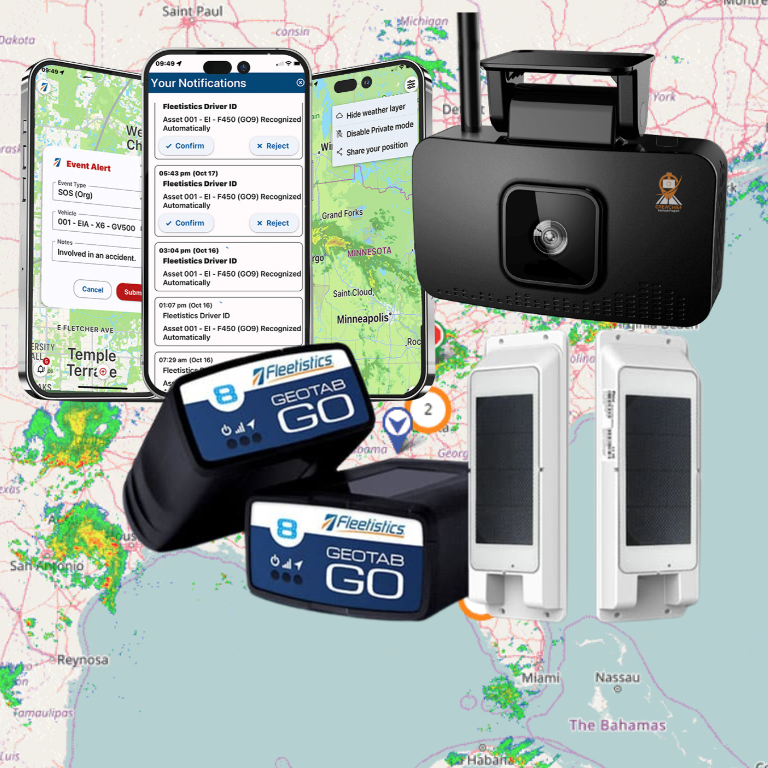

An ELD is only as useful as the data it captures and the compliance process built around it. For many fleets, the Geotab GO device supplies the vehicle data needed for electronic logging. While the right implementation partner helps turn that data into consistent HOS and DVIR workflows.

Geotab eld fmcsa compliance depends on deploying the GO device with the appropriate ELD software, driver procedures, and ongoing support. The device supports engine diagnostics, ELD compliance, and real-time vehicle tracking, while Fleetistics helps manage FMCSA, ELD, DVIR, and IFTA requirements across the jurisdictions you operate in.
That distinction matters because FMCSA compliance is more than installing hardware. You also need a registered solution, accurate records, and a process your drivers can follow every day. Review the FMCSA ELD compliance standards first, then consider what makes a Geotab deployment compliant in practice.
Speak with a consultant about your Geotab ELD setup
How Does Geotab ELD Achieve FMCSA Compliance?
Yes, Geotab offers ELD solutions intended to meet FMCSA requirements, but compliance depends on the specific registered device and software configuration your fleet deploys. The Federal Motor Carrier Safety Administration published the ELD rule in 2015, and ELDs are now mandatory for many commercial trucks and buses operating in the United States.
What does FMCSA registration mean?
Registration is more than a marketing label. An electronic logging device must electronically record a driver’s Record of Duty Status, including driving, on-duty, off-duty, and sleeper-berth time, in accordance with the applicable hours-of-service rules. The device and supporting system must also provide the records, data transfer, and inspection functions required by the rule.
FMCSA maintains the official list of registered ELDs at eld.fmcsa.dot.gov. That list matters when you are evaluating geotab eld fmcsa compliance because FMCSA can remove devices that no longer meet its requirements. If an ELD is removed, affected carriers must replace it within the agency’s stated timeframe. Before installation, confirm that the exact ELD solution assigned to your fleet appears on the current FMCSA list.
How should you evaluate a Geotab ELD deployment?
The Geotab GO device supports engine diagnostics and ELD compliance, but the hardware is only one part of a compliant operating process. Your drivers need the correct application and user setup, your administrator needs accurate vehicle and driver assignments. And your team needs a process for handling inspections, edits, roadside requests, and exceptions.
Fleetistics helps manage FMCSA, ELD, DVIR, and IFTA compliance across the jurisdictions it serves. As a Geotab Gold Reseller and the longest-running Geotab distributor in the United States. With a partnership spanning more than 21 years, Fleetistics provides an authorized path for configuring the solution around your operation. You can also review the FMCSA ELD compliance standards that shape your implementation decisions.
Speak with a consultant about your Geotab ELD setup
How Does the Geotab GO Device Record HOS, DVIR, and Fault Codes?
The Geotab GO device provides the vehicle-side connection, while the Geotab Drive app gives the driver the tools to manage compliance activity. Together, they turn vehicle movement and driver input into records your fleet can review, manage, and retain. The GO device supports engine diagnostics and ELD compliance, along with real-time vehicle tracking through high-definition GPS.
How are hours of service and RODS captured?
During a trip, the GO device detects vehicle activity and communicates that information to the ELD platform. The driver uses Geotab Drive to manage the required duty-status information. That includes driving, on-duty, off-duty, and sleeper-berth time. The result is an electronic Record of Duty Status rather than a paper log reconstructed at the end of a shift.
For example, imagine a driver operating a truck that pulls a refrigerated trailer from Tampa to Atlanta. As the truck moves, the GO device supplies vehicle and location data. The driver signs into the app, selects the appropriate duty status, and reviews the record during the trip. Fleet managers can then see the vehicle’s location and compliance activity in near real time, while the trailer remains part of the tracked asset picture.
That combination is central to geotab eld fmcsa compliance: the hardware captures vehicle signals, the app supports driver workflows, and the fleet team has visibility into the operating record. Review the Geotab GO device capabilities before choosing a deployment approach.
What does electronic DVIR reporting include?
Electronic DVIR workflows let drivers document required vehicle inspection activity in the app, record defects, and submit the report for fleet follow-up. That gives your team a consistent digital trail for safety inspections instead of relying on loose forms or delayed data entry. FMCSA requirements cover both accurate HOS records and electronic DVIR capability. See the FMCSA ELD resource for the federal requirements and registered-device information.
How are engine fault codes surfaced?
The GO device can read supported engine diagnostic information from the vehicle and make fault-code data available for review. A fleet manager may use that signal to investigate a warning, coordinate maintenance, or compare an issue with the vehicle’s recent operating history. Fault-code visibility does not replace a technician’s diagnosis, but it helps your team identify issues sooner and prioritize the next action.
Speak with a consultant about your Geotab GO device deployment.
What Does Setting Up Geotab ELD for Your Fleet Look Like in 60 Days?
A successful rollout is more than plugging in a device. Fleetistics uses a consultative 60-Day Solution Evaluation Process to match the Geotab ELD platform to your fleet, validate compliance workflows, and help drivers adopt the system without disrupting daily operations. The process supports fleets across the USA, Canada, and Mexico, with compliance management covering FMCSA, ELD, DVIR, and IFTA requirements.
-
Assess your fleet and compliance requirements
Fleetistics begins by reviewing your fleet size, vehicle types, operating jurisdictions, routes, and current processes. The team identifies how your drivers record hours, complete inspections, and handle exceptions, then maps those needs to a practical Geotab ELD configuration. This assessment is especially important for mixed fleets and organizations operating across multiple jurisdictions.
-
Deploy GO devices and coordinate installation
Next, the appropriate Geotab GO devices are assigned to vehicles and installed according to the rollout plan. GO devices support engine diagnostics and ELD compliance, while also providing real-time vehicle tracking with high-definition GPS. Installation is planned around your maintenance schedule so deployment can proceed in manageable groups instead of creating an avoidable operational bottleneck.
-
Configure Geotab Drive, accounts, and fleet rules
With hardware in place, Fleetistics configures the Geotab account structure, vehicle assignments, driver access, and Geotab Drive workflows. Settings are aligned to how your fleet operates, including the information needed for electronic records of duty status, inspection workflows, and exception management.
-
Onboard drivers and train them on HOS and DVIR
Drivers receive practical guidance on signing in, selecting the correct duty status, reviewing logs, managing unidentified events, and completing DVIRs. Training focuses on the situations drivers encounter in the field, so your team can use the system confidently rather than treating it as another administrative burden.
-
Validate compliance before the evaluation ends
Fleetistics reviews the configured workflows and available records against applicable FMCSA hours-of-service and ELD requirements. The team checks that HOS activity, required inspection information, and vehicle data are being captured as intended, then addresses gaps before the 60-day evaluation is complete. For the broader regulatory context, review these FMCSA ELD compliance standards.
-
Continue with 24/7 support and compliance management
Implementation does not end when the first logs appear. Fleetistics is the longest-running Geotab distributor in the USA, with a 21+ year relationship and Geotab Gold Reseller status. You receive ongoing consultative support, including 24/7 assistance, as your fleet changes, drivers need help, or compliance processes require refinement. Choosing a reseller also gives you an advocate for the implementation, not just hardware. See the Geotab reseller benefits.
Speak with a consultant about your 60-day Geotab ELD evaluation
Geotab ELD vs Other FMCSA-Approved ELDs: What Should You Compare?
How Does Geotab ELD FMCSA Compliance Compare?
Once an ELD is registered with the FMCSA, certification is the starting point, not the whole buying decision. The agency maintains a registered ELD list and removes devices found non-compliant, requiring affected carriers to replace them by a stated deadline. You can review the current regulatory framework at the FMCSA ELD portal.
That means a certified device should meet the same federal technical standard as other approved options. The practical differences usually appear in the depth of the telematics platform, the quality of automation. The integrations available to your team, and the support you receive when compliance questions arise.
| What to compare | Geotab ELD through Fleetistics | Typical FMCSA-approved alternative |
|---|---|---|
| Hardware and telematics depth | GO devices combine engine data, diagnostics, compliance support, and broader fleet telematics. | May focus primarily on electronic logs, with less vehicle or asset data available in one platform. |
| FMCSA compliance | Built for ELD compliance within a managed fleet solution, with setup guidance from a Geotab Gold Reseller. | Must remain on the FMCSA registered list and meet the same applicable technical requirements. |
| HOS and DVIR automation | Supports electronic records, HOS workflows, DVIR processes, and engine fault-code visibility. | May provide core HOS and inspection functions without the same connected diagnostic depth. |
| Integrations and APIs | Open ecosystem with free APIs and 300+ integrations for connecting operational systems. | Integration range and API access vary by provider and plan. |
| GPS and analytics | Real-time GPS, fleet analytics, and connected data for compliance and operational decisions. | Real-time location or analytics may be narrower or offered as separate capabilities. |
| Support model | Fleetistics advocates for your fleet, provides 24/7 support, and helps manage implementation. | You may need to handle issues directly with the manufacturer or a less involved support channel. |
The strongest choice is the one that fits your workflows after certification is confirmed. Fleetistics can help you test that fit through its 60-Day Solution Evaluation Process, rather than judging the hardware in isolation.
Speak with a consultant about your ELD options
Why Buying Geotab ELD Through Fleetistics Includes More Than the Hardware
An ELD is only one part of a compliant fleet operation. The value of working with a certified reseller is having an experienced advocate help you select. Configure, deploy, and manage the solution around your vehicles, drivers, and operating requirements.
Fleetistics is a Geotab Gold Reseller and the longest-running Geotab distributor in the United States, with a relationship spanning more than 21 years. That history gives you a knowledgeable partner on your side, rather than leaving you to manage every question, configuration decision, and support issue directly with the manufacturer.
That distinction matters when your fleet needs more than a device shipment. Fleetistics can help coordinate FMCSA, ELD, DVIR, and IFTA compliance management across the USA, Canada, and Mexico. The goal is a workable process for drivers, managers, and administrators, not merely hardware that has been installed in a vehicle.
What support do you receive after installation?
Fleet operations rarely fit a generic deployment checklist. A consultative demo helps you evaluate the platform against your actual fleet, workflows, and compliance obligations. The 60-Day Solution Evaluation Process gives you time to validate the implementation and identify adjustments before committing to a long-term operating model.
You also have access to 24/7 support when questions arise during a driver shift, an inspection, or a system change. This continuing guidance can be especially valuable when you are managing mixed assets, multiple jurisdictions, or a fleet that is growing faster than your internal processes.
Can the platform support more than ELD compliance?
Yes. Geotab GO devices support engine diagnostics, ELD compliance, and real-time vehicle tracking with high-definition GPS. Fleetistics also provides an open ecosystem with free APIs and more than 300 integrations. Allowing your telematics data to connect with the systems you already use instead of creating another isolated dashboard.
That broader view supports better ROI decisions. You can evaluate compliance workflows alongside utilization, maintenance, routing, safety, and productivity outcomes. For a closer look at the Geotab reseller benefits, compare the advocacy, implementation, and support included in the partner model.
Speak with a consultant about your Geotab ELD deployment
Frequently Asked Questions
What is an FMCSA-compliant ELD?
An FMCSA-compliant ELD electronically records a driver’s Record of Duty Status, including driving, on-duty, off-duty, and sleeper-berth time. It supports the hours-of-service records required for applicable commercial trucks and buses. The FMCSA published its ELD rule in 2015. See the FMCSA ELD portal for current requirements.
Does the Geotab GO device work for ELD compliance?
Yes. The Geotab GO device supports ELD compliance by connecting vehicle data with the software used to manage hours-of-service records. In a properly configured deployment, it can support electronic RODS, vehicle information, engine diagnostics, and DVIR workflows. Your implementation still needs accurate driver, vehicle, and operating-profile setup.
How does Geotab help fleets track HOS and DVIR information?
The GO device supplies vehicle data to the fleet management system, while the driver-facing workflow supports required status changes and inspection records. That combination helps you capture driving and duty status consistently, review exceptions, and maintain electronic DVIR documentation. Fleetistics can help align the setup with your fleet’s jurisdictions and operating practices.
What happens if an ELD is not FMCSA compliant?
A device that is removed from the FMCSA registered list cannot continue serving as a compliant solution. The carrier must replace it within the deadline specified by FMCSA, so monitor official notices and confirm your device’s status in the FMCSA registration database. Work with a qualified distributor to address replacement, configuration, and driver transition requirements before an inspection creates a larger disruption.
Why use a Geotab distributor for compliance setup?
A qualified distributor provides more than hardware. Fleetistics combines Geotab implementation experience with compliance guidance, 24/7 support, and a 60-Day Solution Evaluation Process. Giving you a practical way to validate the configuration in your fleet before committing long term.
Ready to Evaluate Geotab ELD for Your Fleet?
FMCSA compliance depends on more than installing a device. The right setup helps you align the GO device, driver workflows, and fleet requirements before deployment. Speak with a consultant about Geotab ELD FMCSA compliance and discuss a practical path for your operation. You can also call 855.300.0527 if you prefer to talk through your needs directly.