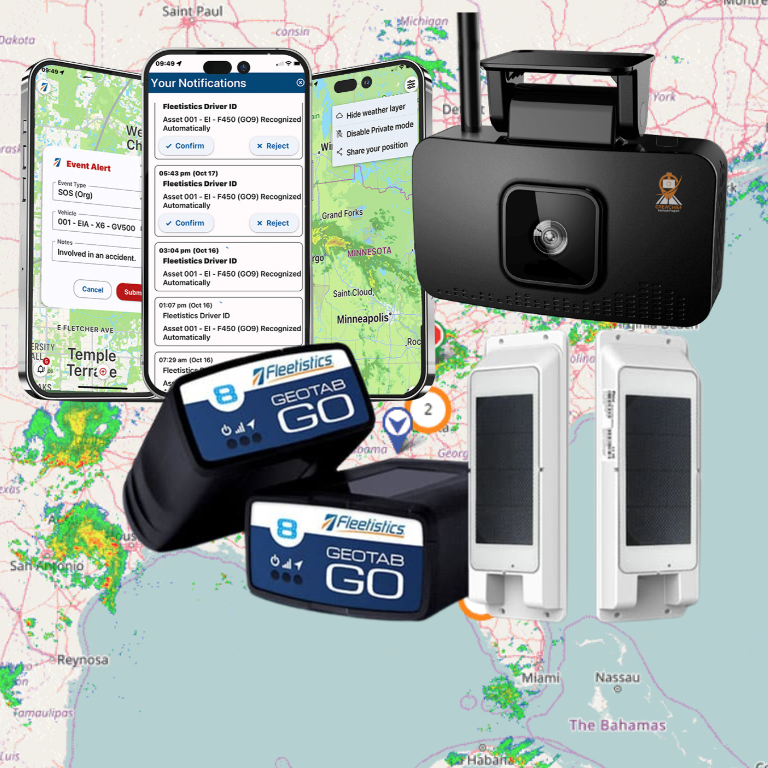


Learning how to improve fleet efficiency is not about asking drivers to do more with less. It is about giving fleet leaders reliable information, clear workflows, and a practical way to act on exceptions. When utilization, routing, fuel, maintenance, safety, and customer communication are managed together, small operational improvements can reinforce one another.

How to Improve Fleet Efficiency in Daily Operations
Fleet efficiency is the relationship between the work your fleet completes and the time, miles, fuel, labor, maintenance, and risk required to complete it. A more efficient fleet is not simply one that travels fewer miles. It completes the right work with fewer avoidable miles and delays while preserving safety, service quality, and compliance.
Start by defining the outcome your business needs. A field-service fleet may prioritize completed stops per shift and arrival-window performance. A delivery operation may focus on miles per stop, route adherence, and successful first attempts. A construction or public-sector fleet may need better equipment utilization, idle-time control, and preventive maintenance. The baseline should reflect the work, not a generic industry benchmark.
Use fleet analytics metrics to establish a common vocabulary for the team. Then choose a short list of measures that managers can review every week. Efficiency also has a time dimension: a change that saves fuel but creates missed appointments is not an improvement, and a change that increases completed work while increasing preventable risk needs to be reconsidered.
Which Fleet Metrics Should You Measure First?
Too many dashboards can create the appearance of control without improving decisions. Begin with a baseline period long enough to reveal normal variation, then compare similar vehicles, routes, shifts, and job types. Do not compare a lightly loaded local van with a heavy-duty unit on long-distance work and call the difference a performance problem.
The following measures are a useful starting point:
- Utilization: operating hours, miles, jobs, or engine hours compared with available capacity.
- Route productivity: completed stops, miles per stop, drive time per job, and late arrivals.
- Fuel performance: fuel consumed per mile, fuel consumed per operating hour, idle time, and unusual fuel activity.
- Maintenance performance: preventive work completed on time, unplanned downtime, repeat repairs, and cost per vehicle.
- Safety: speeding, harsh braking, distracted-driving indicators, collision events, and coaching completion.
- Customer experience: arrival-window performance, failed visits, proof of service, and time spent resolving status questions.
Assign each metric an owner and a decision. For example, a rising idle percentage should trigger a review of job-site practices, dispatch timing, or vehicle selection. A late-arrival trend should prompt an examination of route assumptions and appointment windows. A metric without a defined response is only a report.
Use both leading and outcome measures. Route publication, alert response, coaching completion, and preventive-maintenance completion are leading measures that show whether the process is being followed. Fuel per job, downtime, completed stops, and customer complaints are outcome measures that show whether the process is producing value. Reviewing both helps managers find problems before a monthly result becomes difficult to reverse.
How Can You Improve Vehicle and Asset Utilization?
Underused vehicles and equipment tie up capital while overloaded units create overtime, rushed work, and premature wear. Utilization analysis helps you decide whether the issue is capacity, scheduling, geography, or a mismatch between the asset and the job.
Review activity by vehicle, asset type, location, day of week, and time of day. Look for units that remain parked during periods of demand, as well as units that regularly operate beyond planned hours. Compare actual engine hours or movement with assigned work. GPS data can also show when an asset is available but not visible to dispatch because records, groups, or handoffs are unclear.
Next, create a simple exception list:
- Identify assets with consistently low utilization.
- Confirm whether low activity is intentional, seasonal, or caused by poor assignment.
- Identify vehicles with overlapping coverage or duplicated territory.
- Test a reassignment, shared-asset process, or schedule change.
- Measure service output and cost before making a permanent change.
Use a fleet tracking map to review where vehicles actually work, not only where they are scheduled to work. For equipment that moves infrequently, consider a suitable trailer-tracking solution or asset-tracking workflow rather than assuming every unit needs the same device configuration.
Be careful when interpreting parked time. A vehicle may be stationary because a driver is waiting for a safe loading opportunity, completing paperwork, or working at a site. Pair location data with job status and operating context before changing staffing or schedules. The goal is to remove avoidable idle capacity, not to penalize necessary work.
How Does Better Routing Reduce Avoidable Work?
Route efficiency depends on more than drawing the shortest line between stops. A workable route accounts for service windows, vehicle capacity, job duration, driver availability, traffic, restricted roads, and the likelihood that a customer will be ready when the driver arrives.
Build the route from actual operating data. Compare planned and traveled miles, planned and actual arrival times, stop duration, skipped stops, and return-to-yard miles. If drivers routinely deviate from the plan, determine why before treating the deviation as poor performance. The route may ignore loading requirements, a recurring access problem, or a customer schedule that dispatch does not know about.
A practical routing workflow looks like this:
- Clean the customer and stop records, including addresses, service duration, access notes, and time windows.
- Group work by geography and required skills or equipment.
- Set realistic start, end, break, and appointment constraints.
- Publish the route with clear instructions and a process for changes.
- Review exceptions at the end of the day and improve the next plan.
When weather affects travel or job conditions, include it in dispatch decisions instead of treating delays as a surprise. Fleetistics explains how weather data can support fleet decisions. The U.S. Department of Energy’s Federal Energy Management Program also identifies telematics and GPS technology as tools that can help optimize travel time and distance for service delivery; review the FEMP sustainable fleet principles when developing a broader efficiency program.
The goal is not a perfect plan that never changes. It is a plan that gives dispatch and drivers a reliable starting point and makes changes visible. Record why a route changed, whether the change protected a service commitment, and whether the same constraint should be built into future planning.
What Fuel Workflows Improve Efficiency Without Sacrificing Service?
Fuel is influenced by route length, load, traffic, vehicle condition, driver behavior, idling, and unauthorized use. Treating fuel as a driver-only issue usually misses the operational causes. A vehicle that waits at a job site for 40 minutes, takes a long detour, or carries an unsuitable load can consume more fuel even when the driver follows policy.
Establish a fuel baseline by vehicle class and operating pattern. Review fuel economy alongside miles, engine hours, idle time, and job output. A vehicle that uses more fuel per mile may need maintenance attention. A vehicle with high fuel use per engine hour may have an idling or scheduling problem. A vehicle with unusual fuel transactions may require a record review.
Use fleet fuel-saving practices as an operating program rather than a one-time reminder. Set a threshold for investigation, coach the relevant behavior, and follow up with the same measurement. Fleetistics documents savings of up to 14% on fuel; actual results depend on fleet type, baseline conditions, implementation, and driver adoption.
Separate an efficiency conversation from a blame conversation. A driver may need coaching on avoidable idling, while dispatch may need to stop sending a vehicle too early to a site. Maintenance may need to investigate a mechanical issue, and leadership may need to review whether the assigned vehicle fits the work. Looking at the complete workflow makes the corrective action more precise.
How Can Maintenance Workflows Prevent Efficiency Loss?
Maintenance affects availability, fuel consumption, safety, and customer commitments. A preventive schedule is useful, but it is more effective when paired with vehicle data and a clear escalation process. The objective is to identify developing issues early enough to plan the repair instead of allowing a roadside failure or missed appointment.
Track preventive work completed on time, diagnostic alerts, repeat repairs, downtime hours, and maintenance cost by vehicle class. Separate normal wear from recurring failures. Review whether the vehicle is being used outside its intended duty cycle or whether a scheduling problem is pushing service past its due date.
A strong workflow connects four steps:
- Detect: receive a mileage, engine-hour, diagnostic, or inspection trigger.
- Prioritize: classify the issue by safety, reliability, compliance, and operational impact.
- Schedule: assign a shop, time, parts, and backup capacity.
- Verify: close the work order and confirm that the issue did not recur.
Fleet managers can compare these results with their fleet maintenance software workflow. Integrating maintenance records with telematics also helps managers see whether a repair improved the expected metric, such as idle time, fuel economy, or vehicle availability.
Make downtime visible in operational planning. If a unit is unavailable, dispatch should know which jobs must move, which backup asset is appropriate, and when the unit is expected back. A repair that is technically completed but not reflected in the assignment process can still cause missed work. Close the loop between the shop, dispatch, and the manager responsible for the asset.
How Do Safety Improvements Support Fleet Efficiency?
Safety and efficiency are not competing goals. Collisions, preventable damage, injuries, vehicle downtime, and rushed driving all create direct and indirect costs. A safe operating process can protect capacity by keeping vehicles and drivers available for planned work.
Use event data to find patterns, not to create a leaderboard. Review speeding in context, including road type, posted limit accuracy, and dispatch pressure. Look for repeated harsh braking on a route, distraction indicators near specific job sites, or risky behavior during the final portion of a long shift. Then coach the behavior with a specific example and a clear expectation.
Video and vehicle data can support a fair review of incidents. Fleetistics provides guidance on fleet safety solutions, including GPS, AI dashcams, and coaching. Before deployment, explain what is collected, who can access it, how long it is retained, and how employees can raise questions. Transparent notice and consistent governance improve trust and make the data more useful.
Measure whether coaching is followed by a change in the relevant behavior. Track event frequency by miles or hours, coaching completion, repeat events, and incident closure. Avoid rewarding low reporting or encouraging drivers to take a less safe route just to improve a score. The best safety metric supports a documented decision and a safer operating environment.
How Can Customer Communication Remove Hidden Inefficiency?
Dispatchers and drivers lose time when customers call for updates that the fleet cannot answer quickly. Repeated status calls, failed visits, unclear arrival windows, and missing proof of service all create work that does not move the vehicle closer to its next productive task.
Define the customer communication points that matter. These may include an estimated arrival notification, a delay alert, a completed-service message, and a record of what occurred at the stop. Use a shared source of truth so customer service, dispatch, and operations see the same vehicle and job status.
For appropriate use cases, a controlled vehicle-sharing view can give authorized customers or partners visibility without requiring every person to access the full fleet platform. Set permissions carefully and review whether the view reduces calls, improves arrival coordination, or introduces confusion.
Build an exception script for common situations. If a vehicle is delayed by weather, a blocked entrance, or a mechanical issue, the dispatcher should know what information to share and when to update the customer again. This prevents several employees from researching the same event and gives the customer a realistic next step rather than an uncertain promise.
How Should You Compare Fleet Efficiency Options?
Technology should support the workflow rather than become another isolated dashboard. Compare options against the decisions your team must make, the data already available, and the time needed to implement the process.
| Efficiency area | Useful data | Workflow decision | Metric to review |
|---|---|---|---|
| Utilization | Movement, engine hours, assignments | Reassign, pool, or resize capacity | Output per available asset |
| Routing | Stops, miles, time windows, deviations | Rebuild route or adjust constraints | Miles per stop and on-time rate |
| Fuel | Transactions, idle time, miles, engine hours | Coach, maintain, or change schedule | Fuel per mile or job |
| Maintenance | Faults, inspections, work orders | Prioritize and schedule repair | Downtime and completion on time |
| Safety | Events, video, coaching records | Coach, investigate, or change policy | Events per mile and closure rate |
| Communication | Arrival, delay, completion status | Notify, reroute, or provide proof | Failed visits and status calls |
Look for a platform that can grow from a focused use case to a connected workflow. Fleetistics combines Geotab technology with modular solutions, implementation support, and an open ecosystem that includes API access and integrations. That approach can help a fleet begin with a measurable operational problem instead of paying for capabilities it cannot yet use.
During evaluation, ask practical questions: Can supervisors see the same information as dispatch? Can data be exported or integrated with existing systems? Can permissions reflect different roles? Can the team start with a small group and expand after the workflow is proven? A technically capable system still underperforms if employees cannot understand the alerts or managers cannot act on them.
How to Improve Fleet Efficiency With a Practical Evaluation Process
Choose one operational problem and run a controlled evaluation. Document the baseline, the vehicles or routes included, the people responsible, the expected behavior change, and the review date. Avoid changing every process at once; otherwise, you will not know which action affected the result.
A useful evaluation plan includes five stages:
- Define: state the problem in operational terms, such as excess idle time or missed service windows.
- Measure: record the current result and the conditions that influence it.
- Configure: set alerts, groups, permissions, routes, or maintenance triggers to support the chosen workflow.
- Adopt: train dispatchers, supervisors, drivers, and other users on what to do with the information.
- Review: compare results, document exceptions, and decide whether to expand, adjust, or stop.
During the evaluation, review leading indicators weekly and business outcomes monthly. Leading indicators may include route publication, coaching completion, preventive maintenance completion, or response time to alerts. Business outcomes may include cost per job, downtime, fuel per mile, completed stops, or customer complaints.
At the end, ask four questions:
- Did the workflow change the behavior or decision it was designed to change?
- Did the result improve without creating a safety, service, or compliance tradeoff?
- Can supervisors explain the result using data they trust?
- Is the process simple enough to repeat across another group?
Fleetistics has served fleets since 2001 and supports modular solutions for organizations ranging from small operations to large enterprises. A consultative review can help you match fleet management software and GPS tracking to the decisions that matter most in your operation.
Contact Fleetistics to Review Your Fleet Goals
Frequently Asked Questions
What is the fastest way to improve fleet efficiency?
Start with a baseline and one high-impact workflow, such as reducing avoidable miles, controlling idle time, or improving preventive maintenance completion. A focused evaluation produces clearer evidence than a broad rollout with no defined success measure.
How do you measure whether a fleet is becoming more efficient?
Compare output and service quality with the resources used to produce them. Useful measures include completed jobs, miles per stop, fuel per mile, downtime, on-time arrivals, safety events, and customer status calls. Review comparable periods and vehicle groups rather than relying on a single fleet-wide average.
Can GPS tracking improve fleet efficiency by itself?
GPS tracking provides visibility, but visibility is not the same as improvement. The benefit comes when the team uses location and vehicle data in a repeatable process for routing, utilization, safety, maintenance, fuel, or communication decisions.
How should managers introduce efficiency tracking to drivers?
Explain the purpose, the data collected, who reviews it, and how it will be used. Focus coaching on specific behaviors and operational context, give drivers a way to identify inaccurate information, and recognize improvements that support safety and service.
How long should a fleet efficiency evaluation last?
The right period depends on the workflow and operating cycle. Use enough time to capture normal route, demand, maintenance, and seasonal variation, while setting an early checkpoint to correct data or adoption problems. The evaluation should end with a documented decision to expand, adjust, or stop.
Ready to Improve Fleet Efficiency?
Talk With a Fleet Consultant About Your Fleet Efficiency Goals
A stronger fleet begins with a clear baseline, a prioritized problem, and a workflow that turns information into action. Choose the next measurable improvement, involve the people who will use the process, and review the result before expanding it.
With the right data and consistent follow-through, fleet leaders can improve productivity while protecting safety, service quality, and long-term operating value.