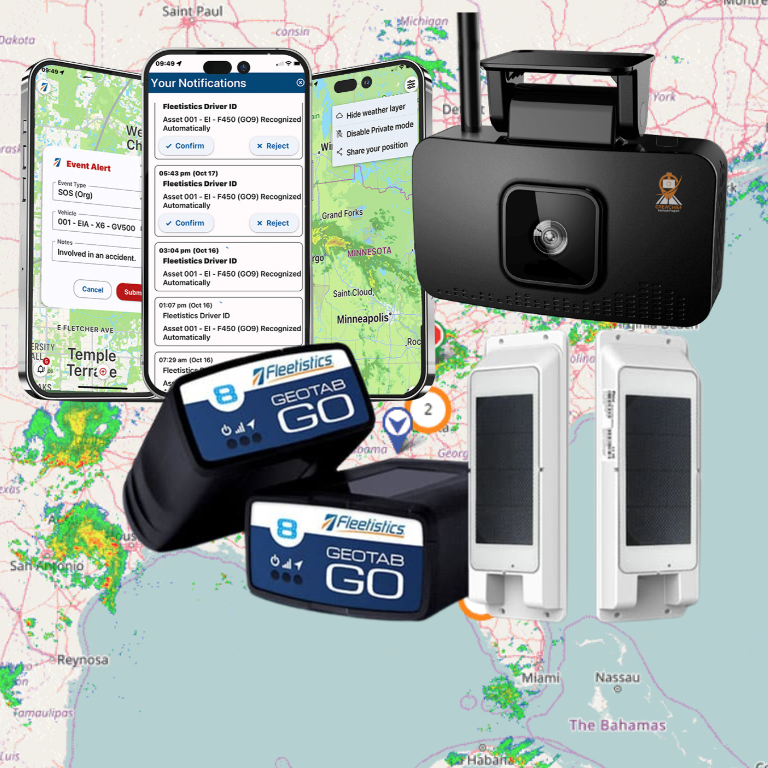

A vehicle maintenance log book app gives fleet teams a practical way to replace scattered paper records with a shared mobile workflow. Instead of waiting for a driver or technician to return to the office, managers can capture inspections, service work. Reminders, and supporting notes close to the vehicle and make that information available to the people who need it.

Speak with a fleet management consultant
What should a vehicle maintenance log book app do?
The right tool is more than a digital notebook. It should help your team create a dependable record, identify work that is due, and close the loop after a repair. The workflow should be simple enough for a driver or technician to use from a phone, but structured enough for a fleet manager to review across many vehicles.
Look for six core capabilities:
- Vehicle records: Keep service history, mileage, dates, costs, notes, and documents connected to the correct vehicle or asset.
- Reminders: Trigger upcoming maintenance tasks by mileage, engine hours, date, or another practical interval supported by your process.
- Inspections: Record defects and follow-up actions before a vehicle returns to service.
- Mobile access: Let authorized users enter information at the yard, job site, or service location.
- Reporting: Turn individual entries into a view of overdue work, repeat defects, downtime, and maintenance trends.
- Adoption controls: Make the workflow clear, consistent, and easy to train.
A fleet management platform can extend this record with telematics data, vehicle status, and other operational signals. Fleetistics provides fleet maintenance software and diagnostics as part of a broader, modular fleet management approach. The correct configuration depends on the vehicles, equipment, maintenance process, and level of visibility your organization needs.
How do paper logs, spreadsheets, and mobile tools compare?
Each approach can work in a limited setting. The problem appears when a fleet grows, vehicles operate across locations, or multiple people need the same information at the same time. A comparison helps you identify the tradeoff rather than choosing technology simply because it is newer.
| Approach | Records and access | Reminders and inspections | Reporting and scale | Best fit |
|---|---|---|---|---|
| Paper log book | Simple, but pages can be lost, damaged, or left in a vehicle | Usually manual; depends on driver and manager follow-through | Slow to consolidate and difficult to compare | Very small operations with limited shared reporting needs |
| Spreadsheet | Central file is possible, but version control and mobile entry can be difficult | Can use formulas or calendar alerts, but setup requires discipline | Useful for basic summaries; becomes complex with multiple users | Small fleets with a defined administrator and stable process |
| Mobile maintenance tool | Structured records available to authorized users in the field | Digital tasks, inspection forms, and due-date workflows | Faster views of status, trends, and exceptions | Fleets needing repeatable workflows across vehicles or locations |
| Connected fleet platform | Maintenance records can sit alongside tracking and telematics data | Rules can use dates, mileage, engine hours, or vehicle signals | Supports broader operational analysis and escalation | Fleets seeking maintenance and operational visibility together |
The table is not a promise that one option eliminates every administrative task. It shows where the work moves. Paper shifts the burden to memory and manual review. Spreadsheets shift it to file maintenance. A mobile or connected platform shifts more of the process into repeatable workflows that can be audited and improved.
Consider a simple example. A driver notices a tire concern at the end of a shift and writes it in a paper book. The supervisor may not see it until the next morning, and a technician may need to call around for the vehicle’s history. In a structured mobile workflow, the driver records the issue against the asset, the manager sees its status, and the technician starts with the relevant context. The app does not make the repair decision, but it reduces the chance that the report disappears between handoffs.
Which maintenance records should the app capture?
Start with the records your team actually uses to make decisions. A long form that no one completes is less useful than a focused form that creates consistent data. Before configuring fields, list the questions a manager asks when a vehicle is unavailable: What happened? When was it found? Who owns the next action? Has the repair been completed? Can the unit return to service?
Vehicle identity and operating context
Connect each entry to a vehicle, trailer, piece of equipment, or other tracked asset. Include the unit identifier and the information your team uses to distinguish similar assets. Mileage, engine hours, operating location, and responsible group can add useful context when they are available and accurate.
Use a consistent naming convention. If one person enters a unit as “Truck 12,” another as “T12,” and a third uses a license plate, reports may split one asset into multiple records. Establish the identifier before importing history, and show it where drivers and technicians can easily find it.
Service history and repair details
Capture the date, type of service, work performed, parts or fluids used, provider or technician, and any follow-up required. A maintenance history should explain what happened, not only show that a transaction occurred. Attach invoices, photographs, or other supporting files when they help verify the work.
Separate planned work from corrective work. An oil service completed on schedule answers a different management question than an emergency repair after a breakdown. Clear categories make it easier to see whether a vehicle is receiving preventive attention or generating avoidable reactive work.
Defects and inspection outcomes
Separate a routine service entry from a defect that needs action. A useful inspection workflow identifies the issue, its severity, who owns the next step, and whether the vehicle is cleared for use. Clear status values prevent an unresolved note from being mistaken for completed work.
Define the minimum evidence for each status. “Reported” might require a description and asset identifier. “Assigned” should identify an owner. “Completed” should include the work performed. “Closed” should mean that an authorized person reviewed the result and updated the vehicle status. These definitions turn a list of notes into a manageable queue.
Costs and downtime
Maintenance cost and downtime data help managers compare recurring problems, assets, and service decisions. Avoid false precision. If a cost is estimated, label it as an estimate; if downtime is not measured consistently, improve the process before using it as a performance benchmark.
Record the cost components your team can maintain consistently. Parts, labor, outside service, towing, and rental or substitute-vehicle costs may belong in different fields. You do not need a complicated accounting system on day one, but you do need enough consistency to compare like with like.
For a broader view of maintenance reporting, review how VMRS can improve maintenance reporting. Standardized naming makes it easier to compare similar work across vehicles and locations.
How do reminders prevent overdue maintenance?
Reminders are valuable only when they match the way your fleet operates. A calendar-only reminder may miss a vehicle that travels more miles than expected. A mileage-only rule may not fit an asset that sits unused but still needs time-based service.
Build a maintenance schedule around the trigger that reflects the task:
- Date: Use for inspections, registrations, seasonal preparation, or time-based service.
- Mileage: Use when distance is the meaningful indicator for the vehicle or component.
- Engine hours: Use for equipment whose workload is better represented by operating time.
- Condition or event: Use when a diagnostic signal, inspection finding, or repair event should create follow-up.
Set reminders early enough to allow scheduling, parts acquisition, and vehicle availability planning. Then define escalation: who receives the notice first, when it becomes overdue, and who reviews exceptions. A reminder without ownership is simply another notification.
Do not create an alert for every possible event. Too many low-value notifications train users to ignore all notifications. Start with work that has a clear owner and consequence, such as a scheduled inspection or a defect that prevents normal use. Review alert performance after several weeks and remove rules that do not lead to action.
Fleet teams can also use fleet analytics metrics to decide which maintenance indicators deserve regular review. Keep the initial dashboard focused on actionable measures such as overdue tasks, repeat defects, cost by unit, and downtime.
How should mobile inspections fit the daily workflow?
Adoption improves when the app follows the workday instead of asking users to recreate it later. Define when an inspection starts, what must be recorded, and how an issue moves to resolution. A driver should not have to understand the entire maintenance program to report a concern correctly.
- Before use: The driver or technician completes the appropriate inspection and records exceptions.
- During operations: New symptoms or damage are reported through the same channel rather than on a separate piece of paper.
- Manager review: A designated person evaluates severity, assigns work, and decides whether the vehicle remains available.
- Service completion: The technician records the work performed and attaches relevant evidence.
- Closeout: The responsible manager confirms that the issue is resolved and the vehicle status is current.
Test this sequence with real scenarios. Ask a driver to report a broken light, a supervisor to triage it, and a technician to close it. Then test a recurring defect and an issue that does not remove the vehicle from service. These examples expose confusing fields and unclear permissions faster than a feature checklist.
Do not force every user through every field. Drivers, technicians, supervisors, and administrators may need different permissions or forms. A flexible system should preserve the shared record while keeping each role’s task manageable.
Where location and utilization context matters, managers can review tracking maps alongside maintenance events. The purpose is not to collect more data for its own sake. It is to connect a maintenance decision to the operating conditions that produced it.
What access and governance does a fleet need?
Maintenance data is operational data. It can affect vehicle availability, work assignments, safety decisions, and budgets. Establish access rules before deployment.
- Give drivers a fast way to submit an inspection or defect.
- Give technicians enough history to diagnose the issue without exposing unrelated administrative functions.
- Give managers views of overdue work, exceptions, and vehicle status.
- Limit editing of completed records and preserve a clear change history where available.
- Define who can mark a vehicle ready for service.
- Train users on what to record, when to record it, and how to escalate a serious issue.
Mobile access should support accountability, not encourage informal surveillance or unclear responsibility. Explain the purpose of the workflow, provide notice about what information is collected, and give employees a way to ask questions. Consistent governance protects trust and improves data quality. Fleet teams can use a written company driving policy as a starting point for related expectations when tracking and maintenance workflows overlap.
Also decide who owns data cleanup. New vehicles, transferred assets, retired units, and changes in responsibility can make a maintenance database unreliable if no one updates it. Assign an administrator or process owner to review duplicate records, missing mileage, inactive assets, and overdue items that were closed outside the system.
How can a maintenance app connect with fleet operations?
Maintenance rarely operates in isolation. Location, utilization, fuel, safety, and routing information can help a manager understand why a vehicle is unavailable or why a repair keeps recurring. The connection should serve a decision, not simply add more screens.
For example, a manager may compare maintenance events with mileage and utilization to identify an asset that is being overworked. A service operation may combine vehicle status with critical weather data when planning vehicle readiness and field response.
Integration questions should be concrete. Can a maintenance event be associated with the correct vehicle? Can authorized users see the status where they already plan work? Can data be exported or connected to an existing system without duplicate entry? If the answer to each is no, a larger platform may create more administration rather than less.
Fleetistics works with Geotab technology and offers modular fleet management solutions. A fleet can evaluate the maintenance workflow alongside GPS tracking, telematics, safety, or other needs instead of assuming every organization needs the same package. Learn more about how GPS fleet tracking works before deciding which connected data belongs in the maintenance process.
How should you measure results after implementation?
Choose a baseline before changing the workflow. Otherwise, a new app may produce more records without proving that it improved maintenance. Capture the current process for a defined period, even if the information is incomplete, and note how the numbers were created.
Useful measures include:
- Percentage of scheduled tasks completed on time.
- Number of overdue tasks and average days overdue.
- Inspection completion rate by vehicle or operating group.
- Time from defect report to assignment and from assignment to completion.
- Repeat defects by vehicle, component, or service type.
- Unplanned downtime and days unavailable.
- Maintenance cost per vehicle, mile, or operating hour when those denominators are reliable.
- Data completeness, such as entries with a clear status and responsible owner.
Use a small scorecard rather than trying to report every available field. For example, a first-month review might include inspection completion, overdue scheduled work, open defects by age, and data completeness. A later review can add cost and repeat-defect analysis once the records are consistent.
Review the measures weekly during rollout, then move to a cadence that fits your operation. Ask whether the data changed a decision: Did the team schedule work earlier. Identify a repeat problem, avoid an unnecessary repair, or return a vehicle to service with better documentation? Those answers matter more than the number of screens in the application.
What is a practical rollout plan for a mobile log book?
A phased rollout reduces disruption and gives the team a chance to improve the workflow before it becomes standard. The following sequence works well for many mixed vehicle and equipment operations.
- Map the current process: Follow one inspection from completion through repair and closeout. Record every handoff, duplicate entry, and delay.
- Select a representative pilot: Include different asset types, shifts, locations, and user roles. Do not choose only the easiest vehicles.
- Define the minimum data set: Agree on required fields, statuses, ownership, and evidence for completion.
- Configure reminders carefully: Begin with known service intervals and verified asset readings. Do not import uncertain rules without review.
- Train by scenario: Practice a routine inspection, an urgent defect, a scheduled service, and a correction to an inaccurate record.
- Review the first records: Look for missing identifiers, vague descriptions, duplicate entries, and alerts that no one acts on.
- Expand in stages: Add vehicles, locations, or integrations after the pilot demonstrates reliable completion.
Keep a short feedback loop during the first few weeks. Ask users which field slows them down, which status is unclear, and which notification is not useful. A process owner should publish the answer and update training rather than letting each group invent its own workaround.
What should you ask before choosing a vehicle maintenance log book app?
Use a small pilot to test the actual workflow. Include the people who enter records and the people who act on them.
- Can users complete an inspection quickly on the device they already carry?
- Can the system distinguish vehicles, equipment, locations, and responsible groups?
- Can reminders use the intervals that matter to your assets?
- Can managers see overdue work without opening every record?
- Can the workflow document defects, assignments, repairs, and closeout?
- Can authorized users access the information from multiple locations?
- Can the platform expand into tracking, telematics, safety, or analytics if those needs emerge?
- What training and implementation support will your team receive?
- How are permissions, record corrections, exports, and inactive assets handled?
- What happens when a device is offline or a user submits incomplete information?
Ask for a demonstration using your maintenance scenarios, not a generic feature tour. Bring one common service, one recurring defect, one urgent inspection issue, and one reporting question. The best fit is the system that makes those examples easier to execute and review.
Book a demo to discuss your maintenance workflow
Frequently Asked Questions
Is a vehicle maintenance log book app better than a spreadsheet?
It can be when several people need mobile access, reminders, inspection workflows, and shared status. A spreadsheet may remain appropriate for a small operation with one administrator and simple reporting, but test how reliably it handles multiple users and overdue work.
Can a mobile maintenance app replace inspections?
No. The app records and routes the inspection; it does not replace the inspection itself or the judgment of the qualified person performing it. Your organization still needs a clear inspection procedure and escalation rules.
Can the app track maintenance for equipment as well as vehicles?
Many fleet workflows can cover equipment when the system supports separate asset records and relevant triggers such as engine hours or service dates. Confirm the asset types, fields, and reminders during a demonstration.
How quickly should a fleet adopt a new maintenance workflow?
Start with a defined pilot, train a small group, measure completion and data quality, and correct confusing steps before expanding. A staged rollout is usually easier to manage than changing every form and rule at once.
What if our maintenance records are incomplete today?
Begin by importing or entering the information that is dependable, and label unknown values rather than guessing. Use the new workflow to establish a clean starting point, then add older history when it can be verified and will support a real decision.
Ready to improve maintenance records and follow-through?
A vehicle maintenance log book app should make the next action clear: record the issue, assign the work, complete the service, and verify the result. A consultative review can help you match mobile maintenance capabilities with your fleet’s vehicles, equipment, users, and operating goals.
Call 855-300-0527 to speak with a Fleetistics consultant.
Next: How to Interpret Vehicle Diagnostic Codes | Previous: Fleet maintenance resources
With the right workflow, maintenance records become a practical operating system for safer, more available, and better-managed assets.