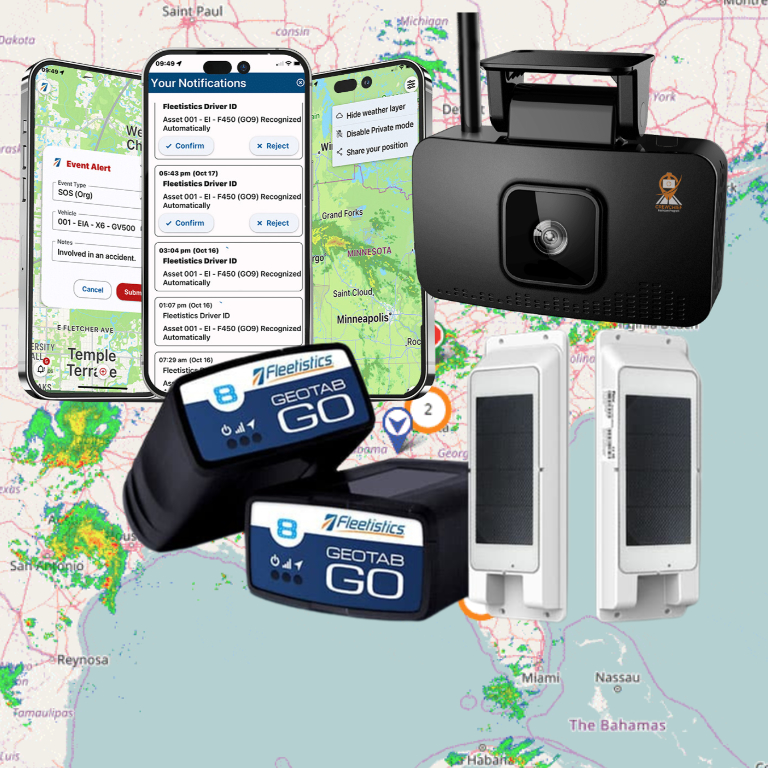


Fleet incident management is the repeatable process for reporting, responding to, documenting, investigating, and learning from events involving fleet vehicles, drivers, passengers, property, or the public. A clear process helps your team act consistently under pressure and turn each event into specific follow-up work.
What should fleet incident management cover?
Define an incident broadly enough to capture more than collisions. Include vehicle damage, injury or near misses, theft, property damage, hazardous conditions, and events that disrupt service. Specify which situations require immediate escalation and which can be recorded through a routine report.
Do not make the process a substitute for emergency services, legal advice, insurance direction, or applicable reporting duties. Your policy should tell employees to call emergency services when needed, protect people from further danger, and follow the relevant organizational and jurisdictional requirements. A fleet process coordinates internal action; it does not change those obligations.
Keep incident handling distinct from routine maintenance, driver compliance, and general safety analytics. Those functions can contribute information, but incident management answers a narrower question: what happened, who needs to act now, what evidence and decisions need to be recorded, and what should change afterward?
What should happen in the first minutes after an event?
Give drivers a short, ordered checklist they can follow without trying to investigate at the scene. The sequence should prioritize people and immediate hazards, then notification and basic facts. Adapt it to your vehicle types, operations, and approved organizational procedures.
- Protect people. Stop in a safe place if possible, check for injuries, and contact emergency services when appropriate.
- Prevent further harm. Use hazard controls that are safe and within the driver’s training. Do not ask anyone to take photographs or gather details in an unsafe location.
- Notify the designated contact. Provide the location, time, vehicle identifier, whether anyone appears injured, and whether the vehicle can continue operating safely.
- Preserve basic information. When safe and permitted, record the other parties’ contact and vehicle details, witness information, road and weather conditions, and photographs of relevant damage or surroundings.
- Follow instructions and document the handoff. Record who was contacted, when, and what next steps were agreed. Avoid speculation or statements assigning blame.
A driver should not be expected to decide fault or promise payment. Train staff to describe observable facts, avoid arguing, and refer questions about claims or liability to the designated company representative. Your written driver policy can set expectations for reporting and communication.
How do you build a dependable reporting workflow?
Make the reporting route obvious before an event occurs. Employees should know which number or channel to use, who covers after-hours reports, and what information to submit. If you use a form or mobile tool, ensure it works for the people and conditions involved; a long form is a poor fit for the roadside.
Use a two-stage report. The first stage captures immediate essentials. A later follow-up collects fuller details once the driver is safe and available. This reduces pressure to complete a lengthy narrative at the scene while preserving a consistent record.
| Stage | Core information | Owner and next action |
|---|---|---|
| Immediate notice | Time, location, vehicle, people involved, apparent injury, hazards, safe-to-operate status | Driver contacts supervisor or response lead; arrange emergency help or secure the vehicle as needed |
| Initial record | Event type, concise factual description, witnesses, photos if safe, notifications made | Supervisor opens the incident record and assigns an owner |
| Investigation | Statements, relevant records, timeline, contributing conditions, evidence gaps | Investigator assesses facts and documents uncertainty |
| Resolution and learning | Corrective actions, accountable owners, due dates, completion evidence, review date | Manager confirms closure and checks whether the action reduced the identified risk |
Use one incident identifier across reports, photos, correspondence, repair or claim records, and action items. Limit access to sensitive information according to your policies. Keep records factual, dated, and attributable: distinguish what someone observed from what they inferred.
Set a practical reporting deadline in policy, with an immediate notification requirement for urgent events. A supervisor should acknowledge the report, check for missing essentials, and tell the reporter what happens next. Silence can lead employees to assume their information was not received or that follow-up is unnecessary.
What should the report form ask?
Separate required fields from optional detail. A useful first-stage record can ask for the reporter’s name, callback method, event date and time, location, vehicle identifier, event type, immediate safety status, people involved, and actions already taken. Add a short free-text field for facts that do not fit the selections. Avoid asking a driver to make legal conclusions or select a fault category before review.
For the follow-up, capture a chronological account, witness contact details where appropriate, evidence sources, notifications and their times, vehicle status decisions, and outstanding questions. Label entries by author and timestamp. If a detail is not known, record it as unknown and assign someone to check it rather than leaving an ambiguous blank.
Who owns each part of the response?
Assign roles in advance, especially when a small team shares responsibilities. One person may hold multiple roles, but each task still needs a named owner. A simple responsibility map helps prevent gaps and duplicate calls.
- Driver: protect people, notify the organization, provide an accurate account, and follow safe instructions.
- Supervisor or dispatcher: receive the alert, confirm immediate needs, notify the appropriate internal contacts, and arrange operational continuity.
- Incident lead: maintain the record, coordinate evidence collection, set the investigation scope, and track actions to completion.
- Safety, risk, or HR contact: advise on internal procedures and sensitive cases within their remit; escalate matters that require specialist or external advice.
- Fleet manager: determine vehicle status and replacement or repair coordination, and review patterns across incidents without prejudging individual cases.
Write down the escalation path for serious injury, significant property damage, suspected impairment, vehicle fire, hazardous material, or events involving a vulnerable road user. The specific triggers should reflect your operation and obligations. Keep emergency contact details accessible, and review them when staffing or operating locations change.
How can you make the handoff dependable?
Use a named primary contact and a backup for each shift or operating period. A notification is not complete just because a message was sent; someone should acknowledge receipt and confirm the next owner. If a supervisor cannot reach the incident lead, the driver needs an alternate route that does not depend on guessing who is available.
For example, an after-hours vehicle damage report might go first to the on-call supervisor. That person confirms there are no injuries or active hazards, records the vehicle’s location and condition, and decides who must be notified before the next shift. The next-day fleet manager receives the incident identifier and a clear list of open items, rather than an informal retelling with missing context.
How should you investigate without jumping to blame?
An investigation should establish a useful timeline and identify conditions that influenced the event. It is not simply a search for a person to fault. Blame-first responses can discourage reporting and obscure practical fixes such as unclear procedures, poor visibility, scheduling pressure, or a vehicle defect.
Start with a small set of questions: What happened immediately before the event? What did each person observe? What conditions were present? Which safeguards were expected, and were they available and understood? What information is missing? Record competing accounts fairly and mark unresolved points as unknown rather than filling gaps with assumptions.
Gather only material that is relevant and authorized under your policies. Depending on the event, that may include driver and witness accounts, photographs, dispatch records, vehicle inspection or repair information, and available telematics or camera data. Such data can help establish timing or context, but it should be interpreted carefully and in line with employee notice, privacy practices, and access controls. A privacy-aware approach to fleet data supports appropriate use rather than indiscriminate collection.
For serious or complex events, preserve relevant records promptly and route the matter to the appropriate internal or external specialists. Do not edit original evidence; note the source, date received, and any handling. Your organization should determine retention, disclosure, and claims procedures with qualified advisers as needed. For a transportation incident management reference, the HathiTrust catalog record for Incident Management Successful Practices describes a cross-cutting study published by the U.S. Intelligent Transportation Systems program.
How do you keep an investigation factual?
Build a timeline from the earliest verified point to the last known event. For each entry, note the time, source, and whether it is an observation, a reported account, or a record from a system. If two accounts differ, preserve both and identify what could help clarify the difference. This approach lets reviewers update a conclusion as evidence changes without silently rewriting the original account.
Use a simple evidence log with fields for item, source, date received, custodian, storage location, access restrictions, and relevance. For example, a photograph supplied by a driver is different from a dispatch record generated by a system; retain that distinction. Avoid collecting unrelated employee information merely because a tool makes it available. Limit review to a defined scope and document why each material item was considered.
How do you turn findings into corrective action?
Every finding should lead to a decision: no action, a targeted action, or more fact-finding. State the reason. Avoid vague tasks such as âbe more careful.â Prefer a change someone can complete and verify, such as clarifying a dispatch handoff, adjusting a site procedure, repairing a specific defect, or delivering focused coaching based on an observed skill gap.
For each action, record an owner, due date, completion evidence, and a check date. Consider whether the action addresses a contributing condition and whether it creates a new risk elsewhere. If the proposed fix depends on a policy change, training, equipment, or an operational decision, identify the person authorized to approve it.
Driver coaching should be specific, respectful, and based on verified information. Explain the behavior or condition being addressed, invite the employee’s account, agree on the next step, and document the conversation according to company policy. A written company driving policy can establish consistent expectations before an incident occurs.
How can you check that an action worked?
Closure should mean more than marking a task complete. Decide what evidence demonstrates completion: a revised procedure issued to the affected team, a repair record, a completed coaching session, or a documented change to a dispatch checklist. Then set a later review date to see whether the intended control is being used and whether similar conditions recur.
Suppose an investigation finds that a loading-area turn was difficult to see at dusk. A generic reminder to drive carefully is hard to verify. A more testable response might assign a site manager to inspect lighting and sightlines, record any approved changes, and have the fleet lead review reports from that location after the change. The review checks the control, not merely whether the task was ticked off.
Which records and tools help the process work?
A workable system is more important than a sophisticated one. For a small operation, a controlled form and clearly assigned spreadsheet may be sufficient if access, version control, and follow-up are reliable. A larger or geographically dispersed fleet may need role-based workflows, mobile reporting, notifications, and dashboards. Choose based on the handoffs and control needs you actually have.
Evaluate tools against real tasks rather than a long list of features. Can a driver submit an initial report quickly? Can a supervisor see whether it was acknowledged? Can the incident lead attach evidence, document decisions, assign actions, and see overdue work? Can you search by date, vehicle, type, or location while restricting sensitive records to appropriate users?
Fleet telematics may provide context such as vehicle location or event timing, subject to system configuration and data availability. It should complementânot replaceâdriver reports, witnesses, and other relevant evidence. A GPS platform’s capabilities vary by device, setup, and service. Learn the basics of how GPS fleet tracking works and consider how incident information fits with your broader fleet management solutions workflow. For appropriate events, camera data may also contribute context; see the overview of video telematics.
Employee understanding matters whenever monitoring data is part of the process. Explain what data may be collected, why it may be reviewed, who can access it, and how it supports a fair investigation. Invite questions and apply written rules consistently. Guidance on introducing tracking to employees can help with that conversation.
| Approach | Useful when | Check before adopting |
|---|---|---|
| Controlled form and register | A smaller team needs a consistent record and has clear owners | Access controls, backups, version history, and reminders for overdue actions |
| Shared workflow tool | Several departments need to hand off and track tasks | Role permissions, notification routing, audit history, and simple mobile entry |
| Fleet platform data alongside a case record | Location or event timing may help provide context | Data availability, employee notice, retention rules, and who can interpret it |
Do not assume a new platform will fix unclear responsibilities. Map the current process first: who reports, who acknowledges, where records live, and how actions close. Then test the proposed tool using a realistic case, such as a minor collision reported during an evening shift. Confirm that the record remains understandable when handed from dispatcher to supervisor to investigator.
How can you tell whether the process is improving?
Review a small set of operational measures alongside case quality. Counts alone do not prove that risk is rising or falling: reporting may increase because people trust the process more. Interpret changes in light of fleet size, activity, event severity, reporting practice, and changes to routes or work.
- Reporting completeness: Are time, location, event type, and required notifications recorded?
- Response timeliness: How long between initial notice, acknowledgement, and assignment of an owner?
- Open-action control: How many corrective actions are overdue, and why?
- Repeat conditions: Are similar circumstances recurring, and what operational change could address them?
- Review quality: Do records distinguish observed facts, reported accounts, and unresolved questions?
Review serious cases promptly and examine trends on a regular schedule. Share lessons in a way that protects sensitive information and focuses on prevention. If an action does not appear effective, revisit the assumption behind it rather than simply repeating the same instruction.
How should you choose useful measures?
Begin with measures that point to a decision. If reports often lack a location or callback number, improve the form or driver instructions. If acknowledgements take too long on night shifts, review coverage and backups. If actions remain open, distinguish unrealistic due dates from missing authority or resources. A number without a response plan is just another report.
Review a sample of case files as well as summaries. A dashboard may show that reports close quickly, while a file review reveals that corrective actions have no verification or that unresolved facts are presented as conclusions. Pairing a modest set of measures with case review gives managers a more grounded view of whether the process is usable and improving.
What should you ask when evaluating a fleet incident management process?
Test your procedure with realistic scenarios before relying on it. Walk through a minor vehicle scrape, a roadside injury, and an after-hours event. Ask where the driver gets help, how the report reaches an owner, who makes vehicle-use decisions, and how actions remain visible until closed.
- Can an employee find the reporting instructions quickly, including after hours?
- Does the initial report capture urgent facts without delaying safety actions?
- Are escalation thresholds and role backups clear?
- Can you preserve records and restrict access to sensitive information?
- Can supervisors assign, track, and verify corrective actions?
- Do employees understand how fleet data may be used during an investigation?
- Can the procedure adapt to different vehicle classes, operating sites, and incident severity?
Use the answers to identify one or two specific process improvements, assign an owner, and set a review date. If technology is part of the gap, compare it with the current workflow and confirm that it will solve a defined need rather than add another disconnected record system.
Fleetistics combines Geotab technology with a modular approach to fleet management, so organizations can consider tools in light of their operations rather than assume one setup fits every fleet. Start by identifying where your current process loses information or delays a decision; then evaluate whether added visibility, mobile reporting, or a clearer data workflow would address that gap. See the relationship between cameras and tracking as one example of how separate sources may offer context, not an automatic conclusion.
Discuss your fleet information needs
Frequently asked questions about fleet incident management
What is the first priority after a fleet incident?
Protect people and address immediate danger. Call emergency services when needed, then notify the designated company contact when it is safe to do so. Reporting and evidence collection should never take priority over safety.
Should every near miss be reported?
Your policy should define reportable events and make near-miss reporting straightforward. Capturing relevant near misses can help identify hazards before they lead to injury or damage. Explain what details are useful and how the information will be handled.
Does telematics determine who caused an incident?
No. Telematics may provide specific data points, depending on the device and configuration, but it does not establish the full context or automatically determine fault. Consider it alongside other relevant information and follow your organization’s review process.
How long should incident records be kept?
Retention depends on the record, applicable requirements, claims or litigation holds, and your organization’s policy. Set the schedule with qualified advisers and avoid applying a single unsupported retention period to every incident.
Ready to improve your incident workflow?
A consistent incident process gives drivers clear next steps and helps managers close the loop from first report to verified action. Review your procedure with the people who use it, test it against realistic situations, and update it when the workflow or operating risks change.
Contact Fleetistics to discuss fleet management needs
Review your procedure regularly so each driver and manager knows how to respond, record facts, and follow corrective actions through to completion.
Previous post: Fleet Safety Analytics: Metrics and Coaching Guide | Next post: Trucks Fleet Management: Improve With This Practical Guide. These adjacent guides offer further context on fleet safety and truck operations.