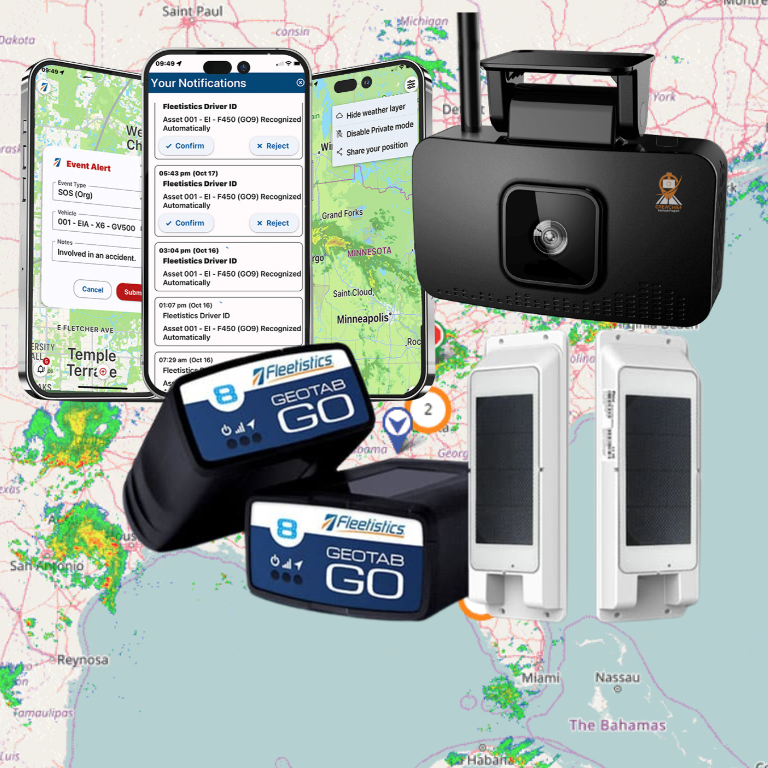
A dashcam can show a moment on the road, but a safety team needs to understand what led to it, where it occurred, and what should happen next. That is why effective fleet safety programs connect video with vehicle and location data instead of treating footage as an isolated recording.
Video telematics combines camera footage, event signals, GPS context, and related vehicle data so your team can review incidents, coach drivers, protect privacy, and measure whether safety practices are improving. Automated alerts can identify a possible event, but a qualified reviewer should validate the circumstances before coaching or escalation.
The strongest programs also define who may access footage, how long records are retained, and how employees receive notice. The sections below explain how these connected pieces work together, beginning with the technology and data behind each event.
Contact Fleetistics to discuss your fleet safety goals
What Is Video Telematics and How Does It Work?
Video telematics connects camera footage with the operational data that explains what a vehicle was doing at the time. Instead of reviewing video as an isolated recording, a fleet team can relate an event to GPS location, speed, timing, vehicle signals, and other telematics data. That combination creates a more useful view of a trip, a safety event, or an incident.
A standalone dashcam primarily records what happens in front of, behind, or inside a vehicle. It may preserve valuable evidence, but someone still has to find the relevant clip and interpret it without the surrounding vehicle context. A video telematics system adds that context through connected devices and software. A harsh maneuver, collision signal, driver-behavior alert, or other configured event can help identify when footage deserves review.
The distinction matters because video alone does not always answer the operational questions a fleet manager needs to resolve. Where did the event occur? How fast was the vehicle traveling? What route and timing surrounded it? Was there a corresponding vehicle signal or driver-behavior trigger? Video telematics brings those sources together so the reviewer can assess the event more accurately rather than treating an automated alert as a final finding.
What data does a video telematics system connect?
Most implementations combine four practical data layers:
- Video: Camera footage shows the roadway, vehicle surroundings, or driver-facing conditions relevant to the event.
- Event data: Configured rules, alerts, or vehicle signals identify a moment that may require attention, such as a collision-related event or a detected driving behavior.
- GPS and location context: Location history, speed, route, and timing help place the event in its operating environment. Fleetistics describes this type of visibility through automatic vehicle location.
- Vehicle and platform signals: Diagnostics, driver identification, exceptions, and other connected records can add operational context and support follow-up.
Fleetistics combines GPS tracking, telematics, AI-powered dashcams, compliance tools, and integrated software in a modular platform. Its broader integrated fleet telematics platform can support accident data capture, driver identification, alerts, APIs, and more than 300 partner integrations, depending on the configuration selected.
The right setup depends on your fleet’s risk profile, vehicle types, operating environment, and review process. A small service fleet may need focused driver-behavior visibility, while a larger or mixed fleet may benefit from deeper integrations and formal incident workflows. The objective is not to collect every possible data point. It is to connect the evidence your team can govern, review fairly, and use to improve safety and operations.
How Do Camera Footage, Event Data, and GPS Context Work Together?
A useful video telematics workflow does more than save a clip after a hard brake or collision. It connects the visual record to the operational data that explains when, where, and under what conditions an event occurred. That gives your safety team a reviewable sequence instead of an isolated alert or an assumption about fault.
- Define the event trigger. The workflow begins when an onboard system identifies a condition that deserves attention. The trigger may come from a critical-event alert, driver-behavior detection, an accident signal, or a configured safety rule. Fleetistics documents capabilities that include accident data capture and reporting, driver identification, exceptions, alerts, and coaching triggers. The trigger is a prompt to investigate, not a final conclusion about what happened.
- Capture the relevant camera footage. The camera provides visual evidence of the road scene and, depending on the selected configuration, the vehicle or driver environment. That footage can help a reviewer understand the sequence around the event, including details that a sensor value cannot show on its own. Your camera choice should match the risks you need to review, rather than assuming every fleet needs the same coverage.
- Add GPS and vehicle context. GPS data places the event on a route and adds location, speed, timing, and direction context. Live tracking can also connect the event with second-by-second data capture, critical-event alerts, engine diagnostics, and other telematics signals. Reviewing the clip alongside automatic vehicle location helps establish whether the vehicle was moving, where it was operating, and what was occurring immediately before and after the trigger.
- Connect the event to the wider record. Driver identification, exception history, and related vehicle data can help separate a one-time occurrence from a recurring pattern. Platform capabilities such as API and SDK access and 300-plus partner integrations may also help bring relevant operational information into the review process. Use only the data that supports the specific safety question. More data is not automatically better if it makes the review harder to interpret.
- Have a qualified reviewer validate the event. An automated alert can identify a possible distraction, following-distance issue, lane departure, collision, or other risk signal. A person should review the footage and supporting data before deciding what the event means. Check the timestamp, route, speed, camera view, driver identity, and surrounding circumstances. This step matters because an AI alert or event rule is a coaching or investigation trigger, not conclusive proof of fault.
- Preserve evidence when the event warrants it. For a collision, claim, serious near miss, or disputed incident, preserve the relevant footage and supporting records according to your written policy and access controls. Keep the evidence connected to the event record so another authorized reviewer can understand its source and sequence. Fleetistics’ guidance on GPS and dashcam evidence covers how these records can support collision reconstruction, claims review, and evidence preservation.
- Turn the finding into fair coaching or follow-up. If the review confirms a behavior that needs attention, discuss the specific situation with the driver, explain the safety expectation, and document the agreed action. Coaching should address behavior and context, not treat monitoring as covert surveillance. Use a consistent review standard, allow relevant information to be considered, and connect repeated events to telematics driver coaching when appropriate.
- Measure what changes after the intervention. Close the loop by tracking whether the event recurs, whether coaching was completed, and whether near misses, preventable incidents, or response times change. This turns footage and GPS data into a managed safety process. It also helps you refine event rules, camera coverage, and coaching priorities around the risks that matter most to your fleet.
The strongest programs keep each layer connected: footage shows what happened, event data identifies why it was flagged. GPS supplies operational context, human review establishes meaning, and coaching creates a path to improvement.
Which AI Dashcam Detections Can a Fleet Verify?
AI dashcams can help a fleet identify safety events quickly, but an alert is the beginning of a review, not the final conclusion. Fleetistics documents verified Geotab GO Focus and GO Focus Plus detections for specific driver and roadway conditions. These capabilities can support a structured video telematics program when your team uses the alert alongside footage, event data, and the operating context.
Which driver behaviors can the system flag?
The documented detection set includes tailgating or following-distance violations, which can indicate that a vehicle is traveling too close to the vehicle ahead. The cameras can also identify seatbelt compliance, helping safety teams determine whether a driver appears to be using the restraint as expected during the recorded event.
For driver attention and fatigue risks, the verified detections include drowsiness and distraction, as well as cell phone use. These alerts can help a supervisor prioritize footage for review and coaching. They should not be treated as a medical determination, a complete assessment of a driver’s condition, or proof of intent. A reviewer still needs to consider what the footage shows and whether the alert fits the surrounding circumstances.
Which roadway events can it identify?
The documented roadway detections include lane departure warnings and forward collision alerts. Depending on the event, the alert may point to a possible lane-position or forward-risk situation that deserves attention. It does not, by itself, establish why the vehicle moved, whether a collision was unavoidable, or who was responsible.
That distinction matters when you use AI for safety management. Camera systems can surface a large number of potential events, while human reviewers provide the judgment needed for fair coaching, incident documentation, and escalation. Fleetistics’ documented approach separates automated detection and coaching triggers from final human review. You can learn more about the verified detection scope on the Fleetistics distracted-driving detection page.
How should a fleet use these alerts?
Start by defining which alerts require immediate review, which support routine coaching, and which need additional context before action. A reviewer can compare the AI trigger with the forward-facing view, driver-facing evidence when available, speed, location, timing, and other event data. That process helps distinguish a recurring behavior from an isolated or ambiguous event.
Use the result to guide a documented conversation, not to label a driver automatically. Check whether the event recurs, whether prior coaching addressed it, and whether route, weather, traffic, or vehicle conditions add relevant context. The right configuration will depend on your fleet’s risk profile and operating environment. So select the detections that support your actual safety priorities rather than assuming every fleet needs every feature.
How Should You Govern Video Telematics Privacy and Retention?
A sound governance program makes video telematics a transparent safety and operations process, not a hidden monitoring exercise. Before installation, explain what the system collects, why the organization uses it, who may access it, and how employees can ask questions or raise concerns. This conversation is especially important when a fleet operates across the USA, Canada, or Mexico, where privacy, employment, and recording expectations may differ by jurisdiction.
Start with notice, purpose, and employee understanding
Give drivers and other affected employees a written notice before the program begins. Describe the types of information involved, such as video, event alerts, vehicle location, timing, and driver identification when those features are enabled. Then state the approved purposes in plain language: improving safety, investigating incidents, supporting fair coaching, documenting claims, and managing fleet operations.
Purpose limitation matters. If the stated purpose is safety improvement, do not quietly repurpose footage for unrelated employee decisions without reviewing the policy and applicable requirements. Explain how an alert is handled, including the difference between an automated detection or coaching trigger and a confirmed finding. An AI alert should prompt appropriate human review, not determine fault by itself.
Use practical resources when introducing the program. Fleetistics offers guidance on introducing GPS tracking to employees, including the need for transparent communication and buy-in. Pair that conversation with a written driver policy that explains expectations, review standards, and the organization’s safety objectives.
Limit access and document fair review
Access should follow job responsibility. A safety manager may need to review an event, while a dispatcher may need location context but not unrestricted video access. Define role-based permissions, require strong authentication where available, and record access and system changes. Fleetistics documents role-based access controls, multifactor authentication options, and audit trails as security capabilities.
Write objective review criteria before an incident occurs. Specify which event types receive routine review, when footage is escalated, how a driver can provide context, and what evidence is preserved for a claim or investigation. Apply the same process consistently, while allowing for relevant circumstances such as weather, road conditions, equipment issues, or an alert that requires additional validation. The objective is a repeatable safety process, not automatic discipline.
Set configurable retention and deletion rules
There is no single retention period that fits every fleet or jurisdiction. Set retention by purpose and risk. Routine event footage may need a different treatment from footage tied to an open incident, claim, legal hold, or documented coaching review. Have the appropriate privacy, legal, HR, and safety stakeholders review the policy for the places where the fleet operates.
Document when data is deleted, when it is archived, who can approve an exception, and how the organization confirms that the action occurred. Configurable data-retention policies and automated archival can support historical analysis without keeping every record indefinitely. Periodically review whether the schedule still matches operational needs. A retention rule that nobody can explain or audit is not a governance framework.
Finally, measure whether the policy is working. Track access exceptions, review completion, deletion or archival activity, employee questions, and recurring events. Good governance helps employees understand the safety purpose, gives managers evidence they can use responsibly, and keeps the video telematics program aligned with the fleet’s actual risks.
What Should a Video Telematics Review Workflow Include?
A useful review process turns an alert into a consistent safety decision. It should clarify who reviews events, what evidence they consider, how the driver is heard, and what happens after the conversation. The objective is not to let an automated alert determine fault. It is to give your safety team a structured way to identify risk, respond fairly, and prevent recurrence.
1. Assign roles before an event occurs
Define who owns first review, who can access footage, who speaks with the driver, and who handles a serious escalation. Role-based access keeps sensitive video limited to people with a legitimate business need. It also prevents inconsistent decisions when supervisors apply different standards to similar events.
Write the review criteria into your safety policy. A trigger may come from a dashcam, vehicle sensor, or telematics rule, but the trigger is only the starting point. Your reviewer should know which event types require routine coaching, a second review, immediate safety action, or management involvement.
2. Triage the alert and preserve the evidence
Begin with the event record, then gather the surrounding context. Review the video before and after the trigger, along with location, speed, timing, route, vehicle information, and any relevant driver or vehicle data. GPS and dashcam evidence can help reconstruct what happened, especially when an incident may lead to a claim or internal investigation. Fleetistics describes this combined approach through its GPS and dashcam evidence resources.
Preserve the original event and record when it was reviewed, by whom, and why it was retained. Do not rely on a clipped video alone when the surrounding seconds could change the interpretation. If the event involves a collision, injury, allegation, or potential legal claim, follow your escalation and evidence-preservation policy promptly.
3. Validate the event with human judgment
Automated detections can identify a possible distraction, seatbelt issue, following-distance concern, lane departure, or collision warning. They do not establish intent, identity, causation, or fault by themselves. Check the video and context for road conditions, traffic, weather, construction, emergency maneuvers, equipment issues, and other reasonable explanations.
When the evidence is incomplete or ambiguous, document that uncertainty rather than forcing a conclusion. A second reviewer can reduce bias for high-risk or disputed events.
4. Hold a fair conversation, then coach to a specific behavior
Give the driver a clear description of the event and an opportunity to explain what happened. Keep the conversation focused on the observable behavior and the safety outcome, not on labels or assumptions. Effective telematics driver coaching connects the evidence to one practical behavior change, such as increasing following distance or removing phone-related distractions.
Document the discussion, agreed action, coaching completion, and any follow-up date. Escalate only when the facts and policy support it. Finally, review recurrence by driver, route, vehicle, location, or event type. Repeated events may call for additional coaching, route or equipment changes, supervisor review, or a broader safety intervention rather than another isolated warning.
How Do You Measure Video Telematics Outcomes?
Measure outcomes by comparing a documented baseline with what changes after implementation. The objective is not to collect more alerts. It is to determine whether your review and coaching process is reducing repeat-risk behavior, improving incident response, and producing evidence that helps your operation make better decisions.
Start with a baseline you can defend
Choose a baseline period that reflects normal operations, then record the fleet size, vehicle or asset mix, miles or operating hours, routes, season, and reporting rules used. Track rates rather than raw counts where possible. For example, events per 10,000 miles or incidents per 100 vehicles can be more useful than a monthly total when fleet activity changes.
Define what counts as a video telematics event before measurement begins. An automated alert is a trigger for review, not a conclusive finding of fault. A reviewer should confirm the available footage, event data, and GPS context, then document whether coaching or escalation is appropriate. This keeps the measurement tied to a consistent process instead of changes in alert volume or reviewer preference.
| KPI category | What to measure | How to use it |
|---|---|---|
| Leading indicators | Alert review time, percentage of assigned events reviewed, coaching completion, time from event to coaching, and repeat-event rate by driver, vehicle, route, or behavior. | Shows whether the workflow is operating quickly and consistently before waiting for a crash or claim to occur. |
| Lagging indicators | Preventable incident rate, collision frequency, claims outcomes, injury costs, repair costs, downtime, and severity where reliable records are available. | Tests whether changes in behavior and review practices correspond with better safety and operating outcomes. Adjust for exposure and severity. |
| Evidence and claims | Percentage of incidents with usable footage, time required to assemble evidence, disputed-event resolution, and documentation completeness. | Measures whether footage and context support fair decisions, incident reconstruction, and liability documentation without overstating what the system proves. |
| Implementation health | Camera and device uptime, data availability, alert delivery, user access, reviewer workload, policy acknowledgement, and employee questions or appeals. | Separates a weak result caused by poor adoption or data quality from a result that reflects the safety program itself. |
Review trends, not isolated alerts
Use leading indicators weekly or monthly to find bottlenecks. If review time is increasing, coaching completion is falling, or the same event keeps recurring. The remedy may be workflow design, manager capacity, route planning, or a clearer conversation with the driver. Segment results by behavior and operating context rather than treating every alert as equivalent.
Review lagging indicators over a longer period and compare them with exposure, weather, staffing, route mix, and vehicle changes. Fleetistics identifies accident reduction, driver coaching, incident documentation, and liability protection as dashcam evidence use cases. But those outcomes should be tested against your own records, not promised in advance. Similarly, a potential fuel figure such as 14-20% through idle reduction and route optimization is an example, not a guaranteed result. See the fleet analytics resources for context on evaluating operational data.
Include governance in the scorecard
A sound measurement program also checks who can access footage, whether review criteria are documented. Whether employees understand the purpose of monitoring, and whether retention and archival practices match written policy. These checks protect trust and make results more credible. At the end of the evaluation period, compare the baseline with the same definitions, validate exceptions, and decide which configuration or coaching changes are worth continuing.
Is Video Telematics Right for Your Fleet?
Video telematics is most useful when it answers a defined operational question. Are preventable incidents increasing? Do supervisors lack objective context for coaching? Is your fleet exposed to frequent backing, distraction, following-distance, or collision risk? If the answer is yes, video can add meaningful evidence to the GPS and vehicle data you already use. If your primary need is location visibility, adding cameras may create cost and governance work without solving the central problem.
Start with your fleet risk profile, not a feature checklist. Consider vehicle types, routes, work environments, incident history, driver turnover, customer requirements, and the severity of a potential claim. A construction fleet, local service operation, public-sector fleet, and long-haul carrier may need different camera views, event rules, coaching workflows, and access policies. Fleetistics recommends matching video, GPS, event, compliance, and coaching workflows to the fleet’s size, risk profile, and operating context rather than applying one configuration universally.
Choose the right camera and data configuration
Decide what evidence you genuinely need. A forward-facing view may help document road conditions and collision context. A driver-facing view may support review of distraction, drowsiness, or seatbelt events, but it also requires especially clear notice, purpose limits, and employee buy-in. You may also need different configurations across vehicle classes. Connect those cameras to GPS, diagnostics, driver identification, and event data so a reviewer can evaluate location, speed, timing, route, and vehicle conditions alongside the footage.
Integration matters as much as the camera. Fleetistics combines GPS tracking, telematics, AI-powered dashcams, compliance tools, and integrated software, with API and SDK access and more than 300 partner integrations documented among its platform capabilities. That can help your team fit video into existing safety and operations workflows instead of creating another isolated dashboard. Review the role of automatic vehicle location in your broader visibility plan, then confirm which systems and users need access.
Confirm that your organization is ready to govern the system
Before installation, establish who may view footage, which events receive review, how employees are notified, how coaching is documented, and how records are retained, deleted, or archived. Use role-based access, multifactor authentication options, and audit trails where available. Automated alerts should identify events for review, not serve as conclusive fault findings. A consistent human review process protects fairness and improves the quality of coaching. A written driver policy can help your team define expectations before rollout.
Finally, validate ROI with a consultative evaluation. Establish a baseline for event recurrence, preventable incidents, coaching completion, claims documentation, and response time. Then test whether the proposed configuration improves those measures without adding unnecessary complexity. Fleetistics offers a modular approach and a consultative evaluation process so you can assess solution fit and ROI before committing to a broader deployment.
Book a video telematics evaluation with Fleetistics
Frequently Asked Questions
What is video telematics and how does it work?
Video telematics combines camera footage with event data, GPS context, and vehicle information. When an event occurs, footage shows what happened, the event data identifies the trigger, and GPS adds location, speed, route, and timing. A trained reviewer can then validate the event and determine whether coaching or follow-up is appropriate.
What is the purpose of video telematics?
Its purpose is to turn isolated video clips into useful safety and operations insight. A governed program can help your team identify recurring behaviors, coach drivers consistently, document incidents, and understand surrounding conditions instead of judging a clip without context.
Can AI dashcam alerts be treated as proof that a driver was at fault?
No. An AI alert is a detection or coaching trigger, not a conclusive fault finding. Human review should consider the footage, event data, road and traffic conditions, and applicable policy before coaching or escalation. Verified detections may include distraction, drowsiness, cell phone use, seatbelt compliance, lane departure, following distance, and forward collision alerts.
How should a fleet handle privacy and video retention?
Start with a written policy that explains employee notice, the purpose of monitoring, access roles, review criteria, escalation, retention, deletion or archival, and auditability. Retention should be a configurable policy decision reviewed for the jurisdictions where you operate, rather than a one-size-fits-all period. Transparent communication and fair review support employee understanding and buy-in.
How can a fleet measure whether the program is working?
Establish a baseline, then track event recurrence, coaching completion, near-miss trends, preventable incidents, claims documentation, and response time. Review trends by vehicle, route, behavior, and time period. This shows whether the workflow is changing risk and response, without assuming a guaranteed savings percentage.
Contact us to evaluate video telematics for your fleet
A modular evaluation can help you match camera coverage, event review, GPS context, and coaching workflows to your fleet’s actual risks and operating priorities. Speak with a Fleetistics consultant to discuss the right starting point and assess how the program could fit your measurement and ROI goals. Contact Fleetistics today to get started.