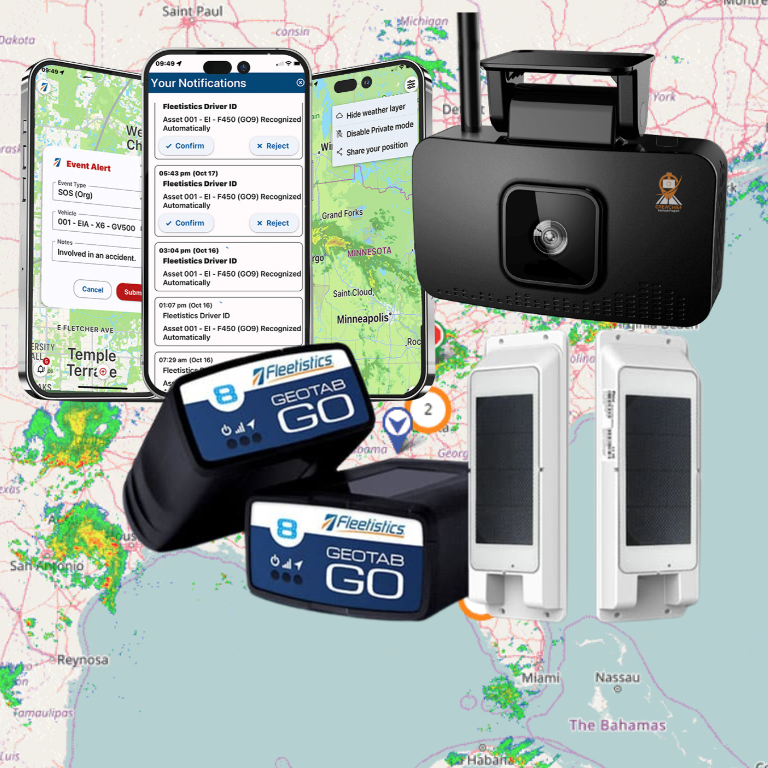

What is vehicle telematics data? It is information collected from a vehicle or asset and transmitted through a connected device or system for monitoring and analysis. Depending on the hardware, vehicle, configuration, and service, that information may include location, movement, engine readings, fault codes, trips, or driver-related events. The exact data available is not the same for every vehicle or device, so start by checking what your own equipment actually reports.
What does vehicle telematics data mean in practice?
Telematics combines communication with information about a vehicle or asset. In a fleet setting, a device gathers selected signals, associates them with a vehicle or other identifier. And sends them to software where people can review events and patterns. Some data can appear soon after it is collected; other reports may be processed or displayed later. Availability and timing depend on the particular system and connection.
Think of telematics data as observations, not conclusions. A location point can show where a vehicle was reported to be, but it does not by itself explain why a driver stopped. An engine code can identify a condition the vehicle has reported, but it does not replace inspection or diagnosis. A speeding event may be a prompt to review context and policy, not proof of unsafe intent.
This distinction helps prevent overconfidence. Telematics can give a fleet a more consistent record than scattered recollections. But a useful decision still depends on the quality of the signal, its context, and a defined operational process. For a broader introduction to location systems, see how GPS fleet tracking works.
Which types of data might a telematics system collect?
Vehicle telematics is an umbrella term. The actual data set varies with the device, vehicle interface, subscription, enabled features, and configuration. A fleet manager should verify each category with the device specifications and a sample report rather than assume every vehicle exposes every field.
- Location and movement: reported position, route history, direction, or movement status, subject to device capability and signal conditions.
- Trip and utilization details: trip start and end times, distance, operating time, stops, or time spent in selected areas. These fields help teams ask where vehicles are used and where availability may be mismatched with demand.
- Vehicle and engine information: readings or events provided through a vehicle connection, which can include diagnostic trouble codes and other supported engine data. Not every make, model, year, or installation provides the same details.
- Driver and safety events: configured event records related to such things as speeding thresholds, harsh movement, or camera-based observations when those capabilities are installed and enabled. The event definition and available evidence vary by system.
- Asset and equipment status: selected location, movement, or operating information for compatible non-vehicle assets. A basic location tracker may report far less than a powered asset connected to vehicle systems.
- Environmental or route context: information layered into fleet tools, such as weather or map-based context. This may come from a separate data source rather than directly from the vehicle.
Separate the source of a field from the place it appears. A dashboard may show several kinds of information together, but some values come from the vehicle. Some from a tracking device, and others from a third-party or platform layer. Knowing the source makes it easier to evaluate accuracy, refresh timing, and the right response.
How is telematics information collected and delivered?
A typical flow has four parts. First, a device is installed or connected to an asset. Depending on the solution, it may connect to a vehicle interface, use a separate power source, or receive location information from satellite positioning. Second, the device records supported signals at configured intervals or when an event occurs. Third, it sends selected information over a communications network. Finally, a software platform organizes the information into maps, alerts, reports, or integrations.
Each step can affect what a fleet sees. A device cannot report a value it does not support or cannot access. A weak connection can delay updates. A configuration may determine which events are recorded or how often a location is refreshed. Software may group, filter, or display raw signals as a more readable event. For this reason, two vehicles in one fleet can produce different levels of detail.
Review the hardware and installation choices against the questions you need to answer. For instance, a basic location requirement differs from a need to review engine information or camera events. Fleetistics offers several types of GPS tracking hardware; ask what each proposed device can capture for your specific vehicle and use case. For one example of a device family, see the Geotab GO10 overview.
Data quality also has limits. Satellite reception, vehicle conditions, installation, network coverage, timing settings, and platform processing can all affect the record. GPS accuracy is not identical in every setting; review the practical factors in this guide to GPS accuracy before treating a map point as exact.
How should you interpret a telematics record?
Begin with the question, not the dashboard. Decide what decision you are trying to make, identify the data that could inform it, then check the event’s context before acting. A clear process reduces the risk of treating a signal as a full explanation.
- Confirm the source and definition. Find out whether the value came from a vehicle sensor, a location device, a camera, a platform rule, or an external layer. Read how the report defines an event and which thresholds or filters are active.
- Check the time and vehicle match. Confirm the timestamp, time zone, asset identifier, and driver assignment if applicable. Look for gaps, duplicate records, or an unexpected device assignment.
- Compare with context. Review route, schedule, work order, maintenance history, or other relevant records. One data point may have several plausible explanations.
- Look for a repeatable pattern. A single event may merit verification. Repeated events across a consistent period or comparable vehicles can provide a stronger basis for investigation.
- Choose a proportionate next step. The right response may be to verify an installation, inspect a vehicle, update a workflow, coach a driver, or simply continue monitoring. Record what was checked and why.
For example, a diagnostic code is a useful lead, not a complete diagnosis. Confirm the code and vehicle details, compare the alert with symptoms and maintenance records, and have qualified personnel determine the needed inspection. This is a sounder process than replacing a part based only on a dashboard label. See how to interpret engine data for more detail on moving from a reading to an informed response.
Likewise, an apparent utilization gap should prompt questions about duty cycle, vehicle availability, seasonality, and assignment. It does not automatically mean an asset is unnecessary. Compare the underlying records over a meaningful period and involve the teams who understand the work.
How can fleet teams put telematics data to work?
Use a small number of operational questions to connect data to action. The aim is not to collect every possible signal. It is to create a reliable feedback loop: observe, check, act, and review whether the action helped.
- Improve dispatch visibility. Location and trip information can help teams understand vehicle progress and coordinate work. Set clear expectations about update frequency and what dispatchers should do when a record is stale or missing.
- Review utilization. Compare operating time, trips, and assignments with the work vehicles are meant to perform. Use findings to investigate scheduling or allocation opportunities, not to assume that one metric tells the whole story.
- Support maintenance workflows. Use supported engine alerts and vehicle records to flag items for review, then connect each alert to inspection and follow-up. Telematics does not replace a maintenance plan or a technician’s assessment.
- Coach safety consistently. Define event thresholds, review evidence fairly, and discuss patterns with drivers. The U.S. General Services Administration describes fleet telematics as a way to identify poor or hazardous driving practices and improve safety and fleet utilization.
- Understand energy use. Where the available data supports it, compare drive cycles and operating patterns to identify questions about energy efficiency. The U.S. Department of Energy’s Alternative Fuels Data Center report discusses using telematics data to translate drive cycles and driving behavior for energy-efficient mobility research; see Telematics and Data Science: Informing Energy-Efficient Mobility.
- Coordinate assets and service. Use location or status information to answer practical questions about equipment availability and response. Geofences can support location-based alerts when configured appropriately; learn more in this fleet geofencing guide.
Teams can bring multiple sources into a broader view. For example, combining a dashcam and tracker may give reviewers more context for selected vehicle events, while still requiring a fair review process and attention to the limits of each record. A collection of metrics becomes useful when owners know who reviews them, how often, and what action follows.
Which telematics option fits the data you need?
Compare options by the decisions they support rather than by a long feature list. Ask vendors to demonstrate the actual fields and reports available for a representative vehicle from your fleet. The table below is a decision framework; it does not mean that every device in a category provides every listed field.
| Option or data layer | Typical information to confirm | Best evaluation question | Key limitation to check |
|---|---|---|---|
| Location-focused tracking | Reported position, movement, trips, and supported alerts | Can this answer dispatch, route, or asset-location questions at the update rate we need? | Coverage, refresh timing, and location precision |
| Vehicle-connected telematics | Location plus supported vehicle or engine readings and events | Which specific fields are available on our vehicle makes, models, and years? | Vehicle compatibility and field-level availability |
| Camera or video telematics | Selected camera views or event-related video, depending on configuration | What triggers recording, who can review it, and how is footage handled? | Camera capability, event settings, data access, and retention rules |
| Integrated fleet platform | Combined reports, workflows, and connected applications | Can the team relate telematics events to maintenance, dispatch, or safety processes? | Integration scope, data mapping, permissions, and ongoing ownership |
Build the comparison around your actual vehicle mix and workflows. An option that reports many fields may add little value if no one can validate or act on them. Conversely, a focused location solution may be sufficient for a narrowly defined tracking need. Fleetistics works with Geotab technology and offers modular fleet solutions; the appropriate setup depends on fleet requirements, available hardware, and the processes a team intends to support.
What governance should accompany vehicle telematics?
Telematics data can relate to employees as well as vehicles. Establish sensible governance before broad deployment. Explain what the organization collects, the operational reason for collecting it, who can view it, and how managers will use it. Give employees a clear way to raise questions or correct assignment errors. Transparent notice and consistent policy help make monitoring understandable rather than surprising.
Set role-based access so people see information needed for their work. Define how long reports or recordings are retained, how access is granted or removed, and how exceptions are handled. Apply the organization’s applicable privacy, labor, safety, and recordkeeping requirements; rules differ by jurisdiction and use case, so obtain appropriate guidance for your situation.
Document event definitions and review procedures. If a score or alert is used in coaching or an employment decision, explain the criteria, verify the underlying record, and allow relevant context to be considered. Avoid using a proxy metric as a complete measure of an employee or operation. For camera data in particular, set clear access and review practices; this fleet privacy resource discusses privacy considerations around cameras.
Finally, decide how to protect and share the information. Use secure account practices, restrict exports to authorized purposes, and review connected applications before enabling data flows. A shared live view can be useful for a specific audience, but access should be intentional; review the use case for sharing vehicle or group locations and define who receives the link.
How do you build a dependable telematics workflow?
Translate the data into a routine that a team can follow during normal work, not just during a product demonstration. A simple workflow names the question, the signal, the person who reviews it, the action to take, and the record that closes the loop. For example, a dispatcher may review a delayed vehicle location, confirm whether the update is current, contact the appropriate person through the normal process, and note the resolution. If the location has not refreshed, the workflow should say how to verify status rather than treating an old point as live.
- Pick one use case. Start with a recurring operational problem, such as locating an assigned asset or routing a reported engine alert for review. Avoid rolling out several unconnected dashboards at once.
- Map the necessary fields. Write down which record is required, how current it must be, and what identifier ties it to the correct vehicle or asset. Confirm these fields appear in a real sample, not only in a feature list.
- Assign an owner and backup. Decide who reviews the event, who handles exceptions, and what happens when the primary reviewer is unavailable. This keeps alerts from becoming an unattended queue.
- Test exceptions deliberately. Check a missing update, a vehicle reassignment, an unexpected reading, and a duplicate event. Confirm the team can distinguish a data problem from an operational problem and knows when to escalate.
- Review and refine. Gather feedback from drivers, dispatchers, maintenance staff, and managers who use the information. Adjust thresholds, training, or process steps only after recording what changed and why.
Keep definitions stable during the test. If an event threshold, reporting interval, vehicle assignment, or user permission changes midway through the review, note the date and reason. Otherwise, a difference in the dashboard may reflect configuration rather than a meaningful operational change. A short reference sheet can define the event, explain the intended response, and identify who can answer questions.
Do not judge a pilot only by whether the technology is online. Also check whether the data arrives with the needed level of detail, users can find it, and someone completes the follow-up. If a field is unreliable or the action creates unnecessary work, revise the use case before broadening it. This small operational test makes it easier to separate a useful signal from a feature that looks attractive but does not fit the fleet’s actual workflow.
How can you evaluate a telematics data program?
Before rollout, write down the operational problem, the decision owner, and what evidence would show that the workflow is improving. Choose a manageable set of measures tied to the purpose. For example, a dispatch initiative may examine whether status information is current and whether exceptions are resolved; a maintenance initiative may check whether alerts receive documented review. Avoid selecting metrics simply because a report makes them easy to display.
Establish a baseline using a defined period and consistent definitions. Then test the workflow on a representative group of vehicles, validate that the right fields are arriving, and ask users where the process creates friction. Keep a record of configuration changes so a shift in reporting is not mistaken for a shift in operations.
Review performance at regular intervals with the people responsible for acting on it. Ask whether the signal is reliable enough, whether the response happens on time, and whether the decision produced the intended operational result. A useful dashboard is one that supports a repeatable decision, not one that merely displays more data. Fleet leaders looking to select practical indicators can use this guide to fleet analytics metrics as a starting point.
For a fleet considering a broader rollout, compare needed fields, integration requirements, user access, support, and the time required to manage the workflow. An open platform can connect data with other systems, but integrations still need ownership, testing, and ongoing review. Begin with the most important question, then expand when the team can explain how additional data will be used.
Talk with Fleetistics about your data requirements
Frequently asked questions
Is vehicle telematics data the same as GPS data?
No. GPS location can be one component of telematics data. Telematics may also include supported vehicle readings, trips, events, camera information, or other connected data. The exact mix depends on the device, vehicle, configuration, and service.
Does every vehicle provide the same telematics data?
No. Vehicle compatibility, model year, installed hardware, available signals, configuration, and network conditions all affect what a system can report. Ask for a field-level demonstration using vehicles similar to yours.
Can telematics diagnose a mechanical problem?
Telematics can provide information such as a supported fault code or alert that helps a team decide what to inspect. It is not, by itself, a complete mechanical diagnosis. Confirm the record and have qualified personnel evaluate the vehicle.
How should a fleet introduce employee-facing tracking?
Explain the purpose, information collected, access rules, and how records may be used before launch. Apply a clear policy, provide a way to address questions or inaccurate assignments, and keep reviews consistent with the stated purpose and applicable requirements.
What is the practical next step?
Talk with Fleetistics about your data requirements
List the decisions your team needs to make, match each one to the data that could support it. And verify that your vehicles and devices provide those fields reliably. Then set clear review, access, and follow-up rules before expanding collection. A focused, well-governed telematics workflow is more useful than a large data set without a defined purpose.
Previous: How Does Real Time Vehicle Tracking Work? | Next: Predictive Analytics Fleet Management: Data to Action.