Utility fleet management software should connect the work your crews perform with the vehicles and equipment they depend on. When comparing systems, look beyond a map of truck locations: evaluate how well each option supports work orders, asset visibility, crew safety, maintenance, and service territories as one practical operating workflow.
Discuss your utility fleet needs
What should utility fleet management software help you coordinate?
Utility fleets have a mixed operating picture. A team may dispatch service trucks for scheduled work, respond to an outage or equipment issue, and move specialized assets between sites. The software should help managers answer a handful of questions quickly: Which vehicle or asset is available? Where is it? Is it assigned to the right work? Is it ready to go? What happened during the shift?
Start by mapping the workflows you actually need to improve. Include dispatch, field supervisors, drivers, maintenance staff, and the people who manage records. A system that gives one group a useful map but leaves other teams dependent on separate spreadsheets may create another information silo rather than solve the coordination problem.
- Work coordination: Connect a vehicle or crew to the job, territory, or service request they are supporting.
- Vehicle and equipment visibility: Find mobile resources and understand whether they are moving, idle, or at a known work location.
- Readiness: Surface maintenance needs and inspection information early enough for the team to act.
- Safety: Give supervisors practical information to review driving events and coach consistently.
- Management insight: Review utilization, response patterns, and operating exceptions with data that supports a decision.
For a grounding in how location data works, see what GPS fleet tracking is and how it works. Then assess how that core visibility fits utility-specific processes instead of assuming a tracker alone will manage the operation.
How should you evaluate work-order and crew coordination?
A utility work order is more than a destination. It may involve a crew, a service vehicle, specialized equipment, a scheduled time window, and a location that changes as work progresses. During a product review, trace one representative job from assignment through completion. Ask what the dispatcher can see, what the field team receives, and what information remains available afterward.
Check whether the platform can help your team connect vehicle activity to the work being performed. Can dispatch see which assigned resources are nearby? Can a supervisor distinguish a planned stop from an unexpected delay? Can the team review the trip or location history associated with a job without asking several people to reconstruct events from memory?
Do not assume that a GPS point is the same as a completed work order. Location can provide useful context, but your organization still needs a clear process for recording task status, completion details, and exceptions. Identify which system will remain the authoritative record for work orders and determine whether the fleet platform can share relevant data through available integrations.
In a demo, use a realistic scenario: a planned inspection, a service call added during the day, and a crew reassignment. Watch how many steps it takes to update the work and whether the change is visible to the people who need it. Ask what happens when a vehicle has limited connectivity or when a crew uses a phone rather than a dedicated in-cab interface.
What vehicle and equipment visibility do utility teams need?
Utility operations may depend on more than road vehicles. Consider the full inventory that affects readiness: service trucks, trailers, generators, material-handling equipment, and other mobile assets. Not every item needs the same tracking method or reporting frequency. A practical system lets you match visibility to the value, mobility, and use of each asset.
Build a short asset list and group it by operational need. For example, a dispatched truck may require frequent location updates. While a trailer may mainly need to be found when crews prepare for work or conduct an inventory check. Ask what device, power source, coverage, and installation each group requires. Confirm the update behavior in the environments where the assets operate, including remote service areas if those are part of your territory.
Useful questions include whether managers can organize vehicles and assets by district, crew, depot, or equipment type. Whether authorized staff can locate a resource without having access to unrelated groups; and whether map views are clear on a mobile device. Explore IoT asset-tracking considerations if the fleet includes equipment that is not routinely powered by a vehicle.
For work that requires sharing a vehicle’s location with another authorized party, ask whether a controlled sharing option is available and how access expires or is revoked. See vehicle and group location sharing as an example to discuss during evaluation. Treat sharing permissions as part of governance, not just a convenience feature.
How can software support crew safety without creating noise?
Safety tools are useful when they lead to consistent review and coaching. Ask what driving events the system can identify, how supervisors review the context, and how drivers are informed about monitoring. Set expectations for who can view data, what events trigger follow-up, and how the organization will distinguish a coaching opportunity from a data-quality issue.
Telematics and camera options serve different purposes. A vehicle tracking platform can provide location and vehicle-event information; a camera can provide additional visual context when configured for that purpose. Compare these options against your safety program, privacy expectations, and review capacity. More alerts are not automatically better if supervisors cannot assess them and respond fairly.
Plan transparent employee communication before rollout. Explain what information is collected, how it supports safe and effective operations, who reviews it, and how employees can ask questions. A clear policy and feedback path help set a shared understanding. Fleet teams can use guidance for introducing GPS tracking to employees, along with a sample driver policy to shape their own rules.
For camera-specific evaluation, ask about the events captured, access controls, retention settings, and how video fits the investigation or coaching process. The fleet safety solutions overview can help frame a discussion of tracking, cameras, and safety workflows. Select technology and policy together; neither is a substitute for the other.
What maintenance capabilities matter in a utility fleet?
Maintenance affects whether a truck or piece of equipment is ready when a crew needs it. Determine whether the system can help your team organize service schedules, capture relevant vehicle information, and bring upcoming needs to the attention of the right person. Then define how a reminder becomes an assigned maintenance task and how completion is recorded.
Ask which data the platform receives from each vehicle and device. Diagnostic information can help identify a condition to investigate, but a code or alert is not necessarily a confirmed diagnosis. Your technicians need a process to verify the issue, prioritize it, and document the repair. For more on that distinction, review how to interpret engine data before taking action.
During the review, walk through an overdue inspection or an unexpected warning. Can a manager see the responsible vehicle, the alert, and the follow-up status? Can a technician record what was checked and what was repaired? Does the tool connect to an existing maintenance system, or would staff have to enter the same information twice? A clear answer is more valuable than a long feature list.
How should you compare service-territory and routing tools?
Territory visibility can help managers understand where resources are assigned and whether work is concentrated in particular areas. Determine how the software represents your districts, depots, service boundaries, and work locations. Some systems give you the ability to view your tracking data on your internal GIS maps. If this is a beneficial feature for your organization, be sure to inquire how your GIS maps can be added. Ask whether authorized users can filter the map by crew or resource and whether a supervisor can quickly see vehicles relevant to a current operating issue.
Routing tools may help plan a sequence of stops, but utility work is not always a fixed delivery route. Priorities can change as new service requests arrive, work takes longer than expected, or a crew needs a different asset. Test how the proposed system handles route changes and whether dispatch can update assignments without losing the context of the original plan.
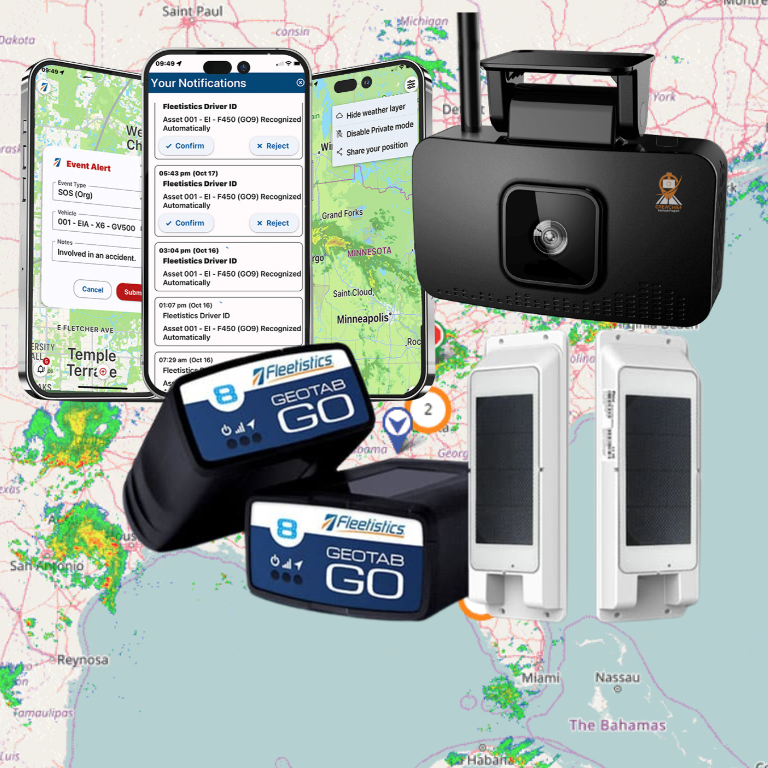
Consider weather and road conditions as operational context, not as a promise that software will predict every disruption. If that information matters to your procedures, ask what data is available, how current it is, and how it appears to dispatchers and field staff. Fleetistics discusses weather information in fleet tracking as one potential layer to evaluate.
When you test a routing workflow, use a representative territory and actual operating constraints. Include a normal day and a change to the plan. Record whether the tool helps your team make a better-informed decision, and whether the resulting instructions reach the people doing the work.
Which option is the best fit for your utility operation?
Compare options against the work you need to support, not the number of items on a feature sheet. A basic location-focused configuration may be appropriate for a team whose first priority is finding vehicles. Another team may need a broader mix of maintenance, safety, equipment visibility, and integrations. A modular approach can make it easier to begin with priority workflows and add capabilities as needs become clear.
| Evaluation area | Basic location focus | Broader operational platform | Questions to ask |
|---|---|---|---|
| Vehicle visibility | Map position and trip context | Visibility organized by crew, district, or vehicle group | Can dispatch filter the view quickly and see the history needed for follow-up? |
| Work coordination | Location used as context for assignments | Work and resource data connected through a defined workflow or integration | Which system owns work-order status, and how are changes shared? |
| Equipment | Focus on powered vehicles | Different tracking approaches for vehicles and mobile equipment | Can you match device, power, and update needs to each asset group? |
| Safety | Vehicle activity information | Additional event review or camera workflows where appropriate | Who reviews events, informs employees, and follows up? |
| Maintenance | Vehicle data available for reference | Maintenance reminders and follow-through linked to an established process | How do alerts become verified, assigned, and documented work? |
| Growth and integration | Limited initial scope | Capabilities selected in stages with relevant system connections | What can be added later, and what data can be exchanged? |
Ask each provider to demonstrate the same scenarios, using the same questions and participants. Score the results on ease of use, data relevance, workflow fit, configuration effort, support, and ability to expand. Include the people who will use the system in the field; their experience can reveal friction that is easy to miss in a management presentation.
For teams comparing platform structure and integration options, review Fleetistics fleet management solutions and its approach to Geotab-based technology. Fleetistics has served fleets since 2001 and combines a modular platform with a broad integration ecosystem. Ask which components fit your utility’s requirements rather than assuming every operation needs the same configuration.
How should you run a practical evaluation?
Before selecting software, agree on a small number of operational questions the evaluation must answer. A focused test helps distinguish a useful workflow from a polished presentation.
- Choose representative users and assets. Include dispatch, a field supervisor, a driver or crew representative, and maintenance staff. Select a few vehicles and equipment types that reflect real needs.
- Document the current workflow. Note how assignments are made, how teams find assets, where maintenance information lives, and how exceptions are communicated.
- Set observable measures. Track practical indicators such as time needed to locate an available vehicle, completeness of assignment records, missed maintenance follow-ups, or effort required to prepare an operational review. Establish a baseline before testing.
- Run realistic scenarios. Test routine dispatch, a changed assignment, an asset search, a maintenance alert, and the review of a safety event. Include a field user’s mobile experience.
- Check governance and integration. Confirm user permissions, retention and access controls, employee communication, and how the platform will exchange information with existing systems.
- Review the outcome together. Ask users what improved, what became harder, and which gaps remain. Decide whether a staged rollout, revised configuration, or a different workflow is needed.
Keep expectations grounded. A platform can organize information and make patterns easier to review, but it cannot replace clear work ownership, sound maintenance practices, or supervisor judgment. If an evaluation includes a proposed efficiency or savings estimate, ask what assumptions produce it and how your organization will measure the result against its own baseline.
What should you ask before choosing a provider?
Use these questions to turn a vendor demonstration into a useful operational discussion:
- Can you show our work-order and dispatch scenario from assignment through review?
- What vehicle and equipment tracking options suit our mix of powered and non-powered assets?
- What data will each device report, and what conditions may affect availability or update frequency?
- How do users see territories, crews, and relevant vehicles without being overwhelmed by unrelated information?
- How are maintenance reminders reviewed, assigned, verified, and closed?
- Which safety events or camera functions are available, and what governance should we plan?
- What integrations are available, and what data moves in each direction?
- What support, implementation, and training are included in the proposed approach?
- Can we start with a defined scope and expand only when the next operational need is confirmed?
Also ask for clarity on device installation, user access, data retention, system administration, and what happens when personnel or vehicles change. If your service territory includes remote locations, test coverage in the conditions that matter to your operation rather than relying only on a general demonstration.
Book a consultation to review your fleet workflows
Frequently asked questions
Is GPS tracking enough for a utility fleet?
GPS tracking can provide useful vehicle location and trip context, but it may not automatically manage work orders, maintenance, equipment records, or employee policies. Decide whether your priority is basic visibility or a connected set of workflows, then evaluate the configuration that fits.
Can one system track trucks and other utility equipment?
Potentially, but the right device and reporting approach may differ by asset. List the equipment, how it is powered, where it operates, and how often staff need location updates. Use that inventory to confirm the best fit for each asset group.
How do we measure whether the software helps?
Choose measures tied to a current operational issue before implementation. Examples include how long it takes to locate a resource, whether maintenance follow-ups are documented, or how much effort goes into reviewing assignments. Compare results with a consistent baseline and account for changes in workload and process.
Should we add cameras to a fleet tracking system?
That depends on your safety goals, review capacity, employee communication, and governance. Compare camera capabilities with location and vehicle-event data, then define who may access recordings and how events are handled before turning on a new workflow.
Ready to evaluate a utility fleet platform?
Start with the operational problem, map the people and assets involved, and test the workflow with realistic scenarios. The U.S. Department of Energy provides broader energy-sector context at energy.gov; your software evaluation should still be grounded in your organization’s own service, safety, and maintenance requirements.
Talk with Fleetistics about a utility fleet evaluation
With clear requirements and a measured evaluation, your team can choose capabilities that support its day-to-day work without taking on tools it does not need.
Previous: Waste Management Routing Software: A Practical Fleet Guide | Next: Boat Maintenance Software: What Fleet Operators Should Evaluate.