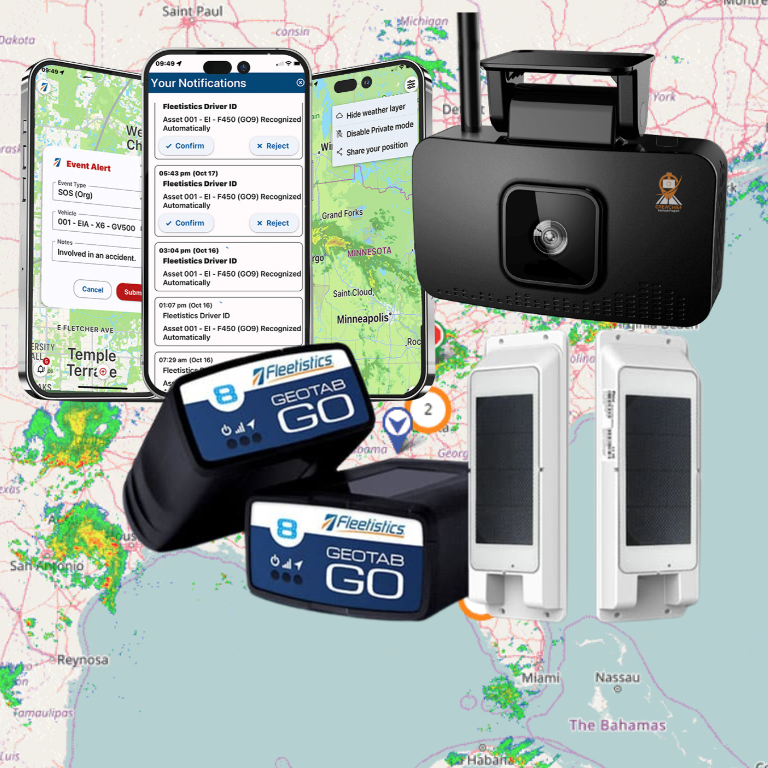


Video telematics pricing depends on more than the camera itself. Your total cost can include hardware, installation, cellular connectivity, video storage, software access, support, and the work needed to roll out the system. Compare those items together, then request a quote based on your vehicles, operating conditions, and goals, not a generic per-camera figure.
Book a consultative demo to discuss your fleet requirements
What does video telematics pricing include?
A video telematics system combines video with vehicle or driver data. Depending on the configuration, it may help a fleet review events, understand context around driving behavior, and connect footage with other telematics information. The components and service terms vary, so a quoted monthly amount may not represent the full cost of ownership.
Start by separating the proposal into two groups:
- One-time or variable costs: cameras and other equipment, installation labor, shipping, configuration, and initial training.
- Recurring costs: software or service subscriptions, cellular data, video storage, support, and any optional capabilities.
Ask whether each line is included, optional, charged once, or billed repeatedly. Also confirm whether the stated amount is per vehicle, per camera, per user, per month, or based on usage. A clear unit of measure prevents two proposals from appearing comparable when they cover different things.
If you are still clarifying the difference between location data and broader vehicle information, review how GPS fleet tracking works. For video specifically, this guide to video telematics, safety, coaching, and ROI can help you define the use case before evaluating a quote.
Which cost drivers should you compare?
Use the table as a quote-review checklist. The right configuration depends on the vehicles, work, and decisions you want the system to support. Do not assume every fleet needs every option.
| Cost driver | How it may be priced | What to ask before comparing |
|---|---|---|
| Camera and hardware | Purchase, lease, or equipment bundled into a service plan | Which cameras and components are included? Are additional views, cables, or accessories required for your vehicle types? |
| Installation | Per vehicle, per device, or project-based labor | Does the quote include installation, scheduling, travel, and testing? Who handles vehicles with unusual layouts? |
| Connectivity | Recurring plan, pooled data, or usage-based service | What network access is included? Are data limits, overages, or different treatment for live viewing specified? |
| Video storage and retrieval | Storage tier, retention period, event volume, or usage | How long is footage retained? What triggers upload? Are downloads, exports, or additional retention billed separately? |
| Software and users | Per vehicle, device, user, or subscription tier | Which dashboards, event tools, and reporting functions are included? Are there limits on users or access? |
| Support and warranty | Included service, support tier, or separate coverage | What support channels and hours are available? What is covered for hardware replacement and troubleshooting? |
| Implementation and training | One-time project fee, included onboarding, or separate services | Who configures the system, helps set policies, trains users, and checks adoption after launch? |
How does the camera configuration affect cost?
The hardware decision should follow the evidence you need, not the assumption that more cameras are always better. A forward-facing view, an in-cab view, or additional camera perspectives can capture different context. Each can also change equipment, installation, connectivity, storage, and review requirements.
Write down the operational question first. Do you need to understand what was happening in front of a vehicle? Do you need a view of the cab to support coaching? Are you evaluating a specific blind spot or work activity? Match each view to a defined use, and ask the provider to explain what that configuration will and will not show.
Compare camera resolution and field of view, low-light performance, event recording, and how footage is retrieved. The quote should say whether event-triggered clips, continuous recording, or live access are part of the proposed service. These choices can influence how much data is sent and retained. Review how dashcams and vehicle trackers work together when you are comparing video with other fleet data.
For every camera option, ask whether the system is compatible with the vehicles in your fleet and what happens if a vehicle is replaced. Mixed fleets may need more than one installation approach. Fleetistics offers modular fleet management solutions using Geotab technology; the useful question is which combination fits your vehicles and operating needs, not whether one package is right for every organization.
What should you ask about installation?
Installation is easy to overlook in a headline price. Yet labor, vehicle access, wiring, scheduling, and testing can affect both the project budget and the time vehicles are unavailable. Clarify the scope before approving the hardware order.
- Is installation included in the quote, and is the rate the same for every vehicle type?
- Where will installation happen, and who coordinates vehicle appointments?
- Will the installer document camera position and verify that the device records correctly?
- What is the process if a vehicle cannot be completed at its scheduled appointment?
- Are removal, transfer, or reinstallation costs specified when equipment moves between vehicles?
Ask for a rollout sequence that reflects your operation. A small pilot can help confirm fit, recording behavior, and user workflow before broader deployment. For a large or geographically dispersed fleet, ask how the provider will coordinate sites and communicate progress. The in-cab video resource can help your team frame questions about camera use and fleet safety.
How do connectivity and storage change the monthly total?
Video files can require more data and storage than basic location updates. The amount depends on configuration and use. Ask the provider to spell out how video is recorded, what causes a clip to be uploaded, how live viewing works if offered, and what storage or retrieval limits apply.
Do not compare data plans by name alone. Ask for the included allowance or usage policy and what happens when it is exceeded. If the plan uses event-based uploads, clarify which events create a clip and whether settings can be adjusted. If the team expects to retain footage for a particular period, have that retention need stated in the proposal.
There are practical tradeoffs: retaining more video may help with later review, but it can also affect storage and administration. A large volume of footage is not useful unless your team can locate relevant clips and has a consistent process for review. Include access permissions, retrieval steps, and export needs in the evaluation, not just storage capacity.
What support and implementation work belongs in the quote?
A device can be installed and still fail to deliver value if the fleet has no agreed process for using the information. Clarify what the supplier provides after the order: account setup, configuration, user training, troubleshooting, and assistance with early adjustments. Separate included services from any optional or billable work.
Support terms deserve the same attention as hardware terms. Confirm the support channels, hours, response process, and warranty coverage in writing. Ask how a faulty camera is diagnosed, whether replacement equipment is covered, and who pays for labor if a repair requires a service visit. Do not assume that a hardware warranty covers installation labor, connectivity, or subscription charges.
Implementation should also address who can view video, how events are reviewed, and how drivers are informed about the program. A transparent policy and clear expectations help make the system part of a safety process rather than a device that produces unused alerts. Fleet teams can use privacy considerations for fleet cameras to inform policy discussions, then tailor procedures to their organization and applicable requirements.
For a practical follow-through plan, see Fleetistics training resources and the guide to fleet safety metrics and coaching. These topics can help you decide how people will act on what the cameras show.
How do you budget for an evaluation and a full rollout?
A pilot and a fleetwide deployment are different budget cases. For an evaluation, count the vehicles and locations involved, any minimum subscription period, the installation and removal plan, and the staff time needed to assess results. Ask whether pilot equipment can remain in service if you proceed, and whether any setup work must be repeated for the broader rollout. Get the answer in writing so the pilot total does not leave out the transition.
For the full rollout, map costs against deployment waves. A fleet spread across multiple depots may incur installation work at different times, while a concentrated group of vehicles may be scheduled in a smaller number of visits. Ask whether the provider’s estimate assumes all vehicles are available together. Identify dependencies such as driver communication, account setup, policy approval, and training before setting a launch date.
Make a short list of scope changes that could alter cost: adding camera views, changing retention, increasing the number of users, or expanding to vehicle types not represented in the initial group. Request the cost impact or pricing rule for each. You do not need to predict every future need; you do need to understand how the proposal treats changes.
Finally, agree on a review checkpoint. At that point, compare actual rollout effort and recurring charges with the original assumptions. This gives you a practical basis to adjust the configuration, continue the deployment, or revisit the service terms before the fleet expands further.
How can you compare quotes on equal terms?
Normalize proposals before choosing a provider. Build a simple cost sheet with the same vehicle count, camera configuration, service period, storage needs, and support assumptions for each option. Show setup charges separately from recurring charges, and flag any usage-based amounts that cannot be known in advance.
- Define your use case. Identify the safety, claims, operational, or coaching problem the system is meant to address. Choose a small number of outcomes you can observe.
- Inventory the fleet. Record vehicle types, quantity, locations, duty cycles, and any special installation needs. Avoid assuming that a single installation estimate covers every vehicle.
- Specify the configuration. List required camera views, connectivity, event settings, retention, user roles, integrations, and reports.
- Separate cost categories. Record equipment, installation, monthly service, storage, support, onboarding, taxes or fees if shown, and any optional items as separate rows.
- Calculate the evaluation period. Compare setup and recurring costs across the same time horizon. Include deployment effort and expected equipment moves where relevant.
- Check contract and exit terms. Confirm commitment length, renewal terms, return or ownership of hardware, and what happens to stored video and account access if service ends.
- Test the workflow. Before scaling, confirm that users can retrieve the right clips, understand alerts, and follow the intended review and coaching process.
Do not treat projected savings as guaranteed. Ask what assumptions support a business case, who owns each workflow change, and how the fleet will measure results after deployment. Useful measures may include whether the desired video is available when needed, how quickly authorized staff can retrieve it, and whether coaching actions are completed. Choose measures that reflect your purpose and baseline rather than borrowing a promised result from another operation.
How can you build a like-for-like cost model?
Use a consistent period for every option, such as the planned evaluation period or the expected service term. Put the one-time setup total on one line, then calculate recurring items over that same period. Keep variable expenses separate and show the provider’s assumptions instead of treating an uncertain amount as fixed. If one quote excludes installation or onboarding, mark the gap rather than quietly comparing it with a fully scoped offer.
Next, calculate an effective cost per equipped vehicle for the chosen period, while preserving the underlying categories. This is a comparison aid, not a replacement for the detailed quote. Two solutions with a similar per-vehicle figure may differ in retention, support, camera views, or deployment effort. Keep those differences visible so a lower amount does not conceal a narrower scope.
Finally, consider operational effort alongside the invoice. Estimate who will schedule installs, administer accounts, review events, and provide coaching. These are real demands on staff time even when a proposal does not bill separately for them. A fair comparison considers the complete workflow and identifies what the fleet must contribute to make the system useful.
Which planning scenarios should you model?
Test a few realistic scenarios before you settle on a budget. A basic case might equip a defined group of vehicles with one required camera view and event-based footage retrieval. A broader case might include additional views, a longer retention requirement, or more authorized users. These are planning examples, not package recommendations; ask each provider to price the same scope so you can see what changes the total.
Also model operational changes that are easy to miss. If seasonal vehicles join the fleet, will they need their own equipment and subscriptions for the full term? If a camera moves from a retired vehicle to a replacement, will labor or reconfiguration apply? If a safety manager needs to preserve a particular clip beyond the standard retention period, what process and fee apply? These questions help identify budget exposure without pretending that uncertain usage can be forecast precisely.
Keep one assumptions column beside every scenario. Note the vehicle count, camera layout, deployment locations, contract period, retention expectation, and included support. When a quote changes, update the assumption that caused the change rather than changing the total without explanation. This makes internal approvals easier and gives procurement a clear record for later review.
What should you send when requesting a quote?
A focused request helps a consultant recommend a fit-for-purpose configuration. You do not need a finished technical specification, but you should provide enough context to make the discussion concrete.
- Approximate vehicle count, vehicle types, and locations.
- The reason you are evaluating video and the situations you want to understand.
- Camera views or recording needs you already know are important.
- Expected users, review process, and any driver communication or policy work underway.
- Connectivity conditions, retention expectations, and any integration needs.
- Desired rollout timing and whether you want to begin with a pilot.
Ask for an itemized proposal that identifies equipment, installation, recurring service, storage, support, and implementation. If a detail is uncertain, have the quote state the assumption and explain how a change would affect cost. That gives you a more useful basis for budgeting than a single number without scope.
Request a quote for your fleet configuration
Frequently asked questions about video telematics pricing
Is video telematics billed per vehicle or per camera?
It depends on the proposal. A service may price hardware, software, connectivity, or storage using different units. Ask the provider to label each line clearly and state which components are recurring.
Is installation always included?
No universal assumption is safe. Some proposals may bundle installation; others may list it separately or vary the charge by vehicle and location. Confirm labor, scheduling, testing, and future equipment transfers before comparing totals.
How much video storage does a fleet need?
That depends on recording settings, event volume, retrieval habits, and how long your organization needs to retain clips. Define the use case and retention expectation, then ask the provider to explain limits and any charges for additional storage or access.
Can we start with a pilot instead of equipping the whole fleet?
A pilot can help verify installation fit, camera views, data handling, and user workflows before a wider rollout. Set a defined evaluation period, participant group, success measures, and decision process so the pilot produces useful information.
Ready to budget for the right configuration?
Budgeting works best when your quote reflects the full system and the work required to use it. Fleetistics has served fleets since 2001 and partners with Geotab; a consultative review can help you map your vehicle types, goals, and deployment needs to a suitable configuration without assuming one package fits every fleet.
Book a consultative demo and discuss your fleet needs
Previous: Dashcam and Tracker for Fleets | Next: Video Telematics: A Practical Fleet Safety Guide. Continue with either guide to explore system fit and fleet safety workflows.