Government fleet managers must improve safety, control costs, and document every purchasing decision across vehicles with very different operating demands. The right telematics program supports that accountability without forcing your agency through a slow, disconnected procurement process.
Contact Fleetistics to explore your agency’s Sourcewell tracking options
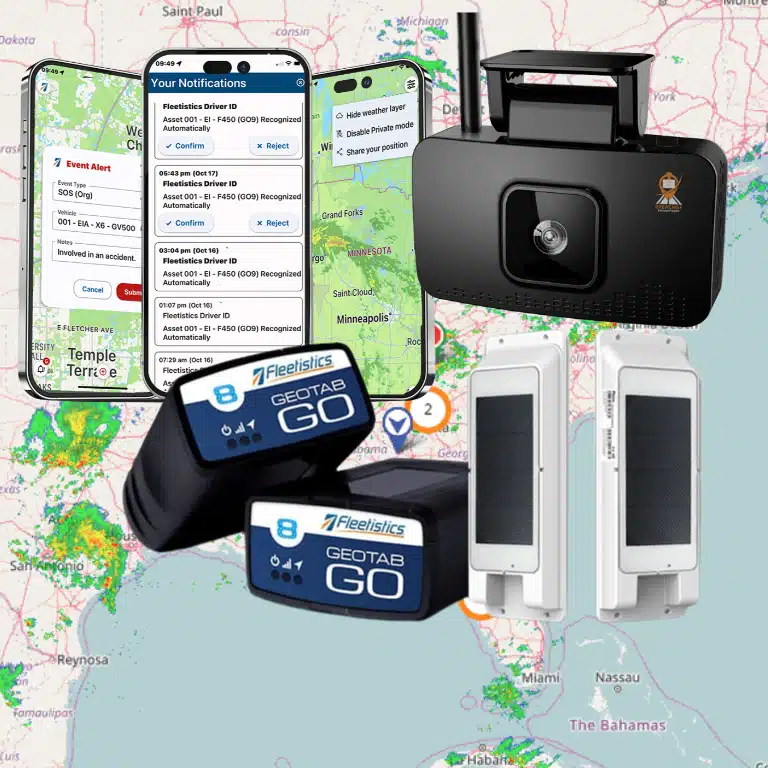
A government fleet tracking sourcewell contract gives eligible public agencies a competitively solicited path to fleet tracking and telematics solutions, helping them move forward without starting a separate full-scale bid. Fleetistics supports this approach with modular Geotab technology, implementation guidance, and ongoing service matched to the agency’s fleet.
The opportunity is practical, not theoretical. Fleetistics supported the City of Seattle’s 4,100-vehicle fleet and helped document $2 million in fuel savings. Before evaluating contract details, it helps to understand why municipal and state fleets need a different GPS tracking strategy than a typical commercial operation. Learn more about fleet tracking by industry as you assess the requirements that matter most.
What Does a Government Fleet Tracking Sourcewell Contract Include?
A Sourcewell contract for government fleet tracking is a competitively solicited cooperative purchasing agreement covering GPS telematics and fleet management software. It gives eligible public agencies access to pre-vetted suppliers and a documented procurement path, while each agency confirms its own eligibility, scope, and purchasing rules.
Sourcewell is a service cooperative that helps government, education, and nonprofit organizations purchase products and services through competitively solicited contracts. Instead of asking every agency to run a separate procurement process for complex fleet technology, an eligible organization can use an existing cooperative contract subject to its own applicable purchasing requirements. Sourcewell describes its cooperative purchasing model and participating contracts at Sourcewell’s fleet resource.
For public-sector fleet managers, that distinction matters. A government fleet tracking Sourcewell contract creates access to qualified fleet technology and suppliers, then lets the agency match the solution to its vehicles, assets, operating environment, and budget while preserving the documentation and accountability expected of public agencies.
What types of fleet technology are available?
Sourcewell agreements cover fleet management solutions, including telematics, GPS tracking, and public safety fleet applications. A configuration may combine several capabilities:
- Vehicle and asset visibility: GPS location, trip history, utilization data, and operational status for vehicles and equipment.
- Maintenance support: Telematics data and alerts that help managers identify service needs before a preventable issue creates downtime.
- Safety and public-service operations: Tools that help agencies understand vehicle use, respond to incidents, and manage fleets with different mission requirements.
- Driver and operator management: Behavior insights and coaching support that reinforce safe, efficient operation.
- Fuel and sustainability reporting: Consumption, idling, and mileage data that support cost control and sustainability goals.
- Compliance and reporting: Records that support operational reviews and the reporting obligations associated with government fleet programs.
This modular approach matters because a police department, public works team, and parks department may not need the same devices or workflows. A smaller agency may start with location and utilization tracking, while a larger operation adds maintenance, safety, compliance, and analytics as needs develop. The goal is a useful platform, not technology bought simply because it appears in a contract catalog.

Where does Fleetistics fit?
Fleetistics provides fleet tracking and Geotab telematics through applicable Sourcewell agreements as an authorized Geotab distributor, acting as the agency’s reseller and advocate. That means your team has a partner to define requirements, configure the deployment, and coordinate support, rather than purchasing directly from Geotab.
You can review the available purchasing pathway and solution context in the Sourcewell fleet GPS tracking contract resource. Before selecting a configuration, identify the assets you need to monitor, the reports stakeholders require, and the outcomes the fleet must improve. Sourcewell’s competitively solicited contracts and pre-vetted supplier access can simplify the starting point, but a careful requirements review still determines whether the final deployment will deliver value.
Why Do Government Fleets Have Unique GPS Tracking Requirements?
Government fleets need GPS tracking that balances public safety, service continuity, and taxpayer accountability alongside operational efficiency. A public-sector platform must scale across mixed fleets, support emergency response, and produce defensible reports, rather than simply tracking a single vehicle type.
A commercial fleet may focus on delivery times, route efficiency, or customer service. A public-sector fleet has to balance those priorities with public safety, service continuity, and taxpayer accountability, which changes what you need from GPS tracking.
Municipal fleets are rarely uniform. One agency may manage police cruisers, public works trucks, utility vehicles, transit assets, trailers, and heavy equipment at the same time. These assets operate in different environments and follow different workflows. A practical platform needs to scale across that mix, with the right tracking, maintenance, safety, and reporting tools for each use case. Fleetistics describes this as a modular approach to municipal fleet management, rather than forcing every department into the same configuration.
That flexibility matters when you are evaluating government fleet telematics solutions. Patrol vehicles may need location visibility and incident context, while public works supervisors confirm crew locations during a storm response and utility teams monitor assets far from the depot. The goal is not simply to place a dot on a map. It is to give each team usable information while maintaining a common operational view.
Why does uptime matter more for public-sector vehicles?
Downtime in a public agency can delay emergency response, interrupt essential services, or leave a community waiting. Government fleets therefore need dependable vehicle data and maintenance alerts that help managers catch issues before a breakdown takes a critical asset out of service. Dispatchers and supervisors can then see available vehicles, verify activity, and make faster decisions when conditions change.
How do agencies maintain visibility at scale?
Large government fleets cannot rely on department-by-department spreadsheets or disconnected tools. Managing thousands of vehicles requires a centralized telematics platform that gives authorized users a consistent view of location, utilization, idling, and routing while supporting better fuel and resource decisions.
Finally, every technology purchase faces public scrutiny. You should be able to connect fleet data to measurable outcomes and document whether the investment delivers value. That combination of visibility and defensible reporting makes government fleet tracking a distinct decision.
How Do Agencies Buy GPS Tracking Through a Sourcewell Contract Without a Bid?
An eligible agency uses an existing Sourcewell cooperative contract instead of issuing its own request for proposals. Sourcewell has already run the competitive solicitation, so the agency confirms its requirements, selects an awarded supplier, and completes its own purchasing documentation.
Sourcewell does not eliminate procurement accountability. It changes where the competitive work happens. Instead of asking every city, county, or state agency to issue its own request for proposals, Sourcewell conducts a competitive solicitation for cooperative contracts that participating public agencies can use.
That distinction matters when you are evaluating a government fleet tracking sourcewell contract. The contract provides a legally compliant purchasing path, but your agency still needs to confirm eligibility, follow its internal approval process, and document the purchase according to applicable local and state requirements. Sourcewell’s cooperative purchasing model is designed to support those requirements through a transparent, competitively solicited process. Review Sourcewell’s fleet purchasing information for the current contract and program details.
What are the steps in the no-bid process?
In practice, a participating agency uses an existing Sourcewell contract rather than issuing a separate RFP for the same category of fleet technology. The process follows a clear sequence:
- Confirm your agency is eligible to participate in the Sourcewell cooperative.
- Identify the vehicles, assets, and operational outcomes the fleet technology must support.
- Confirm the award contract covers the needed solution and supplier.
- Complete your agency’s own purchasing documentation and approval process.
- Select the awarded supplier and scope the deployment to your requirements.
This can remove months of work compared with an agency-by-agency RFP. Your team spends less time writing specs, advertising a solicitation, and repeating due diligence that Sourcewell has already completed at the cooperative level, without treating procurement as an informal purchase.
| Procurement path | Agency-by-agency RFP | Sourcewell cooperative contract |
|---|---|---|
| Competitive solicitation | Run separately for each project | Completed at the cooperative level |
| Time to award | Often months of specification and review work | Faster path using an existing contract |
| Buying power | Single agency negotiating alone | Collective demand across many agencies |
| Supplier vetting | Each agency repeats due diligence | Pre-vetted, competitively solicited suppliers |
| Compliance | Must document the full local process | Documented against applicable rules |
Why does collective buying power help?
A single municipality may not have the volume to negotiate the terms it could access through a cooperative contract. By combining demand across many eligible agencies, Sourcewell gives suppliers a larger market and public agencies collective buying power, making an enterprise-grade platform more attainable for both small departments and large regional fleets. The benefit is not limited to price: a cooperative contract gives your team a defined framework for comparing capabilities, support, and service expectations.
What should your agency verify before ordering?
Start with the fleet, not the catalog. List the vehicles and equipment you need to track, the departments that will use the data, and the reporting or compliance outcomes the system must support. Because municipal operations span passenger vehicles, trucks, emergency assets, trailers, and heavy equipment, a modular platform is more practical than one built around a single vehicle type. Explore fleet tracking by industry when mapping those use cases.
Then confirm eligibility, contract scope, pricing, implementation responsibilities, data ownership, support coverage, and renewal terms. Sourcewell streamlines procurement, but a good purchase still requires a clear business case, documented expected value, and a configuration that can scale as your agency changes.
How Does the Government Fleet Tracking Sourcewell Contract Support Public Accountability?
Because Sourcewell runs a competitive solicitation, the contract gives agencies a documented, defensible basis for the purchase. Telematics data then feeds clear reports on fuel use, utilization, mileage, and maintenance, so leaders and auditors can connect fleet spending to measurable results.
Government fleet technology has to withstand more than an internal budget review. Residents, elected officials, auditors, procurement teams, and department leaders may all ask the same basic questions: What did the agency buy? Is it being used? What value is it producing? Telematics gives you the evidence to answer those questions with more than estimates.
Start with a defensible baseline. Before deployment, document measures such as fuel use, idling, utilization, mileage, and maintenance. After implementation, compare those measures over consistent periods to create a practical ROI record for a taxpayer-funded investment and to distinguish measurable results from assumptions.
That accountability begins at procurement. Sourcewell’s competitive solicitation process is designed to provide a legally compliant, vetted path for public agencies purchasing fleet technology. Its contracts support competitive procurement and public transparency, rather than leaving an agency to justify an unexplained vendor selection after the fact. See the Sourcewell fleet resources for the cooperative’s public information about available solutions and contracting.
Turn daily operations into audit-ready reports
Raw location points are not enough for an audit or a public-records response. The useful output is a clear, filtered report showing what happened, when, which asset was involved, and which department was responsible. Granular telematics reports support fleet-utilization reporting, fuel-tax documentation, route review, and mileage verification, while automated formats let managers export the relevant date range instead of reconstructing activity from fuel receipts and spreadsheets.
Answer stakeholder and open-records requests with context
Data transparency is not the same as publishing every data point without review. Agencies still need retention, access, privacy, and records-management policies. Telematics gives authorized staff a searchable source for questions about vehicle use, idling, fuel consumption, and assigned assets, providing the transparency needed for government reporting and accountability.
Fuel data is particularly useful in public discussions about cost control. Monitoring excessive idling and driver behavior can identify opportunities to reduce fuel consumption and document progress in lowering tax-supported operating expenses. When reports connect a fleet action to a financial result, the conversation moves from asking whether the agency is spending on tracking to showing what the investment helped the agency manage better.
How Do ELD and FMCSA Rules Apply to Municipal and State Fleets?
Government ownership does not automatically exempt a vehicle from federal hours-of-service requirements. If a municipal or state fleet operates a commercial motor vehicle in circumstances covered by the Federal Motor Carrier Safety Administration. The driver may need an electronic logging device (ELD), depending on vehicle type, interstate activity, and available exemptions.
An electronic logging device (ELD) records duty status in place of manual logs. Applicability depends on vehicle type, interstate activity, driver duties, and any available exemption, so agencies should confirm the rule for each operation rather than apply a blanket assumption.
The FMCSA’s ELD guidance explains the federal requirements and the types of records an ELD captures. For public-sector fleets, that distinction matters. A city may operate passenger vehicles, utility trucks, emergency units, snowplows, and heavy-duty vehicles under different operating conditions. The compliance process should reflect those differences.
Which government vehicles may require an ELD?
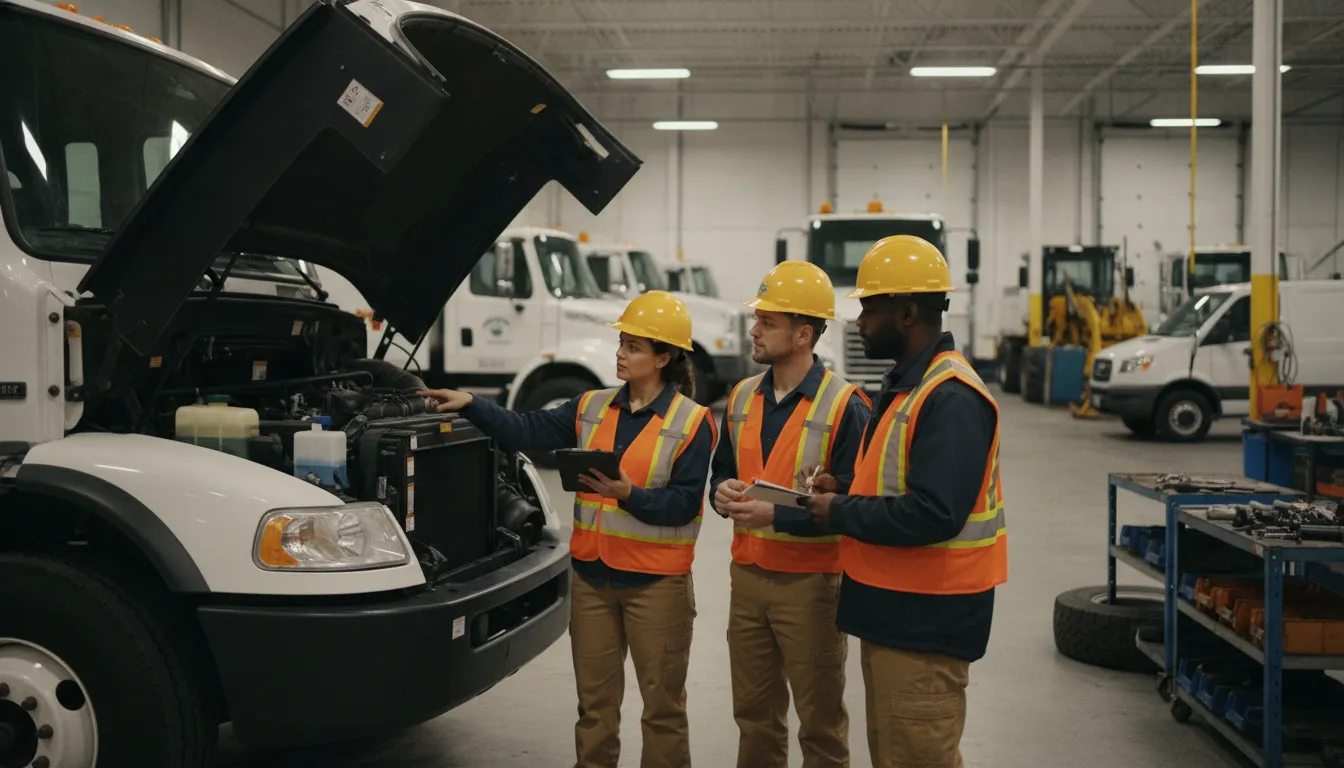
ELD requirements generally focus on drivers subject to FMCSA hours-of-service rules, not on whether the employer is a private company or a government agency. A heavy-duty municipal vehicle in regulated operations may fall within the mandate while another vehicle in the same department does not. Start with an asset-level review of weight, configuration, work type, and exemptions to build a defensible compliance policy and avoid covering vehicles outside the rule.
How does electronic logging reduce administrative work?
Manual logs force drivers and supervisors to reconstruct hours and chase missing entries. An ELD records driving activity electronically, giving administrators a consistent way to review duty-status data, reduce paperwork, and surface violations earlier. Supervisors spend less time correcting log errors and more time managing service delivery, while a centralized view helps identify patterns such as recurring scheduling pressure. The technology does not replace a sound policy or trained supervisors, but it gives them better evidence.
What about IFTA and DVIR reporting?
ELD data is only one part of a broader compliance workflow. Fuel and mileage records can support IFTA reporting when vehicles and operations fall under those requirements. Automated reports provide the organized documentation needed for fuel-tax reviews and internal audits, reducing the burden of assembling records across departments.
Daily Vehicle Inspection Reports (DVIRs) should be managed alongside the ELD process, not treated as a separate spreadsheet exercise. Drivers can submit inspection results from a mobile workflow, while maintenance teams receive defects and follow-up tasks in one system. A fleet compliance management software approach gives agencies a clearer record of hours, inspections, fuel reporting, and corrective action without forcing every fleet type into the same operating model.
How Fleetistics Deployed GPS Tracking Across 4,100 City of Seattle Vehicles
Fleetistics deployed GPS tracking and telematics across more than 4,100 City of Seattle vehicles and helped document about $2 million in fuel savings. The result shows how a centralized telematics view supports cost control and accountability at municipal scale.
Large public fleets rarely fail because managers lack effort. They struggle because vehicle, driver, fuel, and utilization data sits across departments, yards, and service areas. The City of Seattle deployment shows what changes when that information is brought into one operating view.
Fleetistics deployed GPS tracking and telematics across 4,100 City of Seattle vehicles, giving fleet leaders centralized visibility into a complex municipal operation. The project produced approximately $2 million in documented fuel savings, according to Fleetistics’ case-study and company materials. That result is not a promise that every agency will achieve the same number. It demonstrates why measurable telematics data matters when public funds and essential services are involved.
One operating picture across a complex municipal fleet
A city fleet includes public works trucks, inspection vehicles, maintenance units, emergency assets, and more across a wide geographic area. A centralized platform helps managers see where assets are, how they are used, and whether activity matches the assigned work. Real-time GPS visibility lets dispatchers identify nearby vehicles, supervisors review route activity, and managers compare utilization across departments from current operational data.
That visibility also supports accountability without turning tracking into a blunt disciplinary tool. The useful question is whether the data reveals a process that needs attention, such as inefficient routing, excessive out-of-route travel, extended idle time, or vehicles that are underused while another department faces a shortage.
How telematics turns fuel waste into an actionable issue
Fuel savings generally come from many small improvements rather than one dramatic change. Telematics identifies excessive idling, inefficient driving, unnecessary mileage, and route conditions that increase consumption, so leaders can coach drivers, adjust policies, or redesign assignments. Fuel reports let a government manager compare use before and after a change, monitor results by department, and show stakeholders how adjustments affect tax-funded spending.
For agencies evaluating fleet tracking by industry, the Seattle example shows that scale requires a platform which can start with core GPS visibility and expand into fuel, maintenance, safety, and compliance workflows. Through government fleet management, you can build the right mix for your assets and reporting needs rather than buying features that do not serve your mission.
The goal is not simply to place dots on a map. It is to create reliable evidence for better service delivery, lower waste, and responsible stewardship of public resources.
Speak with a consultant about your Sourcewell fleet tracking plan
Frequently Asked Questions
What is the government fleet tracking Sourcewell contract?
It is a competitively solicited cooperative purchasing agreement that gives eligible public agencies a structured way to acquire fleet management technology, including telematics and GPS tracking. Sourcewell identifies the contract and participating suppliers, while your agency still confirms eligibility, funding, scope, and any local purchasing requirements. See the applicable contract details at Sourcewell.
How does Sourcewell procurement benefit municipal fleet tracking?
A cooperative contract can reduce the time and administrative work involved in running an agency-specific solicitation. It also lets public fleets use collective purchasing power while maintaining documentation around the competitive process. Your procurement or legal team should confirm that the contract meets your jurisdiction’s rules before issuing a purchase order. Sourcewell’s cooperative purchasing guidance provides the starting point.
Are fleet tracking systems compliant with FMCSA under Sourcewell contracts?
Not automatically. A Sourcewell contract addresses procurement, not your agency’s operating compliance. If your vehicles and drivers fall under federal electronic logging device or hours-of-service requirements, you still need properly configured equipment, enrolled drivers, accurate records, and compliance processes. Confirm the applicable rules directly with the Federal Motor Carrier Safety Administration.
Why should government fleets use a Sourcewell-awarded fleet management vendor?
An awarded vendor can give your team a documented procurement path and a platform that scales across vehicles, equipment, and departments. Before selecting one, evaluate implementation support, data ownership, integrations, reporting, maintenance workflows, and the specific capabilities your fleet needs. The contract is a starting point for due diligence, not a substitute for defining measurable outcomes.
Ready to Plan Your Government Fleet Tracking Deployment?
A Sourcewell purchasing path can help your agency evaluate fleet tracking with a clearer route from procurement planning to implementation. Fleetistics can help you discuss your fleet, reporting needs, and deployment goals before you move forward.