
A safer fleet is rarely built by adding one more alert or camera. It starts with a clear operating process: identify the driving behaviors and incidents that matter, collect usable evidence, coach consistently, and measure whether daily decisions improve.
Effective fleet safety solutions connect GPS visibility, meaningful alerts, driver coaching, dashcam evidence where appropriate, transparent employee policies, and measurable review. The right combination depends on your fleet type, size, routes, risk profile, and goals. So the technology should support a practical program rather than become surveillance for its own sake.
Contact Fleetistics to discuss practical fleet safety solutions

That distinction matters. A platform can show where vehicles are, but a safety program explains what the data means, who should act, and how employees can understand and respond to the process. Start by defining the system’s purpose and boundaries before selecting features, thresholds, or reporting routines.
What Are Fleet Safety Solutions Really Designed to Do?
Fleet safety solutions are not a bundle of disconnected features. They are an operating system for turning everyday driving information into safer decisions, consistent coaching, and measurable improvement. The technology matters, but the program around it determines whether the data changes behavior or simply fills a dashboard.
Start with a defined safety objective
Before choosing devices or configuring alerts, identify the risks the program must address. That might mean reducing preventable collisions, improving seatbelt use, limiting distracted driving, strengthening incident response, or giving managers a clearer view of field operations. A useful objective is specific enough to guide decisions and broad enough to support the way your fleet actually works.
That objective also establishes the program boundary. A safety system should explain what information is collected, why it is needed. Who can access it, how long it is retained, and how drivers can ask questions or provide context. Transparent notice and consistent policy application build more trust than surveillance-first messaging.
Connect data to a repeatable response
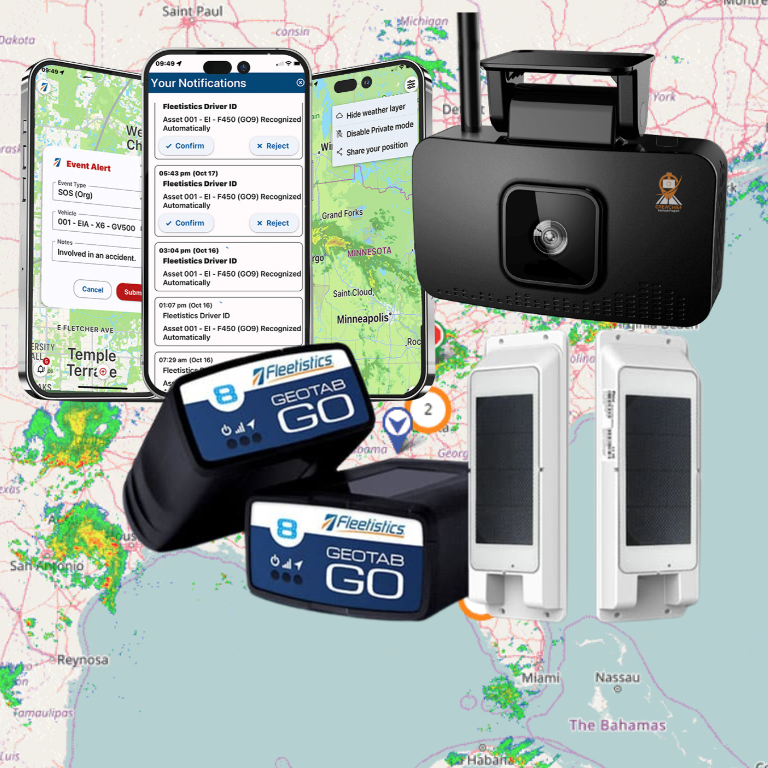
A practical system usually combines GPS tracking hardware, driver identification, exception alerts, incident records, and video evidence where it adds useful context. Fleetistics documents capabilities such as live GPS tracking, accident data capture, and selected critical alerts in less than 10 seconds. Those capabilities are most valuable when an alert leads to a defined action, such as a supervisor review, a driver conversation, a maintenance check, or an escalation for a serious event.
Coaching should be specific and fair. Review the event, confirm the circumstances, explain the expected behavior, and record the follow-up. Video or telematics data should support that conversation, not replace manager judgment. Policies should also define an appeal path for situations where weather, road design, dispatch instructions, or an emergency affected the event.
Measure the program, then improve it
Use a mix of leading and lagging indicators. Unsafe-event trends, alert quality, coaching completion, and repeat behaviors can show whether the program is working before collisions or claims occur. Collision frequency, preventable incidents, and associated costs provide a later outcome measure. Review both sets on a regular cadence, and adjust thresholds when alerts are too noisy to prompt action.
Roll out the program in stages: establish the policy, configure a focused set of alerts. Train managers and drivers, review early data, and expand only when the workflow is sustainable. Fleetistics has served fleets since 2001, but the right configuration still depends on your fleet type, operating environment, and goals. The strongest fleet safety solutions are modular, governed, and practical enough for people to use every day.
How Do You Turn GPS Data Into Safer Daily Decisions?
GPS data becomes useful when it changes a specific operating decision. Start by establishing a baseline for normal routes, stops, speeds, vehicle use, and recurring exceptions. The baseline does not need to be perfect. It gives managers a reference point so an unusual event can be assessed in context instead of treated as automatic proof of unsafe behavior.
That context begins with reliable visibility. The right GPS tracking hardware can provide live location data, while automatic vehicle location helps dispatchers and safety leaders understand where vehicles are, how routes are progressing, and when activity differs from the plan. Choose the level of detail that supports your goals and fleet type. More data is not automatically better if no one can review it or act on it.
Separate meaningful events from background activity
Configure exception rules around events your team can address. Depending on the fleet, that may include speeding in a defined area, an unauthorized stop, unusual route deviation, harsh driving, or a collision-related event. Driver ID adds another layer of accountability by associating an event with the person operating the vehicle rather than leaving managers to guess from a vehicle number or schedule.
Set thresholds carefully. An alert that fires for every minor variation trains people to ignore the system. Begin with a small group of high-value exceptions, review the results, and adjust thresholds when the alerts are too broad or too rare. Critical alerts may be available with rapid delivery in selected capabilities, but speed should support a defined response process, not create a stream of interruptions.
Give every alert an owner and a next step
A safety alert should answer three questions: who reviews it, when do they review it, and what happens next? Dispatch may handle an active route concern. A safety manager may review a repeated behavior pattern. A supervisor may schedule a coaching conversation after checking the route, driver ID, weather, job conditions, and any available incident evidence.
Use leading indicators, such as unsafe events and coaching completion, to identify opportunities before a collision or claim occurs. Keep the review consistent across drivers and document the reason for decisions. Where the data is incomplete or circumstances are unclear, treat the event as a prompt for investigation rather than a final judgment.
This operating discipline turns GPS into one part of a broader safety workflow. It also reduces alert fatigue, protects trust, and keeps fleet safety solutions focused on practical decisions: what needs attention today. Who is responsible, and how the team will learn from the result.
How Should Driver Coaching and Dashcam Evidence Work Together?
A driver behavior event is a starting point for a conversation, not a verdict. The fairest coaching process combines telematics data with relevant video, then gives the manager and driver a chance to understand what happened before deciding what action is appropriate. That approach helps safety teams focus on behavior improvement instead of treating every alert as proof of misconduct.
Start with risk, not volume
Review events according to their potential safety impact and recurrence. A possible forward-collision risk, drowsiness event, or repeated cell phone-use alert may deserve faster attention than an isolated lower-risk exception. Available detection categories can include tailgating, seatbelt use, distraction, cell phone use, lane departure, drowsiness, and forward-collision risks. These are capabilities to evaluate and configure, not guaranteed outcomes in every vehicle, camera, road condition, or event.
Set thresholds and escalation rules that fit the fleet’s work. A manager might look for repeated patterns, a cluster of events on one route, or a serious event that requires same-day review. Avoid creating a system where drivers receive so many alerts that meaningful risks disappear in the noise.
Use video to add context
GPS and behavior data can show when an event occurred and help identify the vehicle or driver. AI dashcam evidence can add the road view and surrounding circumstances. A close following event, for example, may reflect aggressive driving, a sudden traffic change, or an alert that requires calibration. Review the footage alongside location, time, vehicle conditions, and any available incident details before reaching a conclusion.
Video should answer a useful question: what can the driver and manager learn from this event? It should not become an invitation to search unrelated footage or monitor employees without a defined safety purpose. Limit access to people who need it, apply retention rules consistently, and preserve relevant records when an incident requires further review.
Coach privately, document clearly, and follow up
Hold the coaching conversation privately and describe the observable behavior without exaggeration. Ask the driver what they saw, what conditions were present, and whether equipment, route design, scheduling, or training contributed to the event. Then agree on a specific correction, such as increasing following distance, securing a phone before moving, or taking an approved break when fatigue is a concern.
Record the event, context reviewed, coaching action, and any driver response. This creates a consistent process and makes it easier to distinguish a one-time coaching need from a recurring pattern. Data-driven driver coaching should include a follow-up date or review point, rather than ending when the conversation is over.
When the same risk declines, recognize the improvement. When it continues, revisit the evidence and apply the stated policy consistently. A measured coaching loop turns fleet safety solutions into an operating practice that supports drivers, managers, and safer decisions over time.
How Do You Build Driver Buy-In and Governance?
Trust is part of the safety system, not a communication task after the technology is installed. Before rollout, explain what data the fleet safety solutions collect, why the organization needs it, and how it will be used to support safer operations. Drivers should understand whether the program covers vehicle location, driving events, video, vehicle diagnostics, or other information, and who can review each type of data.
Use purpose limitation as a practical operating rule. Collect and retain information that supports defined safety, compliance, maintenance, or incident-review objectives. Avoid expanding a safety program into open-ended employee monitoring without a clear business reason and documented policy update. A transparent conversation about introducing GPS tracking and building employee buy-in can help managers address concerns before they become resistance.
Set access, retention, and review boundaries
Not every manager needs access to every record. Use role-based permissions so dispatchers, safety leaders, fleet administrators, and executives see the information relevant to their responsibilities. Audit trails, multifactor authentication options, and encrypted data transmission are useful governance capabilities when safety data moves between people and systems.
Define how long different records are retained, who may export them, and when they should be deleted or archived. Retention can vary by record type and operational need. Document the process so a driver can understand what happens to routine location data, an event alert, and incident evidence after review. A sample driver policy can provide a starting point for explaining these expectations in plain language.
Make coaching consistent and reviewable
Use alerts and video as prompts for a fair conversation, not automatic proof of intent. A manager should review the available context, confirm that the event meets the organization’s threshold. And ask whether conditions such as weather, traffic, road design, or an emergency affected the situation. Drivers should have a defined way to provide context or appeal a finding before it affects a performance record.
Apply the same policy standards across comparable roles, routes, and shifts. Manager training should cover event review, documentation, respectful coaching, privacy boundaries, and escalation. This reduces the risk that one supervisor treats a system alert as a coaching opportunity while another treats a similar alert as punishment.
Roll out in stages
Start with a limited group, a small number of safety behaviors, and a short feedback cycle. Share what the pilot is measuring, what will not be measured, and what changes will follow from the results. Correct confusing alerts or unclear policy language before expanding the program. A staged rollout gives drivers a meaningful chance to shape the process while helping leaders verify that the technology supports safer decisions rather than simply generating more data.
Which Metrics Should You Use to Evaluate a Safety Program?
A useful scorecard balances what happens before an incident, what your team does during normal operations, and what happens after a loss. That means reviewing leading, operational, and lagging indicators together rather than treating collision counts as the only measure of safety. A fleet can experience few collisions during a short period while unsafe behaviors are increasing underneath the surface.
Start with a small set of measures that managers can explain and employees can influence. For example, unsafe-event frequency can show where attention is needed, while coaching completion shows whether the organization is responding. Pair those measures with inspection and maintenance follow-through, employee feedback, and collision or claim trends. Your fleet analytics metrics should support consistent decisions, not create a leaderboard that encourages drivers to hide problems.
Fleet safety indicators and management actions
| Indicator type | Examples | Cadence | Management action |
|---|---|---|---|
| Leading | Unsafe-event frequency, harsh-braking or distraction events, employee safety feedback | Weekly review; monthly trend | Identify patterns, validate context, and prioritize coaching or policy clarification |
| Operational | Coaching completion, inspection follow-through, maintenance work-order completion | Weekly or per workflow | Remove process gaps, assign ownership, and confirm that corrective actions are completed |
| Lagging | Collision trends, preventable incidents, claims, injury reports | Monthly or quarterly trend | Review root causes, adjust the program, and verify whether changes address recurring risk |
Leading indicators are most valuable when they prompt a fair review, not an automatic judgment. A frequent alert may reflect a route, vehicle, weather condition, sensor issue, or training need. Managers should examine the available context, discuss the event with the driver, and document the reason for any coaching or escalation.
Operational indicators reveal whether the safety program works as a repeatable process. If coaching is assigned but rarely completed, the issue may be scheduling, manager capacity, unclear expectations, or an overly broad alert configuration. Similarly, incomplete inspections or overdue maintenance should lead to an assigned action and follow-up, not merely another report.
Lagging indicators confirm the consequences of risk over time. Review collision and claim trends by vehicle, route, event type, and contributing conditions where the data supports that analysis. When an incident occurs, GPS and dashcam evidence can help establish what happened and inform training, while employee feedback can reveal issues that telemetry does not capture. Revisit the scorecard periodically so it stays aligned with your fleet’s actual risks and operating goals.
What Should You Check Before Choosing Fleet Safety Solutions?
A strong evaluation should test how well a solution supports your safety process, not simply how many features appear in a demonstration. Use the checklist below to compare capabilities against daily responsibilities, employee expectations, and the measures your leadership team already reviews.
- Define the safety decisions you need to improve. Start with specific goals, such as reducing preventable unsafe events, improving coaching consistency, strengthening incident review, or giving managers better visibility. Separate leading indicators, such as alert trends and coaching completion, from lagging indicators, such as collisions and claims. A clear starting point helps you avoid buying technology that produces data without an operating plan.
- Map the data sources to those goals. Determine whether you need live GPS visibility, driver identification, exception alerts, accident data capture, video context, or a combination of these. Confirm that the proposed fleet safety hardware fits your vehicles, equipment, coverage needs, and installation preferences. The right mix will vary by fleet type, size, and risk profile.
- Test alert controls and review workflows. Ask how thresholds are configured, who receives alerts, and how managers distinguish urgent events from noise. Check whether selected critical alerts can arrive quickly enough to support your process, and whether events can be assigned, documented, and revisited. Alerts should lead to a defined action, not become another unattended inbox.
- Review the coaching workflow. Look for tools that connect behavior evidence to a fair conversation, corrective action, follow-up, and completion tracking. If dashcam or driver-behavior capabilities are included, ask how managers see relevant context and how drivers can respond to disputed events. A system should support consistent coaching rather than encourage surveillance-first management.
- Examine governance and employee communication. Confirm how role-based access, audit trails, multifactor authentication options, encryption, retention, and permissions are handled. Establish what data is collected, why it is used, who can view it, and how appeals are managed. Explain the program before rollout and apply the policy consistently across comparable situations.
- Check integrations and implementation support. Ask whether the platform can connect with the systems your team already uses through APIs, streaming, webhooks, SDKs, or partner integrations. Also evaluate training, configuration help, safety-meeting resources, and ongoing support. Fleetistics brings Geotab reseller and implementation experience, along with an open ecosystem, so confirm how that support would apply to your operation.
- Plan for a measured evaluation and future growth. During Fleetistics’ standard 30-day Solution Evaluation Process, define the baseline, pilot the selected workflows, gather manager and driver feedback, and review early indicators. Larger operations may need a different timeline, while smaller fleets may use a shorter pilot when that timeline is confirmed with Fleetistics. Before deciding, confirm that the solution can scale without forcing a complete redesign. Comparing modular fleet solutions against your roadmap can help clarify that fit.
Book a fleet safety solutions consultation
Frequently Asked Questions
What should fleet safety solutions include?
A practical program usually combines GPS visibility, meaningful alerts, driver identification, coaching workflows, and clear safety policies. Add dashcam evidence when video can answer a specific operational question, such as understanding a collision or addressing distraction. The right mix depends on your fleet type, risk profile, operating environment, and goals.
How can GPS data improve driver safety without creating a surveillance-first culture?
Start by explaining what data is collected, why it supports safety, who can access it, and how long it is retained. Use the data to identify patterns, provide consistent coaching, and recognize improvement rather than treating every alert as automatic discipline. Give drivers a way to ask questions or provide context, and apply the same review standards across the fleet.
Do fleet safety programs require AI dashcams?
No. GPS and vehicle data can support visibility, alerts, driver coaching, and incident review without video. AI dashcams may add useful context for events such as distraction, tailgating, seatbelt noncompliance, lane departure, or forward-collision risk. Choose video when its evidence and coaching value justify the installation, governance, and review requirements.
Which metrics show whether a fleet safety program is working?
Track leading indicators, such as unsafe events by severity, alert response, coaching completion, and repeat behaviors, alongside operational measures and lagging outcomes such as collisions, claims, and injuries. Review trends by vehicle, route, driver group, and time period. A balanced scorecard helps leaders improve the program without relying on a single metric or promising a guaranteed result.
Ready to Build a Practical Fleet Safety Program?
A thoughtful safety program connects the right data, coaching process, employee policies, and rollout plan to your fleet’s goals. Contact Fleetistics to discuss your fleet safety program and identify a practical path for putting those pieces together.