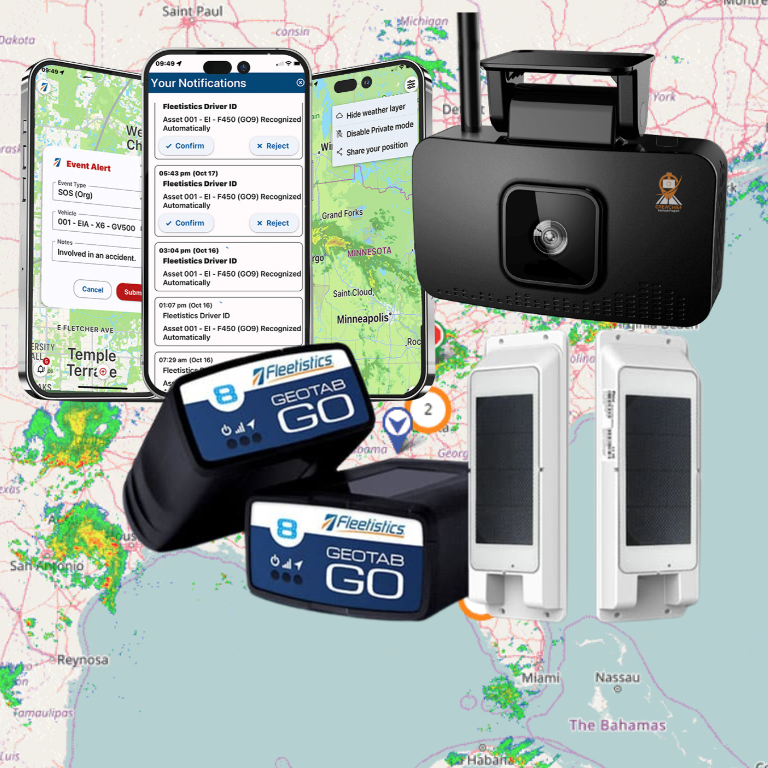
A nationwide fleet needs more than a map with vehicles on it. Operators need a repeatable way to manage safety, maintenance, utilization, reporting, and data across states or regions, while local teams still handle the realities of weather, terrain, customers, labor, and service schedules. The most effective model sets national standards for control points and gives each region room to execute them intelligently.
What does nationwide fleet management mean for operators?
Nationwide fleet management is a shared operating system for vehicles, equipment, and watercraft working across multiple regions. It combines common data definitions, safety expectations, maintenance rules, user permissions, and performance reviews with local decisions about routes, facilities, customers, and jurisdiction-specific requirements.
That distinction matters. Standardization does not mean forcing every branch to run the same route plan or use the same maintenance vendor. It means every region reports the same core facts, follows the same minimum controls, and can show whether its choices are improving safety, availability, and cost.
A practical nationwide model usually has four layers:
- Shared visibility: One current view of vehicle and asset location, status, utilization, and exceptions.
- Common controls: Consistent policies for driver safety, inspections, maintenance triggers, and escalation.
- Local execution: Regional teams adapt schedules, vendors, and workflows to operating conditions.
- Comparable measurement: A small set of definitions and KPIs that leadership can compare across regions.
This approach gives executives a reliable national picture without taking useful decisions away from the people closest to the work.
Why do multi-region fleet operations lose consistency?
Distributed fleets usually become inconsistent through small, reasonable local decisions that accumulate over time. One branch names an asset one way, another uses a different maintenance interval, and a third sends a weekly report built from a separate spreadsheet. Each practice may work locally, but leadership can no longer compare regions or identify a problem early.
The common failure points are predictable:
- Different definitions: Regions disagree about what counts as an active asset, preventable event, idle period, or overdue service.
- Disconnected systems: GPS data, work orders, fuel activity, dispatch records, and safety evidence sit in separate tools.
- Unclear ownership: A national team assumes a branch is monitoring exceptions, while the branch assumes corporate will act.
- Inconsistent coaching: One manager addresses unsafe driving immediately, while another reviews the same event weeks later.
- Local workarounds: Spreadsheet exports and manual messages fill gaps that the platform should make visible.
The fix is not to centralize every decision. It is to centralize the definitions, data, and minimum controls that make decisions trustworthy.
What should a nationwide fleet governance model standardize?
A strong governance model standardizes the controls that affect safety, asset availability, data quality, and management decisions. It leaves room for local teams to choose the best way to deliver the work, as long as their process produces the required evidence and meets the agreed threshold.
Start with a one-page operating standard that answers five questions:
- What must every region monitor? Define required location, utilization, safety, maintenance, and exception data.
- Who owns each decision? Name the national owner, regional owner, and escalation owner for every control.
- What triggers action? Set clear thresholds for overdue service, repeated safety events, unauthorized use, or unavailable assets.
- What evidence is required? Specify the report, inspection record, work order, video, or approval that closes an issue.
- How often is performance reviewed? Use a consistent cadence for daily exceptions, weekly operations, and monthly leadership review.
Keep the standard short enough for a branch manager to use. A long policy that nobody checks is less valuable than a concise control sheet connected to live operational data.
How should central and local fleet teams divide responsibility?
The best division of responsibility is central control over standards and local control over execution. Corporate fleet leaders should own the data model, permissions, safety baseline, KPI definitions, and escalation rules. Regional leaders should own the daily decisions that depend on customers, geography, staffing, weather, facilities, and local suppliers.
| Control area | National standard | Regional flexibility | Review signal |
|---|---|---|---|
| Asset identity. | Use one naming convention and required fields. | Assign local cost centers and operational labels. | Unmatched or duplicate assets. |
| Driver safety. | Use common event definitions and coaching steps. | Schedule coaching around local shifts and language needs. | Repeated events or overdue coaching. |
| Maintenance. | Set service triggers, closeout fields, and escalation timing. | Choose qualified local vendors and appointment windows. | Downtime, overdue work, or repeat repairs. |
| Reporting. | Use shared KPI definitions and reporting periods. | Add branch views for local routes and customers. | Unexplained variance between regions. |
| Access and governance. | Apply role-based permissions and audit ownership changes. | Manage approved local users and operating groups. | Unused accounts or unauthorized changes. |
This model also reduces friction during rollout. Local teams can see where the national standard protects them, where they can choose their own method, and what evidence leadership will expect.
How can one platform create shared visibility without erasing local differences?
Use the platform as a common data layer, not as a command center for every local decision. A unified view should show the location and status of vehicles and assets, the exceptions that need attention, and the trends that help leaders allocate resources. Local teams should still see the routes, jobs, facilities, and assets relevant to their work.
For a nationwide fleet, configure the platform around three levels of visibility:
- Enterprise view: Leadership sees national totals, regional comparisons, high-risk exceptions, asset availability, and trend lines.
- Regional view: Managers see their vehicles, drivers, maintenance queues, service territories, and unresolved exceptions.
- Working view: Supervisors and authorized staff see the alerts, mobile workflows, and assignments they need to act.
Automatic vehicle location is especially useful as the shared foundation because it gives teams a common answer to where a vehicle or mobile asset is, where it has been, and whether it is available. From there, operators can connect location to safety, maintenance, dispatch, and customer-service decisions through automatic vehicle location tools.
Permissions are part of the design. A national administrator may need cross-region reporting, while a local supervisor may need operational access only for an assigned group. Role-based access keeps the data useful without exposing more information than a person needs.
How do you standardize maintenance across regions?
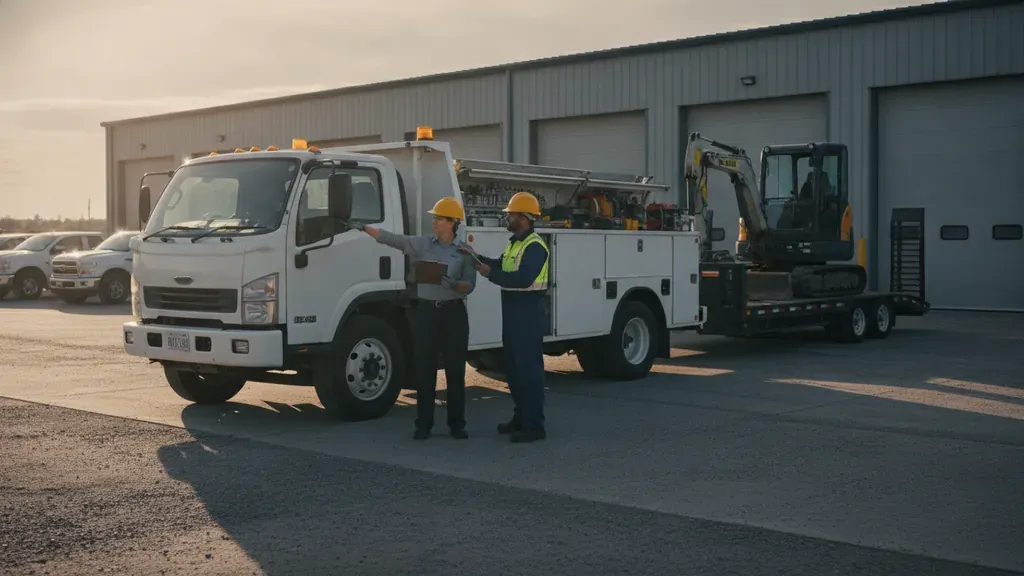
Standardize the maintenance decision, the evidence, and the escalation path, not necessarily the vendor or appointment process. Every region should know which services are triggered by time, mileage, engine hours, diagnostics, inspection findings, or a combination of these conditions. Each completed job should return the same minimum information to the central team.
A useful maintenance standard includes:
- Asset-specific schedules: Apply the correct interval to each vehicle, equipment type, or watercraft.
- Condition signals: Use engine diagnostics, battery information, mileage, hours, and inspection findings to identify risk.
- Work-order ownership: Assign a named person for scheduling, approval, vendor coordination, and closeout.
- Downtime visibility: Record when an asset becomes unavailable and when it returns to service.
- Closeout discipline: Require the service date, work performed, parts or notes, next due point, and supporting documentation.
Fleetistics supports maintenance scheduling, work orders, cost tracking, reminders based on days, hours, or miles, odometer reporting, and battery-voltage monitoring. That gives a distributed operation a way to connect local service activity to a shared view of asset readiness.
Do not use one national interval when equipment, duty cycles, or environmental conditions differ. The standard should define how intervals are chosen and reviewed. Local teams can then adjust the schedule with documented reasons instead of relying on undocumented habits.
Which safety, reporting, and integration controls should every region use?
Every region should use the same safety event definitions, reporting logic, and core data connections. Otherwise, leadership may compare numbers that describe different things. The local team can add views for its work, but the enterprise dashboard should preserve a common baseline.
Prioritize these controls:
- Safety events: Define which driving behaviors, incidents, inspections, and coaching actions enter the shared safety record.
- Exception workflows: Route urgent alerts to the person who can act, and document when the issue is acknowledged and closed.
- Management reporting: Build a standard weekly report for availability, utilization, maintenance, safety, and unresolved exceptions.
- Integration ownership: Assign owners for dispatch, maintenance, fuel, payroll, finance, and customer systems that receive fleet data.
- Data quality: Review missing identifiers, stale users, duplicate assets, and failed data transfers on a scheduled basis.
Fleetistics combines Geotab-powered telematics with an open ecosystem, free APIs, and more than 300 integrations. That can help a nationwide fleet connect a common operational dataset to regional systems without requiring every branch to replace the tools it already uses.
When evaluating a platform, compare fleet management platforms against the governance model, not just the feature list. Ask whether the system supports shared definitions, role-based access, regional groups, scheduled reports, APIs, and a clear path for adding vehicles or assets.
How should operators measure a nationwide fleet program?
Measure the program at three levels: leading controls, operating outcomes, and business impact. Leading controls show whether the process is being followed. Operating outcomes show whether assets and people are performing better. Business-impact measures show whether the program supports cost control, service quality, and growth.
| Measurement level | Useful questions | Example metrics |
|---|---|---|
| Leading controls. | Are teams completing the required actions? | Inspection completion, coaching closeout, report delivery, and data-quality exceptions. |
| Operating outcomes. | Are vehicles and equipment ready for work? | Asset availability, downtime, utilization, overdue maintenance, and route variance. |
| Business impact. | Is the operating model improving results? | Fuel use, overtime, avoidable downtime, claims evidence, service reliability, and fleet size decisions. |
Compare regions carefully. A branch with older equipment, longer routes, or severe weather may have a different baseline than a dense urban branch. The purpose of comparison is to find useful questions, not to punish local teams for conditions they cannot control.
Fleetistics has documented experience supporting large public-sector fleets, including a City of Seattle fleet of 4,100 vehicles with reported fuel savings. Use proof points like this as a reason to define measurable outcomes during evaluation, not as a promise that every fleet will achieve the same result.
What is a practical nationwide fleet rollout checklist?
A rollout works best when it begins with operating decisions rather than hardware or software configuration. Use the checklist below to create a controlled baseline, test it with representative regions, and expand only after the team can prove that the process works.
- Map the operating model. List regions, asset types, facilities, teams, routes, vendors, and current systems.
- Choose common definitions. Agree on asset status, utilization, downtime, safety events, maintenance status, and KPI formulas.
- Set the national minimum. Document required visibility, permissions, safety workflows, maintenance evidence, and escalation timing.
- Define local flexibility. Record which decisions stay with regional managers and what evidence supports an exception.
- Clean the data. Remove duplicate assets, standardize identifiers, confirm users, and assign ownership before launch.
- Pilot different conditions. Test the model in at least one dense market, one dispersed market, and one region with a different fleet mix.
- Train by role. Give executives, regional managers, supervisors, technicians, and drivers only the workflows they need.
- Review exceptions first. Start daily meetings with unresolved safety, availability, and maintenance risks instead of reviewing every data point.
- Measure and refine. Compare the agreed KPIs after the initial operating period, document changes, and publish the new standard.
For platform selection, a 60-day Solution Evaluation Process can help a fleet validate its data model, role structure, reporting cadence, and operational fit before making a broader commitment. Larger or more complex fleets may need a longer evaluation, but the decision should be based on evidence from the operating model.
Frequently Asked Questions About Nationwide Fleet Management
Use these questions to test whether a proposed nationwide model is practical rather than merely centralized.
Can local teams still make decisions?
They should. A useful model centralizes definitions, minimum controls, data, and escalation rules while leaving routes, vendors, staffing, and customer workflows to the people who understand local conditions.
Does every region need the same fleet technology?
Every region needs compatible data and a shared reporting baseline. Hardware, workflows, and integrations can vary when the fleet mix or operating environment requires it, as long as the differences are documented and the core measures remain comparable.
How do you prevent a national fleet dashboard from becoming noise?
Limit the enterprise view to decision-ready information: high-risk exceptions, asset availability, trend changes, overdue actions, and comparisons that lead to a specific question. Let local dashboards handle the detail required for daily work.
What should be standardized first?
Start with asset identity, safety event definitions, maintenance status, user roles, escalation ownership, and the small set of KPIs leadership will use. These controls create a reliable foundation for later integrations and automation.
How can a fleet prove that standardization is working?
Compare the baseline with results after rollout using the same definitions. Look for fewer unresolved exceptions, better asset availability, faster maintenance closeout, more consistent coaching, cleaner data, and clearer explanations for regional differences.
How can Fleetistics help you build a nationwide fleet model?
Fleetistics fleet management solutions help organizations connect vehicle and asset visibility, driver safety, maintenance, analytics, compliance, and integrations in a modular platform. Fleetistics has served fleets since 2001 and is the longest-running Geotab partner in the United States, with extensive Geotab reseller experience. The team helps you select the right hardware and configure the platform with support from Geotab’s technical and development staff when needed. Fleetistics remains your advocate and implementation partner.
Start with the operating decisions you need to standardize, then evaluate the data, workflows, support, and integration model that can sustain them across regions.
Speak With a Fleetistics Consultant about standardizing your nationwide fleet operations.