When every technician starts the day in a different van, a small routing mistake can become a missed appointment, extra fuel, and an unhappy customer. Pest control operators need visibility across every stop without turning dispatch into a constant phone chase. The challenge is familiar to any field service owner: solo drivers, tight appointment windows, and customers who expect to know exactly when the technician will arrive.
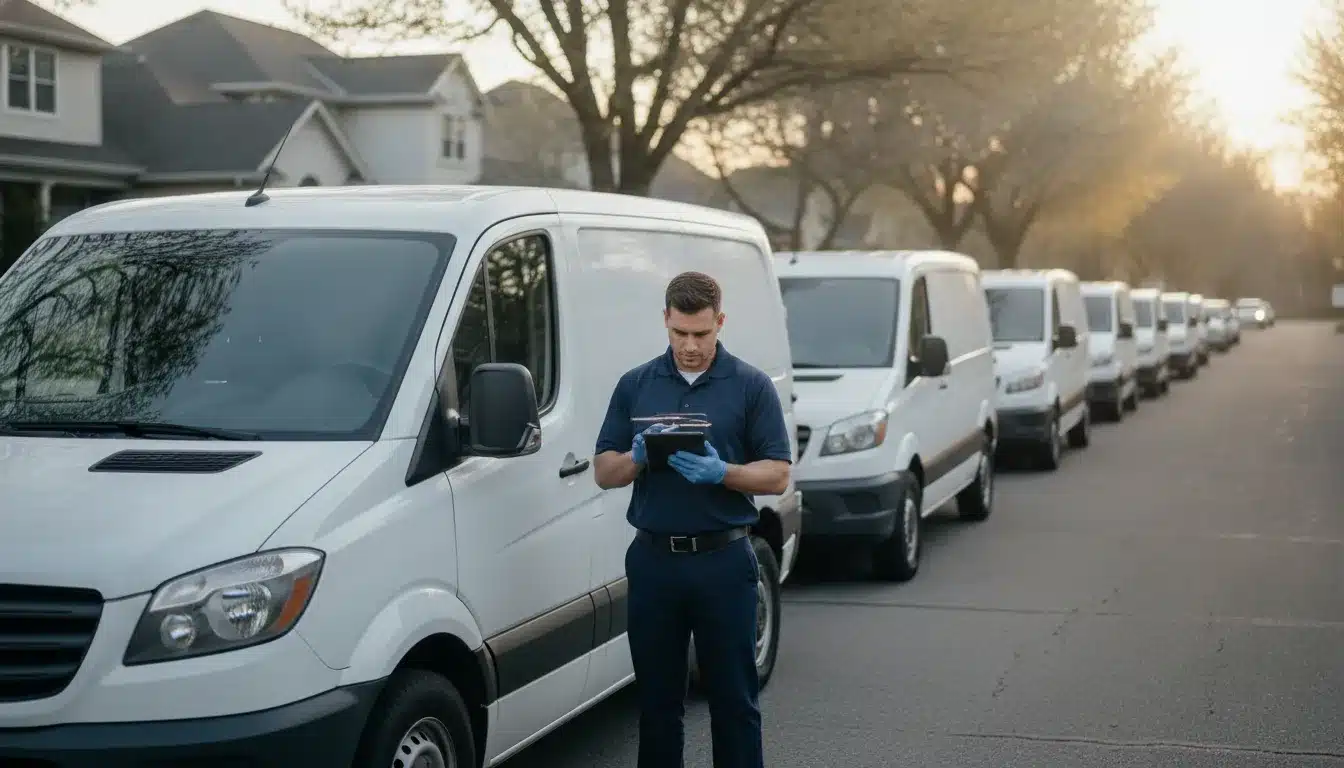
GPS tracking for pest control companies helps dispatchers see vehicle locations in real time, adjust routes, send the closest available technician when priorities change, and confirm when service vehicles arrive and leave. That visibility can reduce response times and help each technician complete more appointments during the workday.
The right system also connects location data with the tools your team already uses, creating a clearer operational record from dispatch through job completion. Beyond finding trucks, it can flag idle time, confirm completed stops, and shorten how long customers wait for service. That is the difference between running the day reactively and managing it with current, reliable data.
To see how these capabilities apply across different fleet types, explore Fleetistics’ fleet tracking by industry solutions. First, consider why pest control fleets are especially well suited to GPS-based oversight.
Talk with a fleet specialist about GPS tracking for your pest control fleet.
Why Pest Control Companies Need GPS Fleet Tracking
A pest control van may look like a single vehicle on the road, but every route carries a full day of customer commitments. When technicians work alone, dispatchers often have limited visibility into who is closest to the next property. Whether a stop was completed, or why an appointment is running late. That uncertainty creates avoidable calls, schedule gaps, and pressure on both the office and the field team.
Multi-stop routes are especially difficult to manage by guesswork. A technician may start with a planned sequence, then encounter traffic, an urgent service request. A customer who is not home, or a treatment that takes longer than expected. Without live location data, the dispatcher is working from assumptions rather than the technician’s actual position. Real-time GPS tracking gives managers a current view of technician locations and supports route adjustments as conditions change.
That visibility matters when appointments are missed or delayed. A customer may call asking when the technician will arrive, while the office has no reliable answer beyond calling or texting the driver. The same problem occurs when a technician says a stop was completed but the business has no simple record of arrival and departure. GPS data can provide a verifiable activity trail, reducing manual check-ins and helping managers resolve service questions with facts.
Idle hours also become easier to identify. A van that sits for long periods between jobs may reflect a legitimate break, an early arrival, an inefficient route, or lost productive time. Location and trip history do not replace good management, but they show where the day is consuming capacity. Managers can use that information to refine service areas, adjust appointment windows, and coach around recurring bottlenecks instead of relying on anecdotal reports.
Real-time route optimization can also improve emergency dispatching. When an urgent pest issue comes in, the office can see which technician is positioned to respond rather than contacting every driver in sequence. The U.S. Department of Energy reports that GPS fleet devices produced a significant reduction in service-call response times. A change that can help service organizations fit more appointments into each technician’s day. The documented fleet example supports the broader operational value of turning vehicle location into dispatch information.
The strongest results come when tracking connects with the systems your team already uses. Fleetistics software integrates with 300+ third-party business systems through a free API, allowing scheduling data and vehicle activity to work together rather than creating another isolated dashboard. For a closer look at vehicle tracking for field service fleets, evaluate how live visibility could fit your pest control operation.
How Does GPS Tracking for Pest Control Companies Improve Route Efficiency?
Pest control routes rarely follow a simple pattern. A technician may handle recurring residential visits, a commercial service call, and an urgent rodent or wasp complaint across several parts of town. Without current location data, dispatchers often rely on phone calls and outdated assumptions. That creates extra miles, unnecessary idling, and backtracking.
GPS tracking gives dispatch a live view of vehicle locations and route progress. Managers can see which technicians are finishing nearby, identify gaps in the schedule, and adjust assignments before a small delay affects the rest of the day. For a closer look at this use case, see Fleetistics’ vehicle tracking for field service fleets.
How does live dispatching reduce unnecessary miles?
When an emergency call comes in, real-time location data lets a dispatcher send the closest available technician instead of contacting every driver to ask where they are. The same visibility helps the team assign new work to a van already operating in that area, rather than sending another vehicle across town. This can reduce deadhead travel while helping technicians complete more appointments in the same shift.
Route planning also becomes more practical when it reflects the day as it is actually unfolding. Dispatchers can sequence stops by geography, account priority, service window, and technician availability. If one appointment runs long, they can move the next stop to a better-positioned technician and avoid sending a van back through streets it has already covered.
Can telematics reduce fuel use and idling?
Fewer miles usually mean less fuel, but route efficiency is not limited to distance. A tracking system can help managers identify extended idling, repeated detours, and inefficient movement between stops. Fleet management technology can reduce fuel consumption by up to 15% in the first year, according to the cited field-service research in the fact ledger. Treat that figure as a benchmark, not a guarantee. Your results depend on fleet size, baseline driving habits, territory design, and how consistently the team acts on the data.
For pest control businesses, the operational gain is often cumulative. A small reduction in idle time across every van, combined with fewer out-of-area dispatches and better stop sequencing, can improve daily capacity without adding another vehicle.
How does maintenance visibility protect the route?
Efficiency disappears when a service van fails during a busy route. GPS-enabled fleet tools can display vehicle fault codes, allowing technicians or maintenance staff to understand the issue before the vehicle leaves the shop. They can prepare the right parts and tools in advance, which may reduce repeat trips and downtime. The U.S. Department of Energy describes this fault-code and parts-preparation workflow for maintenance fleets: review the source details.
Combined, live dispatch, smarter stop sequencing, fuel monitoring, and earlier fault awareness turn route planning from a morning estimate into an active operating process. Your team spends less time covering avoidable miles and more time completing the work customers scheduled.
What Customer Arrival Notifications Keep Homeowners Informed?
For a homeowner, the difference between “your technician is on the way” and an uncertain four-hour window is significant. Pest control appointments often require someone to unlock a gate, secure a pet, or meet the technician at the property. Accurate arrival notifications give customers the information they need without forcing your office team to make repeated calls.
With GPS tracking, dispatchers can view a technician’s current location and use live tracking data to provide a more reliable estimated time of arrival. When traffic, an extended treatment, or a schedule change affects the route, the office can update the customer before the missed window becomes a complaint. Better visibility supports a smoother service experience and helps your team communicate with confidence.
The notification workflow can be simple. A scheduling or dispatch system identifies the next appointment, while the tracking platform monitors the assigned van’s progress. When the vehicle approaches the job site, the system can trigger an arrival alert by text, email, or an app notification, depending on the tools your company uses. A confirmation message can tell the homeowner that the technician has arrived and the visit is ready to begin.
That same location data helps verify the visit from the operations side. GPS records can confirm when a technician arrives at and departs from a customer’s property, creating a dependable activity record without requiring a manual check-in after every stop. If a homeowner asks when the technician arrived, or a property manager needs confirmation that a recurring service was completed. Your team has a time and location reference to review.
Arrival and departure verification also gives managers a clearer view of schedule performance. You can identify late starts, unusually long stops, or gaps between appointments and address the underlying issue. The goal is not to watch technicians unnecessarily. It is to replace guesswork with consistent information that supports customers, technicians, and dispatchers.
For pest control fleets that also need visibility into vehicle activity and road events, van tracking with dashcam integration can bring location and video data into one operational view. That combination helps your team answer customer questions quickly while maintaining a clearer record of each service call.
How Do You Build Driver Accountability for Solo-Driver Service Vehicles?
When one technician operates a service van alone, managers need visibility without turning every customer visit into a phone call. A GPS tracking system creates a consistent operating record, helping you review what happened on the road and coach from evidence rather than assumptions. Tracking devices can increase driver awareness and encourage more consistent driving behavior, according to the U.S. Department of Energy. The agency also describes telematics benefits for vehicle performance and driver awareness.
Start by defining the driving behaviors that matter most to your operation. Set practical thresholds for speeding, harsh braking, rapid acceleration, and excessive idling. A single alert should not become an automatic disciplinary action. Look for patterns by driver, route, vehicle, or time of day, then discuss the context with the technician. That approach distinguishes a recurring safety issue from a difficult driveway, traffic backup, or emergency service call.
Review exceptions instead of micromanaging every mile
Accountability works best when the system highlights exceptions. If a van repeatedly exceeds your speed threshold, brakes harshly near customer sites, or idles for long periods between appointments, the manager has a specific coaching opportunity. Idling reports can also reveal process problems, such as technicians leaving vehicles running while completing paperwork or carrying equipment into a property.
Use the same review process for unauthorized stops. A stop outside the scheduled route may be legitimate, but it should be explainable. Compare the location and duration with the day’s work orders, supply needs, and employee explanation. Telematics can also support inventory and vehicle-performance monitoring, giving you a broader view of whether a van is ready for its assigned work.
Verify arrivals and protect the business record
Job-site verification is another practical safeguard. Match the vehicle’s arrival and departure timestamps to the scheduled appointment and service notes. This helps confirm that the technician reached the correct property, identifies gaps when a customer says no one arrived, and reduces dependence on manual check-ins. Verifiable activity logs can reduce business risk by preserving a clearer record of field activity.
Give technicians access to the information they need through a fleet management mobile app. Clear schedules, location context, and simple status updates make compliance easier than a process built around texts and memory. Over time, safer driving can also support lower insurance premiums, although savings depend on your insurer, claims history, and documented results. The objective is not surveillance for its own sake. It is a safer, more predictable service operation with facts available when a coaching, customer-service, or risk decision requires them.
How Fleetistics Serves Pest Control Fleets of 5-200 Vans
Pest control companies rarely need every fleet-management feature on day one. A five-van operation may primarily need vehicle location, route visibility, and proof that technicians reached scheduled properties. A 200-van company may also need deeper reporting, maintenance workflows, driver coaching, and connections between dispatch, customer records, and field activity. Fleetistics uses a modular platform so you can build around the way your operation works instead of forcing your team into a fixed package.
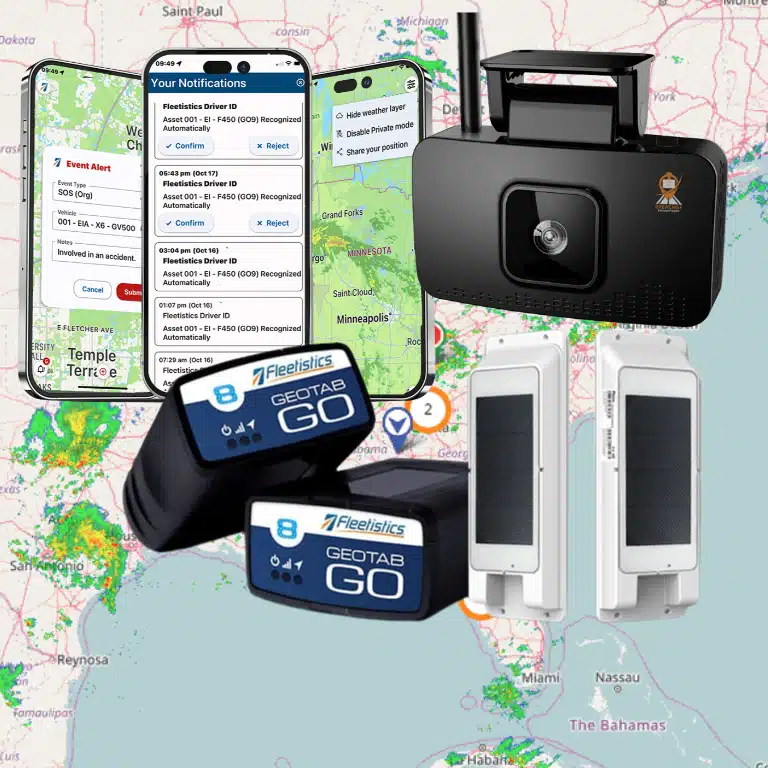
That approach lets you start with the capabilities that solve your most immediate problems, then add tools as your service territory, technician count, and operational demands grow. You can learn more about the hardware and platform foundation on the Geotab GO platform page.
Start with visibility, then expand with your operation
For a small pest control fleet, the first step may be confirming where vans are, improving dispatch decisions, and giving customers more accurate arrival expectations. As the business adds routes and branches, the same core system can support more vehicles and more users without requiring a disconnected replacement.
Fleetistics also supports connections between fleet data and the systems your office already relies on. Through a free API with 300+ integrations, pest control companies can link scheduling or CRM software with tracking data. That can reduce duplicate data entry and give dispatchers a clearer view of assigned work, vehicle locations, and completed visits.
Get experienced guidance instead of a generic rollout
Fleetistics has served fleets since 2001 and is the longest-running Geotab distributor in the USA. That experience matters when you are deciding which capabilities belong in your first deployment, which workflows need customization, and which additions can wait. The goal is not to sell a larger system than you can use. It is to create a practical path from initial visibility to a more connected fleet operation.
Support continues after installation. 24/7 support gives your team a resource when a tracking or operational question cannot wait until the next business day. The 60-day Solution Evaluation Process also gives you time to evaluate the solution in your own routes, with your own technicians, before committing to a long-term rollout. For fleets ranging from 5 to 200 vans, that combination of modularity, integration, and guided evaluation makes it easier to scale deliberately.
How to Choose the Right GPS Tracking for Your Pest Control Business
The best gps tracking for pest control companies should fit the way your technicians work today. It should also remain useful as your service area expands. Use this checklist before comparing platforms.
Can you install it across the entire van fleet?
Choose hardware that is straightforward to install, configure, and replace. A consistent installation process matters when you manage five vans, add vehicles seasonally, or acquire another service territory. Ask whether the provider supports the vehicle types in your fleet and whether installation can be completed without taking vans out of service for long periods.
| Capability area | What to ask | Why it matters for pest control |
|---|---|---|
| Installation | Can devices be installed without pulling vans out of service for long? | Keeps technician days on schedule during rollout. |
| Integrations | Does the platform connect with my scheduling and CRM software? | Brings appointment and location data into one workflow. |
| Scalability | Can the same system grow from a few vans to 200+? | Avoids replacing the platform as you expand territories. |
| Reporting | Are fuel, idling, route, and arrival reports easy to act on? | Turns location data into daily dispatch decisions. |
| Support | Who helps when a device stops reporting or an integration fails? | Protects uptime across a busy service season. |
Will it connect to the systems you already use?
Tracking should not create another isolated dashboard for dispatchers to maintain. Confirm that the platform can connect with your scheduling, CRM, work-order, and payroll systems. Fleetistics supports integrations with more than 300 third-party business systems through a free API. Giving you a path to connect technician location data with the operational tools your team already relies on.
Does the platform scale from five to 200 vans?
Look for a modular platform rather than a rigid package built for only one fleet size. A small pest control company may begin with live location, route history, and basic alerts. As the fleet grows, it may need geofencing, driver-behavior reporting, maintenance workflows, dashcams, or more advanced analytics without replacing the entire system.
Can it turn location data into useful decisions?
Real-time visibility is only valuable when managers can act on it. Review the reporting before you buy: fuel use, idling, route history, arrival activity, vehicle utilization, and exception alerts should be easy to understand. Telematics programs can reduce fuel consumption by up to 15% in the first year when the data is used to change inefficient behavior and routing.
Maintenance reporting is equally important for vehicles that carry technicians between multiple daily appointments. GPS devices can display vehicle fault codes, helping maintenance staff identify problems earlier and prepare the right parts before a van returns to service. When telematics is connected with maintenance processes, teams can schedule service proactively and protect fleet uptime.
What support will you receive after installation?
Ask who helps when a device stops reporting, an integration needs attention, or your team needs a better report. Dependable support should include clear escalation, onboarding, and practical guidance, not just a knowledge base. Fleetistics offers 24/7 support and a 60-day Solution Evaluation Process, so you can assess whether the system produces measurable value before expanding it across the business.
Speak with a consultant to see how GPS tracking can streamline your pest control routes.
Frequently Asked Questions
What fleet size benefits from GPS tracking?
GPS tracking can benefit a company with a few service vans as well as a larger regional operation. Start with the vehicles, routes, and visibility gaps that create the most cost or customer-service issues, then expand the system as your team grows.
Can GPS tracking connect with pest control scheduling software?
Yes. Fleet management software can connect with existing scheduling and business systems through integrations. Fleetistics supports connections with more than 300 third-party systems through a free API, which can help bring appointment and vehicle-location data into the same operating workflow.
How can GPS tracking improve customer arrival updates?
Dispatchers can use live vehicle locations to estimate arrival times more accurately and send updates when a technician is approaching. Location data can also verify when a vehicle arrives at or leaves a job site, reducing the need for manual check-ins.
What return on investment can a pest control company expect?
Measure results against your current fuel use, drive time, missed appointments, overtime, and administrative workload. Telematics can reduce fuel consumption by up to 15% in the first year for field service fleets. But your actual return depends on fleet size, driving patterns, route density, and how consistently managers use the data. Source: U.S. Department of Energy.
Does GPS tracking replace a technician’s judgment?
No. It gives managers better operational context while technicians still make on-site decisions. Tracking can show where vehicles are, support faster dispatching, and provide a consistent record of travel and job-site activity without replacing professional judgment.
Ready to Improve Your Pest Control Fleet?
GPS tracking can help you coordinate service vehicles, keep customers informed, and give your team clearer visibility across daily routes. Speak with a consultant about GPS tracking for your pest control fleet and discuss an approach that fits your operation. You can also call 855.300.0527 if you prefer to talk by phone.