Safety programs become easier to improve when managers can see the same driving patterns that drivers experience on the road. Instead of waiting for a crash, complaint, or annual review, you can use current data to identify risky behavior, coach it, and measure whether the coaching works.
Fleet safety monitoring software combines telematics, GPS, driver behavior data, and connected AI dashcams to score driving events and produce reports managers can act on. The goal is not to police every mile. It is to give you consistent evidence for focused coaching, earlier intervention, and a more accountable safety culture.
That approach works best when video and vehicle data tell the same story. Fleetistics has served fleets across the USA, Canada, and Mexico since 2001 as a Geotab Authorized Reseller, pairing enterprise telematics with personalized support. Its AI dashcam for fleet vehicles resources explain how video can strengthen that safety picture.
Before comparing scores or report types, it helps to define what the platform actually connects, measures, and delivers to a fleet manager.
What Is Fleet Safety Monitoring Software?
Fleet safety monitoring software combines the data and workflows you need to understand what happens on the road, identify risk, and coach drivers consistently. Instead of treating video, vehicle location, and driver behavior as separate systems, it brings them into a shared view of safety performance.
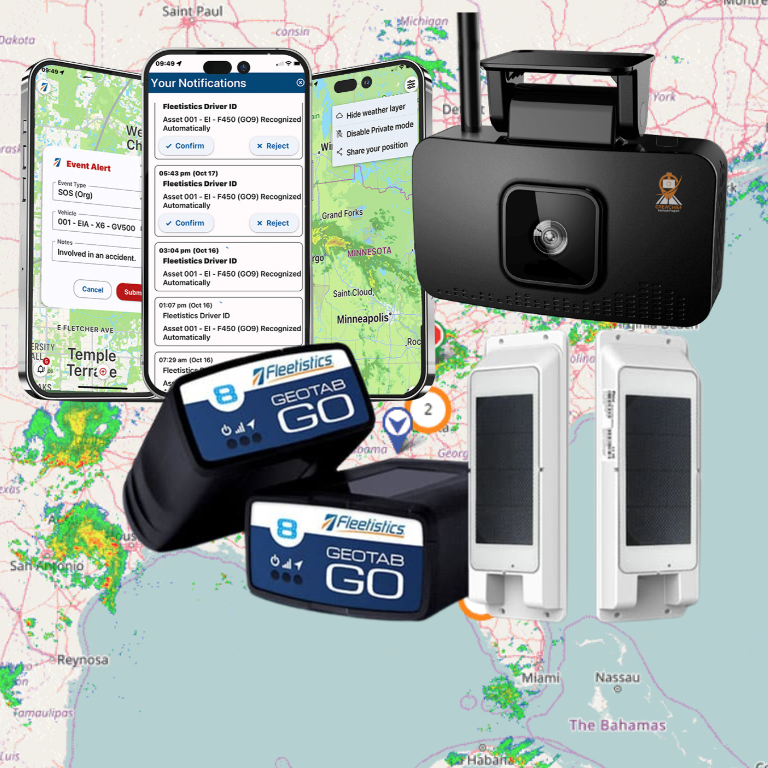
That typically means connecting GPS tracking, vehicle telematics, AI dashcam video, and driver behavior analytics. Telematics systems can collect near real-time GPS location and engine diagnostics, then transmit that information through a cellular network to a secure, cloud-based platform. The U.S. Department of Energy describes this data flow as a way to support more efficient fleet management.
More than a dashcam or GPS tracker
A basic dashcam records what the camera sees. That footage can be valuable after a collision, but recording alone does not give you a complete safety program. You still need a practical way to connect an event with vehicle speed, location, harsh braking, acceleration, or the driver’s actions before and during the incident.
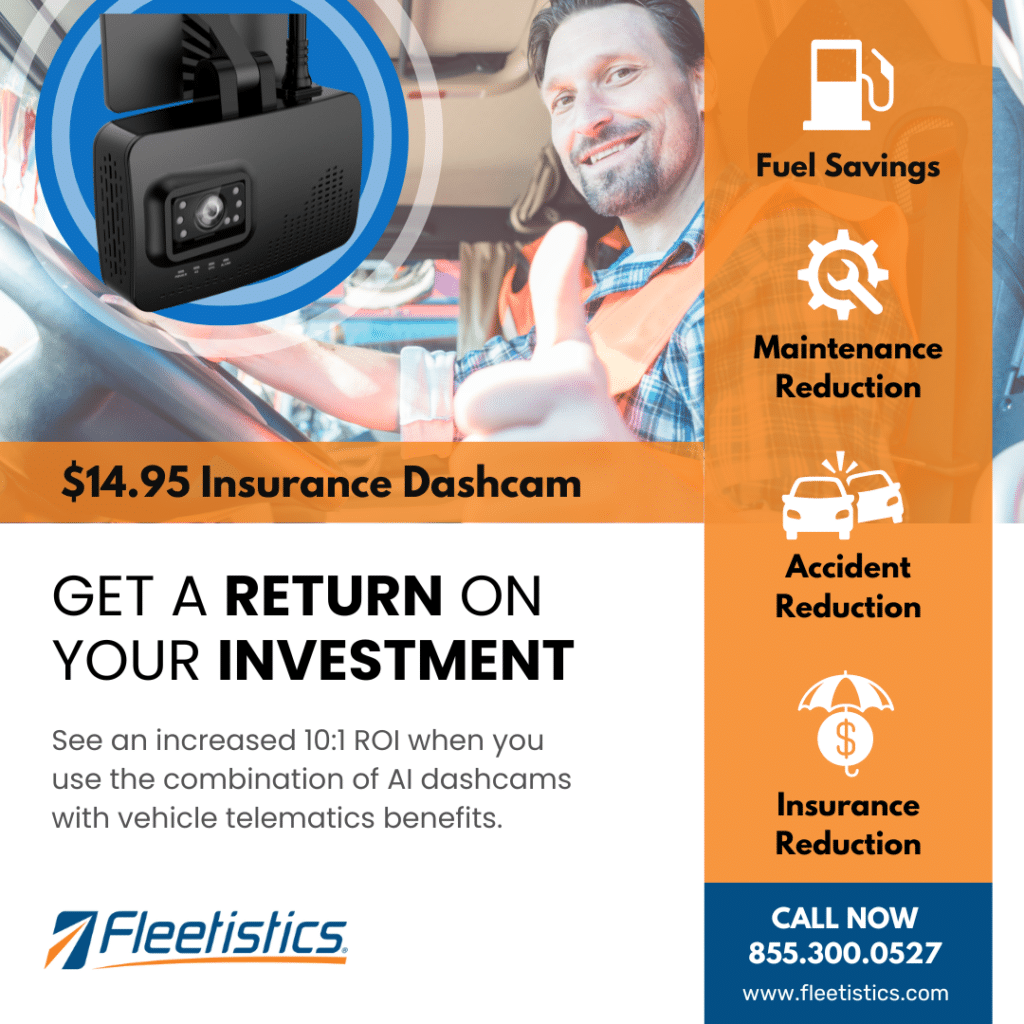
An AI dashcam for fleet vehicles can add context by helping identify events such as distraction or unsafe following. To understand the difference between recording, detection, and response, review how AI dashcams work for commercial fleets. The important point is not simply having more video. It is turning relevant video and telematics events into information your team can act on.
A basic GPS tracker has the opposite limitation. It can show where a vehicle is or was, but location data by itself may not explain why a driver received a safety alert or what coaching would help. Integrated monitoring connects the vehicle, driver, and event so managers can review patterns instead of relying on memory or subjective impressions.
From isolated events to actionable coaching
When the systems work together, safety monitoring can support driver behavior scoring and automated reports. Real-time feedback through in-vehicle monitoring systems can help reduce risky behaviors such as harsh braking and rapid acceleration, while data-driven insights give managers a more consistent basis for coaching. The goal is improvement, not punishment: show the behavior, discuss the cause, and agree on the next action.
Integration also gives you a more holistic view of driver performance and vehicle health. Fleetistics is an Authorized/Reseller of Geotab, combining enterprise telematics technology with personalized service. That approach lets you build a safety program around the data your operation can use, rather than forcing every fleet into the same package.
Key Features to Demand in a Fleet Safety Software Platform
The right platform should turn safety data into decisions your team can act on. Look for a connected system that combines vehicle data, video, alerts, coaching, and reporting instead of forcing managers to piece together separate tools.
Connected data, not isolated snapshots
GPS and telematics should provide near real-time location and vehicle diagnostics through a secure cloud platform. That foundation gives you context around an event: where it happened, what the vehicle was doing, and whether a pattern is emerging. The U.S. Department of Energy describes this combination of GPS and diagnostics as a core function of vehicle telematics (telematics guidance).
Video adds another layer. AI dashcams can help identify events such as distraction, while behavior scoring and automated reports make it easier to prioritize follow-up. You can learn more about distracted driving detection before deciding which camera capabilities your operation needs.
| Feature | What It Does | Why It Matters |
|---|---|---|
| AI dashcam video | Captures relevant driving events and can flag behaviors such as distraction. | Gives managers usable context for coaching and incident review. |
| GPS and telematics data | Collects near real-time location, diagnostics, and vehicle activity. | Connects safety events to vehicle conditions, routes, and operating patterns. |
| Driver behavior scoring | Organizes events into consistent performance trends. | Helps you focus coaching on specific behaviors rather than subjective impressions. |
| Dashboards and automated reports | Surfaces trends by driver, team, district, or vehicle. | Supports accountability and helps identify higher-risk drivers early. |
Alerts that lead to coaching
Real-time feedback is most valuable when it supports a clear response. Research on in-vehicle monitoring systems has found that feedback can help reduce risky behaviors such as harsh braking and rapid acceleration (CDC research). Choose tools that let supervisors review the event, discuss the behavior, and document a consistent coaching action.
Dashboards should make trends visible across teams and districts, not merely list isolated violations. A Missouri Department of Transportation safety dashboard was designed to encourage safer driving across districts, demonstrating how reporting can support accountability (U.S. DOT case summary). Automated reports can also help you identify high-risk drivers early, so intervention happens before an incident.
Modular coverage and dependable support
Your platform should match your operation today while leaving room to expand. Fleetistics offers five tiered platforms representing a variety of solutions, so you can assemble the capabilities that fit your fleet rather than accept an inflexible package. Fleetistics also provides 24/7 support, an important consideration when safety issues arise outside office hours.
Finally, verify that the vendor can support your broader fleet program, including driver coaching, accident reconstruction, compliance workflows, and integrations. A modular system backed by responsive support is easier to adapt as your vehicles, routes, and safety priorities change.
How Driver Safety Scores Are Calculated (and What to Do With Them)
A driver safety score is useful only when it explains behavior clearly enough to improve it. Treat the score as a coaching tool, not a punishment. A low score should start a practical conversation about what happened, what support the driver needs, and how you will measure progress.
Use the score to find patterns, not assign blame
Most scoring models combine event types such as speeding, harsh braking, hard cornering, rapid acceleration, distraction, and seat belt use. The platform assigns different weights to those events, then produces a score or risk rating that helps managers compare trends over time. The exact formula varies by system, so use the score consistently within your own fleet instead of treating it as a universal grade.
- Capture behavior events. Start with objective inputs from GPS and telematics data, in-cab technology, and AI dashcam footage where available. Record the event type, location, time, road context, and whether the system flagged a possible distraction or seat belt issue. Video can add context that a single telematics event cannot provide. If you are evaluating an fleet driver coaching program, confirm that managers can access the underlying evidence, not just a score.
- Weight events into a score. Assign greater weight to behaviors that create greater risk, while avoiding a model that overreacts to one isolated event. Review the scoring rules with operations and safety leaders. A useful dashboard should show the events behind each result and reveal trends by driver, vehicle, route, team, or district. MoDOT used a safety dashboard to encourage safer behavior across districts, rather than relying on disconnected observations. Its reported results included an 85% increase in seat belt use and a 70% reduction in speeding during the first year.
- Review the result with the driver. Schedule a private, fact-based discussion. Ask what was happening at the time, listen for legitimate operational or roadway factors, and distinguish a one-time anomaly from a repeated pattern. The goal is shared understanding and a specific next action, not public ranking or automatic discipline.
- Coach with video evidence and clear feedback. Show the event when footage is available, explain the safer alternative, and agree on one or two behaviors to focus on first. CDC research on in-vehicle monitoring systems supports real-time feedback for reducing risky behaviors such as harsh braking and rapid acceleration. Coaching paired with clear feedback is more useful than passive tracking alone.
- Re-measure and reinforce improvement. Recheck the same behaviors after an agreed period, then recognize progress and address recurring risks early. A consistent feedback cycle can build accountability without creating a surveillance-first culture. If scores remain low, review training, routes, vehicle conditions, and workload before assuming the driver is the only cause.
The best score is not the lowest number on a leaderboard. It is a reliable signal that helps you prevent incidents, support drivers, and build safer habits across the fleet.
Fleet Safety Reporting: Dashboards, Alerts, and Manager Workflows
Reporting turns safety data into a repeatable management process. Instead of waiting for an accident or relying on anecdotal feedback, you can use fleet safety dashboards to see where risk is increasing, which behaviors need attention, and whether coaching is producing measurable improvement.
Match the reporting cadence to the decision
A daily view should focus on exceptions that need a quick response: speeding events, harsh braking, distracted driving alerts, open DVIR issues, or ELD compliance concerns. Managers can review the event, confirm the vehicle and driver, and assign the appropriate follow-up while the details are still fresh.
Weekly reporting is better for patterns. Compare teams, routes, vehicle types, or operating areas to identify repeated behaviors rather than treating every alert as an isolated failure. Monthly reports can support leadership reviews, safety goals, insurance discussions, and resource decisions. The cadence matters because consistent monitoring and reporting help establish a safety culture across the organization, not just a reaction to individual incidents. MoDOT’s safety dashboard work illustrates how dashboards can highlight driving trends across districts and encourage accountability.
Drill down from the score to the event
A useful dashboard should let you move from a high-level safety score to the underlying events. Start with the driver, team, or vehicle that needs attention, then review the event type, location, time, speed, route context, and available video. This makes the conversation specific: you can discuss a recurring harsh-braking pattern or a speeding event at a particular location instead of presenting a vague score.
Automated reporting also helps identify higher-risk drivers early, giving managers an opportunity to provide proactive coaching before an incident occurs. That approach is more constructive than using the platform as a punishment system. The U.S. Department of Energy describes telematics as a way to automate reporting and monitor driver safety using operational data rather than subjective assessments.
Connect alerts, video, and compliance workflows
Configure alerts around the behaviors and compliance issues that matter most to your operation. A speeding or harsh-braking alert can create a coaching task. A DVIR defect can route to maintenance. An ELD exception can go to the appropriate compliance manager. The goal is a defined workflow, with an owner and a follow-up action, rather than another notification that disappears in an inbox.
When an accident occurs, synchronized telematics and video can support accident reconstruction by showing the vehicle’s movement, the surrounding conditions, and the driver’s actions before the event. An AI dashcam for fleet vehicles can add context to the fleet telematics data already flowing through your management platform. Together, these tools help you investigate facts, coach appropriately, and improve future procedures.
This integrated view also scales beyond the safety department. City of Seattle runs a 4,100-vehicle fleet and documents fuel savings through telematics, showing how the same data foundation can support safety, efficiency, and broader fleet management decisions.
How to Choose Fleet Safety Monitoring Software for Your Fleet Size
The right platform should fit the way your fleet operates today while leaving room for practical growth. A five-vehicle contractor does not need the same reporting depth, integrations, or support model as a government fleet with thousands of units. Start with the number of vehicles you manage, then match the technology to the safety decisions you need to make every week.
Match the platform to your operating scale.
Small fleets with 5 to 50 vehicles typically need a focused foundation: GPS visibility, an AI dashcam option, core driver behavior alerts, and weekly reports that a manager can review without a dedicated analyst. Priority goes to ease of use and a clear path from an alert to a coaching conversation. The goal is not to collect every available data point. It is to identify the few behaviors that create the greatest safety or liability risk.
Mid-size fleets with 50 to 500 vehicles usually need a more complete telematics environment. Look for AI dashcam integration, automated behavior scoring, configurable dashboards, and a repeatable coaching workflow. This is Fleetistics’ sweet spot, where managers often need more structure than a small operation but still expect responsive, personalized support. A modular platform lets you expand coverage without replacing the system when your fleet adds vehicles, locations, or operating requirements.
Large fleets with 500 to 5,000 or more units should evaluate enterprise integrations, permission controls, reporting at multiple management levels, and implementation support. Confirm that the platform can connect safety data with the systems your organization already uses. Government fleets should also examine purchasing pathways such as Sourcewell government purchasing, which can simplify procurement when the organization is eligible.
Fleetistics supports representative fleet sizes from 5 to 5,000-plus units through five tiered subscription platforms with a variety of solutions. That range gives you room to select a practical starting point instead of paying for complexity your team will not use. Fleetistics also combines Geotab technology with personalized service and 24/7 support, which matters when safety workflows need attention beyond a monthly report.
Before comparing vendors, separate must-have capabilities from future requirements. This fleet safety software selection checklist can help you document the cameras, alerts, reports, integrations, and support expectations that belong in your evaluation. Then ask each provider to demonstrate how a real incident moves from detection to review, coaching, documentation, and follow-up.
Frequently Asked Questions
What is fleet safety monitoring software?
It combines driver behavior data, vehicle location, alerts, and safety reporting in one platform. When connected with AI dashcams, it can help you identify risky events, review context, score behavior, and organize follow-up coaching.
How do fleet managers score driver safety?
Start with a consistent set of behaviors, such as speeding, hard braking, harsh cornering, distraction, and seatbelt use. Assign appropriate weight to each event, review trends over time, and compare results with clear internal benchmarks. Scores work best as coaching signals, not as a standalone punishment.
What features should I look for in a safety monitoring platform?
Prioritize accurate event detection, real-time alerts, automated reports, configurable dashboards, coaching workflows, and incident review tools. Integrations with GPS, telematics, DVIR, ELD, and existing fleet systems can reduce duplicate data entry and give managers a more complete view.
How can software help reduce accident risks?
It helps you find repeat behaviors and higher-risk routes or situations before they become a larger pattern. Managers can then review the event, speak with the driver, document the coaching action, and measure whether the behavior improves in later reports.
Does safety monitoring software integrate with other fleet systems?
Many platforms connect with broader fleet management and tracking tools, including telematics, GPS, dashcams, and compliance workflows. Before choosing a system, confirm which integrations are supported today and whether the data can be accessed in the reports your managers already use.
Ready to Improve Your Fleet Safety Program?
A clearer view of driver behavior can help you turn safety data into focused coaching and practical improvements. Book a consultative demo to see how Fleetistics can help your team score, report, and improve driver safety. Contact us to talk with a consultant about your fleet.