
A two-truck or 20-truck operation can lose money the same way a large fleet does: unnecessary idle time, unclear job status, avoidable overtime, missed maintenance, and fuel purchases no one can explain. GPS tracking for small fleets puts those daily decisions on facts instead of callbacks, paper logs, and assumptions.
The goal is not to watch a dot move across a map. The goal is to know whether the right vehicle reached the right job, whether drivers are operating safely, and where costs are building before they become a monthly surprise. A well-chosen system gives a small fleet real-time control without forcing it to buy enterprise features it will not use.
Why GPS Tracking for Small Fleets Delivers Fast Value
Small fleets usually operate with little room for waste. A few extra gallons per vehicle, one missed service interval, or an unproductive hour each day can quickly affect margins. GPS tracking provides a practical record of vehicle activity: where vehicles traveled, how long they stopped, when they arrived, and how they were driven.
That visibility improves customer service as much as cost control. Dispatch can provide an accurate arrival window rather than calling a driver for an update. A manager can send the closest qualified vehicle to an urgent job. When a customer disputes a service visit, location history and timestamps provide an objective answer.
The strongest return often comes from changing routine behavior. Drivers who know that idle time, speeding, harsh braking, and unauthorized use are measured tend to make better day-to-day decisions. Managers can coach from a clear event record instead of relying on a complaint or a vague impression.
Start With the Operating Problem, Not the Device
Before comparing trackers, define the decisions the system needs to support. A plumbing contractor may need to verify arrival and departure times at job sites. A delivery fleet may need route visibility and proof of service. A field-service business may be more concerned with excessive idling, vehicle maintenance, and employee safety.
This step prevents a common mistake: selecting the lowest-cost tracker, then expecting it to solve safety, compliance, maintenance, and workflow problems it was never designed to address. Basic location reporting can be the right starting point. But if vehicle downtime or driver risk is a major cost, telematics data and connected workflows matter more than map visibility alone.
Also decide who will use the information. Owners may need a weekly performance view. Dispatchers need current vehicle status. Maintenance teams need service alerts. Drivers need a clear policy that explains what is monitored, why it is monitored, and how the program supports safer, more reliable work.
What a Small Fleet Tracking System Should Do
The best fit depends on fleet size, vehicle type, and operating model, but several capabilities consistently produce useful results.
Provide reliable location and trip history
Real-time location helps dispatch make better assignments while trip history helps managers review service activity, mileage, and out-of-route travel. Update frequency matters. A fleet responding to emergency calls may need more frequent updates than a business reviewing daily routes. More frequent reporting can improve visibility, but it may also affect device cost and data usage.
Turn driving behavior into coachable events
Speeding, hard braking, rapid acceleration, extended idling, and seat belt events can reveal risk and fuel waste. The value is not in generating more alerts. It is in setting reasonable thresholds, reviewing patterns, and having consistent coaching conversations.
For higher-risk operations, AI-enabled dashcams can add important context. A harsh-braking alert may be caused by aggressive driving, a cut-off vehicle, or a pedestrian entering the roadway. Video helps safety managers coach fairly and can help protect the business after an incident. It is a larger investment, so it makes the most sense where claims exposure, safety performance, or driver training are material concerns.
Support maintenance before downtime occurs
Odometer readings, engine hours, diagnostic trouble codes, and scheduled maintenance reminders help fleets service vehicles on time. For small fleets, this is often more valuable than a complicated maintenance program. A simple process that flags upcoming oil changes, inspections, and fault codes can prevent a vehicle from failing during a customer commitment.
Create useful reports without creating administrative work
A report is only useful when someone can act on it. Start with a limited set of operational reports: idle time, speeding, vehicle utilization, after-hours activity, and maintenance due status. As the program matures, add route analysis, fuel-card controls, digital vehicle inspections, or customer-facing arrival reporting where they solve a real problem.
Choose Hardware That Fits the Vehicle and the Job
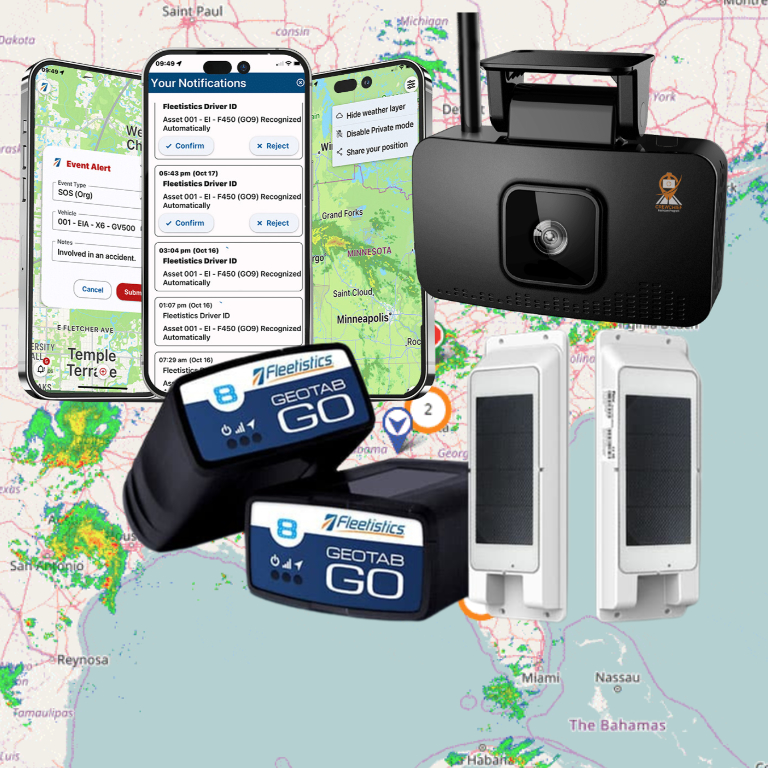
Hardware choices affect installation effort, data quality, and long-term flexibility. Plug-in devices can be a practical option for lighter-duty vehicles and fast deployments. They are easy to move between vehicles, but they can be removed or disconnected and may offer less complete data depending on the vehicle.
Hardwired devices are more secure and are commonly used when consistent tracking is essential. They can also support added inputs such as PTO monitoring, trailer status, or specialized equipment signals. Installation requires more planning, particularly across mixed vehicle types, but the result is generally better suited to a permanent fleet program.
Asset trackers serve a different purpose. Trailers, generators, containers, and mobile equipment may not provide vehicle diagnostic data, yet their location and movement can still be operationally critical. Tracking high-value assets can reduce search time, deter theft, and improve inventory accountability.
Do not overlook coverage, installation support, and device durability. A low initial hardware price does not help if installations are inconsistent, devices fail in the field, or the platform cannot grow with the fleet.
Make Data Part of the Daily Operating Rhythm
Tracking programs fail when data sits in a dashboard until someone has a problem. Build a simple review process around the roles already running the fleet. Dispatch can review exceptions during the day. Supervisors can address repeat driving events weekly. Maintenance can review upcoming service needs before scheduling work. Leadership can review trends monthly to verify that the investment is reducing cost or risk.
Avoid using GPS data as a gotcha tool. A fleet gets better results when the program has defined expectations and a consistent response. If drivers are penalized for every isolated hard-braking event, they will view the system as surveillance. If managers use patterns to identify coaching needs, recognize safe performance, and investigate legitimate exceptions, the data becomes a management tool.
Written policies matter. Explain authorized vehicle use, after-hours rules, privacy boundaries, safety expectations, and how alerts will be reviewed. This is especially important when take-home vehicles are involved. Clear communication reduces resistance and gives supervisors a fair standard to apply.
Measure ROI Against the Costs You Can Control
A GPS program should have a business case that is easy to track. Estimate current fuel spend, average idle time, overtime, preventable maintenance costs, unauthorized mileage, and the time spent manually checking on vehicles. Then establish a baseline before making changes.
The return may come from several smaller gains rather than one dramatic reduction. Cutting idle time can reduce fuel use. Better routing can create capacity for another job per day. Faster proof of service can reduce billing disputes. Maintenance alerts can prevent a costly roadside failure. A single avoided accident or fraudulent claim can materially change the annual result.
Review the numbers after 30, 60, and 90 days. If a report does not drive a decision, remove it from the routine. If a recurring problem remains unchanged, adjust the policy, alert threshold, or coaching process. Technology provides evidence, but management follow-through produces the return.
Build a Platform That Can Grow With You
Small fleets should not have to replace their tracking system every time their needs change. Start with the location, trip, and driver data that supports immediate control. Add maintenance management, ELD tools, AI video, fuel-card integration, route optimization, or mobile workforce workflows when the operation justifies them.
This modular approach protects the budget while keeping the fleet connected. It also reduces the risk of fragmented systems where GPS data, inspection forms, fuel transactions, and maintenance records live in separate places. Fleetistics helps fleets match the platform to their current operating needs while preserving a clear path to broader fleet management capabilities.
The right tracking program should make Monday morning easier: vehicles accounted for, drivers supported, maintenance visible, and decisions backed by data. Start with the cost or service problem that matters most, then build a system your team will use every day.