
When routes are built from habit, spreadsheets, or a quick glance at a map, small planning errors can compound across the day. A missed service window creates a rushed driver, an extra trip increases mileage, and an uncertain arrival time leaves the customer calling dispatch. Route optimization gives fleet teams a more structured way to plan around the realities of their operation.
The benefits of route optimization software include more efficient route plans, better control of service windows, lower unnecessary mileage, and a clearer view of driver workload. The strongest results come when the software accounts for vehicle capacity, customer demand, traffic, operating geography, and the specific commitments your fleet has made.

In practical terms, that can mean three measurable improvements: fewer miles between stops, more balanced assignments across drivers, and more accurate customer updates when plans change. It can also help dispatchers compare the intended route with what actually happened, including delays, dwell time, and missed or completed stops. These measures give managers a starting point for validating ROI rather than assuming every fleet will see the same outcome.
Route optimization is not a replacement for GPS tracking. Planning creates the route your team expects, while GPS and telematics show how vehicles are executing it and help surface exceptions. Together, they connect planning decisions to daily operations.
The right approach begins with understanding how your fleet serves customers, handles capacity, and responds to changes in the field. From there, the operational benefits become easier to evaluate in context.
What Are the Benefits of Route Optimization Software?
The benefits of route optimization software begin with a better way to turn customer demands, vehicle limits, and service commitments into a workable daily plan. Instead of relying on a dispatcher to arrange every stop manually, the software evaluates route options against the conditions that matter to your operation. Those conditions may include vehicle capacity, customer demand, pickup and delivery locations, service windows, and the geography your drivers cover.
That distinction matters because the shortest route is not always the most useful route. A practical plan must fit the vehicles available, the work assigned, and the promises made to customers. Research on vehicle routing shows that routing and scheduling software needs to reflect the operating environment and customer needs rather than follow one universal formula. Route optimization therefore works best as an operational decision tool, not as a generic map with a single ideal answer.
What does route optimization improve?
For a delivery, field-service, or scheduled-route fleet, the main value is coordination. A well-designed route can help dispatchers organize stops more logically, balance assignments across vehicles, and reduce avoidable gaps between jobs. It can also make the plan easier to explain to drivers and easier to evaluate after the workday ends.
- More efficient use of miles and vehicles: Routing objectives commonly include minimizing miles and the number of vehicles required while meeting service requirements.
- Better workload planning: Assignments can account for customer demand, vehicle capacity, and the time available for each job instead of treating every vehicle and stop as interchangeable.
- Fewer scheduling conflicts: Time-window routing helps align a vehicle with customers who must be served during specified periods, which is especially useful for recurring service appointments and delivery commitments.
- More consistent customer communication: A clearer route plan gives operations teams a stronger basis for communicating expected arrival times and handling changes.
- Useful performance visibility: When planning data is connected with fleet data, managers can compare planned routes with actual routes and investigate where dwell time, delays, or missed stops affected service.
These advantages are not automatic. Results depend on the quality of the operational data, the constraints included in the model, and how closely the workflow fits your business. A plumbing company, regional distributor, and government fleet may need different rules for capacity, priorities, service windows, and geographic coverage. The right evaluation asks whether the software can represent those realities and whether your team can measure the resulting changes in miles, stops, drive time, workload, and on-time service.
How Does Better Route Planning Reduce Mileage and Driver Workload?
Better route planning reduces avoidable work by looking at the entire operating day, not just the distance between two stops. A useful plan can sequence jobs, assign vehicles, and account for service requirements while helping dispatchers avoid unnecessary backtracking. Common objectives include reducing miles, vehicles, labor, and waiting time while still meeting service requirements. Vehicle-routing research frames these goals as connected decisions rather than isolated mileage calculations.
That distinction matters because the shortest route on a map is not always the most practical route for a fleet. A vehicle may need to carry a particular load, reach a customer during a defined window, or avoid a location that cannot accommodate its size. Routing and scheduling should reflect the fleet’s cargo, customer requirements, and operating region instead of applying one universal formula.
Reduce avoidable miles without creating new bottlenecks
Start by examining the causes of excess mileage. Long distances between stops, partially full vehicles, traffic, weather delays, limited parking, and customer preferences can all disrupt an otherwise reasonable schedule. A route plan that groups nearby work may reduce backtracking, but it should also preserve capacity and realistic service times. Otherwise, the fleet may trade fewer miles for missed appointments, extra transfers, or a second trip.
For example, a field-service team could group appointments by area while reserving enough capacity for equipment and parts. The planner can then account for a high-priority job, a narrow arrival window, or a location where parking takes longer. The result is not necessarily the same number of miles every day. It is a more deliberate plan that makes tradeoffs visible before drivers are on the road.
Balance workload across drivers and vehicles
Route optimization can also support driver workload balance. If one driver receives a dense schedule with long service times while another finishes early, the problem is not solved by mileage alone. Dispatchers should review stop count, expected drive time, job duration, vehicle capacity, and the likelihood of waiting. Scheduling and dispatching tools can help distribute work more evenly, but managers still need to confirm that the assumptions match real operating conditions.
Traffic, weather, parking, and unexpected delays can change the workload after a plan is published. Use actual operating data to compare planned and completed routes. Then look for recurring patterns such as late-day congestion, excessive dwell time, or routes that regularly exceed available labor. That review helps teams adjust service windows, staffing, or route rules rather than blaming drivers for conditions the plan failed to anticipate.
The practical test is whether the plan gives drivers a manageable day while protecting service quality. Track miles, waiting, overtime, missed windows, and workload distribution during an evaluation. Results will vary by fleet, region, vehicle type, and customer demand. So treat route planning as an ongoing operating process rather than a promise of identical savings for every business.
How Do Service Windows and Customer Updates Improve Operations?
For scheduled-route fleets, a route is more than a sequence of addresses. Each appointment may have a promised arrival period, a required service duration, a pickup or delivery constraint, and a customer expecting timely communication. Vehicle-routing models can assign service locations within defined time windows, including separate windows for pickup and delivery. That structure helps dispatchers build a plan around actual operating commitments instead of treating every stop as interchangeable.
This matters for field-service teams in HVAC, plumbing, landscaping, pest control, delivery, and similar operations. A realistic schedule gives drivers a workable order of stops while helping the office identify conflicts before they become missed appointments. The right configuration still depends on the fleet’s service area, vehicle capacity, customer requirements, and daily workload. Routing and scheduling software should be adapted to those conditions, not applied as a universal formula.
Turn the planned route into a measurable service promise
Planning is only the starting point. Teams also need to compare the planned route with what actually happened. Fleetistics identifies plan-versus-actual route comparison, job-site dwell-time monitoring, and service-delivery efficiency as practical operating measures. If a technician spends longer than expected at one location, a dispatcher can see how that affects later appointments and communicate before the delay becomes a surprise.
Live location data can make arrival estimates more useful. Instead of relying only on a driver’s original schedule, the office can use current vehicle position and route progress to provide a more accurate update. Depending on the workflow, customers may receive a narrower expected arrival period, a service confirmation, or a shared view of the vehicle’s location. These updates reduce uncertainty without requiring dispatchers to make repeated calls for basic status information.
Use service records to resolve questions after the visit
Accurate operational records also help after the vehicle leaves. Location and service information can support verification that a visit occurred, which is useful when a customer questions a completion record or a billing event. It does not replace work orders, technician notes, or customer sign-off, but it gives the operations team another evidence point when reviewing a disputed service.
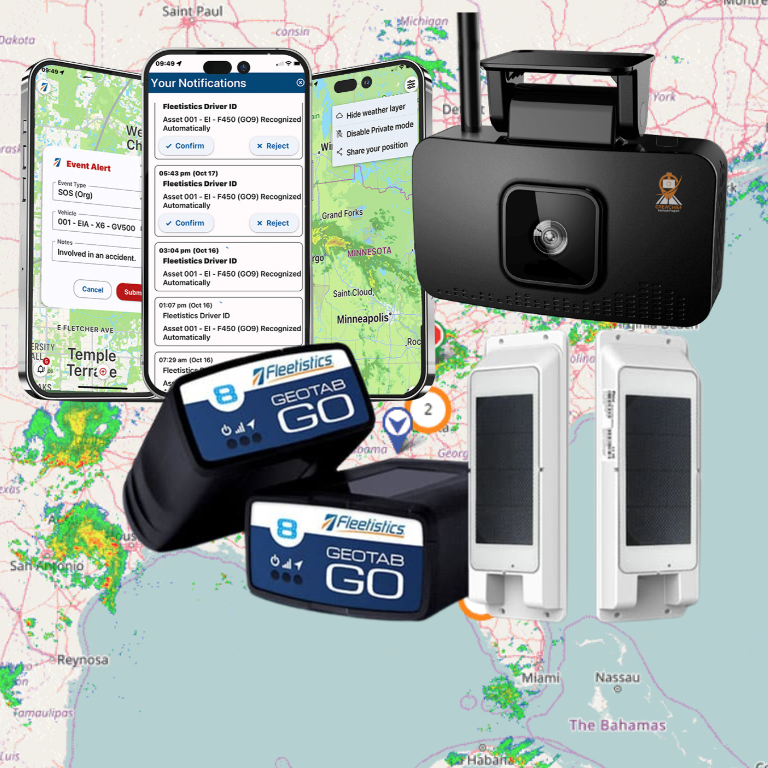
These capabilities depend on connecting route plans with execution data. Fleetistics combines route optimization with GPS tracking and telematics, including live location, real-time data capture, mapping, and alerts. The result is a workflow in which service windows guide the plan, telematics shows progress, and customer updates reflect what is happening in the field. That combination is one of the practical benefits of route optimization software for fleets that measure both efficiency and service reliability.
How Does Route Optimization Work With GPS Tracking?
Route optimization and GPS tracking solve related but different operational problems. Route planning creates the intended plan: which vehicle should visit each location, in what sequence, and within which scheduling constraints. Live GPS and telematics then show what is actually happening once drivers begin the route. Treating those functions as interchangeable can leave dispatchers with a polished plan but no reliable way to manage the day when conditions change.
Planning sets the expected route
Optimization can account for customer locations, service windows, vehicle capacity, and operating requirements before a vehicle leaves the yard. That gives dispatchers a practical baseline for scheduled delivery and field-service work. A plumbing, HVAC, landscaping, or delivery operation can use the plan to assign work, sequence stops, and balance the expected workload across available vehicles. Because operating environments differ, the right rules depend on the fleet, cargo, customers, and service region rather than one universal formula.
Fleetistics combines route optimization with broader GPS tracking and telematics, so planning can be evaluated against what happened in the field. The distinction matters when you are assessing the benefits of route optimization software. A route that looks efficient on a map may perform differently because of traffic, access issues, customer delays, or longer-than-expected service time.
Live data exposes exceptions
During execution, live GPS tracking provides location data, mapping. And alerts that help a dispatcher see whether a vehicle is following the planned sequence and progressing toward the next stop. The goal is not to criticize every deviation. It is to identify exceptions that require action, such as a late arrival, an extended stop, an unexpected departure from the route, or a service window at risk.
That visibility supports a more useful response. A dispatcher may contact the customer with a better arrival estimate, adjust assignments when an urgent job appears. Or investigate why a driver spent more time at a site than expected. The system should support operational decisions, not simply display dots on a map.
Analytics connect the plan to results
After the route is complete, teams can compare planned and actual routes, review job-site dwell time, and evaluate service-delivery efficiency. Repeated differences may reveal inaccurate service-time assumptions, unrealistic scheduling, capacity issues, or a need to revise territory design. Alerts and historical analytics make those patterns easier to identify than manual driver check-ins alone.
APIs and integrations extend this workflow into dispatch, routing, ERP, maintenance, fuel-card, accounting, payroll, and insurance applications. Fleetistics also offers route optimization, exceptions and alerts, API or SDK access, and partner integrations as part of its broader fleet management software ecosystem. The practical test is whether those connections preserve useful data from planning through execution and reporting. Allowing your team to improve the next route using evidence from the last one.
How Can You Validate the ROI Before Rolling It Out?
Route optimization should be evaluated against the way your fleet operates today, not against a generic savings promise. A useful business case connects the software to measurable changes in mileage, labor, service reliability, utilization, and customer experience. The goal is to learn whether the solution fits your routes, vehicles, drivers, workload, and service commitments before expanding its use.
- Establish a baseline. Record representative operating data before changing the planning process. Depending on your fleet, that may include total miles, number of stops, drive time, overtime. Fuel use, on-time arrival rate, vehicle utilization, idle time, missed service windows, and customer-service contacts. Include route conditions that influence those results, such as delivery density, appointment windows, traffic, and seasonal demand. A baseline helps separate software effects from normal variation.
- Choose measures that connect to business outcomes. Select a manageable group of inputs and define how each one will be calculated. For example, compare planned and actual miles, scheduled versus completed stops, drive time per route, overtime hours, fuel consumed, and the percentage of arrivals within the promised window. Add operational and customer-service measures when relevant, including dispatch time, rescheduling volume, arrival inquiries, service confirmations, and billing disputes. Choose measures your team can capture consistently and act on.
- Run a bounded evaluation or pilot. Test the workflow with a defined group of routes, vehicles, or service teams. Keep the evaluation conditions clear, document exceptions, and involve dispatchers and drivers who understand the daily constraints. Route optimization is not a one-size-fits-all formula. Capacity, geography, customer requirements, parking, weather, and traffic can all affect results. Fleetistics describes a consultative process that can include needs assessment, a tailored demonstration, a pilot or Solution Evaluation Process, implementation, and training.
- Compare after-results with the baseline. Review the same measures over a comparable operating period. Look for changes in miles, stops, drive time, overtime, on-time arrivals, fuel, utilization, and service workload. Examine both averages and exceptions. A route may show fewer miles while creating longer service delays, or higher stop counts while increasing driver strain. Compare results by route type or operating area so a strong result in one group does not conceal a poor fit in another.
- Include the operational value customers notice. More accurate arrival information, service confirmation, live location sharing, and proof of service can reduce uncertainty and support billing resolution. These effects may not appear as a simple fuel calculation, but they still influence retention, dispatch workload, and service quality. Use the fleet telematics ROI resource to organize relevant savings and productivity inputs, then validate the assumptions against your own baseline. This approach supports an informed rollout decision without claiming guaranteed payback.
The resulting business case should show where the solution creates value, where adjustments are needed, and which outcomes deserve continued monitoring. That evidence is more useful than a headline percentage because it reflects your fleet’s actual routes and service model.
What Should You Look For in a Route Optimization Platform?
The right platform should reflect how your fleet actually works, not force every operation into the same routing formula. Routing and scheduling requirements vary by cargo, customer expectations, geography, vehicle capabilities, and service model. A delivery fleet, HVAC team, and public-sector operation may all need route optimization, but they will not evaluate fit in exactly the same way.
Use the criteria below to compare platforms before you commit. The goal is not to collect the longest feature list. It is to confirm that the system can support your constraints, connect with the tools you already use, and produce information your team can act on.
| Evaluation criterion | What your fleet should verify |
|---|---|
| Operating environment | Can the platform reflect your service area, road conditions, vehicle types, cargo, customer requirements, and regional operating rules? Customization matters because there is no universal routing formula. |
| Capacity and demand | Can planners account for vehicle capacity, load size, stop demand, pickup requirements, and delivery sequence? Confirm that the system can recognize real constraints instead of optimizing distance alone. |
| Service windows | Can dispatchers schedule visits within promised time windows, prioritize stops, and manage pickup or delivery timing? Ask how exceptions are handled when a route changes during the day. |
| GPS and telematics relationship | Does the platform separate planned routes from live execution? Optimization should establish the intended plan, while GPS and telematics show actual progress, dwell time, and exceptions. |
| Integrations | Can it exchange data with dispatch, routing, ERP, maintenance, fuel-card, accounting, payroll, or insurance applications? Verify available APIs, SDK access, and the workflow for keeping records synchronized. |
| Reporting and measurement | Can managers compare planned and actual routes and track miles, stops, drive time, overtime, utilization, on-time arrival, fuel use, and customer-service measures? Reports should support baseline-versus-after evaluation. |
| Modularity and scalability | Can you start with the capabilities your operation needs now and add related tools later, such as alerts, maintenance, analytics, or compliance? Confirm that the design can serve your fleet as its assets, regions, or workflows grow. |
| Implementation and training | Who will assess your needs, configure the workflow, train users, and help optimize it after launch? A consultative process should include needs assessment, a tailored demonstration, evaluation, implementation, training, and ongoing improvement. |
Fleetistics approaches this decision as a technology and implementation partner. Its offering can combine route optimization with Geotab-powered GPS tracking, telematics, analytics, alerts, APIs, and partner integrations. Allowing the solution to match the fleet rather than operate as an isolated planning tool. Review the platform against your actual routes, data sources, and performance measures before deciding what belongs in the initial rollout.
Contact Us Today to discuss the operating requirements your route optimization platform needs to support.
Frequently Asked Questions
How do you know whether route optimization software fits your fleet?
Start with the operating problem, not the software label. Review your fleet’s service area, vehicle capacity, customer requirements, appointment windows, stop density, dispatch process, and exception patterns. A suitable platform should reflect those conditions rather than force a one-size-fits-all formula. It should also give managers a practical way to compare planned routes with actual performance and determine whether the workflow supports the fleet’s drivers and customers.
Can route optimization improve customer communication?
It can give dispatch and customer-service teams a more reliable operational picture. When planned routes are connected with live vehicle-location data, teams can provide more accurate arrival updates. Share vehicle location when appropriate, confirm completed service, and investigate questions about when work occurred. These capabilities are especially useful for scheduled-route operations such as HVAC, plumbing, landscaping, pest control, delivery, and other field services. The software does not remove every delay, so teams should still communicate exceptions caused by traffic, weather, parking, or job-site conditions.
How does route optimization work with GPS tracking?
The two technologies serve different roles. Route optimization creates the intended sequence of stops using inputs such as demand, capacity, locations, and service windows. GPS tracking and telematics then show what is happening during execution, including vehicle location, route progress, dwell time, and exceptions. Comparing the plan with actual activity helps managers identify recurring delays, adjust schedules, and improve future routes. Fleetistics describes this relationship as planning the intended route while live telematics monitors performance and supports exception response.
How should a fleet measure the return on route optimization software?
Establish a baseline before changing the process, then compare results after implementation or during a defined evaluation. Useful measures include miles, stops, drive time, overtime, on-time arrival rate, fuel use, vehicle utilization, missed service windows, and customer-service indicators. Review the same measures across comparable routes and operating periods instead of relying on a single favorable day. A consultative evaluation can help connect the measurements to your fleet’s goals. Identify which benefits are actually attributable to the new workflow, and determine whether the solution merits broader adoption.
Ready to Discuss the Right Route Optimization Approach?
A practical evaluation can help you determine whether route optimization fits your fleet, service commitments, and operating model. Fleetistics can help you discuss the integrations you rely on, the baseline metrics worth tracking, and how to compare planned improvements with actual results during an evaluation. That conversation can also clarify how route planning should work alongside GPS tracking and your existing fleet systems, without assuming every operation needs the same configuration.