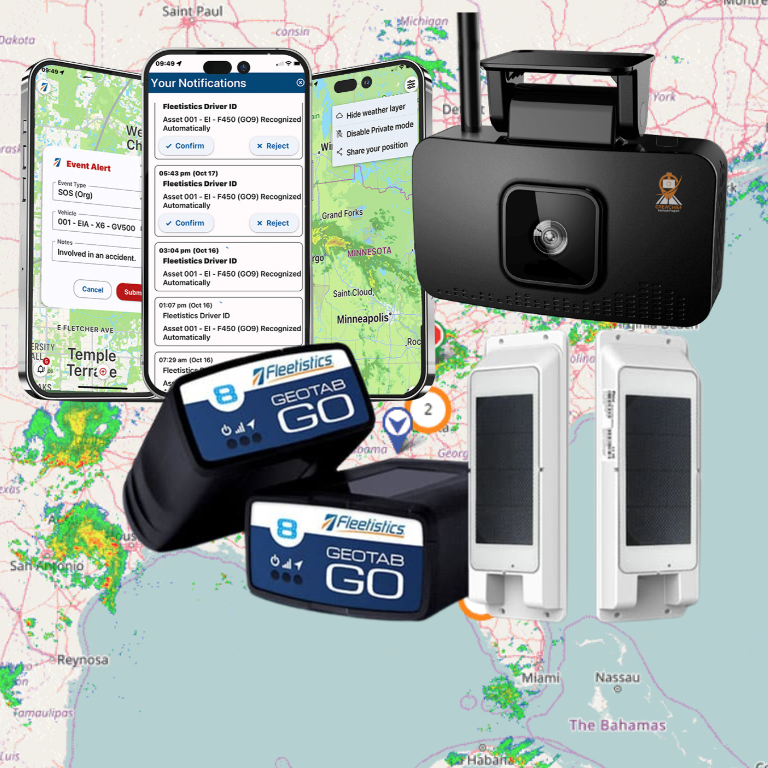

Truck operations become harder to control when location, safety, maintenance, routing, and compliance data live in separate systems.
A practical management approach connects those signals, then turns them into decisions a fleet manager can measure: fewer idle hours. Stronger utilization, faster maintenance turnaround, safer driving, and fewer compliance exceptions.
Trucks fleet management is the coordinated process of managing vehicle location, drivers, maintenance, routes, fuel use, safety, and applicable compliance requirements. The right system combines telematics and operational workflows without forcing every fleet into the same feature set. Your fleet size, vehicle mix, routes, jurisdictions, and goals should determine what you track and how often you act on it.
The most useful starting point is an integrated fleet management approach that shows how these functions support one another. Once the core components are clear, you can select technology and establish a dashboard around the metrics that matter most to your business.
- Set a baseline for utilization, idle time, safety, maintenance, and compliance.
- Connect each metric to an owner, review cadence, and corrective action.
- Run a measured evaluation before expanding the program.
Contact Fleetistics for a consultative fleet needs assessment
What Does Trucks Fleet Management Include?
Trucks fleet management is an operating system for coordinating vehicles, drivers, maintenance, dispatch, safety, compliance, and lifecycle decisions. It is not simply a map with vehicle dots or a software license. The goal is to connect daily activity to decisions a fleet manager can measure, explain, and improve.
Visibility that supports daily decisions
The foundation is accurate vehicle and asset data. GPS tracking hardware and telematics can show where trucks are, how they are being used, and whether activity matches the planned route or schedule. Diagnostics, alerts, and usage information add context, helping dispatchers respond to exceptions instead of relying on calls, spreadsheets, or end-of-day reports.
For example, a service fleet may see that a truck assigned to its first appointment is still stopped several miles away. A dispatcher can investigate the delay, update the customer, and adjust the next assignment. The same data can later help the operations team compare route adherence, idle time, utilization, and recurring delays. Explore how GPS tracking and telematics connects these data sources.
Workflows for people, vehicles, and risk
A complete program also turns information into repeatable workflows. Driver management may include training, license and certification review, recordkeeping, and behavior monitoring. Safety tools can identify patterns that deserve coaching, while transparent policies help drivers understand what information is collected and how it supports safer operations.
Maintenance is another connected workflow. Teams can schedule inspections and preventive work using mileage, usage, or engine hours, then use diagnostics and work orders to manage repairs and downtime. The right interval depends on the fleet and, in some cases, the vehicle. The Federal Motor Carrier Safety Administration explains that systematic inspection, repair. And maintenance means a regular or scheduled program, while inspection and maintenance intervals remain fleet-specific and sometimes vehicle-specific. Review FMCSA maintenance guidance before turning a generic schedule into a policy.
Compliance and business performance
Compliance reporting belongs in the operating model, but requirements depend on the vehicle, route, jurisdiction, and type of operation. Relevant fleets may need workflows for ELD, DVIR, IFTA, or other records. A local delivery fleet should not assume it needs the same compliance configuration as an interstate carrier.
Finally, management uses the system to evaluate fuel use, idle time, utilization, maintenance completion, safety events, compliance exceptions, and payback. That measurement layer is what separates an integrated fleet program from a generic list of features. Choose only the capabilities that fit your truck mix, operating model, existing systems, and improvement priorities.
How Do Location Data and Routing Improve Truck Operations?
Location data becomes operationally useful when it helps a dispatcher make a better decision, not when it simply places a vehicle on a map. A live view of truck position, direction, status, and recent movement gives the team a shared picture of work in progress. That visibility supports more accurate arrival updates, faster reassignment when conditions change, and better coordination between drivers, dispatchers, and customers.
Start by connecting location data to the plan for the day. Dispatchers can compare a truck’s current position with its assigned stops, expected arrival window, and route. When a vehicle deviates from the planned path, the exception should prompt a question, not an automatic accusation. Construction, customer instructions, weather, or a safe alternative route may explain the change. The value is having the information early enough to confirm the reason and adjust the plan.
An automatic vehicle location system can also make recurring patterns visible. Review repeated detours, extended stops, and unplanned after-hours movement by vehicle, route, or operating area. A single event may be reasonable. A pattern may indicate weak route planning, unclear dispatch instructions, a recurring site issue, or a need to review access and security procedures. Use the data to improve the operating process and communicate expectations clearly with drivers.
How should you measure routing and utilization?
Build a baseline before changing routes or policies. For at least one representative review period, record planned versus actual route adherence. Miles or time assigned to productive work, idle time, unauthorized or unexplained stops, and completed stops per available truck. Keep the comparison consistent by separating route type, payload, service territory, and seasonal demand.
Then establish a simple review cadence. Dispatch can review live exceptions during each shift. Supervisors can examine route adherence and idle trends weekly. Operations leaders can review utilization monthly alongside service levels and fuel use. The goal is not to chase a perfect map. It is to identify exceptions that consume capacity or create risk, assign an owner, and confirm whether corrective action changed the next review period.
This measurement loop connects location, routing, and utilization. Better dispatch decisions can reduce avoidable travel and idle time, while clearer route standards make exceptions easier to investigate. The right dashboard should show enough detail to act without turning every GPS event into administrative noise.
How Should You Use Safety Data to Reduce Preventable Incidents?
Safety data is most useful when it changes the next coaching conversation, not when it simply fills a dashboard. Start by identifying the behaviors most connected to risk in your operation, then review patterns by driver, vehicle, route, location, time of day, and event type. This helps a fleet manager distinguish an isolated alert from a recurring exposure that deserves action.
Depending on the hardware and configuration, telematics can surface events such as speeding, harsh braking, rapid acceleration, seatbelt use, following distance, distraction, cell phone use, lane departure, and forward-collision risk. AI-enabled camera systems can add video context to selected events. The goal is not to label drivers or collect data without a purpose. It is to give supervisors enough evidence to address a specific behavior fairly and consistently.
Turn alerts into coaching, not surveillance
A practical coaching process sets a clear threshold for review. For example, a manager might prioritize repeated harsh-braking events, a cluster of phone-use alerts, or behavior that appears on the same route. Review the event with the driver, ask what happened, identify the contributing condition, and agree on one corrective action. Follow up after a defined period to see whether the behavior changed.
Use a transparent policy that explains what is collected, why it is collected, who can access it, and how long it is retained. Tell employees how camera and telematics data will support safety, training, incident review, and operational accountability. Invite questions and document exceptions, such as weather, road construction, emergency response, or a sensor issue. A governance process protects trust while making the data more useful.
Fleetistics’ telematics driver coaching resources can help structure this feedback loop. For fleets evaluating video evidence, review a fleet safety solution and commercial fleet camera systems based on event detection, storage, permissions, installation, and how the system fits your existing safety process.
Measure preventable incidents against exposure
Track preventable incidents as a rate, not only as a raw count. Choose a consistent denominator, such as incidents per 100,000 miles or per 10,000 trips, and keep the definition of “preventable” stable across reporting periods. Pair the rate with leading indicators, including coaching completion, repeat events, seatbelt compliance, and unresolved high-risk alerts. This shows whether activity is reducing risk or merely increasing review volume.
Distracted driving illustrates why behavior deserves prompt attention. NHTSA reports that reading or sending a text takes a driver’s eyes off the road for five seconds. At 55 mph, that is comparable to traveling the length of a football field with eyes closed: NHTSA’s distracted-driving guidance. Use authoritative context like this to reinforce expectations, then judge your program by your own baseline, repeat-event trend, and preventable-incident rate.
How Do Maintenance Workflows Protect Uptime?
Uptime improves when maintenance is managed as a workflow rather than a reaction to a breakdown. A practical system connects each truck’s mileage, operating hours, usage patterns, inspection results, and diagnostic data to the next action. That gives maintenance teams time to plan service before a developing issue removes a vehicle from its route.
Triggers should match the truck and its work. Odometer updates can prompt mileage-based service, while engine hours may be more useful for vehicles that spend substantial time idling or working at low road speeds. Usage-based rules can account for severe duty, recurring fault codes, or equipment that operates in demanding environments. The goal is not to create one universal schedule. It is to make the reason for each interval visible and reviewable.
Turn diagnostics into assigned work
Telematics can bring together mileage, engine data, and diagnostic trouble codes (DTCs), but an alert is not a repair plan. When a fault appears, the workflow should identify the affected truck, assess urgency, assign an owner, and record the required inspection or repair. A dispatcher can then see whether the vehicle is safe to continue, needs a replacement assignment, or should be routed to a shop.
Work orders should capture the reported symptom, diagnostic finding, parts or labor required, approval status, scheduled appointment, and return-to-service time. That history helps teams distinguish a one-time repair from a recurring problem. It also gives managers a defensible record of what was identified, when it was addressed, and whether the truck returned to productive service.
Measure turnaround, downtime, and completion
Track maintenance turnaround from the time a truck is removed from service to the time it is available again. Pair that measure with downtime hours by cause, repeat repairs, open work orders, and preventive-maintenance (PM) completion. A high PM completion rate is useful only when work is completed on time and vehicles are not accumulating unresolved defects. Review exceptions weekly, then investigate whether the cause is parts availability, shop capacity, scheduling, or incomplete reporting.
Use predictive fleet maintenance to explore earlier issue detection, and compare results against fleet maintenance cost benchmarks. Benchmarks provide context, not a promise of savings. Your own baseline should include cost per vehicle, downtime, repair frequency, and utilization so an operational improvement is not mistaken for a reporting change.
Keep compliance intervals fleet-specific
For regulated operations, maintenance software should support the carrier’s documented inspection and repair program without pretending that every truck follows the same calendar. The FMCSA describes systematic maintenance as a regular or scheduled program that keeps vehicles in safe operating condition, and says inspection, maintenance, and repair intervals are fleet-specific and sometimes vehicle-specific. Configure intervals from the applicable operating requirements, vehicle guidance, and your documented maintenance policy, then retain the records needed to demonstrate completion.
What Compliance Reports Should a Truck Fleet Track?
Compliance reporting should give you a defensible record of the requirements that apply to your vehicles, drivers, routes, and jurisdictions. It should not turn every truck into a copy of an interstate carrier. Start by mapping your operating model, then configure reports around the rules and workflows your fleet actually follows.
Which FMCSA and ELD records matter?
For U.S. operations subject to applicable Federal Motor Carrier Safety Administration requirements, track driver duty status, hours-of-service exceptions, unidentified driving, missing records, and review status. An electronic logging device, or ELD, is relevant to operations covered by the applicable hours-of-service and ELD rules. It is not a universal requirement for every truck, driver, route, or short-haul operation. So confirm the exemptions and jurisdictional rules that apply before treating an exception as a violation.
A useful report should show the exception, affected driver or vehicle, date, location, reviewer, and resolution. That turns a compliance dashboard into a management workflow. Fleet leaders can identify recurring coaching or scheduling problems, while maintaining an audit trail of who reviewed the record and what action followed.
How should DVIR reporting be handled?
Daily Vehicle Inspection Reports, or DVIRs, should connect the inspection result to the vehicle, driver, reported defect, corrective action, and completion date. Separate open defects from resolved defects, and make overdue repairs visible to the people responsible for removing a vehicle from service or returning it to operation. The goal is not simply to collect forms. It is to prove that inspection findings move through a controlled process.
FMCSA describes systematic inspection, repair, and maintenance as a regular or scheduled program that keeps vehicles in safe operating condition. It also notes that inspection and maintenance intervals are fleet-specific and, in some cases, vehicle-specific, rather than prescribing one interval for every carrier. See the FMCSA guidance on systematic maintenance when designing your schedule.
What changes for cross-border and IFTA workflows?
Cross-border reporting requires jurisdictional discipline. FMCSA states that Canadian provincial and Mexican NOM-068 periodic inspection programs can be comparable to the periodic inspection requirements described in its guidance. But that does not make every rule interchangeable. For example, U.S.-based interstate carriers operating in Canada need to complete and retain DVIRs regardless of whether a defect is noted, according to FMCSA vehicle maintenance requirements. Treat that as applicable context for qualifying operations, not a blanket rule for every North American fleet.
IFTA reporting, where applicable, should reconcile fuel purchases, mileage, and jurisdictional travel records so discrepancies can be investigated before filing. Your fleet compliance reporting workflow should make ELD, DVIR, IFTA, and FMCSA-related exceptions easy to filter by jurisdiction, vehicle, driver, and status. That structure helps you monitor compliance without collecting irrelevant data or making unsupported legal assumptions.
Which Metrics Belong on a Truck Fleet Dashboard?
A useful dashboard connects activity to a management decision. It should show whether trucks are available, productive, safe, compliant, and financially justified, rather than simply displaying every data point a telematics system can collect. Start with a defined baseline, assign an owner to each metric, and review trends on a cadence that matches the operating decision.
The targets below are a practical starting framework for trucks fleet management. They are not guarantees. Fleet size, vehicle type, routes, seasonality, duty cycle, and current processes all affect the result. Establish your own baseline before setting a target, then compare like-for-like periods and investigate exceptions instead of reacting to a single outlier.
Truck fleet dashboard metrics and management actions
| Metric | What it measures | Baseline and cadence | Management action |
|---|---|---|---|
| Utilization | How consistently each truck is used against available capacity, operating hours, or assigned work. | Baseline by truck and route for four to eight weeks; review weekly. | Reassign work, adjust dispatch plans, or evaluate whether the fleet is over- or under-sized. |
| Idle time | Engine-on time when a truck is stationary, including avoidable fuel use and operating waste. | Measure idle minutes and idle percentage by vehicle, driver, site, and shift; review weekly. | Investigate recurring locations or behaviors, then address scheduling, routing, or driver coaching opportunities. |
| Maintenance turnaround | Time from a reported issue or work-order opening to a return to service. | Record every work order and calculate median and longest turnaround monthly. | Escalate parts, vendor, approval, or scheduling bottlenecks that extend downtime. |
| Preventable incidents | Collisions or safety events that fleet policy classifies as preventable. | Set a baseline by miles, hours, or vehicles; review incidents individually and trends monthly. | Use documented evidence for coaching, route changes, policy updates, or additional safety controls. |
| Route adherence | How closely completed trips follow planned routes, stops, timing, and service requirements. | Baseline by route and service type; review exceptions daily and trends weekly. | Correct dispatch assumptions, unauthorized stops, inefficient sequences, or customer scheduling issues. |
| Preventive-maintenance completion | The share of scheduled maintenance tasks completed within the approved service window. | Track due, completed, overdue, and deferred work by truck; review weekly. | Schedule vehicles before they become unavailable and examine repeated deferrals. |
| Compliance exceptions | Missing, late, or out-of-policy records and events relevant to the fleet’s jurisdictions and operations. | Define exception types and review open items daily, with a monthly trend report. | Assign corrective action and verify closure. Do not treat an exception report as a universal legal requirement. |
| Fuel | Fuel consumption and cost by truck, driver, lane, route, or operating period. | Baseline fuel use with reliable mileage and fuel records; review weekly and monthly. | Test changes to idling, routing, fueling controls, vehicle assignment, or driver practices. |
| Payback | Value created by the program compared with technology, implementation, training, and operating costs. | Document assumptions before launch; review monthly during evaluation and quarterly thereafter. | Continue, adjust, or expand the program based on verified outcomes, not projected savings alone. |
Dashboard design matters as much as metric selection. A fleet manager may need daily exception views, while an operations director may need monthly trend and payback reporting. Fleet analytics software can help turn location, diagnostic, safety, maintenance, and fuel data into those role-specific views. When evaluating fleet management software options, confirm that the system can export the underlying data, preserve definitions, and connect each alert to a repeatable workflow.
Frequently Asked Questions
What is truck fleet management?
Truck fleet management is the coordinated process of keeping trucks available, safe, productive, and compliant. It combines location visibility, dispatch and routing, driver and safety oversight, maintenance workflows, fuel monitoring, reporting, and replacement decisions. The goal is to connect daily actions to measurable outcomes such as utilization, uptime, route adherence, and operating cost.
How many trucks do you need to be considered a fleet?
There is no universal minimum. A business can benefit from fleet management with one truck if it needs dependable maintenance records, driver accountability, or clear operating data. The right system depends on vehicle mix, routes, risk, and workflow complexity, not only the number of trucks.
What are the main duties of a fleet manager?
A fleet manager coordinates vehicle availability, preventive maintenance, repairs, driver safety, fuel use, routing, compliance records, and lifecycle decisions. The role also includes reviewing exceptions, assigning follow-up actions, and measuring whether operational changes improve uptime, utilization, safety, and cost control.
What are the key benefits of fleet telematics?
Telematics connects vehicle and driver data in one operating view. Depending on the equipment and configuration, it can provide GPS location, diagnostics, driver behavior insights, maintenance alerts, route information, fuel data, and compliance reports. That visibility helps managers act on exceptions instead of relying on disconnected spreadsheets or after-the-fact reports.
How can I reduce fuel costs across my truck fleet?
Start by establishing a baseline for fuel use and idle time by vehicle, driver, lane, or route. Then test practical changes such as reducing unnecessary idling, improving route execution, coaching fuel-efficient driving, reviewing unauthorized stops, and matching vehicle capacity to demand. Measure the change over a consistent period before claiming savings.
Build a Truck Fleet Management Plan Around Your Metrics
A focused needs assessment can help connect location, safety, maintenance, routing, and compliance data to the measures your team already manages. Fleetistics can help you identify the right priorities for your truck fleet, then shape a 60-day Solution Evaluation Process around your fleet size, vehicle mix, routes, and workflows. Contact Fleetistics to discuss your needs assessment and define a practical next step.