Excavators, loaders, cranes, and other off-road assets do not offer the convenient diagnostic-port connection found in many fleet vehicles. That does not mean they must remain invisible. The right telematics setup can give you location, utilization, and site-level visibility across equipment working at one project or spread across several.
Yes, heavy equipment tracking for construction works without OBD access. Specialized telematics hardware, battery-powered GPS units, or asset-management sensors can be installed on non-OBD equipment to report location and activity. With geofencing and centralized reporting, you can identify where assets are, monitor movement between job sites, and make better decisions about deployment, security, and maintenance.
The practical question is not whether tracking is possible. It is how to match the device, data, and alerts to the way your crews actually use each asset. A broader fleet tracking by industry strategy can bring construction equipment into the same operational view as trucks and service vehicles. Start by looking at why heavy equipment creates different tracking challenges in the field.
Request a consultation to plan heavy equipment tracking for your construction fleet.
Why Is Heavy Equipment Harder to Track Than Fleet Vehicles?
Heavy equipment operates in conditions that make conventional vehicle tracking assumptions unreliable. An excavator, loader, crane, or compact machine may not have the onboard diagnostics port used by a road vehicle, and it may spend most of its time off-road. That does not make it untrackable. It means the tracking system must be designed around the asset.
1. Many machines do not offer standard diagnostic access
Non-OBD equipment cannot always provide data through a plug-in vehicle device. Older machines and specialized construction equipment may lack an accessible diagnostic port altogether. Specialized telematics hardware gives you another installation path, allowing equipment such as excavators and loaders to report location and activity without depending on a standard road-vehicle connection.
2. The operating environment is tougher
Construction equipment absorbs vibration, dust, mud, water, and temperature changes that passenger and commercial vehicles may avoid. It also moves across uneven terrain, between staging areas, and around active jobsites. A tracking device must be mounted and configured for the machine’s physical environment, not simply installed as if it were another pickup or service truck.
3. Equipment is spread across changing jobsites
A mixed construction fleet may be distributed across several remote projects at the same time. Managers need to know whether a loader is at the assigned site, sitting unused at a yard, or headed to another project. Without a shared view, that information often lives in dispatch calls, spreadsheets, or the memory of individual operators. Tracking equipment alongside vehicles creates a clearer picture of what is available and where it is working.
4. Location can change without an ignition event
A vehicle’s movement is often tied to its ignition and operating data. Heavy equipment can be relocated on a trailer, moved with another machine, or repositioned without its own engine starting. That makes location history and asset-level GPS data important even when runtime data is limited. You can identify where the asset was last reported and compare its location with project boundaries, assignment records, and expected activity.
AVL and GPS provide the data foundation. The U.S. Department of Transportation explains that AVL/GPS technology can monitor fleet location, activity, and utilization to support management decisions. For construction companies, that foundation helps turn scattered equipment into a manageable fleet. The result is better visibility for allocation, site coordination, and utilization decisions. To evaluate the right approach for a mixed operation, review Fleetistics’ fleet tracking solutions by industry and match the hardware to each asset type.
What Are the Asset Tracking Options for Non-OBD Heavy Equipment?
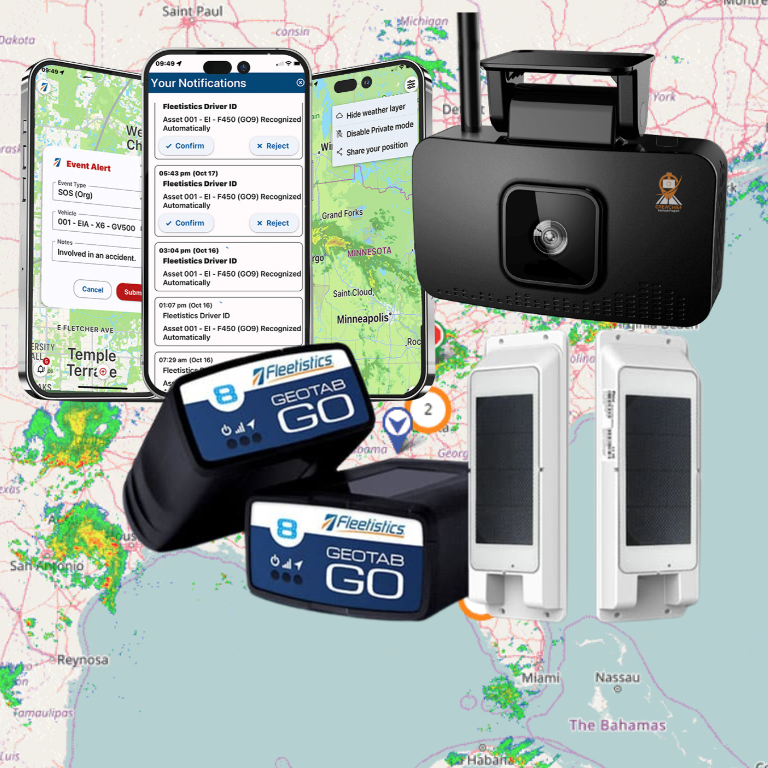
Not every machine has a diagnostic port, and that should not prevent you from building a reliable location and utilization picture. For excavators, loaders, compactors, generators, trailers, and other non-OBD assets, heavy equipment tracking for construction typically starts with hardware designed for the asset rather than a road vehicle.
Battery-powered GPS units simplify installation
A battery-powered GPS unit can be mounted to equipment without connecting to the machine’s electronic control system. That makes it a practical option for older machinery, attachments, towable equipment, and assets that move between projects. You can track location without depending on a compatible diagnostic connection or interrupting the equipment’s existing wiring.
Battery life and mounting conditions matter. Ask how often the device reports, how its battery status is monitored. And whether the enclosure is suited to dust, vibration, moisture, and temperature changes on a construction site. A device that is easy to install but difficult to service will create gaps in your data over time.
Asset-management sensors add useful context
Asset-management sensors provide another non-OBD approach. Depending on the equipment and business need, a sensor may help identify where an asset is assigned. Whether it has moved, or whether it is being used within an expected operating pattern. The right setup lets you monitor equipment that does not behave like a truck, while keeping its records connected to the rest of your fleet.
That distinction is important when you manage mixed equipment across multiple project sites. Instead of maintaining a separate spreadsheet for every asset class, you can bring equipment and vehicles into one platform. Use fleet tracking by industry to evaluate an approach that fits your construction operation and its mix of machines, trucks, and auxiliary assets.
| Tracking Approach | Installation | Best Fit | Trade-offs |
|---|---|---|---|
| Battery-powered GPS unit | Strap or mount; no wiring | Older machines, attachments, towables, assets that move between projects | Simplest install; plan for battery life and service access |
| Asset-management sensor | Attach to the asset; no diagnostic port | Equipment without a vehicle interface, stationary or low-activity assets | Adds context on presence and movement; reporting interval varies |
| Specialized telematics hardware | Installed to the machine | Excavators, loaders, cranes, and heavy assets needing location plus activity data | Richer data (engine hours, utilization); more involved deployment |
Geofencing turns location data into site alerts
Geofencing adds an operational layer to basic GPS visibility. Create a boundary around a project site, yard, storage area, or restricted zone, then configure notifications when a tracked machine enters or exits. Those alerts can help your team confirm deliveries, identify unexpected movement, and maintain a clearer record of where equipment is assigned.
Fleetistics can push tracking data into a centralized platform through 300+ integrations and free APIs. That open connectivity makes it easier to bring asset location and site activity into the systems your team already uses for operations and analytics. Rather than isolating non-OBD equipment in another data silo.
Discuss which asset tracking hardware fits your equipment mix before you buy.
Key Features to Look for in Excavator, Loader, and Crane Tracking
The right tracking system should fit the equipment and the worksite, not force every asset into a road-vehicle setup. Start with hardware designed for construction conditions. Excavators, loaders, and cranes face dust, vibration, moisture, temperature swings, and occasional impact. So the device should be durable, sealed, and installed where it is protected without compromising signal quality or service access.
Next, look for location visibility that supports daily decisions. A useful platform should provide real-time location history, so you can see where an asset is now and review where it has been. That history helps verify dispatches, investigate unexpected movement, coordinate crews across jobs, and understand whether equipment is sitting idle or being used as planned. GPS and AVL data create the foundation for better fleet management decisions, including utilization tracking.
Can the system protect job-site boundaries?
Geofencing is essential when equipment moves between active projects, storage yards, and service facilities. You should be able to draw a boundary around each job site and receive an alert when an excavator, loader, or crane enters or leaves that area. These notifications give managers earlier visibility into unauthorized relocation, missed transfers, and equipment arriving at the wrong site. They also reduce the need to call several supervisors for a basic location update.
Can you see heavy equipment and vehicles together?
Construction fleets rarely consist of equipment alone. The same operation may include pickups, service trucks, trailers, and other vehicles supporting the job. Choose a centralized view that places heavy assets alongside vehicles in one platform. This makes it easier to coordinate equipment and people, compare activity across the fleet, and avoid managing separate dashboards for each asset category.
Integration matters just as much as the map. A construction tracking platform with open APIs and broad integration support can connect location and asset data with the systems you already use for operations and analytics. Fleetistics supports more than 300 integrations and free API access, helping you build a connected view instead of another isolated data source. Explore asset tracking solutions when evaluating how non-OBD equipment can fit into your broader fleet strategy.
Will the system grow with your equipment fleet?
Finally, prioritize a modular, scalable system. You may begin with a few high-value cranes or machines at remote sites, then add loaders, excavators, trailers, or vehicles as operational needs change. The platform should let you expand monitoring capabilities without replacing the entire solution. That flexibility keeps the initial deployment practical while preserving a path toward broader fleet visibility.
How Do You Track Equipment Runtime Hours and Maintenance Intervals?
Maintenance schedules work better when they follow how equipment is actually used, not a rough calendar estimate. Telematics systems collect engine-hour, activity, and utilization data so you can see how long an excavator, loader, crane, or other asset operates across job sites. That information gives your team a practical basis for setting service intervals and allocating equipment where it is needed most.
Start by treating runtime as a maintenance trigger. If a machine reaches a specified number of engine hours, the system can flag the upcoming inspection, lubrication, filter replacement, fluid check, or other service task. Managers can then schedule the work before the equipment misses an interval or develops a more expensive problem. The same data can show when an asset is sitting idle, being overused, or working outside the assumptions behind its original maintenance plan.
This is the difference between preventive maintenance and reactive maintenance. Reactive maintenance waits for a breakdown. A telematics-supported preventive program uses operating data to plan service while the machine is still available, reducing avoidable downtime and helping supervisors coordinate technicians, parts, and replacement equipment. Research on maintenance management for heavy construction equipment also connects predictive and preventive strategies with better availability and utilization.
Tracking runtime can improve allocation decisions as well. Location, activity, and utilization data help you compare actual equipment demand between projects, identify underused machines, and assign the right asset to the right job. A construction company may discover that one loader is accumulating hours rapidly while another is rarely used. Moving work between assets, adjusting service timing, or changing the deployment plan can reduce unnecessary wear without relying on assumptions.
Preventive maintenance is also a safety control. The C.D.C. NIOSH identifies equipment maintenance as critical to reliability and safety, because unmaintained equipment can create significant hazards. Keeping service records connected to operating data makes it easier to identify overdue work and document that inspections and maintenance were addressed. Preventive maintenance supported by telematics is often associated with extending heavy machinery lifespan by 15 to 20 percent. Although the result depends on the equipment, operating conditions, and quality of the maintenance program.
For a broader view of location, utilization, and service activity, connect runtime reporting with GPS tracking. The goal is not simply to collect more data. It is to turn engine hours into timely maintenance decisions that keep equipment productive, reliable, and safer to operate.
Why Heavy Equipment Tracking for Construction Pays for Itself
The business case starts with protecting the equipment you already own. Industry analysis reports that telematics can reduce construction equipment theft risk by up to 50% by making asset location and activity visible. That does not replace physical security, but it can help you identify unauthorized movement sooner. Limit misuse, and improve the odds of recovering an asset when something goes wrong.
Build the calculation around your own costs. Start with the purchase price, insurance exposure, financing, expected service life, and the cost of a day or week of project disruption. Then compare those costs with the tracking system, installation, connectivity, and support. A realistic model should include avoided theft losses, reduced unauthorized use, fewer unnecessary equipment moves, and the value of keeping high-demand machines available.
Use utilization data instead of assumptions
Location data tells you where an excavator, loader, crane, or other asset is. Activity and utilization data help explain whether it is earning its place in the fleet. If a machine spends most of its time idle. You can evaluate whether to move it to another project, rent it out, sell it, or change the deployment plan. If several projects are competing for the same equipment, actual usage records provide a stronger basis for allocation than estimates from jobsite calls and spreadsheets.
This makes ROI more precise. Compare utilization metrics with ownership and operating costs, such as cost per operating hour, fuel, maintenance, transport, and downtime. Fleet tracking data can then show whether an asset is producing enough value to justify its cost, and where a process change could improve the return. You do not need to claim that every tracked machine will pay for itself in the same period. You need a repeatable method for measuring the result.
Government transportation research describes AVL and GPS as tools for monitoring fleet location, activity, and utilization to support management decisions. The same principle applies to construction equipment: better visibility turns scattered jobsite data into decisions you can defend, from reallocating underused assets to planning capacity for the next project.
How Does Fleetistics Deploy Asset Tracking for Construction Equipment?
Fleetistics starts with the equipment, operating environment, and decisions your team needs to make. An excavator working at a fixed site has different tracking requirements than a loader moving between projects. A crane shared by several crews, or a mixed fleet that includes trucks and trailers. The deployment should reflect those differences rather than force every asset into the same configuration.
As a Geotab Authorized Reseller, Fleetistics can configure specialized telematics hardware for heavy construction equipment, including assets that do not use a standard vehicle diagnostic port. The result is a modular tracking solution that can bring equipment location and activity into the same management view as your road-going vehicles. That gives fleet managers a more complete picture of what is available, where it is working, and how it is being used.
Configuration starts with your fleet and job sites
For small-to-midsize fleets of roughly 50 to 500 vehicles, Fleetistics provides enterprise-level technology with personalized, consultative support. The team can help determine which equipment needs location visibility, which assets need more detailed telematics, and how the information should connect with your existing workflows. Fleet managers can also use asset tracking solutions to create a more consistent process for monitoring equipment across distributed projects.
That modular approach matters as construction fleets change. You can begin with the assets that create the greatest operational or security concern, then expand tracking as the business adds equipment, job sites, or vehicles. Fleetistics also supports 300-plus integrations and free API access, helping teams connect tracking data with the systems they already rely on instead of creating another isolated data source.
What does the reseller relationship add?
Fleetistics does more than place hardware on equipment and hand over an app. The reseller relationship gives you an advocate when selecting and configuring technology. Fleetistics represents the customer’s needs in the relationship with the manufacturer, helping keep the solution aligned with the way the fleet actually operates.
The process also includes a 60-day Solution Evaluation Process to validate whether the configuration supports your goals before you commit to a broader rollout. Ongoing 24/7 support provides another layer of assistance when construction operations cannot wait for a standard business-hours response.
Speak with a Fleetistics consultant about tracking excavators, loaders, and other non-OBD assets.
Frequently Asked Questions
How can I track my construction equipment?
Install a GPS or telematics device designed for the asset, then connect location, activity, and utilization data to a central fleet platform. For excavators, loaders, cranes, and other non-OBD equipment, specialized hardware or battery-powered asset sensors can work without access to a diagnostic port. Use the resulting data to see where equipment is, whether it is active, and how it is being allocated across job sites.
What are the best trackers for heavy equipment?
The right tracker depends on the machine, power availability, operating environment, and reporting needs. Look for durable hardware with reliable cellular or satellite connectivity, suitable mounting, geofencing, and battery or external-power options. A tracker should also feed data into the systems your team already uses, rather than creating another isolated dashboard.
How can construction companies track non-OBD assets?
Non-OBD assets can use battery-powered GPS trackers or asset-management sensors that do not plug into a vehicle diagnostic port. This approach works for equipment without a conventional vehicle interface, including machines that remain stationary for long periods. Confirm the device’s power life, installation method, connectivity, and reporting interval before deploying it across a large fleet.
How do geofencing and alerts work in construction tracking?
You define a virtual boundary around a project site, storage yard, or restricted area. The platform can then notify designated users when an asset enters or exits that boundary, helping teams identify unauthorized movement and confirm deliveries or transfers. Combine those alerts with location history and utilization data for a clearer operational record.
How does equipment tracking support maintenance?
Tracking data can show runtime and activity patterns, giving managers a better basis for scheduling service and allocating machines. Preventive maintenance is also a safety issue because unmaintained equipment can create hazards, according to NIOSH guidance. Use runtime records alongside inspections and manufacturer requirements, not as a replacement for them.
Ready to Track Your Construction Equipment?
A practical tracking plan can help you see where heavy equipment is working and choose an approach that fits your fleet, job sites, and operating needs. Fleetistics can help you evaluate the right next step without forcing a one-size-fits-all setup.
Request a consultation to discuss heavy equipment tracking for your construction fleet: Contact us.