

A following-distance rule is only useful if drivers can apply it consistently in traffic, weather, and changing road conditions. For fleet managers, the challenge is turning a safety expectation into a measurable behavior that can be coached before a rear-end crash occurs.
In safe following distance fleet management, telematics uses vehicle data and, when equipped, road-facing camera technology to identify short time gaps, alert drivers to unsafe spacing, and give managers evidence for focused coaching.
The right standard depends on vehicle length, speed, load, and conditions, so a single number does not fit every commercial vehicle. Understanding the legal guidance and the stopping-distance reality gives you a practical baseline. From there, AI dashcams for fleets and telematics can help turn that baseline into an observable safety program.
What Is the Legal Safe Following Distance for Commercial Vehicles?
There is no single number of feet that fits every commercial vehicle and road condition. The FMCSA guidance gives fleet drivers a practical time-based standard: leave at least one second for every 10 feet of vehicle length when traveling below 40 mph. Then add one additional second when traveling above 40 mph.
| Vehicle Type | Length | Seconds (Under 40 mph) | Seconds (Over 40 mph) | Adverse Conditions |
|---|---|---|---|---|
| Passenger car | ~15 ft | 2 | 3 | 4-6 |
| Box truck / straight truck | ~30 ft | 3 | 4 | 6-8 |
| Tractor-trailer | ~70 ft | 7 | 8 | 10-14 |
For a 70-foot tractor-trailer, that calculation produces a minimum of seven seconds below 40 mph. At highway speed, the extra second brings the baseline to approximately eight seconds by the literal formula. However, many fleet safety references use approximately four seconds as a highway-speed baseline for a typical 70-foot combination vehicle, with more distance required when conditions deteriorate. Your written policy should define the exact threshold your fleet will coach and measure.
How the three-second rule fits
The familiar three-second rule is a useful baseline for passenger vehicles: choose a fixed roadside object, and count the seconds between the vehicle ahead passing it and your vehicle reaching it. If you arrive before three seconds, increase the gap. Commercial vehicles need more than that baseline because their length, weight, braking response, and limited visibility change the risk calculation. Larger vehicles or poor weather may require four or five seconds, or substantially more.
Stopping distance matters more than the rule of thumb
At 55 mph, a fully loaded semi-truck may need about 196 feet to stop, compared with approximately 133 feet for a passenger car. That difference leaves little room for a driver who is following too closely when traffic brakes suddenly. The FMCSA defines following too closely as being unable to avoid a collision if the vehicle ahead brakes suddenly, even when the driver is attentive.
Rain, snow, ice, congestion, downhill grades, heavy loads, and reduced visibility all justify increasing the gap. FMCSA recommends typically doubling the calculated following distance in adverse conditions. This is not just a compliance exercise: the Large Truck Crash Causation Study found that 5% of truck crashes occurred when the CMV driver was following the lead vehicle too closely. A practical safe following distance fleet management policy should therefore use the FMCSA time standard as a floor, then adjust for speed, vehicle configuration, road conditions, and load.
How Tailgating Increases Accident Risk and Fleet Insurance Costs
Tailgating leaves commercial drivers with less time and space to respond when traffic changes. At 60 mph, a vehicle travels about 88 feet per second. With a 1.5-second reaction time, it covers roughly 132 feet before braking even begins, according to physics summarized by Raven Connected.
That margin is especially dangerous for heavy vehicles. A tractor-trailer traveling at highway speed can require more than 500 feet to come to a complete stop. A loaded truck cannot shed momentum as quickly as a passenger car, so a following-distance violation can turn an ordinary slowdown into a serious rear-end collision.
The exposure is widespread. The National Highway Traffic Safety Administration reports that rear-end collisions represent about 30% of all traffic crashes. Rear-end crashes also account for more than 1,700 deaths and approximately 500,000 injuries each year in the United States. For fleet operators, those incidents can produce vehicle damage, downtime, workers’ compensation costs, medical claims, and litigation.
Insurance carriers may view repeated rear-end claims as evidence of elevated fleet risk. Even when a driver was not at fault, claim frequency and disputed liability can increase administrative costs and contribute to higher premiums at renewal. A consistent following-distance program helps reduce both preventable crashes and the claim history that insurers evaluate.
Dashcam footage adds another layer of protection. Forward-facing video can serve as a neutral witness, documenting the traffic signal, lane position, speed context, and actions of other drivers. That evidence can help your insurer resolve a false or disputed claim faster, while giving managers a factual basis for coaching instead of relying on conflicting statements.
How Telematics Supports Safe Following Distance in Fleet Management
Telematics turns following distance from a subjective driving habit into a measurable safety behavior. Using a road-facing camera and advanced driver assistance systems (ADAS), the vehicle can identify when the time gap to traffic ahead becomes unsafe. Then give the driver feedback before a close-following event becomes a collision.
Detecting tailgating in seconds
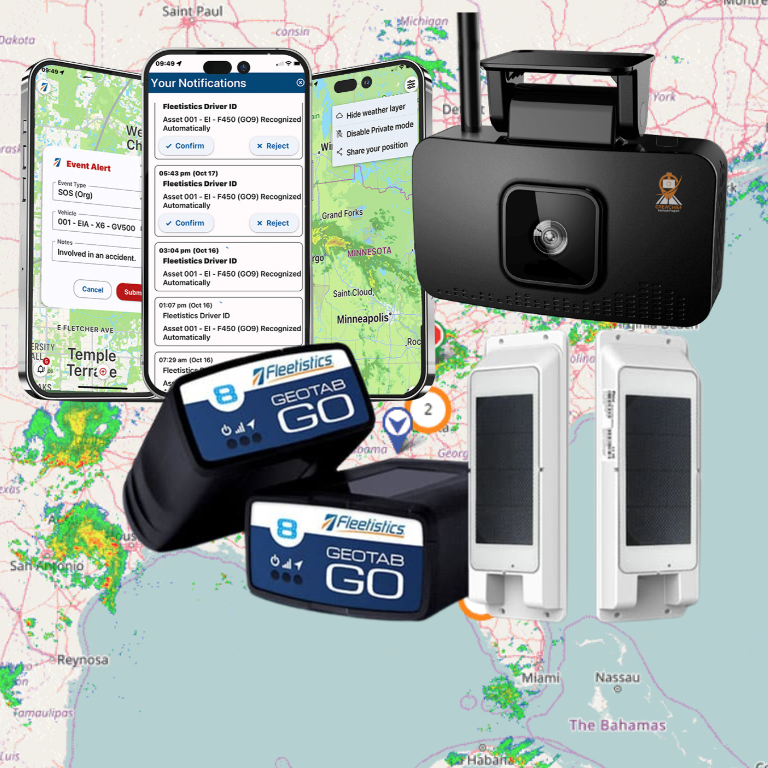
Fleetistics’ Geotab partnership gives fleets access to the GO Focus camera and ADAS capabilities designed to detect risks such as unsafe following distance. The road-facing camera evaluates the space and time between the fleet vehicle and the vehicle ahead. When that gap falls below the configured threshold, the system can recognize the tailgating risk in seconds.
That detection is useful because it happens during the drive, not days later during a manual video review. The driver can receive an audible alert, a visual warning, or both through the in-cab system. Immediate feedback gives the driver an opportunity to create more space while the situation is still under control.
Combining real-time alerts with video evidence
An alert addresses the immediate behavior. The recorded event provides context for what happened next. Relevant video clips upload to cloud dashboards, including the MyGeotab Collision Risk page, where fleet managers can review events, identify patterns, and use the footage during a focused coaching conversation.
Geotab can also provide tailgating scores by driver through MyGeotab and the Geotab Drive app. Instead of giving every driver the same generic reminder, you can identify who needs coaching, which routes or conditions create risk, and whether behavior improves over time.
How other AI dashcams approach the same risk
Geotab is not the only platform applying computer vision to following distance. Samsara AI Dash Cams and other industry systems use road-facing cameras to detect close following and deliver real-time driver alerts. The important distinction is not the brand name alone, but whether the solution connects detection, immediate feedback, cloud video, and actionable driver data.
For a broader look at camera-based safety technology, review Fleetistics’ AI dashcams for fleets. A practical implementation should make the data useful for coaching, not simply collect footage after an incident.
Setting a Following Distance Policy for Your Fleet
A clear policy turns safe following distance fleet management from a general expectation into a measurable operating standard. Start by defining the behavior you expect, then use telematics data to identify where coaching will have the greatest effect.
Use risk scores to find the right coaching targets
Review Geotab tailgating risk scores by driver and asset rather than treating every violation as equal. Look for repeated patterns, such as one driver who regularly follows too closely during peak traffic or a vehicle route where congestion creates more risk. Benchmark your fleet against comparable industry averages when the data is available, but use your own baseline to track improvement over time.
Following distance should also appear on your driver safety scorecards. Pair the metric with speed, harsh braking, distraction, and incident data so managers can see the full driving pattern. A single event may require a conversation; a repeated trend warrants a documented coaching plan.
Make coaching progressive and consistent
Use a graduated response that drivers can understand before an event occurs:
- First pattern: review the event, confirm the driver understands the distance standard, and set a specific improvement goal.
- Continued violations: assign targeted refresher training and review progress on a defined schedule.
- Persistent or severe risk: escalate through your established performance and safety process, documenting each step.
Put the standard in writing. Explain how distance is judged, how weather, vehicle size, traffic, and road conditions change expectations. Which data is reviewed, and how drivers can ask questions or challenge an event. Integrating the policy into a broader fleet safety program keeps it connected to hiring, onboarding, ride-alongs, incident review, and recognition for improvement.
If you need to test the right combination of cameras, telematics, scorecards, and coaching workflows, Fleetistics can guide you through its 60-day Solution Evaluation Process before you commit to a broader rollout.
Real Data: How Following Distance Monitoring Reduces Rear-End Claims
Following distance monitoring is not just a driver score. It creates measurable evidence that a fleet is reducing risky behavior before that behavior becomes a collision or insurance claim.
The behavior changes are measurable
Fleetistics data from dual-facing video telematics shows a 50% reduction in tailgating, alongside improvements in seat belt use, cellphone use, and speeding. A separate federal regulatory study found an 88% reduction in harsh driving events within one year. These results point to the value of immediate alerts, recorded context, and coaching based on what a driver actually did.
That matters for rear-end risk. A following-distance violation can be identified, reviewed, and addressed before it becomes a pattern. Managers can focus coaching on the drivers, routes, or operating conditions that produce the most events instead of sending generic reminders to the entire fleet.
Video evidence can change the claim outcome
Monitoring also protects your fleet when a crash does happen. In one Fleetistics case study, dashcam evidence helped save $80,000 on a single rear-end claim. The footage provided an objective account of the incident and helped move the insurance process forward quickly.
That evidence has value beyond one claim. Share telematics reports, trend lines, and resolved-event data with your insurance broker during renewal discussions. A documented reduction in tailgating and harsh driving can support a stronger conversation about risk controls and premiums. See the fleet dashcam insurance cost reduction guide for more ways video evidence can affect fleet insurance costs.
Frequently Asked Questions
What is the safe following distance rule?
For passenger vehicles, the standard starting point is at least three seconds behind the vehicle ahead, with more time needed in rain, darkness, traffic, or poor visibility. Commercial drivers should account for vehicle length and speed. The Federal Motor Carrier Safety Administration recommends one second for every 10 feet of vehicle length below 40 mph, plus one additional second above 40 mph (FMCSA).
How do fleet telematics measure following distance?
Road-facing cameras and driver-assistance sensors identify the vehicle ahead, estimate the time gap in seconds, and compare that gap with your fleet’s safety thresholds. The system can record the event, associate it with the vehicle and driver, and send the clip to the cloud for review. That gives managers more useful evidence than relying on a driver’s memory after an incident.
How do telematics help enforce safe following distance?
Telematics supports enforcement through immediate in-cab visual or audible alerts, followed by coaching and scorecard review. A driver can correct the behavior while the risk is happening, while managers can identify repeated tailgating by asset or driver. The goal is consistent feedback and documented coaching, not simply issuing a violation after the fact.
What is the safe following distance for heavy trucks?
There is no single distance that works for every truck, speed, load, or road condition. A typical 70-foot tractor-trailer may need about four seconds at highway speed and roughly seven seconds in adverse conditions. At 55 mph, a loaded semi-truck may require about 196 feet to stop. So fleets should set policies in seconds and increase the gap when conditions reduce traction or visibility.
Ready to strengthen following distance practices?
Telematics can help you turn following distance from a general safety goal into a measurable coaching opportunity. Speak with a consultant about fleet safety and following distance solutions at 855.300.0527.