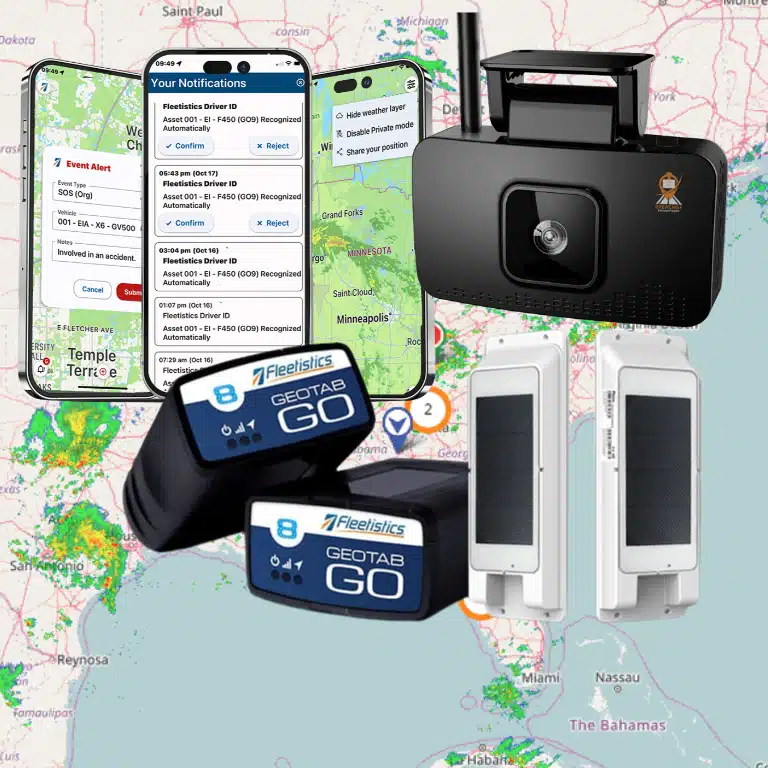

A field service van is both a workplace and a moving source of risk. It carries tools, equipment, and your brand into neighborhoods all day, often with drivers working against tight appointment windows. A location dot can show where the van is, but it cannot explain what happened during a hard brake, collision, or customer complaint.
Van tracking with dashcam integration combines vehicle location, driving-event data, and video evidence so fleet managers can respond to incidents, coach drivers, and improve day-to-day visibility from one system. The CDC notes that work-related crashes affect light fleet vehicles, including vans. And that motor vehicle crashes are the leading cause of work-related death in the United States (CDC/NIOSH).
The right setup is not about watching every driver. It is about giving dispatchers and supervisors the context to act on meaningful events while supporting safer, more accountable operations. Start by looking at why tracking and video work better together than either tool alone, then review the features your fleet actually needs. For a practical overview, see our AI dashcam safety guide for fleets.
Why Field Service Vans Need Both Tracking and Dashcams
Motor vehicle crashes are the leading cause of work-related death across all industries in the United States, according to the CDC and NIOSH. That risk is not limited to tractor-trailers. Work-related crash fatalities also significantly involve light fleet vehicles, including pickup trucks, SUVs, passenger vehicles, and vans.
For HVAC, plumbing, landscaping, pest control, construction, and other field service businesses, van tracking with dashcam integration creates two layers of visibility. GPS tracking shows where the vehicle is, where it has been, and whether the route or schedule is changing. A dashcam helps show what is happening on the road and inside the cab when a risky event occurs.
GPS tells you where. Video helps explain why.
Location data can flag speeding, harsh braking, route deviations, or an unexpected stop. Video adds the context needed to understand the event. Was the driver avoiding a sudden hazard? Did another vehicle cut into the lane? Was the driver distracted, following too closely, or using a phone?
That context supports better decisions. Managers can focus coaching on verified behaviors instead of relying on incomplete reports or assumptions. The NIOSH research cited by the CDC found that an in-vehicle monitoring system combining driver feedback, supervisory coaching. And driver- and outward-facing video significantly reduced overall risky driving behaviors and unbelted driving compared with a control group.
Use the data to coach, not just to punish
Technology works best when it is connected to a consistent safety process. A camera alert by itself does not improve performance. Supervisors should review relevant footage, discuss the behavior with the driver, identify the contributing circumstance, and track whether the behavior improves over time.
Industry data illustrates the potential. Verizon Connect reports a 50% reduction in tailgating and fatigue-related incidents, along with a 60% reduction in seatbelt and phone-use incidents, for specific AI dashcam safety measures. Treat those figures as reported results, not a guarantee, but they show why field service operators should evaluate coaching outcomes rather than simply counting installed cameras.
Video can clarify liability after a collision
When a crash involves a company van, disputed accounts can delay claims and create unnecessary liability exposure. Dashcam footage may show whether your driver caused the incident, help exonerate the driver, or identify behavior that requires corrective action. One fleet technology provider reports reducing disputed claims from 40% to 2% after implementing dashcams with GPS tracking. A vendor-reported result that should be validated against your insurer and operating conditions.
Start with the fundamentals in the fleet GPS tracking capabilities guide, then review the AI dashcam safety guide for fleets. Together, location, behavior, and video evidence give you a more complete view of every field service trip.
What to Look for in Van Tracking With Dashcam Integration
The best bundle connects driver behavior, vehicle location, and usable video instead of creating another disconnected dashboard. Use the criteria below to compare systems for your vans, routes, and risk profile. For a deeper explanation of the technology, review this AI dashcam technology guide.
| Feature | What to evaluate | Why it matters for van fleets |
|---|---|---|
| AI event detection | Look for detection of tailgating, distraction, drowsiness, hard braking, and similar events, with configurable thresholds and evidence. | Events should identify coaching opportunities without forcing managers to review every minute of footage. IVMS can record events such as hard braking, rapid acceleration, speeding, or swerving when a preset threshold is exceeded. NIOSH explains event-triggered recording. |
| LTE connectivity | Confirm that the camera can upload clips over LTE and support remote access, rather than requiring the van to return to a depot. | LTE-connected systems can support live trip streaming and access to footage history, which helps you review an alert while the context is still clear. |
| Camera coverage | Compare road-only cameras with dual-facing options that record the roadway and cab. Check privacy controls and whether the view fits your safety policy. | Road-only video helps reconstruct collisions. Dual-facing video can add context around distraction, seatbelt use, and driver behavior. IVMS cameras may capture the road, the driver, or both before and after a risky event. |
| GPS accuracy and video pairing | Test whether an alert opens the relevant clip alongside the van’s location, route, speed, and timestamp. | Location without video leaves context unanswered. Video without location makes an incident harder to place. The useful combination lets managers review driver alerts against the vehicle trail. |
| Storage and retrieval | Ask how long event clips remain available, whether storage is cloud-based or local, and how quickly managers can find a specific trip. | Cloud access supports remote review and avoids relying solely on a removable memory card. Clarify retention, user permissions, download options, and any footage limits before purchase. |
| In-cab alerts | Prioritize clear visual or audible warnings for detected risky behavior, with settings that avoid distracting the driver. | Real-time feedback gives a driver an opportunity to self-correct. It should support, not replace, supervisor coaching and a documented safety process. |
| Fleet software integration | Verify that GPS, dashcam, ELD, DVIR, IFTA, maintenance, and dispatch data can work in one platform or connect through a reliable API. | Fleetistics offers GO Focus and GO Focus Plus AI dashcam options. Its PRO tier combines GPS tracking, dashcam integration, backup camera support, and ELD/DVIR/IFTA features, while free API access supports 300-plus integrations. That modular approach lets you add the capabilities your operation needs. |
Finally, ask for a live demonstration using a workflow that matches your vans. The right van tracking with dashcam integration bundle should make an alert easy to understand, investigate, and turn into a practical coaching or operations decision.
Installation Guide: OBD vs Hardwired for Cargo Vans and Sprinters
The right installation depends on how your vans are used, who services them, and how much protection you need from tampering or downtime. Fleetistics supports both approaches, so you can start with a practical setup and expand it as your fleet requirements change.
-
1. Choose the van type and power source
Identify whether the vehicle is a cargo van, Sprinter-type van, or another commercial configuration. Then decide whether the tracker can use an accessible OBD-II port or should connect directly to a constant power source. Consider driver turnover, vehicle access, idle time, and whether equipment may be unplugged between routes.
-
2. Use OBD-II for the simplest installation
An OBD-II device is typically a five-minute, plug-and-play option. It is a strong fit for smaller fleets, temporary vehicles, leased vans, or teams that need to move equipment quickly without scheduling a technician. The tradeoff is limited power and easier access, which can make the device more vulnerable to unplugging or tampering.
-
3. Choose hardwired installation for always-on coverage
A professional hardwired installation connects the tracker to the vehicle’s power system and conceals the wiring behind interior panels. This creates a cleaner, more tamper-resistant setup and supports consistent operation when the vehicle is parked or the OBD port is needed for diagnostics. Ask the installer to confirm fuse protection, grounding, battery-impact safeguards, and clean routing before the van returns to service.
-
4. Mount the dashcam for a clear, stable view
Mount the camera high and near the center of the windshield without blocking the driver’s sightline, airbags, mirrors, or safety sensors. Keep the lens clear, secure the cable, and check the view from the driver’s position. A properly aligned camera can support event triggers such as hard braking, rapid acceleration, or speeding. In-vehicle visual or audible alerts can also warn drivers in real time, while video helps identify risky behaviors for self-correction and coaching. NIOSH explains how IVMS feedback, event video, and coaching work together.
-
5. Connect, test, and verify the Fleetistics platform
After installation, confirm that the tracker reports location, ignition status, and vehicle movement. Trigger a test event, verify that the dashcam records the expected road and in-cab view, and check that alerts appear in the platform. Fleetistics can handle either installation type and help configure the setup for your operating model, including van tracking with dashcam integration.
Managing a Field Service Fleet From One Platform: Alerts, Routes, and Video
Field service managers lose time when vehicle locations, dispatch activity, dashcam clips, and compliance records live in separate systems. A unified telematics platform gives you one operational view: where each van is. What route it is taking, which event needs attention, and the video that explains what happened.
Turn alerts into context, not noise
Real-time alerts are more useful when they connect the event to the vehicle’s location and surrounding footage. A hard-braking or speeding alert can open the relevant map position alongside video captured before and after the event. Helping a manager distinguish a genuine safety concern from a defensive maneuver or an unusual road condition. Research from NIOSH notes that in-vehicle monitoring data is typically available in almost real time, enabling timely coaching and fleet-performance tracking: NIOSH guidance on in-vehicle monitoring systems.
Dispatch with better information
GPS tracking helps dispatchers see which technician is closest to the next job and whether a route is progressing as expected. Video confirmation adds another layer when a customer reports a missed arrival, property damage, or an unexpected delay. Instead of calling several drivers or searching disconnected footage, the dispatcher can review the vehicle trail and associated clip in one workflow. This unified view of driver footage and GPS location is a central benefit of integrated video telematics. And it can support productivity, compliance, cost reduction, and vehicle ownership costs.
Use event footage for consistent coaching
Effective coaching is more than forwarding an alert. Set a workflow that reviews event-triggered footage, documents the behavior, and gives the driver a specific correction to apply on the next route. NIOSH research found that combining in-vehicle feedback with supervisory coaching and driver- and outward-facing video significantly reduced risky driving behaviors. The footage gives both parties a shared example, while recurring events reveal whether the issue is isolated or part of a fleet-wide pattern.
That process also supports fairer accountability. Managers can recognize safe decisions, coach high-risk habits, and preserve incident evidence without relying only on recollection. For fleets evaluating telematics platform benefits, the key question is whether alerts lead to a repeatable action, not simply whether the dashboard produces more notifications.
Connect safety improvements to operating costs
Dashcam integration can help reduce disputed claims by providing a clearer record of an incident, while driver coaching may reduce preventable events. The resulting value is not limited to insurance. Integrated technology can also improve compliance and lower vehicle ownership costs by connecting driver behavior, route performance, maintenance decisions, and incident review. Fleetistics supports custom setups with free API access and more than 300 integrations. So you can connect fleet data to dispatch, service, payroll, or other business systems without abandoning the unified view.
How Fleetistics Sets Up Van Tracking and Dashcam Integration
Fleetistics starts with your routes, vehicle mix, driver workflows, and safety goals, then builds a configuration that fits how your vans actually operate. That consultative approach matters when you need van tracking with dashcam integration without replacing a working GPS system or forcing every vehicle into the same package.
Start with the platform and equipment you need
Fleetistics has been serving fleets since 2001 and is Geotab’s longest-running US Gold Reseller, with more than 20 years of experience supporting the platform. You can review the Geotab fleet tracking platform as the foundation, then add the capabilities that match your operation.
That modular setup can include the GO Focus or GO Focus Plus AI dashcam family. Depending on the configuration, cameras can help identify events such as distraction, drowsiness, tailgating, seatbelt use, and lane departure. If your vans already have tracking devices, Fleetistics can add dashcams instead of requiring a disruptive system replacement.
Choose an installation path that fits each van
Installation support covers practical options for cargo vans, service vans, and mixed fleets. An OBD connection can be a straightforward choice when you need flexible deployment or plan to move equipment between vehicles. Hardwired installation can provide a more permanent fit for vans that stay assigned to specific drivers or routes. Fleetistics helps you select the approach based on vehicle availability, equipment location, and operational requirements.
The PRO tier can bring GPS tracking, dashcam integration, backup camera support, and ELD, DVIR, and IFTA tools into one operating environment. You also retain access to a free API and more than 300 integrations, making it easier to connect fleet data with dispatch, maintenance, payroll, safety, or other business systems. Learn more in Fleetistics’ AI dashcam safety guide for fleets.
Validate the fit before scaling
Fleetistics offers a 60-day risk-free trial so you can evaluate driver behavior, alert quality, workflow impact, and return on investment before expanding across the fleet. Ongoing 24/7 support helps your team address questions after installation, while Sourcewell purchasing can simplify procurement for eligible government organizations. The result is a measured rollout, not a leap of faith.
Frequently Asked Questions
Can you add dashcams to an existing van tracking system?
Yes. A modular setup can add a forward-facing or AI dashcam to your current GPS tracking configuration instead of replacing the entire system. Your provider should confirm device compatibility, installation requirements, cellular coverage, and how video events will appear alongside vehicle locations and alerts.
How does van tracking with dashcam integration improve fleet safety?
GPS data shows where a vehicle was and how it was driven, while dashcam footage helps explain what happened. AI features can identify behaviors such as tailgating, distracted driving, drowsiness, seatbelt violations, and lane departures. Managers can then use specific events for timely coaching rather than relying only on complaints or incomplete reports.
What should a field service fleet look for in an integrated system?
Prioritize event-based video recording, cloud access, driver and road-facing camera options, real-time alerts, and a dashboard that connects footage to location and trip history. Reporting should be practical for dispatch, safety reviews, customer disputes, and driver coaching. Also check whether the platform supports the compliance tools your fleet already uses.
Are there different dashcam setups for service vans?
There are. A forward-facing camera focuses on roadway events, while a dual-facing setup adds visibility into the cab and driver behavior. Some fleets need only a camera add-on, while others benefit from a broader configuration that combines GPS tracking. Dashcam video, backup camera support, and ELD, DVIR, or IFTA tools.
How can dashcam video support a disputed incident?
Review the video alongside the van’s location, speed, route, and event data. That combined record can help you establish the sequence of events, respond to a customer concern, and coach the driver using observable evidence. Set clear access and retention rules so only authorized staff handle footage.
Ready to see the right setup for your vans?
Van tracking with dashcam integration can give your team clearer context around driver safety, vehicle activity, and field service operations. A brief consultation can help you match the right equipment and platform capabilities to your fleet, without adding unnecessary complexity. Book a demo or consultation and speak with a Fleetistics consultant about your goals.