
If you searched for “covert GPS tracker for vehicles legal”, you likely want a practical answer before installing hardware in a business vehicle. The answer depends on vehicle ownership, business purpose, notice, consent, data access, and the jurisdiction where the vehicle operates. For broader fleet planning by industry, review Fleetistics’ fleet tracking by industry guide.
Contact Fleetistics to discuss a responsible tracking setup for your fleet.

There is no universal yes-or-no answer. Covert GPS tracking may be appropriate for a company-owned vehicle when it serves a documented business purpose and follows a clear monitoring policy. Employee-owned vehicles require more caution, including informed written consent, limited collection, access controls, and legal review of applicable state or provincial rules.
Discreet hardware placement can reduce tampering and support asset recovery, but it should not turn a fleet system into secret personal surveillance. Use this guide to separate a legitimate operational program from an overly broad or unauthorized tracking practice.
What Is a Covert GPS Tracker and When Might a Fleet Need One?
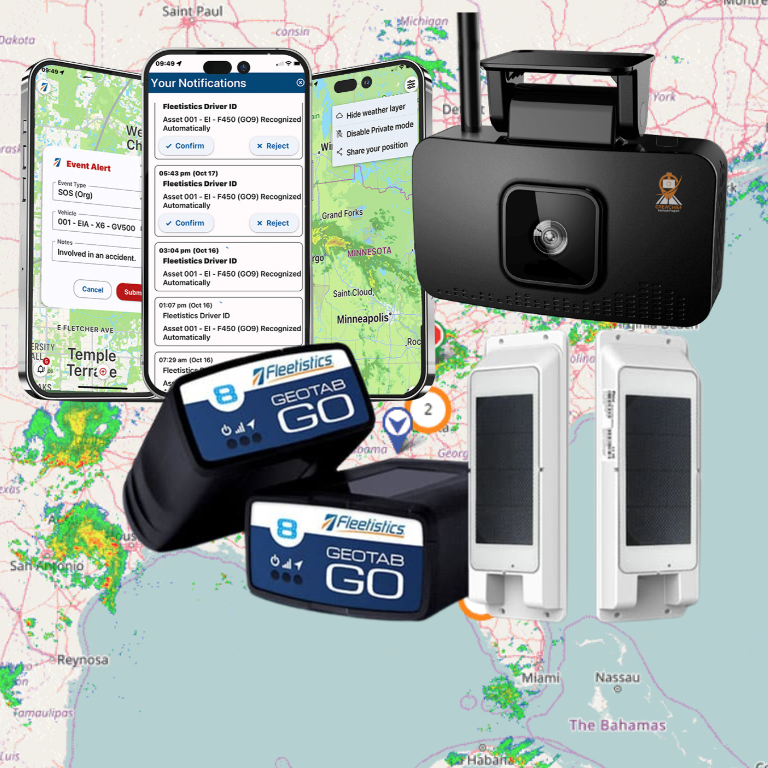
A covert GPS tracker is a vehicle or asset tracking device installed discreetly so it is difficult to spot during a routine inspection. Depending on the device and platform, it may report location, movement, and related telematics data to authorized users. The device can be out of sight while the business purpose and data practices remain transparent to the people affected.
Fleets may choose discreet placement to reduce tampering, protect equipment, discourage theft, preserve recovery data, or keep a vehicle’s interior uncluttered. Those objectives are different from secretly following an individual for personal reasons. The legal and workplace analysis depends on ownership, purpose, notice, access, monitoring duration, and local law.
What does a covert tracker do for a business?
For a company-owned vehicle, a discreet tracker can support a documented asset-management program. A fleet manager might use location data to locate a stolen truck or trailer, confirm that equipment reaches a job site, review route adherence, or understand unauthorized vehicle use. The tracking objective should be specific enough that the company can explain why the data is necessary.
Start by naming the problem before selecting the hardware. Asset recovery, dispatch visibility, and route accountability are clearer operational objectives than curiosity about an employee’s movements. A narrow purpose also makes it easier to limit access, choose retention settings, and set a reasonable monitoring window.
Fleet managers comparing hardware can review Fleetistics covert GPS tracking options separately from this compliance-focused discussion. Product selection should follow the approved operational need, not replace the ownership and policy review.
When can discreet installation create risk?
Risk increases when a business uses a company device to monitor a person rather than manage an asset, especially during off-hours or away from work. The National Labor Relations Board guidance on electronic surveillance illustrates why workplace monitoring can raise labor-law concerns. A business should evaluate both the operational reason and the effect on employees.
Personal or domestic tracking is a separate use case and should not be treated as ordinary fleet management. Do not install a device on a personal vehicle because someone wants to know where another person goes. If a fleet program involves employee-owned vehicles, pause the installation and obtain qualified legal advice before collecting location data.
When Is a Covert GPS Tracker for Vehicles Legal for a Fleet?
There is no single federal rule that makes every covert tracker lawful or unlawful. A responsible analysis starts with who owns the vehicle, why the business needs the data, what notice people receive, who can access the records, how long monitoring continues, and which laws apply. A legitimate fleet purpose does not automatically make every tracking practice lawful.
Company ownership generally creates a stronger starting point for business-asset monitoring. A written policy can explain that specific vehicles are tracked for safety, route management, theft prevention, asset protection, or another defined purpose. The policy should still limit collection to what the business needs and address personal use when it is allowed.
Employee-owned vehicles require additional restraint. Business mileage, reimbursement, or occasional work travel does not by itself establish consent to continuous location monitoring. Before installation, explain what the device collects, when it collects it, why the business needs it, who can see it, and how long records remain available. Use specific written consent where appropriate, and do not assume a general handbook acknowledgment covers the details.
What federal law does, and does not, establish
Federal law provides context, but it does not create blanket permission for private fleet operators to track any vehicle. 18 U.S.C. 3117 addresses court-authorized installation and use of mobile tracking devices. The Supreme Court’s discussion in United States v. Jones treated installation of a GPS device on an individual’s vehicle and monitoring its movements as a search under the Fourth Amendment. Those authorities are legal context, not a substitute for an employment, privacy, or state-law analysis.
Scope and duration matter. A device that reports only during scheduled work use presents a different risk profile from one that records evenings, weekends, leave, or personal errands. The more a program reaches beyond the business purpose, the harder it becomes to explain why the collection is proportionate.
Why state law and notice deserve attention
State rules vary, and a distributed fleet should not rely on one state’s rule as a nationwide answer. The National Conference of State Legislatures overview of state statutes shows why location-tracking requirements need jurisdiction-specific review. Privacy, electronic-surveillance, employment, and labor rules may all affect the analysis.
Before deployment, have qualified counsel review the policy for the states, provinces, or countries where your vehicles operate. Counsel can assess personal-use arrangements, collective bargaining obligations, notice language, consent, retention, and whether the proposed tracking window is proportionate.
What Changes Between Company-Owned and Employee-Owned Vehicles?
Ownership changes the compliance starting point, but it does not make tracking automatically legal. A company usually has a stronger business case for monitoring a vehicle it owns. An employee-owned vehicle calls for a narrower purpose, a clearer consent process, and closer attention to off-hours use.
| Decision area | Company-owned vehicle | Employee-owned vehicle |
|---|---|---|
| Primary justification | Documented business interests such as safety, route oversight, theft prevention, or asset security. | Use tracking only for a specific business need, supported by the employee’s informed agreement before it begins. |
| Notice | Provide clear policy notice and identify which assets are monitored. | Use prominent written notice and specific written consent. Do not rely only on a general handbook acknowledgment. |
| Off-hours use | Define personal-use rules and limit collection when business monitoring is not necessary. | Address personal trips, household members, and non-work hours directly because tracking may reveal unrelated activity. |
| Data access | Restrict location data to authorized roles and approved business purposes. | Use the narrowest access, retention, and reporting settings that support the agreed purpose. |
What should a fleet policy cover?
A Mobile Device and Asset Monitoring Policy should define the program before hardware is installed. At minimum, cover:
- Which vehicles and assets are monitored.
- The business purpose for collecting location or telematics data.
- When monitoring applies and how personal use is handled.
- What data is collected, who can access it, and how it is protected.
- How long records are retained and when they are deleted.
- How employees receive notice, acknowledge the policy, and ask questions.
- How the company responds to inaccurate, excessive, or inappropriate data use.
Clear policy language helps managers apply the same rules across branches and supervisors. It also creates a record of the business decision that existed before a dispute, complaint, or data-access question arose. Fleetistics’ sample driver policy can help your team identify topics to address in a fleet-specific policy.
How should managers handle mixed personal and business use?
Mixed use needs an explicit boundary. If a company-owned vehicle may be used for personal errands, state whether tracking continues outside work and why. If continuous tracking is not necessary, configure a narrower window or create a documented process for disabling or limiting collection. For an employee-owned vehicle, do not assume that reimbursement gives the business authority to track every trip.
Review the policy when vehicle ownership, job duties, monitoring technology, or applicable law changes. A policy that was reasonable for a dedicated company truck may not fit a personal vehicle used occasionally for work. Fleetistics’ sample company driving policy provides another practical reference for documenting expectations around vehicle use.
How Should You Install a Covert Tracker Without Losing Governance?
Discreet placement is a hardware decision, not permission to conceal a monitoring program. The installation should protect the vehicle and the reliability of the data while preserving notice, access controls, and a documented business purpose. Use an authorized installer and keep a record for each device.
For practical hardware considerations, see Fleetistics’ guide to covert tracker installation. Have counsel review the policy before applying it across a distributed fleet. You can also compare how tracking supports different operating environments in Fleetistics’ fleet tracking by industry guide. For employee communication and change management, see Fleetistics’ guidance on introducing GPS tracking to employees.
- Document the business purpose. Identify the problem the device will solve, such as theft prevention, asset recovery, safety, dispatch visibility, or route management. Define the minimum monitoring period and data needed.
- Confirm ownership and authority. Verify that the vehicle is company-owned or that the business has documented authority and consent for the proposed tracking. Do not rely only on an informal request or mileage arrangement.
- Provide notice and record consent. Explain which vehicles are tracked, what information is collected, why it is needed, who may review it, and how long it is retained. Use specific written consent for employee-owned vehicles where appropriate.
- Use an authorized installation location. Place the hardware where it has dependable power, signal, service access, and tamper resistance without interfering with vehicle operation or safety systems. Do not use placement guidance to evade notice or monitor a person outside a legitimate fleet purpose.
- Restrict data permissions. Configure role-based access so only approved personnel can view real-time or historical location data. Review permissions when employees change roles or leave the organization.
- Test and keep records. Confirm that the device reports accurately, the vehicle is mapped to the correct asset, alerts follow policy, and off-hours rules operate as intended. Retain the policy acknowledgment, consent where required, installation record, device identifier, test result, and later changes or removal date.
A technical test confirms that the device works. It does not prove that the tracking program is lawful. Keep legal review and operational verification as separate checkpoints.
How Can Fleetistics Support a Responsible Tracking Program?
A responsible tracking program connects hardware, software, access rules, and policy to a defined business purpose. Fleetistics helps fleets evaluate those pieces together for practical needs such as asset protection, route visibility, safety, and operational accountability.
How should a fleet match technology to its needs?
Fleet tracking should match the fleet, workflow, and risk profile. Fleetistics uses a modular approach rather than forcing every customer into the same configuration. A smaller operating fleet, a distributed field-service team, and a larger enterprise may need different combinations of tracking hardware, telematics capabilities, integrations, and user permissions.
That planning also helps separate operational tracking from personal surveillance. The written policy should identify which assets are monitored, why location data is collected, when monitoring applies, and how long records are retained. Technology cannot repair an unclear legal basis.
How do access controls and integrations improve accountability?
Location data should not be available to everyone by default. Fleetistics-supported Geotab technology can use tiered permissions so authorized managers receive the information needed for their roles while sensitive real-time data remains limited to approved personnel. Open APIs can connect tracking data with systems used for safety, maintenance, dispatch, or asset security.
Fleetistics has served fleets since 2001 and acts as a Geotab advocate and implementation partner. The team helps customers select and configure a practical solution, with access to Geotab technical and development support when needed. Fleetistics also provides 24/7 support and a 60-day Solution Evaluation Process for assessing operational impact and ROI before a broader rollout.
Contact Fleetistics to review the right tracking approach for your fleet.
Frequently Asked Questions
Is a covert GPS tracker for vehicles legal for a company fleet?
It may be, when the business owns the vehicle, has a documented operational purpose, provides appropriate notice, limits access, and follows applicable law. Company ownership is not a universal exemption.
Review the monitoring policy with qualified counsel before deployment, especially when vehicles cross state, provincial, or national borders.
Can a business track an employee-owned vehicle?
Employee-owned vehicles require additional caution. Obtain informed written consent where appropriate, explain the data and monitoring window, and address off-hours use.
Restrict access and retention. Mileage reimbursement alone does not establish agreement to continuous location monitoring.
Do employees need to be told about GPS tracking?
Notice requirements vary by jurisdiction and situation, but transparent written notice is a responsible baseline for a workplace program. Explain which assets are monitored, the business purpose, the data collected, authorized users, retention, and personal-use boundaries. Legal counsel can assess any additional state or labor-law requirements.
Where should a covert tracker be installed?
An authorized installer should choose a secure location that supports dependable power, signal, service access, and tamper resistance without interfering with vehicle safety or operation. The location should be recorded with the device and vehicle identifiers. Discreet placement should not be used to evade notice or expand monitoring beyond the approved purpose.
When should a fleet ask an attorney to review its policy?
Ask qualified counsel to review the policy before deployment when vehicles operate across jurisdictions, employees use personal vehicles, tracking could continue during personal time, collective bargaining may apply, or the program involves sensitive location data. Counsel should also review significant changes to ownership, technology, purpose, access, or retention.
Ready to Discuss Your Fleet Tracking Setup?
The safest fleet programs start with a defined business purpose, clear notice, appropriate consent, controlled access, and a monitoring window that matches the operational need. Once those guardrails are established, your team can evaluate hardware and software with a clearer understanding of what the system should accomplish.
Speak with Fleetistics about a practical, policy-aligned tracking solution.