
A camera that records collisions is useful. A camera that identifies risky behavior early, gives managers the right footage in seconds, and supports fair driver coaching can change fleet safety performance. That is the real standard for evaluating the best AI dashcams for fleets – not simply finding the lowest camera price.
For commercial fleets, AI dashcams sit at the intersection of safety, claims management, driver retention, and operating cost. The right system helps safety teams focus on events that need attention, while the wrong one creates a stream of false alerts, disconnected video, and driver resistance. The difference comes down to how well the camera, telematics platform, workflows, and deployment plan work together.
What Makes an AI Dashcam Worth the Investment?
Traditional dashcams capture evidence after an incident. AI-enabled cameras add computer vision and event analysis to recognize behaviors such as following too closely, distracted driving, cell phone use, speeding, rolling stops, lane departures, and hard braking. When properly configured, the system can issue an in-cab alert, create an event for review, and connect the video to vehicle location, speed, route, and driver data.
That context matters. A clip showing hard braking does not necessarily indicate poor driving. It may show a driver avoiding another motorist who cut into traffic. Video paired with telematics data gives a safety manager the information needed to distinguish a preventable risk from defensive driving.
The business case is usually strongest when a fleet has high accident exposure, frequent insurance claims, rising premiums, or limited time to review safety events. Fleets with passenger vehicles, delivery routes, service trucks, government units, and heavy-duty equipment can all benefit, but the configuration should reflect the operating environment. A long-haul carrier may prioritize forward road visibility and hours-of-service integration. A field-service fleet may care more about distracted driving alerts, route context, and simple coaching workflows.
Best AI Dashcams for Fleets Start With Clear Use Cases
There is no single best camera for every operation. The best choice depends on the risks a fleet needs to control and the systems it already uses. Start by defining the decisions the camera program must support.
For example, if your primary concern is exonerating drivers after not-at-fault collisions, reliable forward-facing video, event retrieval, and long enough video retention may be enough. If distracted driving and preventable crashes are the larger concern, an AI-capable dual-facing camera with in-cab alerts and manager coaching tools may justify the additional investment.
A strong evaluation should consider these four operational requirements:
- Video evidence quality: Footage must be clear enough to identify traffic conditions, signals, vehicles, and relevant driver actions in daylight and low-light conditions.
- AI event accuracy: The system should identify meaningful risk events without overwhelming managers with false positives or trivial notifications.
- Telematics connection: Video should align with speed, location, harsh events, vehicle diagnostics, and driver identity in one workflow.
- Coaching and reporting: Managers need a practical way to review, assign, document, and measure improvement after events occur.
Treat camera features as part of a safety process, not as a standalone purchase. A fleet that installs cameras without defining alert thresholds, review ownership, driver communication, or coaching expectations will not get the same return as a fleet that manages the program deliberately.
Camera Coverage: Forward, Driver-Facing, and Multi-Channel
Forward-facing cameras are the baseline for most fleets. They document roadway conditions and can provide critical evidence after a collision, complaint, or disputed traffic event. They are often the easiest starting point for fleets concerned about driver acceptance.
Driver-facing cameras add visibility into distraction, phone use, seat belt use, fatigue indicators, and other cab behaviors. They can deliver greater safety value, particularly for fleets with a history of preventable accidents, but they require a thoughtful rollout. Drivers should understand what the camera captures, when it records, how footage is accessed, and how the company will use it. Position the system as protection for professional drivers and a tool for consistent coaching, not as a disciplinary shortcut.
Multi-channel systems may include side, rear, cargo, or auxiliary cameras. They are especially useful for buses, waste and recycling vehicles, construction fleets, towing operations, and other applications with blind-spot exposure or specialized equipment. More camera angles can improve incident reconstruction, but they also increase hardware cost, installation complexity, bandwidth needs, and the amount of video your team must manage.
AI Alerts Need Tuning, Not Blind Trust
AI vision can reduce manual video review, but it is not infallible. Road conditions, camera placement, windshield glare, weather, and vehicle type can affect performance. A good provider should help configure the system around your fleet’s risk profile instead of applying every possible alert at maximum sensitivity on day one.
Start with a limited set of high-value events. Distracted driving, close following, speeding, harsh braking, collision detection, and seat belt exceptions are common priorities. Monitor the quality of alerts during the first several weeks, then adjust thresholds and escalation rules based on what managers see in the field.
This approach prevents alert fatigue. If every minor brake application creates a coaching task, safety managers will lose time and drivers will dismiss the program. The goal is not to create more events. The goal is to identify the events most likely to lead to a claim, injury, vehicle damage, or public complaint.
Look Beyond the Camera Hardware
A low-cost dashcam can become expensive when footage is difficult to retrieve, cellular usage is unpredictable, or the camera data cannot connect to the rest of the fleet operation. Evaluate the full operating model, including installation, mounting, data plans, cloud storage, replacement hardware, support, reporting, and system integration.
The strongest systems place video beside the data fleet managers already use. A safety event should connect to the vehicle’s route, speed, engine status, driver assignment, and trip history. When a camera platform also works with ELD, DVIR, maintenance, fuel, and GPS tracking data, managers can see broader patterns. A driver with repeated hard-braking events may be dealing with aggressive routing, a vehicle issue, poor following habits, or all three.
Integration also matters when fleet data must flow to insurance, payroll, dispatch, incident management, or a custom business application. Organizations with established technology stacks should ask whether the provider supports open APIs and has experience connecting to existing workflows. Replacing every system is rarely necessary. Connecting the right systems is often the better path.
Installation and Driver Adoption Determine Results
Camera placement directly affects video quality and AI detection. Poorly installed hardware can create glare, obstruct the driver’s view, lose connection, or capture the wrong angle. Plan installations by vehicle type and schedule enough time for testing before a full deployment.
Driver communication should begin before the first camera is installed. Explain the safety objectives, privacy boundaries, and recognition process for good driving. Be direct about how footage may be used after an incident, but also explain how it can protect drivers against false claims and disputed complaints.
A practical policy should define who can access video, how long it is retained, which events trigger review, and how coaching is documented. It should also establish a consistent escalation process for serious or repeated risk. Consistency protects drivers, managers, and the organization.
Measure ROI With Safety and Operating Metrics
The camera program should be measured against business outcomes, not installation count. Track preventable collision frequency, claims resolution time, safety-event trends, speeding behavior, coaching completion, and insurance-related results. Depending on the fleet, you may also see improvements in driver retention when professional drivers recognize that video evidence can clear them quickly.
Set a baseline before rollout whenever possible. Compare results by vehicle group, operating region, or risk category after deployment. This makes it easier to identify whether the program is changing behavior and where further coaching or configuration is needed.
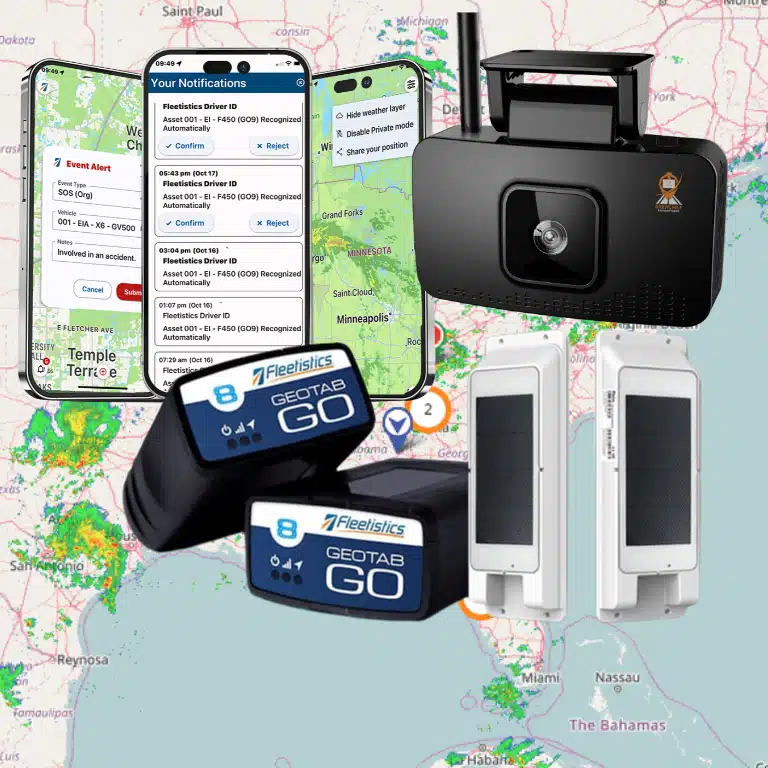
Fleetistics can support a camera strategy as part of a broader connected-fleet program, combining AI video with GPS tracking, compliance tools, maintenance data, and operational reporting. That connected view gives managers more control than a camera portal operating in isolation.
The right AI dashcam program should make safety management more focused, not more complicated. Choose the system that fits your vehicles, drivers, risk exposure, and existing technology, then give it a clear process to support. When video becomes timely evidence and actionable coaching, it can help protect the people and performance your fleet depends on.