
A telematics platform review should start with the problems costing your operation money right now, not a feature checklist from a software vendor. If fuel exceptions are climbing, drivers are missing inspection documentation, vehicles sit idle between jobs, or safety managers cannot see risky behavior until after an incident, the right platform should create a measurable change. A map with moving vehicle icons is only the starting point.
Fleet operators need technology that supports daily decisions across drivers, dispatch, maintenance, compliance, and finance. That means evaluating the platform as an operating system for fleet work, including the devices, data quality, workflow design, integrations, and support behind it.
What a telematics platform review should measure
A useful review evaluates whether a system gives your team control over the outcomes that matter: lower fuel spend, safer driving, less downtime, cleaner compliance records, and more productive field time. The best choice depends on fleet size, vehicle mix, regulatory exposure, and internal processes. A local service fleet with 15 vans does not need the same configuration as a government agency managing vehicles, trailers, equipment, and multiple departments.
Start by defining the decisions your team needs to make faster. Dispatch may need accurate arrival times and route status. Maintenance may need engine fault data and service reminders before a roadside breakdown. Safety may need a fair, documented process for coaching speeding, harsh driving, or distracted driving. Compliance teams may need dependable electronic logs, DVIRs, and IFTA reporting.
If a platform cannot turn collected data into those actions, the fleet is paying for visibility without gaining control.
Review the data before you review the dashboard
A polished dashboard cannot compensate for incomplete or unreliable vehicle data. During a telematics platform review, ask how the device captures location, engine diagnostics, idle time, ignition status, mileage, and driver identification. Confirm how often information updates, what happens when a vehicle loses cellular coverage, and how the system handles delayed or duplicate records.
Data quality has direct operational consequences. Inaccurate mileage can disrupt maintenance schedules and IFTA reporting. Weak GPS detail can create disputes over job arrival times. An unreliable driver assignment process makes safety scores and HOS records harder to defend. These are not cosmetic issues.
Device options should fit the vehicle and job
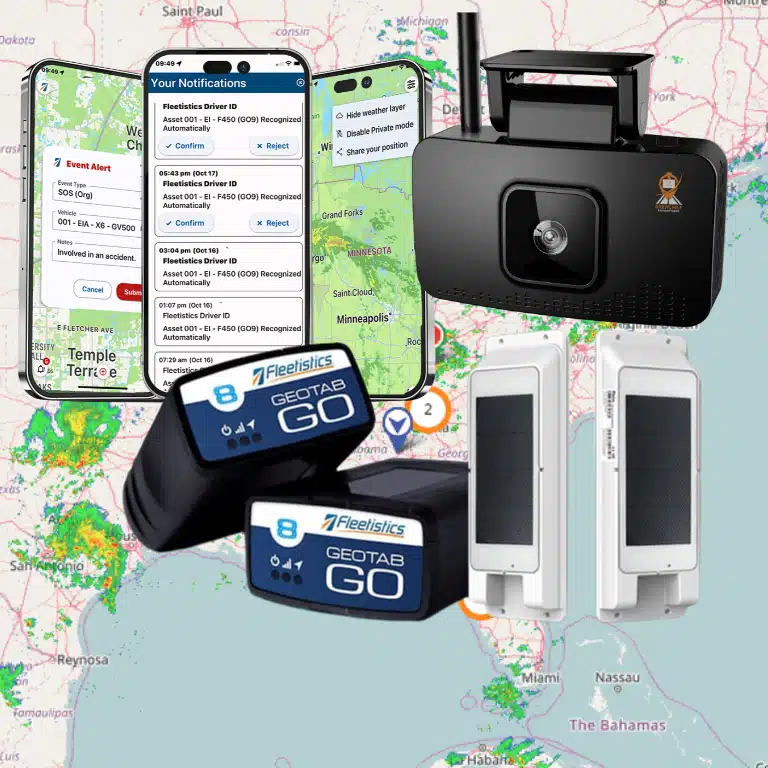
Hardwired GPS devices are usually the right choice for long-term fleet vehicles because they provide dependable power and detailed engine information. Plug-in devices can lower installation effort for eligible vehicles but may be easier to remove or less suitable for certain data needs. Battery-powered asset trackers serve a different purpose: monitoring trailers, generators, containers, and equipment that may not have a consistent power source.
Review installation requirements early. Consider labor time, vehicle downtime, tamper detection, device replacement procedures, and whether technicians or an installation partner will handle deployment. The lowest hardware price can become expensive if rollout disrupts operations or devices are not installed correctly.
Safety technology needs a coaching workflow
AI-enabled dashcams can provide valuable context around collisions and risky events, but video alone does not improve safety. Review how the platform identifies hard braking, speeding, following distance, phone distraction, seat belt use, and other behaviors. Then examine the workflow for assigning, reviewing, disputing, and documenting coaching.
False alerts waste a safety manager’s time and frustrate drivers. On the other hand, a system that filters every event too aggressively may miss behavior that deserves attention. Ask for examples of how event thresholds can be tuned by vehicle class, operating environment, and company policy.
A fair program also distinguishes between a driver-caused risk and a necessary response to traffic, weather, or another motorist. Video and vehicle data should help managers have a specific conversation, not rely on a score without context.
Compliance functions must reduce paperwork
For regulated fleets, ELD capability is only one part of the compliance picture. Review how the platform supports HOS rulesets, driver log edits, unassigned driving, roadside inspections, DVIR completion, and document retention. If your operation crosses jurisdictions, assess IFTA reporting and fuel data workflows as well.
The test is simple: does the system reduce manual reconciliation and make exceptions easier to resolve? A platform that creates another spreadsheet for administrators is not delivering the efficiency promised by fleet technology.
Test the platform against real operating scenarios
A live demonstration should follow your actual work, not a generic product tour. Provide a few common scenarios and ask the vendor to show the process from start to finish. For example, have dispatch locate the nearest qualified vehicle, send a job update, verify arrival, and review the completed route. Have maintenance identify an engine fault, create a service task, and confirm that the vehicle is taken out of service when needed.
Also test an incident scenario. Can a safety manager find the relevant video and vehicle data quickly? Can they see the driver’s history, identify related alerts, document coaching, and produce a record that supports an insurance or legal review? Speed matters when a customer, insurer, or agency asks for answers.
Mobile usability deserves the same attention. Drivers and field staff need tools that work in the cab, at a jobsite, and during a pre-trip inspection. If the mobile app adds too many taps or requires repeated logins, adoption will suffer regardless of how capable the office dashboard may be.
Examine integrations and ownership of your fleet data
Fleet data becomes more valuable when it connects to the systems your team already uses. Review available integrations for fuel cards, maintenance systems, payroll, dispatch, cameras, ERP platforms, and customer-facing applications. More importantly, ask whether the integration moves the data you need at the detail and frequency your workflow requires.
Open APIs matter when standard integrations do not fit a specialized process. A municipality, utility, or large service organization may need to connect telematics data to work-order, inventory, or custom reporting systems. In that case, evaluate API documentation, available endpoints, security controls, rate limits, and the technical resources required to build and maintain the connection.
Confirm who owns the data, how long it is retained, how exports work, and what happens if you change platform levels or providers. A fleet should not lose access to historical maintenance, safety, or location records because of an avoidable contract limitation.
Compare total cost and the path to expansion
Subscription cost is only one part of the investment. Calculate hardware, installation, data plans, camera storage, training, support, integration work, and any charges associated with reporting or compliance modules. Then compare those costs with the operational waste the system can realistically reduce.
A practical ROI model may include fewer idle hours, lower fuel consumption, reduced overtime, avoided breakdowns, faster billing, fewer preventable claims, and less administrative time. Use conservative estimates. A vendor promise is less useful than a business case your finance and operations teams can validate.
Avoid buying enterprise complexity before the fleet is ready to use it. Small and midsize fleets may benefit from a lower-investment platform that establishes location visibility, basic reporting, and accountability first. Larger or more complex operations may need advanced analytics, AI video, compliance controls, maintenance workflows, and deep integrations from the start.
Fleetistics uses this tiered approach through LITE, CORE, enterprise-grade options, and build-your-own API models. The larger lesson applies to any evaluation: choose a platform that solves the immediate problem while allowing the fleet to add capabilities without replacing the foundation.
Make implementation part of the buying decision
The implementation plan often determines whether telematics delivers a return or becomes another underused system. Ask who will configure groups, users, alerts, reports, rules, and driver assignments. Define how drivers will be trained, how managers will use reports, and which metrics will be reviewed weekly during the first 90 days.
Set a small number of operating targets before deployment, such as reducing excessive idling, raising DVIR completion, lowering speeding events, or improving on-time arrival. Assign an owner to each target. Fleet technology produces better results when accountability is built into the rollout rather than added after the fact.
The right platform should make each vehicle, asset, and driver easier to manage on a normal Tuesday, not just look impressive during a demonstration. Choose the solution that gives your team usable data, practical workflows, and a clear next action when the fleet needs attention.