
Fleet vehicle maintenance gets harder when one rule is applied to every asset. A delivery van, excavator, trailer, and service boat can have different risks and service needs. Build a repeatable program. Give each asset the right attention without burying your team in unnecessary work.

A practical fleet vehicle maintenance program combines asset-specific inspections, time- and usage-based schedules, diagnostic signals, complete records, and clear exception rules. Separate safety-critical, uptime-critical, and condition-based work. Assign an owner, due date, severity, and release decision to each issue.
Contact Fleetistics to evaluate your maintenance workflow
This structure turns maintenance from a repair list into an operating system for a mixed fleet. It gives managers a consistent way to decide what must happen before an asset returns to service. It also shows where software can improve visibility. Start with core controls and risk tiers.
What does a proactive fleet vehicle maintenance program include?
A proactive program is a repeatable operating system for keeping each asset safe, available, and properly maintained. It is more than a repair list or a calendar of oil changes. The program defines ownership and asset-specific work. It also sets defect priorities and the evidence required before an asset returns to service.
That structure matters most in a mixed fleet. A service van, heavy truck, trailer, piece of mobile equipment, and watercraft may have different duty cycles, inspection needs, and maintenance records. A single rule applied to all of them can create gaps for high-risk assets or unnecessary work for lower-use equipment.
Assign ownership before setting schedules
Start by naming the people responsible for the program. A fleet manager may own the policy and review results. Supervisors or operators may complete pre-use checks and report defects. Technicians or service providers may diagnose problems, document repairs, and make the release-to-service decision.
Operations staff should know when to remove an asset from service. This is essential when a safety-critical issue is found. Clear ownership prevents a common failure. Everyone should know who tracks overdue inspections and unresolved defects.
Build an asset register and risk tiers
The asset register is the program’s foundation. Give every vehicle or equipment unit a consistent identity. Record its asset class, use, location, responsible team, and service history. The register should distinguish a high-use road vehicle from a seasonal or specialized asset.
Next, classify work into practical risk tiers:
- Safety-critical: defects that could affect control, braking, visibility, load security, or safe operation. These require defined escalation and release rules.
- Uptime-critical: issues that may interrupt service or strand an operator.
- Condition-based: work guided by wear, utilization, or diagnostic information rather than a universal interval.
Risk tiers help the team prioritize without pretending every asset needs the same treatment. They give the team a common language. Staff can decide what can wait, what needs a work order, and what requires the asset to be held from service.
Document the maintenance policy
A written policy should connect the asset register, risk tiers, inspections, scheduling rules, defect reporting, work orders, and release decisions. It should explain what operators record, who reviews exceptions, how overdue work is escalated, and where the official maintenance history lives.
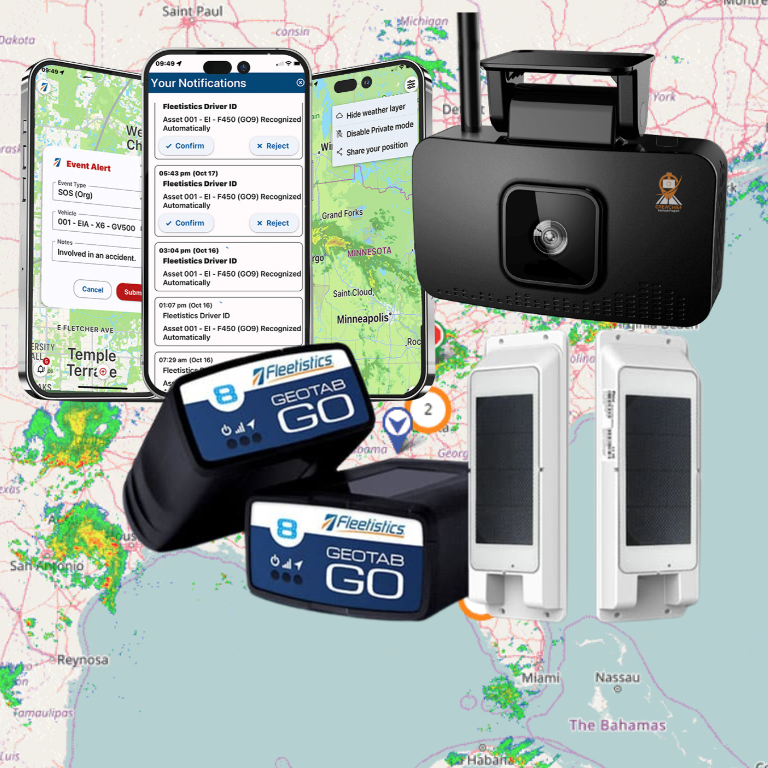
If tracking hardware or telematics is part of the workflow, select GPS tracking hardware that fits the asset and the data needed. Review the policy as fleet composition, operating conditions, and failure patterns change. A useful program guides daily decisions. It also allows asset-specific rules without creating a separate unmanaged process for every unit.
How should you structure inspections and preventive schedules?
A dependable maintenance program starts with a cadence that reflects how each asset is used and what could happen if a defect is missed. A service van, seasonal trailer, excavator, and workboat should not share one checklist or due date simply because they belong to one fleet.
Begin by assigning inspections to the moments that matter: pre-use, post-use, weekly, or monthly. Higher-risk assets or equipment used intensively may need checks before every shift. Lower-use assets may need a scheduled review before deployment and a condition check after use. Create a repeatable plan that catches meaningful problems before they become safety, uptime, or compliance events.
Match the cadence to the asset and its duty cycle
For each asset class, document the inspection owner, required checks, operating conditions, and evidence required. Consider mileage, engine hours, seasonal exposure, payload, terrain, utilization, and manufacturer guidance. A calendar-only schedule can miss a heavily used asset. A mileage-only schedule can overlook equipment that sits outdoors for months.
Use the same logic for preventive service. Combine time, mileage, engine hours, duty cycle, season, and observed condition rather than applying a universal service interval. When manufacturer instructions or regulatory requirements apply, they should anchor the schedule. The fleet’s inspection history can then refine the timing without replacing technician judgment.
Turn inspection findings into controlled actions
Every finding should include a clear severity, owner, due date, and release-to-service decision. A cosmetic issue may be recorded for planned attention. A developing mechanical concern may require a work order before the next assignment. A safety-critical defect should prevent release until an authorized person confirms correction.
Use exception rules for overdue inspections, active fault alerts, repeat defects, severe weather, unusual utilization, or a failed post-use check. If the fleet operates under rules that require driver vehicle inspection reports, use DVIR processes where applicable. ELD requirements are also conditional. They belong in the workflow only when the fleet’s routes and regulatory context make them relevant, not as a default requirement for every local or mixed-fleet operation.
For relevant interstate operations, consult the FMCSA hours-of-service guidance. A schedule is effective when it leads to a documented decision: continue operating, assign a due date, create a work order, or remove the asset from service. That decision trail makes fleet vehicle maintenance easier to manage across asset types.
How do diagnostics and telematics improve maintenance decisions?
Diagnostics and telematics help maintenance teams move from reacting to breakdowns toward prioritizing the right work at the right time. The value is not a dashboard full of signals. It is a clear path from vehicle data to triage, work order, repair, and release to service.
Engine data can reveal fault conditions or changes that deserve review. Utilization data adds context, including mileage, engine hours, duty cycle, and how heavily an asset is used. Location helps the team coordinate service. Alerts can bring urgent conditions forward. Driver-behavior data may identify patterns that contribute to wear or repeated defects.
Use those inputs to sort work by risk and operational impact. A serious diagnostic fault may require an immediate inspection. A recurring alert on an available asset may call for a planned appointment and deeper technician review. A utilization change may justify a cadence change. The responsible manager must confirm that it fits the asset.
What should happen after an alert?
Start by confirming the asset identity, alert details, timing, location, and recent service history. Then assign a severity and owner. Decide whether the asset can remain in service. Create a work order with the required inspection or repair. The technician should validate the condition using the appropriate diagnostic process.
Telematics supports that decision. It does not replace technician judgment, manufacturer guidance, or a physical inspection. Harsh events, idle time, or unusual usage can point to a conversation or inspection. They do not prove that a specific component has failed. Treat the signal as evidence to investigate, not as an automatic repair instruction.
Contact Fleetistics to discuss a maintenance and telematics workflow for your fleet.
For mixed fleets, the best configuration depends on the asset, hardware, available data, and operating environment. Keep the process consistent. Allow the thresholds, inspection steps, and technician decisions to remain specific to each asset.
What records and metrics keep maintenance accountable?
Accountability starts with a record that follows the asset from inspection through release to service. Give every vehicle, piece of equipment, or watercraft a consistent identity. Include its unit number, asset class, and operating details that affect maintenance decisions. Without that foundation, repair history becomes a collection of disconnected notes.
Each inspection and work order should show what was found, how serious it was, who owns the next action, and when it is due. Capture parts used, labor notes, diagnostic findings, and the final release decision. If an asset remains restricted, unavailable, or awaiting parts, record that status explicitly.
Which maintenance measures reveal operational risk?
Review a small set of measures consistently. Compare planned work with unplanned work to see whether preventive activity is controlling avoidable repairs. Track repeat defects by asset and component. A recurring issue may point to a failed repair, an unsuitable service interval, an operating condition, or a deeper equipment problem.
Tie downtime to the asset, work order, cause, and duration. This separates scheduled service from a road call or parts delay. Monitor overdue inspections and maintenance tasks. An overdue item is not automatically an emergency. It is an exception that needs an owner, a reason, and a documented decision.
How should managers use the data?
Review costs by asset class and, where useful, by component or work type. Avoid applying a universal cost target across mixed fleets. A delivery vehicle, excavator, and workboat can have different utilization patterns, service requirements, and downtime consequences.
Trends matter more than an invented benchmark. Rising cost, increasing repeat defects, or growing unplanned work deserves investigation. A weekly exception review can cover overdue tasks, open safety defects, repeat repairs, downtime, and assets awaiting release. A monthly review can examine patterns by asset class and adjust schedules, parts planning, training, or replacement decisions.
Fleet insight metrics can help organize that broader performance review. Use them only when the dashboard supports the decisions your maintenance team needs to make.
How do you handle maintenance exceptions without disrupting operations?
A maintenance program is tested when an asset does not follow the plan. Treat each exception as a controlled operating decision, not an informal favor to keep equipment moving. The goal is to protect people, preserve the asset, and give dispatch a clear alternative.
Classify the exception before assigning the next step
Start by recording the asset, issue, severity, current location, and operational impact. An overdue service may be a scheduling problem. A failed inspection or active diagnostic fault may require the asset to stop pending review. Separate safety-critical defects, uptime risks, and conditions that can be monitored under an approved plan.
For a failed inspection, document the defect and assign an owner and due date. If the condition affects safe operation or the asset’s required function, route it for technician assessment before release. Do not allow a verbal workaround to become the maintenance record.
For a vehicle stopped on the road, capture the road-call details, dispatch status, repair decision, and downtime. The same failure can then be reviewed later.
Keep parts delays and diagnostic faults visible
An active fault should trigger triage and a work order. It should not create an automatic assumption that the asset is unusable or safe. A qualified reviewer can determine whether the asset should be parked, restricted, monitored, or sent for repair.
If a part is delayed, connect the open work order to the part status. Identify the operational alternative, such as another asset, a revised schedule, or a controlled wait. This prevents dispatch from treating an unresolved task as complete.
Use the same workflow for mileage-, engine-hour-, or calendar-based work that becomes overdue. Flag the exception, state why it is delayed, set the next review point, and escalate when the risk changes. That creates a reliable history of planned versus unplanned work.
Make release to service an explicit decision
Before returning an asset to normal operation, record what was inspected or repaired, what remains open, any restrictions, and who authorized the release. Base the decision on available evidence and intended use, not simply on pressure to restore capacity.
Which fleet software capabilities support the program?
Software should make maintenance easier to see and manage. It should not force every asset into the same configuration. Start with the work your team needs to control: asset identity, inspections, service schedules, diagnostic signals, work orders, exception review, and release decisions.
Match platform depth to the fleet
A modular platform can help a small operation begin with needed visibility. It can also give a growing or mixed fleet room to add diagnostics, maintenance workflows, analytics, routing, fuel, safety, or compliance capabilities.
The right choice depends on asset types, operating environment, data requirements, and the people acting on the information. More features are not automatically better if no one owns the review process.
Fleetistics combines Geotab-backed telematics with reseller-provided implementation, configuration, training, and support. As a Geotab reseller, Fleetistics helps the customer select and configure the right Marketplace solution. The Geotab fleet management platform can be evaluated as part of a broader maintenance and operations workflow. Confirm exact availability for the selected platform and hardware.
Verify data access and integration fit
Maintenance information is most useful when it reaches the people and systems that run the operation. Fleetistics documents an open ecosystem with free APIs and 300+ integrations. That can support connections between telematics data, maintenance workflows, dispatch, fuel, safety, or other business systems. Verify the specific integration, data fields, configuration, and applicable terms during evaluation.
Review fleet management integrations against real use cases. Can the team identify an asset from an alert? Can it see utilization context, update a work order, and preserve repair history without re-entering information?
Compare implementation and support, not just features
Ask who installs or configures hardware, maps the workflow, trains users, reviews exceptions, and answers questions after launch. Fleetistics documents 24/7 support, implementation, and training.
Fleetistics documents a 60-day Solution Evaluation Process for this evaluation. A longer period should be discussed only when the fleet context is verified as government or extremely large.
A useful software decision ends with a tested workflow, clear ownership, and evidence that the selected configuration supports daily maintenance decisions. Treat the platform as an operating tool, not a substitute for policy, inspection, or technician judgment.
How can you choose the right fleet vehicle maintenance workflow?
The best workflow is the one your team can apply consistently across its assets. A service truck, trailer, heavy piece of equipment, and watercraft may need different inspection triggers. Each should have a clear owner, documented condition, and release decision. Use the comparison below to identify your current maturity and next step.
| Workflow | Visibility | Strengths | Limits | Best fit |
|---|---|---|---|---|
| Manual baseline | Paper forms, memory, and individual updates. | Quick to start and easy to understand. | Defects, due dates, and repeat issues can be missed. | Very small operations establishing ownership. |
| Spreadsheet plus calendar | Central view of assets, tasks, and dates. | Organizes schedules, assignments, and records. | Manual entry and limited live condition context. | Small or moderately complex fleets with an administrator. |
| Telematics-enabled workflow | Vehicle signals, utilization, alerts, and tasks. | Prioritizes work from current operating data. | Requires suitable hardware and technician judgment. | Fleets using mileage, engine data, location, or duty cycle. |
| Integrated maintenance workflow | Asset identity, inspections, diagnostics, work orders, parts, and release decisions. | Creates a traceable process from signal to completion. | Needs implementation, adoption, data governance, and training. | Mixed or growing fleets needing team accountability. |
How should you implement the next workflow?
- Establish the baseline. List every asset, responsible team, current condition, inspections, and open defects. Separate safety-critical issues from routine service.
- Standardize handoffs. Define who records an inspection, reviews severity, authorizes work, and makes the release decision.
- Add information deliberately. If manual records create gaps, start with a controlled spreadsheet and calendar. If mileage, engine hours, utilization, or fault data would improve triage, evaluate telematics and the appropriate GPS tracking hardware.
- Connect the workflow. As complexity grows, connect inspections, alerts, work orders, and records. Review overdue tasks, repeat defects, downtime, and planned versus unplanned work.
Choose the simplest workflow that gives your team reliable visibility today. Leave a clear path to more connected fleet vehicle maintenance as the operation grows.
Contact Fleetistics to evaluate a mixed-fleet maintenance workflow.
Frequently Asked Questions
How often should fleet vehicles be inspected?
Set inspection cadence by asset risk and use. A vehicle or piece of equipment may need checks before and after use, weekly, or monthly. Record each defect, severity, owner, due date, and release decision.
What should a fleet maintenance schedule include?
Combine manufacturer guidance with time, mileage, engine hours, duty cycle, season, and observed condition. Avoid one universal interval. Add exception triggers for overdue work, active faults, repeat defects, or other high-risk conditions.
Can telematics replace a technician’s inspection?
No. Diagnostics and telematics can surface engine data, utilization, location, alerts, and maintenance signals. Those signals require triage. Review the signal, assess the asset, create or update a work order, and rely on qualified technician judgment for repair and release.
Which maintenance records should fleet managers keep?
Maintain one identity for each asset, plus inspection history, work-order status, repair details, parts and labor notes, downtime, and the release decision. Review planned versus unplanned work, repeat defects, overdue tasks, downtime, and performance by asset class.
Do all fleets need ELD or DVIR workflows?
No. ELD and DVIR requirements depend on vehicles, routes, drivers, and regulatory context. Treat compliance workflows as conditional requirements. Verify the applicable rules and configure the process around the operations that fall within them.
Ready to improve your fleet vehicle maintenance workflow?
A practical evaluation can help you match inspections, schedules, diagnostics, records, and exception handling to the risks across your mixed fleet. Contact Fleetistics to review your current workflow and identify a sensible path toward clearer maintenance decisions.