
Fleet telematics solutions succeed when the technology fits the way your operation makes decisions. A dashboard with impressive features is not enough if the hardware misses part of your fleet. Data must reach the right team, and someone must own the workflow after launch.
The most reliable way to evaluate fleet telematics solutions is to audit operational fit before comparing vendors. Map your assets and decisions, define the data each workflow needs, assign rollout ownership, test the highest-value use cases, and measure results against a baseline. This approach helps you choose a modular system that can serve vehicles, equipment, or watercraft without forcing every operation into the same configuration.

Ask Fleetistics to help map your fleet telematics requirements
Fleetistics supports this type of consultative review with Geotab reseller experience, modular technology, and implementation support for fleets operating across the United States, Canada, and Mexico. The goal is not to buy every available feature. It is to create a defensible plan for the problems your team needs to solve first.
What Does an Implementation-Fit Audit Reveal?
An implementation-fit audit connects three things that are often evaluated separately: the assets being monitored. The decisions people need to make, and the action that should follow each data signal. That connection is the difference between collecting information and improving an operation.
Start by listing the fleet groups that will use the system. Include road vehicles, trailers, heavy equipment, powered assets, watercraft, and any other mobile property. Record the operating environment, power source, installation limits, expected coverage, and people responsible for the asset. A single standardized device may not be appropriate for every group.
Next, list the decisions that matter. Examples include dispatching the next job, scheduling service, coaching a driver, investigating unauthorized movement, confirming arrival, reviewing utilization, or preparing a compliance record. Each decision should have an owner and a defined time horizon. A live location view may support dispatch, while a maintenance trend may need weekly review.
Finally, document the action that should follow the signal. If an alert has no owner, deadline, or response path, it may become notification noise. This is why an audit should evaluate adoption and workflow design alongside the platform itself. Fleetistics’ fleet management platform capabilities can be assessed more meaningfully when each capability is tied to a documented operating need.
Which assets need different hardware?
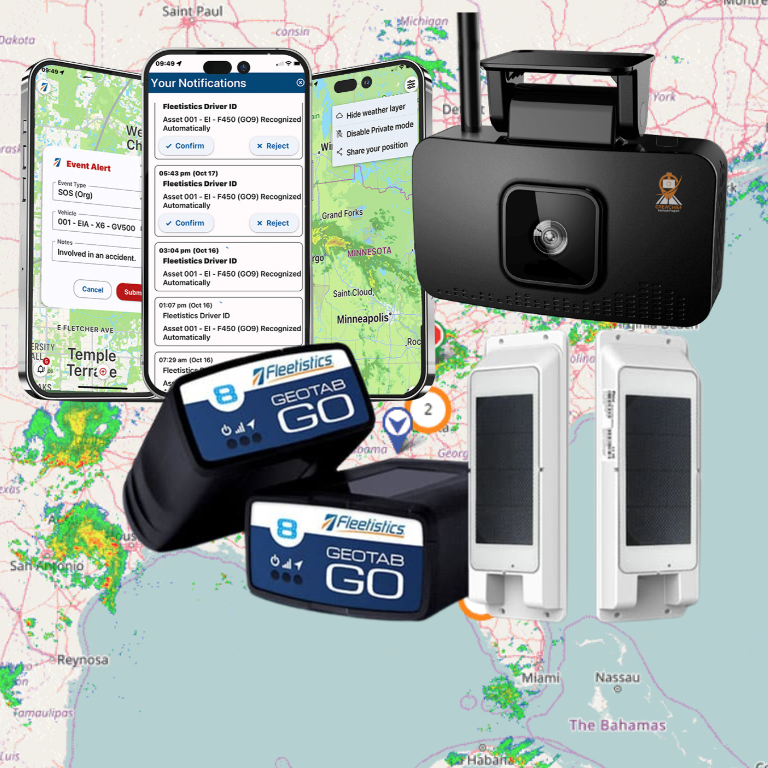
Hardware selection should follow the asset map, not the other way around. Road vehicles may support vehicle data and diagnostic connections that are not available on trailers, equipment, or watercraft. Hardwired options can have different installation and data tradeoffs than plug-in devices. Review GPS tracking hardware by power conditions, mounting location, environmental exposure, expected data, and service requirements.
Also define what happens when an asset changes hands, moves to a new job site, or operates outside the usual route. Those details affect installation records, geofences, user permissions, and reporting. A technically compatible device can still create an operational problem if nobody maintains its assignment or configuration.
Which decisions should be tested first?
Choose a small group of high-value decisions for the first evaluation. A field-service team may prioritize arrival visibility and route execution. A maintenance team may prioritize service timing and diagnostic context. A public-sector fleet may prioritize governance, department reporting, and standardized access. A mixed equipment operation may prioritize location history, utilization, and unauthorized movement.
Do not treat ELD, DVIR, or IFTA functionality as universal requirements. Their relevance depends on routes, vehicle use, and jurisdiction. Fleets subject to applicable interstate hours-of-service obligations can review the relevant ELD and HOS capabilities alongside current FMCSA guidance.
How Should You Choose Fleet Telematics Solutions for Implementation Fit?
A requirements map turns a broad buying conversation into a list that can be tested. It should identify the users, assets, data, workflow, and success measure for every priority. Ask each department to describe the problem in operational language before translating it into a software or hardware request.
| Area | Document before selection | Proof to request |
|---|---|---|
| Assets | Vehicle, equipment, trailer, or watercraft types, power conditions, and operating environments. | Device compatibility, installation method, coverage expectations, and data fields for each asset group. |
| Users | Dispatch, maintenance, safety, finance, supervisors, administrators, and drivers. | Role permissions, dashboards, alerts, reports, training needs, and escalation ownership. |
| Workflows | The decision or action the data should improve. | A live demonstration using a representative scenario, not only a generic product tour. |
| Integrations | Dispatch, maintenance, fuel, payroll, accounting, routing, or business intelligence systems. | Specific connector, API access, fields, refresh timing, permissions, documentation, and applicable fees. |
| Governance | Data access, retention, employee notice, configuration control, and reporting standards. | Administrative controls, audit history, export options, policy responsibilities, and support process. |
| Outcomes | Baseline measures, target direction, review owner, and evaluation period. | A scorecard that separates platform results from changes caused by seasonality, policy, staffing, or volume. |
This map also exposes unnecessary scope. If a proposed feature does not connect to a priority decision, move it to a later phase instead of allowing it to complicate the first rollout. A modular approach can let a fleet begin with the capabilities it can adopt and add workflows as its operating maturity grows.
Integration claims deserve the same discipline. Fleetistics describes an open ecosystem with free APIs and more than 300 integrations, but the exact connector and data path still need to be confirmed for your workflow. Review fleet management integrations with the fields, permissions, refresh rate, and ownership questions your team has documented.
How Can You Score Platform Fit Before a Full Rollout?
Use a weighted scorecard to keep a persuasive demonstration from deciding the purchase by itself. Assign more weight to requirements that affect safety, revenue, compliance, or implementation risk. A minor interface preference should not outweigh a missing data field or an unclear support process.
For each requirement, record four values: importance, demonstrated status, evidence, and owner. A requirement is not complete because a salesperson says it is available. It is complete when the team has seen the workflow, understands the configuration needed, and knows who will maintain it.
- Critical: The requirement affects a core operating or compliance process. Do not proceed without proof.
- Important: The requirement improves efficiency, visibility, safety, or adoption. Test it with representative users.
- Useful later: The requirement may support future growth, but it should not delay the first measurable use case.
Score the implementation partner as well as the software. Ask who selects hardware, coordinates installation, configures users, trains departments, troubleshoots devices, answers integration questions, and reviews results after launch. Fleetistics positions its team as a Geotab reseller and implementation partner. Customers work with Fleetistics to select and configure the technology rather than being directed to purchase from Geotab directly.
Support expectations should be written down before the decision. Fleetistics documents 24/7 support as part of its service model. Ask how support is reached, which issues are handled by the reseller or platform provider, and how urgent device or data problems are escalated.
What Should a Fleet Telematics Pilot Measure?
A pilot should test decisions, not simply prove that devices report locations. Select a representative group of assets, users, routes, and operating conditions. Include at least one scenario that could expose a coverage, installation, workflow, or permission problem.
- Set the baseline. Record the current measure before the pilot begins. Depending on the use case, this may include utilization, idle time, maintenance timing, service response, safety events, arrival accuracy, administrative hours, or unauthorized movement.
- Define the action. Write what the user should do when the data changes. For example, a maintenance signal may create a review task, while an arrival update may change customer communication.
- Test representative conditions. Include the vehicle types, geography, users, shifts, and workflows that matter. A demonstration on one ideal vehicle does not validate a mixed fleet.
- Review adoption. Measure whether dispatchers, managers, maintenance staff, and supervisors can find and act on the information. Track training questions and recurring workarounds.
- Compare results carefully. Separate technology impact from seasonality, staffing changes, route volume, policy changes, and unusual events. Document both improvements and unresolved friction.
For ordinary fleet contexts, use a 30-day evaluation as the standard for validating fit. A 60-day evaluation is appropriate only when the fleet context is verified as government or extremely large and the additional complexity justifies it. Do not present any evaluation period as a guaranteed business result. The evaluation should answer whether the selected workflows are usable, measurable, and worth expanding.
When the pilot includes maintenance, compare scheduled service timing with actual vehicle condition, downtime, and roadside events. When it includes safety, define the events supervisors will review and the coaching response. When it includes fuel, measure the baseline and review fuel-management solutions against the operation’s actual routes, vehicle mix, and reporting needs.
How Do Fleet Size and Use Case Change the Rollout Plan?
Fleet size affects governance and rollout complexity, but asset mix and workflow variation often matter just as much. A small operation may need a simple configuration that people can use consistently. A larger operation may need departments, role-based access, standardized reports, integrations, and a phased launch.
Small and mixed fleets
Start with a short list of decisions that will change daily work. Select hardware that fits the vehicles and any non-vehicle assets, then limit the first alert set to signals someone can act on. Adoption is usually more valuable than an oversized configuration that creates unanswered notifications.
Asset-heavy and field-service operations
Focus on location history, utilization, job-site dwell time, service arrival visibility, and the relationship between assets and work orders. Confirm that devices operate in the environments where equipment is used. Field-service teams should also test how dispatchers and customers receive arrival or completion information.
Enterprise and public-sector fleets
Plan for governance before installation. Define department ownership, user permissions, reporting standards, data retention, procurement requirements, training, and escalation paths. Government buyers can also review Fleetistics’ verified Sourcewell purchasing information when that route applies. Do not assume every department needs the same hardware or reports.
For larger programs, establish a change-control process. A request for a new alert, user group, integration, or report should have an owner, testing step, and review date. This prevents the platform from becoming a collection of unmaintained exceptions.
How Should You Validate ROI Without Overpromising?
ROI validation should connect measured change to a business decision. Start with a baseline and select a small number of metrics that matter to the operation. Possible measures include utilization, idle time, maintenance timing, safety events, response time, route adherence, administrative effort, or asset recovery.
Fleetistics documents fuel savings of up to 14 percent in relevant materials. Treat that as a documented proof point, not a guaranteed outcome for every fleet. Your results will depend on routes, policies, vehicle mix, behavior, data quality, and how consistently managers act on the information.
A credible review should answer five questions:
- What changed compared with the baseline?
- Which workflow or intervention contributed to the change?
- Who reviewed the result and how often?
- What other factors may have influenced the result?
- Should the program expand, change configuration, or stop a low-value workflow?
The City of Seattle provides a documented Fleetistics proof point involving a 4,100-vehicle fleet and fuel savings. That example shows why measurable outcomes matter, but it is not a promise that another operation will achieve the same result. Use customer examples to shape questions, then validate your own fleet’s evidence.
Discuss a measurable fleet telematics evaluation with Fleetistics
Frequently Asked Questions
What are fleet telematics solutions supposed to improve?
They should improve a defined operating decision, such as dispatch visibility, maintenance timing, safety coaching, utilization, route execution, compliance workflow, or administrative reporting. Start with the decision and its owner, then select the hardware, data, alert, and integration that support it.
Can one telematics platform support vehicles, equipment, and watercraft?
It can when the hardware and configuration match each asset type. Review power, installation, environmental conditions, coverage, and required data for each group. A modular approach may use different devices while keeping reporting and user access in one platform.
Do all fleets need ELD, DVIR, or IFTA tools?
No. Those tools depend on route, vehicle use, operating activity, and jurisdiction. Fleets with applicable interstate hours-of-service obligations should review current FMCSA guidance. Local-service, short-haul, equipment, and watercraft operations may have different requirements.
How do I test an integration claim?
Ask the provider to demonstrate the exact connector or API path using the fields and workflow your team needs. Confirm permissions, refresh timing, documentation, data ownership, limits, and any applicable fees. A general statement that a platform has integrations does not prove that your specific workflow will work.
What should happen after the pilot?
Review the scorecard with the people who own the tested workflows. Expand the configuration when the data is usable and the result is measurable. Change or remove a workflow when adoption is poor, the signal lacks an owner, or the result cannot be separated from other operating changes.
Ready to Build an Implementation-Ready Telematics Plan?
The strongest buying decision connects asset fit, usable data, clear ownership, measured outcomes, and ongoing support. Contact Fleetistics to plan your fleet telematics fit review and identify a modular path for your operation.