
Fleet fueling is a control process, not just a record of fuel purchases. It connects fuel cards or other purchasing methods with the vehicle, driver or operator, location, route, engine activity, and work being performed. When those records can be reviewed together, a fleet manager can distinguish normal operating variation from preventable idle, route waste, data problems, and possible misuse.
A useful program starts with a measurable question: can your team explain why each significant fuel transaction occurred? The answer should come from a consistent workflow rather than a monthly total that arrives too late to investigate.
Talk with Fleetistics about a fuel-control process for your fleet.
What should a fleet fueling process control?
A practical fleet fueling process controls four connected areas: authorization, transaction data, operating context, and follow-up. Each area closes a different gap. Authorization limits who can purchase and what the purchase is allowed to include. Transaction data records what happened. Operating context helps determine whether the transaction fits the vehicle’s work. Follow-up turns an exception into a documented decision.
- Authorization: Assign cards, accounts, PINs, or other approved purchasing methods to the right vehicle, driver, operator, location, and fuel type.
- Transaction data: Capture the date, time, location, fuel type, volume, total cost, odometer or engine-hour reading, and any required receipt or work reference.
- Operating context: Compare the purchase with vehicle location, route, assigned work, engine status, mileage, and recent fuel activity.
- Follow-up: Route unusual transactions to an owner, document the explanation, and track whether the underlying control or operating issue was resolved.
This scope is intentionally different from a fuel-card comparison or a generic fuel-management feature list. Before selecting technology, define the decisions your team needs to make. A local service fleet may care about fuel per job and unauthorized after-hours purchases. A delivery fleet may focus on route miles, fuel per mile, and depot-versus-retail fueling. A mixed fleet may need separate rules for trucks, vans, heavy equipment, and watercraft.
Which fleet fueling data should you measure first?
Start with a small scorecard that links fuel use to the work completed. The right denominator depends on the fleet. Fuel cost per mile can help compare similar road vehicles. Fuel cost per engine hour may make more sense for equipment that spends time working while stationary. Fuel per completed job or service visit can add useful context when route length varies.
| Measure | What it helps answer | Follow-up context |
|---|---|---|
| Fuel volume per mile | Is a comparable vehicle using more fuel for its travel? | Review route, payload, weather, traffic, maintenance, and driving conditions. |
| Fuel cost per mile | How does fuel spend change when both price and usage are considered? | Separate fuel-price movement from changes in consumption. |
| Fuel cost per engine hour | Is a work vehicle or asset using fuel while stationary or operating equipment? | Compare engine hours with idle time, job records, and equipment use. |
| Idle minutes and idle share | How much engine-on time occurs without vehicle movement? | Separate necessary idle from avoidable idle caused by worksite or operating practices. |
| Fuel transaction exceptions | Which purchases fall outside the fleet’s rules? | Check time, location, amount, fuel type, vehicle capacity, and assignment. |
| Fuel cost by vehicle or asset | Which units deserve a closer operational review? | Group comparable units before drawing conclusions or recommending action. |
Do not rank every vehicle against one universal benchmark. A loaded truck, technician van, generator, and utility vehicle perform different work. Record the vehicle class, fuel type, route type, payload, operating area, season, and unusual assignments alongside the metric. That context prevents a normal difference from becoming a false fraud allegation or an unhelpful driver score.
For fleets that need a connected reporting layer, Fleetistics provides fuel-management services that can be evaluated alongside the team’s existing purchasing and telematics processes.
How do you build a repeatable fuel-control workflow?
A repeatable workflow turns fuel information into a sequence of actions. The sequence should be simple enough for a manager to run every week and detailed enough to support a deeper monthly review.
- Define the unit of review. Decide whether the team will review transactions, vehicles, routes, locations, drivers, or a combination. Start with the unit that matches the decision you need to make.
- Set the policy. Document approved fuel types, assigned users, required odometer or engine-hour readings, receipt rules, allowed purchase times, and the process for exceptions.
- Collect comparable records. Bring together fuel transactions, vehicle or asset identifiers, mileage, engine hours where available, route or job records, and relevant maintenance or diagnostic context.
- Screen for exceptions. Flag duplicate fills, unusual volume, out-of-area purchases, purchases outside a shift, missing readings, fuel type mismatches, and transactions that do not match the assigned vehicle.
- Investigate with context. Compare the event with GPS position, route, driver or operator assignment, dispatch records, and work conditions before deciding that a control was violated.
- Assign an action. The resolution may be a data correction, policy reminder, card-setting change, maintenance inspection, route review, driver coaching, or escalation for suspected misuse.
- Close the loop. Record the explanation and action, then check the same metric in the next review cycle. A process is not complete when an alert is created. It is complete when the team knows what happened and what changed.
Use different review cadences for different risks. A card limit exception may need same-day attention. A monthly comparison of fuel cost by route may be more useful than a daily fluctuation. The point is to match review speed to the operational and financial risk, not to create a dashboard that nobody can sustain.
How can fleets reduce fuel card fraud and misuse?
Fuel card fraud prevention starts with controls that make a transaction attributable and reviewable. The exact settings depend on the fleet’s size, fueling method, and operating model. A small service fleet may need vehicle assignment, driver identification, receipt capture, and a weekly reconciliation. A larger or mixed fleet may also use per-transaction limits, daily limits, fuel-type restrictions, time and day controls, location rules, and separate policies for depot fueling.
Look for exceptions that deserve a question, not automatic punishment:
- A transaction occurs far from the vehicle’s recorded route or assigned work.
- The purchase happens outside the vehicle’s normal operating window.
- The volume is inconsistent with tank capacity, recent fills, or the vehicle’s normal pattern.
- A fuel type does not match the assigned vehicle or asset.
- Two transactions occur too close together to fit the vehicle’s normal use.
- The transaction has no required odometer, engine-hour, receipt, or work reference.
- A card or account appears to be used by more than one unauthorized vehicle or operator.
Each exception can have an innocent explanation. A reassigned vehicle, shared tank, emergency repair, route change, incorrect odometer entry, or delayed telematics record may explain the mismatch. The control should therefore require a documented review, not a conclusion based on one field. A consistent exception log protects the fleet from both unaddressed misuse and unsupported accusations.
Fleetistics’ fuel-card resources can be part of a broader policy discussion. The purchasing control and the telematics review should be designed together so the team can connect a transaction to the work it supported.
How do GPS and telematics add fuel-use context?
GPS and telematics do not prove that a fuel transaction was fraudulent. They make the transaction easier to investigate by adding time, location, movement, engine, driver, and route context. A fuel purchase becomes more useful when a manager can compare it with the vehicle’s actual position and activity at the same time.
For each transaction, the review may include the vehicle or asset identifier, driver or operator identifier, fueling location and timestamp, fuel type. Volume, total cost, odometer or engine-hour reading, GPS position before and after fueling, route or job assignment, and recent maintenance or diagnostic context. Not every fleet will have every field, and missing data should be treated as a control issue rather than silently filled with an assumption.
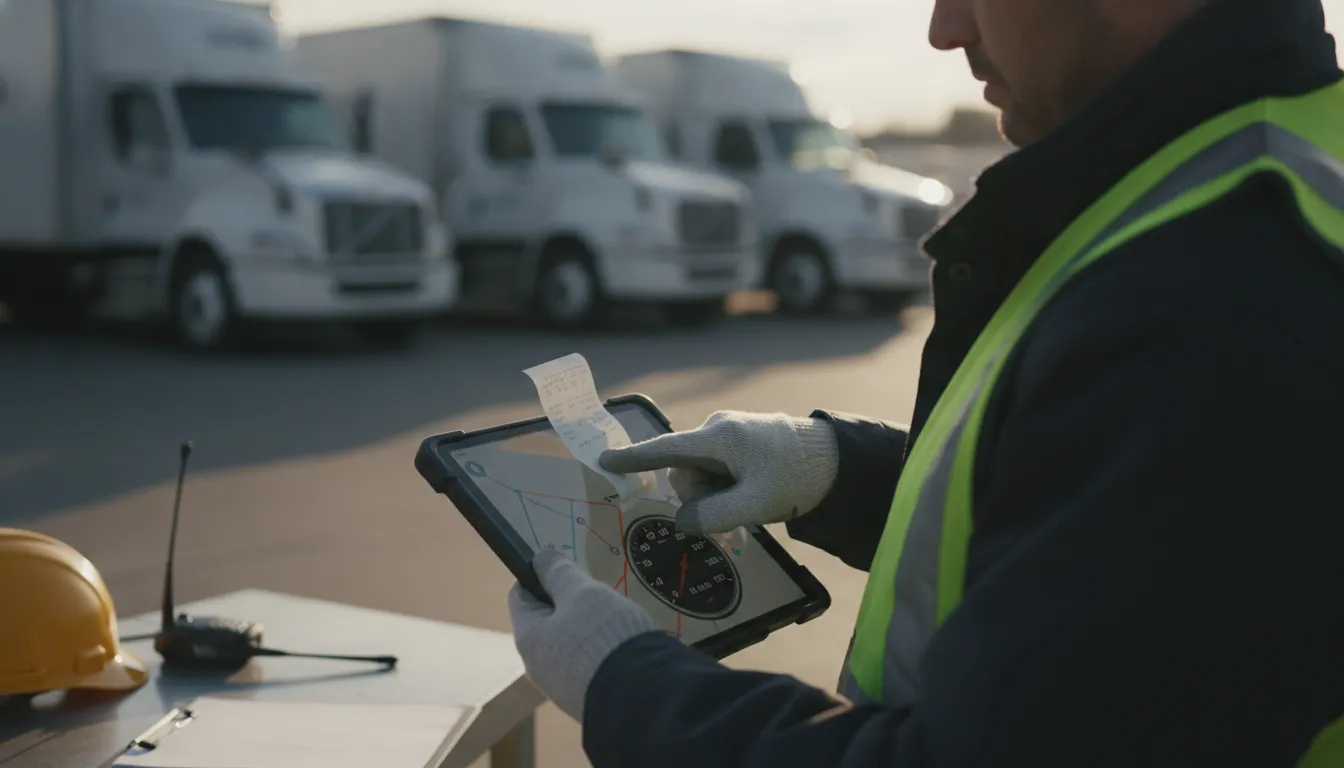
The comparison can reveal different types of waste. A fuel purchase near the vehicle but after excessive stationary engine time may point to an idle-reduction conversation. A purchase far from the planned route may point to a dispatch change, emergency work, a data error, or a policy exception. A repeated mismatch after the explanation is documented may justify stronger controls or a closer review.
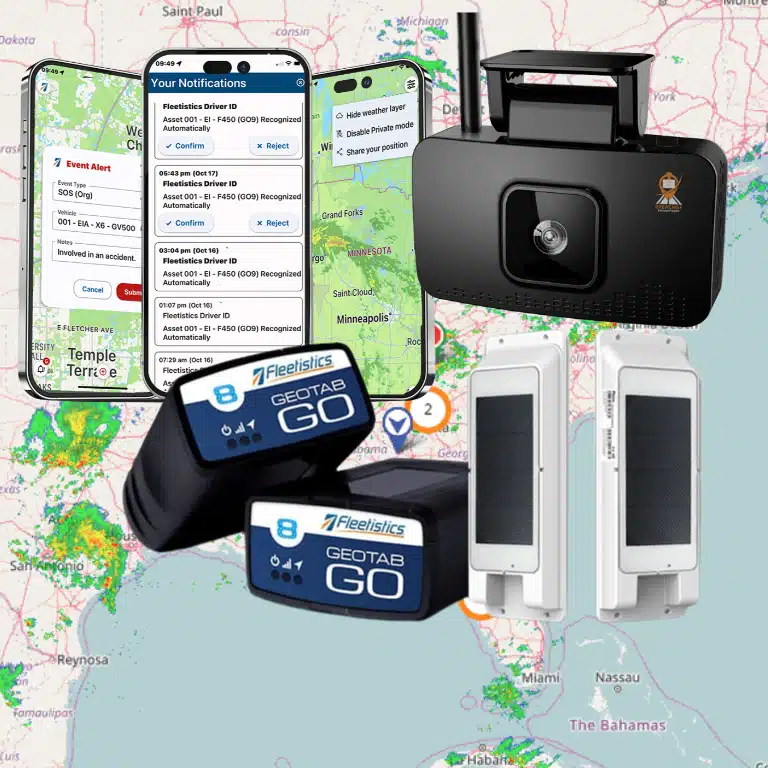
Fleetistics’ Geotab fuel tracking application is a relevant option for teams evaluating how connected fuel and telematics data should support this type of review. The right configuration depends on vehicle types, work patterns, existing systems, and the level of reporting the team can act on.
How should fleets review idle and route waste?
Idle and route waste should be reviewed as separate problems because they have different causes and different owners. Idling may be necessary for safety, temperature control, power, hydraulics, or equipment operation. Extra miles may result from traffic, weather, customer windows, dispatch decisions, or a route that no longer fits the work. The goal is to find avoidable activity without disrupting a legitimate job.
Reduce avoidable idle time
Compare idle minutes and idle share by vehicle, shift, location, job type, and operating condition. Then ask whether the idle was required. A recurring pattern at a depot may call for a staging or dispatch change. A pattern at a worksite may reflect equipment needs. A pattern on a route may call for driver coaching or a clearer policy. The U.S. Department of Energy’s Alternative Fuels Data Center provides idle-reduction guidance that can help frame the discussion around fuel use and engine wear.
Reduce unnecessary miles
Compare planned miles with actual miles for recurring routes, but preserve the reason for legitimate variation. Review repeated detours, backtracking, unplanned depot returns, and route segments that no longer match customer geography. A route issue may be a dispatch or territory problem rather than a driver problem. Assign the review to the person who can change the route, scheduling rule, service territory, or work order.
Both reviews become stronger when fuel data is connected to actual movement and work records. They should produce a specific action and a follow-up measure, not only a report of the prior period.
What should you check before selecting fleet fueling technology?
Technology should support the workflow your team can operate. A larger feature list does not help if the data cannot be assigned, reviewed, or used in a decision. Ask the following questions before selecting a fuel-control or telematics configuration:
- Can it identify the transaction? Confirm how the system records the vehicle, driver or operator, location, time, fuel type, volume, cost, and required readings.
- Can it connect purchasing and movement? Determine whether fuel events can be compared with GPS, route, engine, job, or dispatch data.
- Can it separate vehicle types? Check whether rules and reports can reflect different duty cycles, fuel types, assets, and operating locations.
- Can managers act on exceptions? Look for configurable alerts, review queues, notes, ownership, and a record of resolution.
- Can it work with existing systems? Review integrations, reporting exports, API access, accounting workflows, and data ownership before implementation.
- Can the team validate the result? Define which baseline, metric, and review interval will show whether a change improved the operation.
Fleetistics takes a modular approach to GPS tracking, telematics, fuel tools, analytics, and integrations. That can be useful when a fleet needs to begin with a focused control problem and expand as its data and review process mature. A consultation should be used to match the configuration to fleet size, vehicle mix, routes, and operational goals rather than assume one package fits every fleet.
What belongs on a monthly fleet fueling checklist?
A monthly review should summarize the recurring process and identify decisions that need more attention. Use this checklist as a starting point, then adapt it to the fleet’s vehicles, assets, fueling locations, and work types.
- Confirm every active card, account, driver, operator, and vehicle assignment.
- Review missing receipts, readings, work references, or vehicle identifiers.
- Check unusual volume, repeat fills, fuel type mismatches, and purchases outside policy.
- Compare fuel volume and cost using the appropriate denominator for each vehicle group.
- Review idle time by vehicle, location, shift, and job context.
- Compare route or job miles with planned work and investigate recurring detours.
- Separate data quality issues from operating issues and suspected misuse.
- Assign an owner and due date for every unresolved exception.
- Record policy changes, card-setting changes, coaching, maintenance reviews, or route changes.
- Choose the metric that will be checked in the next cycle to confirm whether the action helped.
The checklist is most valuable when it stays stable enough to show trends. Change the thresholds when the fleet changes, but avoid changing the definition of a metric every month. Consistency gives managers a clearer view of whether fuel performance is improving or whether the apparent change comes from different data or different work.
Frequently asked questions about fleet fueling
What is fleet fueling?
Fleet fueling is the process of managing fuel purchasing and use across vehicles, drivers, operators, assets, routes, and locations. It combines authorization, transaction records, operating context, exception review, and follow-up so a fleet can understand why fuel was purchased and what action is needed.
How can fleet managers reduce fuel fraud?
Use assigned purchasing methods, required transaction data, appropriate card or account limits, and regular reconciliation. Review unusual time, location, volume, fuel type, and assignment patterns with GPS and work records before deciding what happened. Document the resolution so the same issue can be handled consistently.
How does GPS tracking support fuel review?
GPS tracking adds location and movement context to fuel transactions. A manager can compare the purchase with the vehicle’s route, stop, job, driver or operator assignment, and recent activity. GPS context supports investigation, but it does not by itself prove fraud or explain every operational difference.
Which fuel metrics should a fleet track?
Common measures include fuel volume and cost per mile, fuel cost per engine hour, idle time, route miles, fuel cost by comparable vehicle group, and transaction exceptions. Select the denominator that reflects the work. A fleet should not compare vehicles with different duty cycles using one unqualified benchmark.
What should a fleet evaluate before choosing fuel technology?
Evaluate whether the system can identify transactions, connect purchasing with GPS and telematics data. Support different vehicle types, create actionable exception reviews, integrate with existing systems, and measure a defined baseline. Choose a configuration that the fleet can operate and use, not only one with a long list of features.
Build a fleet fueling process your team can use
Better fleet fueling starts with a repeatable connection between purchases, vehicles, work, and review. Begin with the highest-risk control gap, establish the data needed to investigate it, and assign an owner for each exception. Then use the next review cycle to test whether the action improved the relevant metric.
Fleetistics helps businesses evaluate modular GPS tracking, telematics, fuel, analytics, and integration options for fleets operating vehicles, equipment, or watercraft. The right starting point depends on your fleet size, vehicle mix, routes, and reporting needs.
Speak with Fleetistics about a practical fleet fueling process for your operation.