

A truck that misses a route because of an overlooked defect costs more than the repair itself. It can disrupt schedules, strain customer relationships, and force managers into rushed decisions. The answer is not simply more inspections or a new software subscription. It is a repeatable maintenance process that connects daily checks to scheduled service, documented work, and measurable follow-through.
Truck fleet maintenance works best as a closed loop. Set schedules around vehicle use and OEM guidance. Capture inspection findings. Convert defects into assigned work orders, record the repair, and review downtime, recurring faults, and cost trends. Telematics and maintenance software can make that loop easier to monitor, but they should support sound procedures rather than replace them.
Contact Us Today to discuss a truck fleet maintenance workflow for your operation.
Start by defining who owns the process, what each vehicle requires, and how your team will decide whether a defect needs immediate attention or planned service. That foundation makes every later choice, from inspection records to KPI dashboards, more useful and easier to manage across different truck types and operating conditions.
How Do You Build a Truck Fleet Maintenance Program?
A reliable program starts with accountability, not software. Assign one person to own the maintenance process. Define who reports defects, who approves repairs, who schedules service, and who confirms that a truck is ready to return to work. That ownership structure prevents inspection findings from sitting in an inbox without a decision.
Begin with an asset baseline for every truck. Record the vehicle identification number, make and model, mileage, engine hours when available, vehicle class, duty cycle, acquisition date, warranty status, and current condition. Include the equipment that affects how the truck works, such as trailers, lifts, refrigeration units, or specialized bodies. This gives your team a clear starting point and helps separate normal wear from a developing problem.
Next, write a maintenance policy that defines the standard for putting a vehicle into service. It should cover inspection responsibilities, preventive service, defect reporting, repair authorization, parts and vendor decisions, recordkeeping, and escalation for safety-critical issues. Make the policy practical for drivers and technicians. A process that is difficult to follow will produce incomplete records and inconsistent decisions.
For carriers subject to the Federal Motor Carrier Safety Administration’s rules, the governing principle is systematic inspection, repair, and maintenance of every motor vehicle under the carrier’s control. Review the agency’s exact language and requirements in the linked Part 396 guidance.
The same federal guidance states that commercial motor vehicles must not be operated in a condition likely to cause an accident or a breakdown. Review the FMCSA Part 396 inspection, repair, and maintenance requirements for the operations and vehicles covered by your jurisdiction. Do not treat this federal example as a universal rule for every fleet or location.
Set schedules around the truck’s real workload, not a generic calendar. Consider manufacturer recommendations, warranty requirements, mileage, engine hours, stop-and-go driving, load weight, terrain, climate, and seasonal exposure. A local delivery truck, a long-haul tractor, and a construction support vehicle may need different service triggers even when they share a model year. Build daily checks and planned service into dispatch planning so maintenance is part of operations, rather than an interruption to it.
Finally, connect the program to broader truck fleet management. Review completion rates, overdue work, repeat defects, roadside events, and downtime with the people who control routes and vehicle assignments. That feedback loop lets you adjust schedules, ownership, and inspection detail as the fleet changes.
How Should Preventive Maintenance Schedules Work?
A useful schedule turns maintenance from a reaction to a planned operating process. It should tell your team what is due, why it is due, who owns it, and what happens when the truck cannot be serviced on time. A universal interval is unsafe because vehicles differ by class, age, load, duty cycle, climate, road conditions, and the way they are used.
Start with the manufacturer’s recommendations and warranty requirements. The Oregon Department of Transportation’s preventive maintenance guidance specifically calls for an established service schedule based on both. Use those requirements as the control point, then add operating conditions that may justify closer monitoring. Do not replace an OEM interval with a generic “every X miles” rule unless the manufacturer supports it.
- Define the applicable triggers. Track time, mileage, and engine hours because each reveals a different maintenance need. A low-mileage truck that idles for long periods may accumulate significant engine hours. A high-mileage delivery truck may reach a mileage trigger quickly, while a seasonal vehicle may need service based on elapsed time before it travels far. Record the trigger that caused the task and retain the supporting OEM guidance.
- Layer the schedule by operating rhythm. Daily work should cover driver observations and required walk-around or post-trip processes. Weekly checks can review open defects, fluid or tire concerns, and tasks approaching their due point. Monthly reviews should examine overdue work, service history, parts availability, and upcoming shop capacity. Seasonal planning should account for weather, extreme temperatures, routes, storage, and any attachments or equipment used during that period. The exact inspection items and intervals should come from the applicable manual and operating requirements.
- Build exception rules. A schedule needs a clear response when a truck misses a due date, experiences severe service, shows a warning, or develops a reported defect. Assign a responsible person to assess the issue, decide whether the vehicle can continue operating, and document the decision. For regulated operations, safety-related defects require especially disciplined escalation. Federal guidance requires covered motor carriers to systematically inspect, repair, and maintain vehicles. It also says commercial motor vehicles must not operate in a condition likely to cause an accident or breakdown: FMCSA Part 396 guidance.
- Close the loop with drivers. Drivers are often the first people to notice vibration, noise, warning indicators, handling changes, or recurring operating problems. Give them a simple way to report observations, and make sure maintenance staff respond visibly. Review driver feedback alongside service history so repeated symptoms can change the inspection plan, trigger a diagnostic check, or prompt an OEM consultation.
The schedule is working when due tasks are visible, exceptions have owners, and feedback improves the next service decision. Technology can help organize those triggers, but the maintenance policy still needs accountable people and manufacturer-specific judgment.
What Should Truck Inspections and Records Capture?
Inspections are most useful when they create a clear handoff between the driver, maintenance team, and manager. A pre-trip check should give the driver a practical way to identify visible or functional concerns before departure. Depending on the vehicle and duty cycle, that may include tires, lights, brakes, steering, fluid levels, safety equipment, body damage, and attached equipment. A post-trip check records what changed during the shift and what should be addressed before the truck is dispatched again.
For covered operations, federal requirements under FMCSA Part 396 include systematic inspection, repair, and maintenance. The cited requirements include daily written post-trip reports that identify defects affecting safe operation or potentially causing a breakdown. The carrier or its agent must document whether a listed defect was repaired or whether immediate repair was unnecessary. These rules apply to covered operations and are not a substitute for current legal review, state requirements, or vehicle-specific guidance.
How should teams prioritize defects?
Every finding should have a severity or disposition that drives the next action. A safety-critical defect may require the vehicle to be held out of service until corrected. A lower-risk issue may be scheduled for the next maintenance window, while a condition that needs observation can remain open with a defined follow-up date. The record should show who reported the issue, who reviewed it, what decision was made, and when the action was completed. Fleetistics supports DVIR workflows as a capability for organizations that use driver vehicle inspection reporting. That capability does not, by itself, guarantee compliance.
What belongs in the service history?
Link each inspection finding to the truck’s service history and, when applicable, a work order. Record the date, odometer or engine-hour reading, reported symptom, diagnosis, corrective action, technician or vendor, and completion status. Parts and quantities, labor time, labor cost, invoice details, and warranty information add the context managers need to evaluate repair decisions. A complete history can reveal recurring faults, support warranty discussions, and prevent teams from repeating unnecessary work.
Maintain an audit trail rather than overwriting the original entry. Preserve timestamps, approvals, attachments, and status changes so a reviewer can follow the path from reported defect to final disposition. This structure also makes inspections useful beyond compliance: managers can compare recurring issues by vehicle. Component, route, season, or operating pattern and use the evidence to improve the broader truck fleet maintenance program.
How Do Work Orders Control Downtime?
A work order turns a maintenance finding into an accountable plan. Without one, a defect may remain in a driver’s notes, a conversation, or an inbox until the truck fails at the least convenient time. A consistent work-order process gives your team one record of what needs attention, who owns it, what resources are required, and whether the repair actually solved the problem.
1. Convert the finding into a clear request
Start with the inspection finding, driver report, diagnostic alert, or scheduled service trigger. Record the asset, component, symptoms, mileage or engine hours, date, and any conditions that may help a technician reproduce the issue. Avoid vague descriptions such as “truck is acting up.” “Intermittent brake warning during cold starts” gives the next person a usable starting point.
2. Triage the risk before assigning the work
Not every issue should enter the same queue. Classify each request as safety-critical, schedule-sensitive, or monitor.
- Safety-critical: A defect that could make the vehicle unsafe or increase the risk of a breakdown should be removed from service or handled according to your established safety policy.
- Schedule-sensitive: A problem that affects availability, reliability, or an upcoming route should be planned before it becomes an operational interruption.
- Monitor: A low-risk symptom can remain in service with a documented follow-up condition, owner, and review point. “Monitor” should never mean “forget.”
These categories help maintenance and operations teams make consistent decisions without inventing universal response targets. The right priority depends on the defect, vehicle use, route demands, OEM guidance, and your own risk policy.
3. Plan the repair, then verify the result
Assign the work to an internal technician or selected vendor. Before the vehicle arrives, confirm parts availability, labor requirements, tools, warranty information, and whether the repair can be combined with another planned service. Good planning reduces repeat handling and prevents a truck from waiting in a bay for a missing part.
When the repair is complete, document the work performed, parts used, technician or vendor, findings, and any follow-up inspection. Verification may include a test drive, diagnostic check, leak check, or confirmation from the driver, depending on the repair. Close the work order only when the original concern is resolved, deferred with a documented reason, or escalated for further diagnosis.
Digital histories make the process more valuable over time. Review closed work orders for repeat failures, recurring components, warranty coverage, and repairs that did not address the root cause. This broader workflow guide should remain distinct from predictive fleet maintenance, which focuses on using vehicle data to identify needs earlier. Both approaches support the same goal: fewer surprises, better planning, and more available assets.
Contact Us Today to review how your maintenance workflow can reduce avoidable downtime.
Which Truck Maintenance KPIs Should You Track?
A useful KPI does more than describe what happened. It helps a manager decide which vehicle needs attention, where a process is breaking down, or whether a maintenance investment is improving availability. Track each metric consistently by asset, work order, and date, then review the trend rather than reacting to one unusual week.
Start with a small set of measures your team can update reliably. A maintenance system should connect scheduled service, overdue work, downtime, labor, parts, and vehicle history so the numbers describe the same operation. Pair cost measures with reliability and completion measures. A low repair spend is not a win if trucks are unavailable or preventive work is being deferred.
| KPI | What it measures | How a manager uses it |
|---|---|---|
| PM compliance | The share of preventive maintenance tasks completed by their scheduled due point. | Identify scheduling, staffing, or dispatch conflicts that cause planned service to slip. |
| Overdue work | Open maintenance tasks past their due date, separated by age and severity. | Prioritize risk, assign owners, and prevent a growing backlog from becoming breakdowns. |
| Downtime | Time an asset is unavailable because of inspection, repair, parts, or service delays. | Find recurring delays and compare their operational effect across locations or vendors. |
| Mean time to repair | Average elapsed time from a repair event being opened to the vehicle returning to service. | Separate diagnosis, approval, parts, and labor delays so the right constraint can be fixed. |
| Repeat repairs | Instances where the same component or fault returns within a defined review period. | Investigate repair quality, parts, technician procedures, or an underlying vehicle issue. |
| Cost per mile | Maintenance spending divided by miles operated during the same reporting period. | Compare operating cost by asset and support total-cost-of-ownership decisions. |
| Vehicle availability | The share of scheduled operating time an asset is ready for service. | Connect maintenance performance to dispatch capacity and customer commitments. |
Do not impose an arbitrary universal target on every truck. A local delivery vehicle, long-haul tractor, vocational truck, and specialized asset experience different mileage, routes, loads, climates, and duty cycles. Review KPI trends by vehicle, route, duty cycle, and asset class. That comparison reveals meaningful outliers without punishing a team for operating conditions it cannot control.
For broader context, review fleet maintenance cost benchmarks, but use published benchmarks as context rather than a substitute for your own records. Fleet analytics software can help combine maintenance and operating data, making it easier to spot relationships between utilization, downtime, and repair activity.
Where Do Telematics and Maintenance Software Fit?
Telematics and maintenance software solve different parts of the same operational problem. Telematics collects and communicates information about vehicle location, engine behavior, alerts, and use. Maintenance software turns that information, along with inspections and technician input, into scheduled service, work orders, assignments, and records. Treating one as a substitute for the other can leave a gap between detecting a problem and resolving it.
A practical alert-to-work-order loop looks like this:
- Detect: An OBD-II connection reports a real-time engine diagnostic signal, or a mileage or engine-hour threshold comes due.
- Review: A fleet manager checks the vehicle, fault context, severity, current route, and existing service history. An alert is a signal to investigate, not proof that a repair is automatically required.
- Act: The team creates a work order, assigns an owner, sets a priority, coordinates the shop or technician, and records parts and labor as the work progresses.
- Close the loop: The completed work, findings, and follow-up date are stored with the asset. Managers can then review repeat faults, overdue work, and downtime trends.
When evaluating a system for truck fleet maintenance, start with the workflow rather than the feature list. Confirm that it can capture diagnostics and support triggers based on mileage or engine hours. Check whether it connects with the systems your team already uses, and whether integrations preserve useful vehicle and maintenance data instead of creating another manual entry point. Permissions also matter: drivers, technicians, supervisors, and administrators may need different abilities to report, edit, approve, or close work.
Mobile access is important for teams working in yards, shops, and the field. Look for a usable way to review alerts, inspect history, update work orders, and attach clear notes from a phone or tablet. Historical data and reporting should help you compare recurring faults, service completion, vehicle availability, and maintenance activity over time. Predictive tools can prioritize attention, but they do not replace technician judgment, OEM requirements, or a documented repair decision.
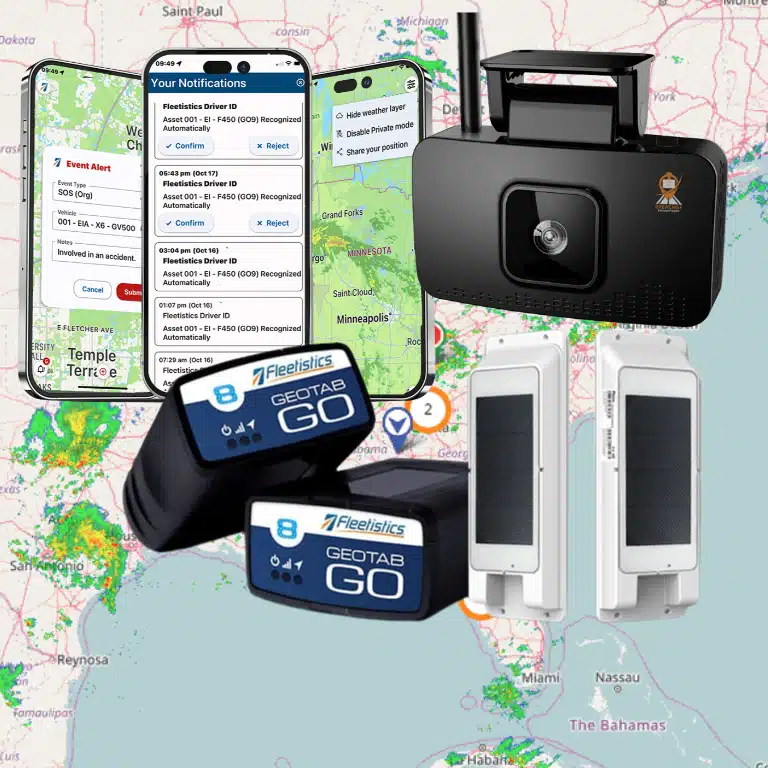
Fleetistics combines live GPS tracking, alerts, analytics, and real-time engine diagnostics through an OBD-II interface. Its PRO offering includes maintenance work orders and engine diagnostics, with predictive maintenance supported by machine learning. The platform also provides 300+ integrations, helping fleets connect telematics data with other operational tools. Review the broader capabilities of fleet maintenance software to determine whether the workflow fits your vehicles, team, and maintenance process.
Contact Us Today to evaluate a maintenance and telematics workflow for your fleet.
Frequently Asked Questions
What does truck fleet maintenance include?
Truck fleet maintenance includes routine inspections, preventive service, corrective repairs, parts and labor tracking, work orders, service records, and trend review. A complete program also assigns responsibility for reporting defects, approving repairs, and confirming that each vehicle is ready for service.
How should I set maintenance schedules for different trucks?
Start with the manufacturer recommendations and warranty requirements, then adjust the schedule for vehicle class, mileage, engine hours, duty cycle, climate, and operating conditions. Use multiple triggers, such as time, miles, and engine hours, and review the schedule when recurring faults or changes in use show that it needs refinement.
What records should a fleet maintenance program keep?
Keep each vehicle’s identity, maintenance due dates, inspection results, repair details, parts, labor, invoices, warranty information, and work-order history. For covered commercial motor vehicles, FMCSA guidance also addresses systematic inspection and maintenance. It covers daily written post-trip reports, reported defects, and certification that defects were repaired or did not require immediate repair. Review the applicable FMCSA requirements.
Can maintenance software reduce truck downtime?
It can help by centralizing preventive schedules, inspections, work orders, service histories, and cost data. The practical benefit comes from closing the workflow loop: capture a defect, prioritize it, assign the repair, stage parts, document completion, and review repeat failures and overdue work.
Does telematics replace maintenance software?
No. Telematics supplies vehicle and engine data, alerts, and operating context, while maintenance software organizes inspections, schedules, work orders, records, and accountability. Used together, they can connect an engine diagnostic alert or utilization pattern to a reviewable maintenance action without removing the need for technician judgment.
Ready to Improve Your Truck Fleet Maintenance Workflow?
A practical review can help you connect maintenance schedules, inspection records, work orders, telematics data, and performance measures to the way your fleet operates. Contact Fleetistics to evaluate your current workflow, identify the right mix of telematics and maintenance tools, and assess potential ROI before investing.