When you manage a few work vans, trucks, or mixed-use vehicles, maintenance often lives in a spreadsheet, a calendar, and someone’s memory. That may be workable at first, but missed service reminders and incomplete repair records become expensive as the fleet gets busier. The right fleet maintenance software for small business gives your team one place to schedule work, document inspections, track vehicle history, and decide what deserves attention next.
Fleet maintenance software for small business centralizes preventive service schedules, work orders, inspection records, vehicle information, user access, and maintenance reporting. The best fit is not the tool with the longest feature list. It is the system your team can use consistently, connect to the information it already relies on, and expand without paying for complexity it does not need.

Talk with Fleetistics about a maintenance software fit for your fleet
This guide focuses on maintenance workflow and total cost of ownership, not just vehicle location. If you need broader operating visibility, review how fleet management software connects maintenance with telematics, safety, compliance, and operational decisions.
What should fleet maintenance software help a small business do?
A small fleet needs software that makes routine work easier to complete and easier to prove. That usually means replacing scattered notes with a repeatable process from service due, to work assigned, to repair completed, to history updated.
Start with the maintenance decisions your team makes every week. Which vehicles are due for service? Which inspection found a problem? Who owns the repair? Is a vehicle safe and available for its next route? What did the last repair cost, and has the same issue returned? Software should answer those questions without requiring someone to reconcile multiple files.
That does not mean every small business needs a large enterprise system. A focused platform can be more useful than a broad one if it gives your owner, fleet manager, driver, or technician the right information at the right time. Prioritize adoption and dependable records before adding advanced workflows.
Which features matter most when you compare options?
Feature names vary across vendors, so compare the workflow behind each feature. A checkbox for maintenance reminders is less valuable if it cannot use the readings your team actually records or if completed work does not update the vehicle history.
Work orders that show ownership and status
Work orders turn a reported problem or scheduled task into an accountable job. Look for a way to describe the issue, assign an owner, set a priority, record parts and labor, attach notes or documents, and close the work only after the repair is complete. Statuses such as open, approved, in progress, waiting for parts, and complete can help a small team see what is happening without a meeting.
Also check whether a work order can be created from an inspection finding or service reminder. That connection reduces re-entry and helps prevent a known issue from disappearing between a driver’s report and a technician’s schedule. If your repairs are handled by outside shops, confirm that the workflow can still preserve the vendor, invoice, and completion details.
Service reminders based on the right trigger
Maintenance schedules may depend on calendar time, odometer readings, engine hours, operating cycles, or a combination. The software should let you choose the trigger that matches the vehicle and service item. An oil service for a road vehicle may follow mileage, while a generator or piece of equipment may need an engine-hour interval.
Ask what happens after a service is completed. Does the next due date or reading reset automatically? Can the system show due and overdue work in one view? Can you set different intervals for different vehicle types? These details determine whether reminders reduce administrative work or create another list that someone must maintain manually.
Inspection history that connects observations to repairs
Inspections are valuable because they capture issues before or during daily use. Look for digital inspection forms that can record pass or fail results, comments, photos, signatures, and readings when relevant. More importantly, a failed item should be easy to review, prioritize, and convert into a work order.
For fleets that operate under specific driver inspection requirements, confirm that the product supports the applicable process and retention expectations. Do not assume that a generic checklist meets every regulatory need. Your compliance owner should review the exact workflow before deployment.
Vehicle and asset data that stays usable
At a minimum, each vehicle record should hold identifying information, current readings, service history, documents, and the maintenance plan that applies to that asset. A growing fleet may also need vehicle class, location, equipment relationships, warranty information, registration dates, or assigned department.
Good data structure matters more than collecting every possible field. Use consistent names and identifiers from the start. If a vehicle changes drivers, locations, or assignments, the maintenance record should stay with the asset. That creates a dependable history for planning, audits, resale decisions, and future troubleshooting.
User access that fits a small team
Small businesses still need clear permissions. Drivers may need to submit inspections, managers may need to approve work, technicians may need to update repairs, and owners may need cost and fleet-level reporting. Ask whether roles can limit access without making the system difficult to use.
Consider how users will work in the field. A mobile-friendly workflow can help a driver report a defect or a technician update a job near the vehicle. If the product requires a desktop for every important step, test whether that will slow down adoption for your team.
Integrations that prevent another data silo
Maintenance information rarely stands alone. Your business may already use accounting software, dispatch tools, fuel systems, telematics, payroll, or a spreadsheet that contains important asset data. Review the available integrations and ask what data moves in each direction, how often it updates, and who owns the connection.
An open API can be valuable when your workflow is unusual or when you need to connect a maintenance record to an existing business application. However, do not buy an API as a substitute for a usable daily workflow. First confirm that the core maintenance process works for the people who will use it, then evaluate integration depth.
How do you calculate the total cost of ownership?
The subscription price is only one part of the decision. A practical total-cost review includes the software plan, hardware or data service when required, installation, onboarding, training, integrations, internal administration, and the cost of downtime or incomplete records. Two products with similar subscription quotes can have very different operating costs.
Use a simple model before you compare proposals:
- Annual technology cost: software, devices, connectivity, and required modules.
- Implementation cost: setup, data cleanup, training, installation, and integration work.
- Ongoing administration: schedule maintenance, review exceptions, manage users, and correct records.
- Expected operational value: fewer missed services, less avoidable downtime, faster diagnosis, better documentation, and less manual coordination.
Do not claim savings before you have a baseline. Record current missed services, unscheduled downtime, repair turnaround time, repeat issues, and maintenance administration effort. If you need a broader way to frame return on investment, use Fleetistics’ fleet telematics ROI calculator as a starting point, then replace assumptions with your own operating data.
How much software does a small fleet need at first?
Match the first configuration to the problem you are trying to solve. A small local service fleet may need vehicle records, recurring reminders, inspection history, and basic work orders. A larger or more active operation may also need engine data, mobile workflows, approvals, reporting, and integrations.
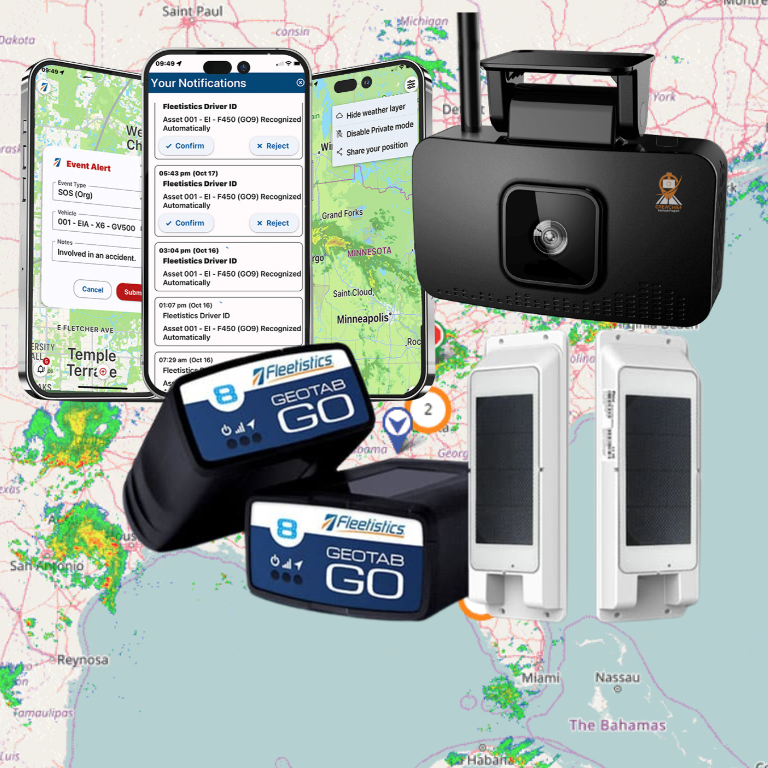
A modular approach lets you start with a focused implementation instead of asking your team to change every process at once. Fleetistics supports modular fleet management configurations through its Geotab-powered platform, with options that can connect tracking, diagnostics, maintenance, analytics, and other operational needs. The right configuration depends on your fleet type, existing systems, and the decisions you need the software to support.
How should you implement maintenance software without overwhelming the team?
Implementation is part of product fit. A system that looks powerful in a demonstration will not improve maintenance if your team cannot keep the records current. Use a short, measurable rollout.
- Define the first use case. Choose one outcome, such as reducing missed preventive services, making inspection findings visible, or creating a reliable repair history. Write down how you will measure it.
- Clean the asset list. Confirm vehicle identifiers, current odometer or engine-hour readings, service intervals, open issues, and responsible users. Remove duplicate records before importing data.
- Configure the minimum workflow. Create only the roles, schedules, inspection forms, statuses, and alerts your team needs for the first phase. Avoid turning on every optional module before the basics work.
- Pilot with a representative group. Include the people who report issues, approve work, perform repairs, and review results. A pilot should expose practical friction, such as missing mobile access or unclear ownership.
- Review the first maintenance cycle. Check whether reminders were acted on, inspections produced usable information, work orders closed correctly, and records contain enough detail for the next decision.
- Expand using evidence. Add telematics, diagnostics, integrations, or additional teams when the current workflow is stable and the next capability solves a defined problem. Scale the process, not just the user count.
Book a Demo to review a right-sized fleet maintenance approach
What questions should you ask before choosing a provider?
Use a live demonstration to test the complete path from issue to resolution. Ask the provider to show, not just describe, how a user will:
- Add or import a vehicle and verify its identifying information.
- Set a time-based, mileage-based, or usage-based service reminder.
- Submit an inspection issue from a mobile device.
- Turn the issue into a work order, assign it, and update its status.
- Record parts, labor, documents, photos, and completion notes.
- Find the asset’s complete service history later.
- Export or connect the data to the systems your business already uses.
- Add users and limit their access by role.
- See what will happen when your fleet grows or your process changes.
Then ask what is not included. Clarify hardware requirements, implementation support, data ownership, cancellation terms, support hours, integration limits, and how the provider handles data migration. A direct answer is more useful than a long feature list.
Fleetistics has served fleets since 2001 and is the longest-running Geotab partner in the United States, with Gold Reseller expertise. The team helps customers select hardware, configure a modular platform, and connect fleet data to business needs. Fleetistics remains the customer’s advocate and implementation partner, rather than treating every small business as a one-size-fits-all deployment.
Frequently Asked Questions
What is the best fleet maintenance software for a small business?
The best option is the one that matches your maintenance workflow, fleet type, user needs, and growth plans. At a minimum, compare service reminders, work orders, inspection history, asset records, permissions, reporting, support, and integration requirements. A short pilot with real vehicles and real users is more reliable than choosing from a feature list alone.
How much does fleet maintenance software cost?
Cost depends on the software model, number of vehicles and users, hardware or connectivity, implementation, training, integrations, and support. Ask for a total-cost view rather than comparing subscription prices alone. Your baseline should also include the current cost of missed services, manual administration, incomplete records, and avoidable downtime.
Can a small business start with basic maintenance tracking and add more later?
Yes, if the provider supports a modular configuration and keeps data compatible as your needs change. Start with accurate asset records, schedules, inspections, and work orders. Add telematics, diagnostics, advanced reporting, or integrations when those capabilities solve a documented operational problem.
Should maintenance software include GPS tracking?
Not every business needs the same combination. A maintenance-only tool may be enough when your main need is scheduling and recordkeeping. GPS tracking and telematics can add vehicle location, usage, diagnostics, alerts, and other context when those signals will change maintenance or operating decisions. Evaluate the value of each capability instead of assuming more technology is always better.
Ready to choose a maintenance system that fits?
The strongest small-business maintenance deployment is focused, measurable, and easy for the people closest to the vehicles to use. Compare the workflow, total cost, integration path, and growth fit before you commit to a configuration.
Contact Fleetistics to evaluate fleet maintenance software for your small business