
Commercial fleet collisions cost billions annually, with over ninety percent caused by human error. Real-time driver assistance is now a necessity.
Understanding how AI dashcams work for commercial fleets is essential for modern business operators. These advanced systems use built-in computer vision and machine learning algorithms to analyze video feeds on the edge. The devices continuously monitor the road and the driver to detect risky behaviors, such as tailgating, phone use, and drowsiness, in real time. When the device identifies a safety hazard, it triggers an immediate in-cab voice alert to help the driver self-correct before a collision occurs. Simultaneously, the camera uploads video clips of the event to a cloud platform, giving managers objective evidence to run data-driven coaching programs. Organizations that deploy these systems see a major drop in safety incidents. A federal regulatory study shows that dual-facing video telematics can reduce harsh driving events by eighty-eight percent within one year.
As you evaluate this technology, you need to know what makes these smart cameras different from the basic recorders of the past. Let’s look at What Is an AI Dashcam? (Beyond Just Recording Video) to understand how these systems process live road and cabin data. Here is how.
How Ai Dashcams Work For Commercial Fleets: What Is an AI Dashcam? (Beyond Just Recording Video)
A basic road camera only saves video to a memory card. It is a passive tool that shows what happened after a crash. In contrast, an AI dashcam works in real time to help prevent those crashes. The technology acts like an active safety partner on the road. It does not just record video, it reads the road, watches for risks, and helps drivers stay safe.
How AI Differs From Passive Recording
Old camera systems need a person to watch hours of tape to find risky habits. By then, the risk has already turned into a costly claim or a bad crash. An AI system uses smart computer sensors to find risks the moment they happen. If you want to see how these tools fit into a full safety plan, you can read our AI dashcam technology overview. This modern tech keeps your drivers safe while they are on the job.
Three Tech Layers That Power the System
Modern fleet cameras rely on three main parts to protect your team. First, optical sensors and high-definition lenses capture the road and the cab. Next, on-device processors run machine learning code directly on the hardware. This code can find signs of distracted driving like phone use, food, or closed eyes. According to federal regulatory reports on video telematics safety benefits, on-device AI can spot these dangers and send loud in-cab alerts so drivers can fix their mistakes fast.
The Role of Cloud Telematics
The third layer is the cloud connection. When the on-device AI spots a major risk like tailgating or a near-miss, it sends the video clip to a cloud dashboard. Fleet managers get instant access to the video, GPS data, and safety scores. This allows you to run a solid driver-coaching program based on real facts. The system turns raw video into clear data that you can use to build a safer fleet.
How AI Dashcam Event Detection Works: Triggers, Alerts, and Coaching
To understand how AI dashcams work for commercial fleets, you must look at the path from live detection to active coaching. Modern units do not just record video to an SD card. They use a smart pipeline to find risks, warn drivers, and help managers build safer habits across the fleet.
The Real-Time Detection and Alert Pipeline
This process runs on the camera and in the cloud to stop accidents before they happen. Here is how the technology works step by step:
- Sensor Triggers: Inertial sensors inside the unit detect sudden movement. This includes hard braking, sharp turns, fast acceleration, or a crash.
- On-Device AI Scan: The camera uses built-in computer vision to watch the road and the driver. It spots cell phone use, drowsiness, tailgating, and lane drifting.
- In-Cab Alerts: If the AI spots a risk, it plays an audio warning. This gives the driver a chance to correct their behavior on the spot.
- Cloud Upload: The unit sends a short video clip of the event to the cloud dashboard using a cellular connection.
- Manager Review: The fleet manager reviews the video clip and notes on the dashboard to plan coaching.
Real-World Results from Active Coaching
This simple pipeline drives major safety gains. A report from a federal regulatory filing shows that dual-facing, connected video units reduce crashes and lower fleet risk. Real fleet data shows a 50% rise in seat belt use and a 34% drop in cell phone use while driving. Speeding incidents fell by 66% and tailgating dropped by 50% after setting up these units.
Driving Down Harsh Events
Using how AI dashcams operate to guide drivers leads to fewer close calls on the road. The same government report noted that one fleet saw an 88% drop in harsh events like sudden braking and hard turns in just one year. These tools turn raw video into clear coaching steps that protect your team and your bottom line.
Front-Facing vs Dual-Facing vs 360-Degree Cameras: What Your Fleet Needs
Choosing the right camera setup depends on your specific fleet goals and risk profile. Different configurations offer varying levels of visibility, installation complexity, and protection. Understanding how these options differ helps you select the best hardware to protect your drivers and your assets.
Front-Facing Dashcams for Basic Protection
Front-facing cameras focus solely on the road ahead. They record continuous video through the windshield to capture traffic conditions, road signs, and the actions of other drivers. If an accident occurs, this forward-looking footage provides clear, objective evidence to exonerate your drivers from false claims. Because these devices are simple to install and highly affordable. They serve as an excellent entry point for fleets that want basic recording without monitoring driver behavior inside the cab.
Dual-Facing Dashcams for Active Coaching
Dual-facing systems use two lenses in a single unit to record both the road ahead and the driver inside the cab. This layout is the industry standard for fleets that want to improve driver safety through active coaching. The driver-facing lens uses advanced dashcam technology to watch for signs of distraction or fatigue. According to federal regulatory data, video telematics solutions have led to a 60% reduction in seat belt unfastened incidents and 60% fewer mobile phone calls while driving. You can learn more about these safety systems by reading about advanced dashcam technology and how it supports fleet safety.
360-Degree Cameras for Complete Visibility
For large trucks, buses, or vehicles carrying high-value cargo, 360-degree systems provide full surround visibility. This setup connects multiple cameras around the vehicle to eliminate blind spots, cover the sides, and monitor the rear. While installation is more complex, the comprehensive view is vital for heavy vehicles operating in tight urban spaces or crowded loading docks. These systems integrate with fleet telematics to give managers complete operational awareness and total safety coverage.
Comparing Fleet Camera Configurations
This table compares the three main camera setups to help you decide which configuration fits your operational needs and budget.
| Camera Type | Field of View | Primary Use Case | Install Complexity | Starting Price |
|---|---|---|---|---|
| Front-Facing | Forward road only | Collision evidence and driver exoneration | Low (simple windshield mount) | Budget-friendly |
| Dual-Facing | Road ahead and driver cab | Driver coaching and distraction detection | Medium (windshield mount with power) | Moderate |
| 360-Degree | Full surround and blind spots | Complete asset safety and side-impact defense | High (multi-camera wiring) | Premium |
Geotab-Integrated Solutions from Fleetistics
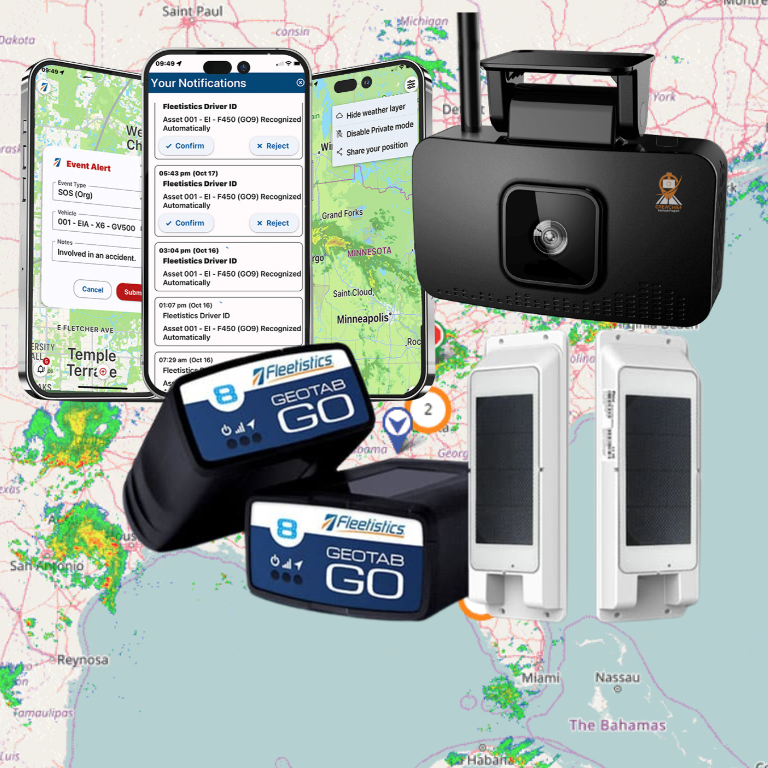
Implementing these cameras does not require a separate, disconnected system. Fleetistics provides high-definition, AI-powered dashcams that integrate directly with your Geotab telematics platform. This integration pairs real-time engine data and GPS tracking with video clips of critical events on a single dashboard. Fleet managers can easily review driving footage, manage alerts, and administer coaching programs without switching between software tools. For more details on these integrations, you can review official research from the government regulatory documentation on video safety systems.
How AI Dashcam Data Integrates With Fleet Telematics
For modern operations, video is only half of the story. To get the full value from your technology, you must connect video with vehicle data. Video event data works best when it is part of a unified fleet management picture, rather than kept in siloed files. Connecting your video feed to your main fleet dashboard changes how you manage drivers and assets.
GPS Location Tagging for Clear Map Context
Connecting video to your telematics integration allows you to tag every video clip with its exact GPS location. When an incident occurs, you can see exactly where the vehicle was on a live map overlay. This map overlay helps you see if a driver faced a tight turn, a known hazard, or a bad intersection. Matching the visual view with map data gives you the full truth about what happened on the road.
Matching Driver Compliance and Hours of Service
Integrating video with your electronic logging device (ELD) and driver vehicle inspection report (DVIR) records makes compliance much easier. If the camera logs an event, you can quickly check if the driver was compliant with their hours of service at that exact moment. This link helps safety managers verify if driver fatigue played a role in an incident. It also ensures that all compliance data and camera clips link together in one simple record for your files.
Overlaying Engine Diagnostics on Video Timelines
Modern telematics platforms let you overlay engine diagnostics like speed, RPM, and fuel usage onto your video timelines. This integration helps you find hard braking, aggressive turns, and fast acceleration patterns. For instance, seeing high RPM alongside video proof shows if a driver was speeding on purpose or reacting to a road hazard. This diagnostic data helps you understand how AI dashcams work for commercial fleets by showing the vehicle status during any event.
Unified Dashboards and Open Ecosystem Access
Fleetistics offers free API access and 300+ integrations with their Geotab-powered platform. This open ecosystem ensures that video events and truck data flow together into a single screen. Instead of checking multiple separate apps, fleet managers get a single source of truth for safety and engine diagnostics. Open API access lets you build custom reports that combine dashcam alerts with fuel consumption and maintenance schedules to make better business decisions.
What Does AI Driver Coaching Actually Improve?
Personalized training programs help fleets build a stronger safety culture. When managers use video-based tools, they see clear gains in driver habits on the road. AI-powered dual-facing dash cameras can proactively reduce crashes and mitigate safety risks by alerting drivers in real-time, according to research shared by Federal Regulatory Information. This combination of live help and video review changes how drivers handle daily risks.
Measurable Safety Improvements
Data shows that video programs lead to quick drops in risky habits. Fleets that use these systems see a major drop in harsh events like sudden braking, fast acceleration, and hard turns. In fact, one fleet of 550 vehicles saw an 88% decrease in harsh events in just one year of using dual-facing video tools. This reduction in harsh driving helps prevent wear on vehicles and lowers the risk of serious road incidents.
Other vital metrics show similar gains once a fleet starts using these systems. Across studied fleets, the use of video-based tools led to:
- A 66 percent drop in speeding events
- A 34 percent drop in cell phone use while driving
- A 50 percent rise in seat belt use
- A 50 percent drop in tailgating events
These figures prove that targeted training improves critical safety metrics. To track these changes, managers can monitor specific driver coaching outcomes over time.
The Virtuous Cycle of AI Coaching
To understand how ai dashcams work for commercial fleets, you must look at the loop of continuous feedback they create. This process has five key steps that turn raw data into better habits. First, the camera detects a risky event like tailgating or distraction. Second, an instant in-cab sound alerts the driver so they can correct their action right away.
Third, the system uploads the video clip to the cloud. This video evidence makes future training conversations objective, removing any doubt about what happened. Fourth, the system updates the driver scorecards to highlight areas that need work. Fifth, these steps combine to build a strong safety culture across the whole fleet.
Proactive Safety and Better ROI
Better driving habits lead directly to lower business costs. When drivers avoid harsh events and crashes, the fleet saves money on repairs and keeps vehicles on the road. Safer driving also leads to lower insurance premiums and better CSA scores. These savings help pay for the cost of the commercial fleet safety technology quickly.
To help you see these benefits, Fleetistics offers a 60-day evaluation process to test the system in your fleet. With 24/7 support, you can easily set up and run a modern safety program that keeps your drivers safe and your costs low.
Frequently Asked Questions
Do AI dashcams record all the time?
Yes. Commercial AI dashcams continuously record road and driver video while the vehicle is running. However, they only upload short video clips to the cloud when the system detects a safety risk. These upload triggers include harsh braking, speeding, or distracted driving. Continuous video remains on the device and is overwritten after a set time unless a manager requests it.
Do AI dashcams work in the dark?
Yes. AI dashcams use infrared light and night vision technology to see in low-light conditions. The camera can monitor both the dark road ahead and the driver inside the cab at night. According to a regulatory filing on Reginfo.gov, dual-facing camera systems proactively warn drivers and managers of unsafe behaviors in real-time, even during night operations.
Can an AI dashcam exonerate drivers from false claims?
Yes. AI dashcams provide objective video evidence that can clear your drivers when they are not at fault. If a collision occurs, the camera captures clear footage of the event. A study on Reginfo.gov shows that commercial fleets regularly rely on this video footage to exonerate honest drivers and protect their business from expensive false insurance claims.
Do AI dashcams need internet to work?
No. AI dashcams do not need a live internet link to analyze driving behavior. The camera has built-in computer vision and machine learning that run directly on the device. It can detect safety risks like tailgating or distraction and alert the driver in-cab instantly. The camera saves video clips to its local storage and uploads them to the cloud once cellular service is restored.
Ready to Improve Your Fleet Safety and Coaching?
Delaying your dashcam setup exposes your fleet to rising insurance costs and preventable road risks. Every day without real-time event detection is another day of unmonitored driving habits that can lead to costly accidents. Implementing an integrated system now helps you protect your drivers, reduce liability, and lower operating costs starting today.
Ready to improve your fleet safety? Call 855.300.0527 to schedule a free consultation and demo of Fleetistics AI dashcam solutions.