Many business owners think fleet management is only for massive corporations with hundreds of vehicles, but that couldn’t be further from the truth. Modern solutions are built to be scalable, offering incredible value for small and medium-sized businesses, too. Whether you have five vans or five hundred trucks, the core challenges are the same: you need to control costs, ensure driver safety, and operate efficiently. The key is finding the right ecosystem of tools that fits your specific needs. This guide will show you how flexible fleet management services can be tailored to your business, helping you see a significant return on investment regardless of your company’s size.
Since 2001 · Trusted Fleet Management
Stop Guessing.
Start Managing Your Fleet Smarter.
GPS tracking, dashcams & compliance tools
that cut costs and keep your drivers safe.
✔ No commitment required · ✔ US-based support · ✔ Free platform comparison
Key Takeaways
- Think beyond dots on a map: True fleet management is a complete operational strategy, using technology like GPS and AI dashcams to proactively handle everything from vehicle maintenance and driver safety to compliance, turning raw data into smarter business decisions.
- The investment delivers clear returns: A solid fleet management system pays for itself through measurable results, including direct savings on fuel and maintenance, fewer accidents with lower insurance costs, and improved efficiency that leads to better on-time performance.
- Your partner and plan are critical for success: Choosing the right provider means finding a partner with a scalable, integrated platform and great support. A successful rollout also depends on a solid plan for getting your team on board and connecting the new system with your existing tools.
What Is Fleet Management?
At its core, fleet management is the system you use to organize and coordinate your company’s vehicles. It’s about looking at your entire fleet, from cars and trucks to heavy equipment, and finding ways to make everything run more smoothly, safely, and cost-effectively. Think of it as the strategic command center for every vehicle and driver representing your business on the road. This process covers the complete lifecycle of your vehicles, from the day you acquire them to the day you sell or replace them. It involves tracking their location, monitoring their health, managing fuel consumption, ensuring driver safety, and keeping up with compliance paperwork.
The goal isn’t just to keep the wheels turning; it’s to turn your fleet into a well-oiled machine that contributes to your bottom line. By implementing smart fleet management solutions, you can move from a reactive approach, like fixing trucks only when they break down, to a proactive one where you can predict maintenance needs, optimize routes to save fuel, and coach drivers to prevent accidents before they happen. It gives you the data and visibility you need to make informed decisions that reduce operational costs, protect your assets, and improve overall productivity. Ultimately, effective fleet management helps you gain control over one of your biggest business expenses.
What’s included in a fleet management service?
A comprehensive fleet management service bundles together several key functions to give you a complete view of your operations. It starts with technology tools like GPS tracking and telematics, which provide real-time data on where your vehicles are and how they’re being used. This data fuels everything else. Services also include programs to improve driver safety, often using tools like AI-powered dashcams to identify risky behavior and provide coaching opportunities.
Beyond tracking and safety, these services help you manage the physical health of your fleet. This includes scheduling preventative maintenance to reduce downtime and handling unexpected repairs efficiently. Many services also offer fuel management programs, using data to track consumption, identify waste, and control one of your largest operational costs.
Is fleet management right for your business?
If your business depends on vehicles to get work done, then the answer is almost certainly yes. Ask yourself: Are you struggling with high fuel bills? Do your vehicles spend too much time in the shop instead of on the road? Are you concerned about driver safety or the risk of accidents? Fleet management is designed to solve these exact problems. It’s for any business, government agency, or non-profit group that wants to reduce costs, improve safety, and get more out of its vehicle fleet. By implementing a system to track metrics and manage performance, companies can see significant savings and operational improvements. It’s about making your fleet work smarter, not just harder.
Busting common fleet management myths
One of the biggest myths about fleet management is that it’s only for massive corporations with hundreds of vehicles. That couldn’t be further from the truth. Modern fleet management services are built to be scalable, offering valuable solutions for small and medium-sized businesses, too. Whether you have five vans or five hundred trucks, the core challenges are the same: you need to control costs, ensure safety, and operate efficiently. The key is to find the right ecosystem that fits your specific needs. Many providers offer tailored packages that bundle essential services, so you only pay for what you need. The return on investment isn’t limited by size; it’s measured by the improvements you make in your own operations.
How Does Fleet Management Work?
So, what does fleet management actually look like day to day? It’s much more than just tracking vehicles on a map. Think of it as a complete operational system designed to make your fleet safer, more efficient, and more compliant. It works by connecting your vehicles, drivers, and office staff through a central platform, giving you a clear, real-time picture of your entire operation. This system helps you make smarter decisions by organizing the chaos of daily fleet activities into a manageable, predictable workflow. You get the tools to see what’s happening in the field, communicate with your team, and spot opportunities for improvement without having to sift through spreadsheets or make endless phone calls.
At its core, fleet management breaks down into three key functions. First, it helps you manage the entire lifecycle of your vehicles, from the day you buy them to the day you sell them. Second, it shifts your maintenance strategy from reactive to proactive, helping you fix issues before they cause costly downtime. Finally, and perhaps most importantly, it takes all the data your fleet generates and turns it into simple, actionable insights you can use to reduce costs and improve performance. Let’s look at how each of these pieces works in practice.
Managing the full vehicle lifecycle
Your vehicles are some of your most valuable assets, and managing them effectively goes far beyond just keeping them fueled up. A strong fleet management strategy covers the entire vehicle lifecycle, from acquisition to disposal. This process starts with helping you select and purchase the right vehicles for your specific needs. From there, the system helps you monitor their usage, performance, and depreciation over time. When a vehicle is no longer cost-effective to operate, the data will help you decide the optimal time for replacement, ensuring you get the maximum return on your investment. Choosing the right fleet management platforms is key to overseeing this entire journey.
Staying ahead of maintenance and repairs
Waiting for a breakdown to happen is a recipe for lost revenue, missed appointments, and frustrated customers. Effective fleet management flips the script by moving you to a proactive maintenance schedule. Instead of reacting to problems, you can prevent them. The system connects directly to a vehicle’s engine computer to monitor its health, tracking everything from mileage to diagnostic trouble codes. You can receive automatic alerts for scheduled service like oil changes or get notified the moment an engine issue is detected. This allows you to schedule repairs at your convenience, minimizing downtime and extending the operational life of your vehicles.
Turning fleet data into actionable insights
Your fleet is constantly generating a massive amount of data, from speed and location to fuel consumption and idling time. By itself, this data is just noise. A fleet management system acts as a translator, turning raw numbers into clear, actionable insights. Through an easy-to-use dashboard, you can see exactly where you’re losing money on fuel, which drivers may need coaching on safety, or which routes are the most efficient. Modern tools like AI-powered dashcams add even more context, helping you understand the “why” behind events and providing clear video evidence for training and incident review.
The Tech That Powers Your Fleet
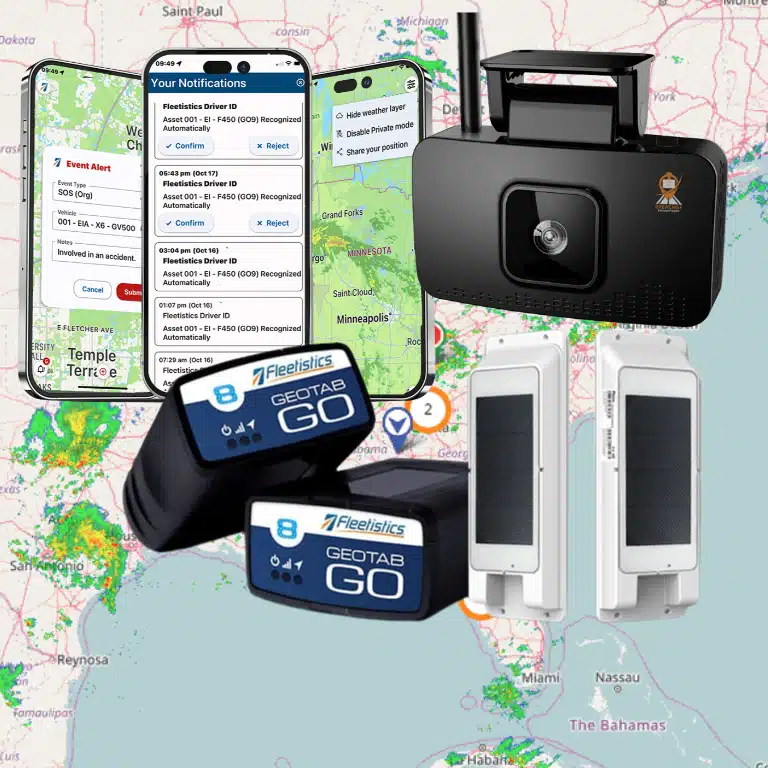
Modern fleet management is powered by a smart mix of hardware and software. I like to think of it as the central nervous system for your entire operation, connecting your vehicles, drivers, assets, and back-office team to one intelligent hub. This tech ecosystem is what takes all the raw data from the field and turns it into clear, actionable insights you can actually use. It’s not about micromanaging your team; it’s about equipping everyone with the tools to work safer and more efficiently. From real-time location pings to AI-powered safety alerts, this is the technology that helps your fleet management solutions drive smarter decisions.
GPS tracking for real-time visibility
At the core of any fleet management system is GPS tracking. This gives you a live, map-based view of where every vehicle is at any given moment. But its value goes far beyond a simple dot on a map. With real-time visibility, you can make smarter dispatching decisions, provide customers with accurate ETAs, and quickly locate a vehicle in an emergency. You can also monitor driver behaviors like speeding or excessive idling, which helps you coach your team and reduce fuel costs. Having this constant stream of location data is the first step toward a more efficient and accountable operation, all managed through integrated fleet management platforms.
AI dashcams to improve driver safety
Today’s dashcams are much more than just recording devices; they are proactive safety coaches. Using artificial intelligence, these cameras can analyze the road and driver behavior in real time. They can detect risky actions like tailgating, lane departures, or cell phone use and provide immediate in-cab audio alerts to help the driver self-correct. In the event of an accident, the high-definition video provides indisputable evidence of what happened, protecting your drivers from false claims and reducing liability for your business. It’s a powerful tool for building a strong safety culture and keeping everyone on the road protected.
Tools to simplify compliance (ELD, DVIR, IFTA)
Staying on top of federal and state regulations can feel like a full-time job. Fleet management technology takes the headache out of compliance. Electronic Logging Devices (ELDs) automate Hours of Service (HOS) tracking, eliminating manual paper logs and reducing the risk of violations. Digital Vehicle Inspection Reports (DVIRs) make it easy for drivers to complete pre-trip and post-trip inspections on a mobile app, ensuring issues are reported and resolved quickly. These systems also simplify fuel tax reporting for IFTA by automatically capturing mileage data. By digitizing these essential tasks, you can reduce administrative work and avoid costly fines.
Asset tracking and performance analytics
Your fleet is more than just your trucks. It also includes valuable assets like trailers, containers, and heavy equipment. Asset tracking technology uses durable GPS devices to let you monitor the location and status of these assets, whether they are powered or unpowered. This helps prevent theft, improve utilization, and ensure you always have the right equipment where you need it. When you combine this data with vehicle and driver information, you get powerful performance analytics. You can identify underused assets, spot maintenance trends before they become problems, and get a complete picture of your operational efficiency.
Route optimization and mobile management apps
Finding the most efficient route is about more than just getting from point A to point B. Route optimization software uses advanced algorithms to plan the best multi-stop routes based on traffic, delivery windows, vehicle capacity, and other factors. This saves you significant time and money on fuel and labor while improving on-time performance. These optimized routes are sent directly to drivers through mobile management apps. These apps provide turn-by-turn navigation and allow for two-way communication with dispatch, making it easy to adapt to last-minute changes. Drivers can also use the app to capture proof of delivery and digitize other paperwork, streamlining workflows from the road to the office.
The Payoff: Why Invest in Fleet Management?
Thinking about fleet management as just another expense is a common mistake. It’s actually an investment that pays for itself, often in more ways than you’d expect. When you have the right tools and data, you can make smarter decisions that directly impact your bottom line. It’s about transforming your fleet from a cost center into a well-oiled machine that drives growth and protects your brand. Many business owners are surprised by how quickly they see a return, whether it’s through lower fuel bills or fewer calls about late arrivals.
From cutting down on fuel waste to preventing costly accidents, the benefits are tangible and far-reaching. You’re not just tracking vehicles; you’re creating a safer work environment for your drivers, simplifying complex regulations, and gaining a clear view of your entire operation. These advantages work together to build a more resilient, efficient, and profitable business. Let’s look at the specific returns you can expect from investing in a solid fleet management solution. It’s less about adding another piece of software and more about gaining a strategic partner for your operations.
Reduce costs and increase efficiency
One of the most immediate benefits of fleet management is the impact on your budget. By optimizing routes, you can significantly cut down on fuel consumption and mileage. Monitoring driver behaviors like speeding, harsh braking, and excessive idling also helps reduce fuel waste and vehicle wear and tear. Proactive maintenance alerts based on actual usage, not just a generic calendar, prevent expensive, unexpected breakdowns and extend the life of your vehicles. These small adjustments add up to major savings, making your entire operation more efficient and profitable. It’s all about using data to make your fleet run better and save money where it counts.
Create a safer fleet
A safe fleet protects your drivers, your assets, and your company’s reputation. Fleet management technology gives you the tools to build a strong safety culture. For instance, AI-powered dashcams can identify risky driving behaviors in real time and provide video evidence for coaching opportunities, helping you correct bad habits before they lead to an accident. Driver scorecards create a clear, fair standard for performance and can even inspire friendly competition to be the safest on the road. By actively working to keep your drivers safe, you can lower accident rates, reduce insurance premiums, and minimize vehicle downtime, all while showing your team you care about their well-being.
Streamline and simplify compliance
Staying on top of regulations like Hours of Service (HOS), Driver Vehicle Inspection Reports (DVIR), and the International Fuel Tax Agreement (IFTA) can be a huge administrative burden. Fleet management systems automate these complex tasks, saving you time and reducing the risk of human error. Electronic Logging Devices (ELDs) make HOS tracking simple and accurate, while digital DVIRs ensure pre-trip and post-trip inspections are completed consistently. This automation not only keeps you compliant and helps you avoid hefty fines, but it also frees up your team to focus on more productive work instead of getting buried in paperwork.
Gain total visibility and control over assets
Do you know where all your vehicles and equipment are right now? With GPS tracking, you can get a real-time, bird’s-eye view of your entire fleet. This total visibility allows you to dispatch the nearest driver to a job, provide customers with accurate ETAs, and quickly recover any stolen assets. Beyond just location, you can monitor how your assets are being used, ensuring they are productive and not sitting idle. Having a comprehensive GPS tracking platform gives you the control to make better operational decisions, improve asset utilization, and protect your valuable equipment from unauthorized use.
Meet your sustainability goals
Operating a greener fleet is not only good for the planet, but it’s also good for business. Fleet management helps you reduce your environmental impact in practical ways. Route optimization directly cuts down on fuel burned and carbon emissions by ensuring your drivers take the most efficient path. Monitoring fuel consumption and idling times also helps you identify areas for improvement. As you look toward the future, this data becomes invaluable for planning a transition to electric or alternative fuel vehicles. By running a more efficient fleet, you can meet your sustainability targets and build a brand that customers and employees are proud to support.
How to Choose the Right Fleet Management Partner
Picking a fleet management partner is a big decision, and it’s about more than just technology. You’re choosing a company that will become an integral part of your operations, so you want to get it right. The best partner is one who understands your business, supports your growth, and provides the tools you need to succeed. As you evaluate your options, focus on these four key areas to find a provider that will feel less like a vendor and more like a true partner.
A comprehensive, integrated platform
Juggling multiple systems for tracking, maintenance, and compliance is a recipe for headaches and missed opportunities. Look for a partner that offers a single, comprehensive platform where all your fleet data lives. When your GPS tracking, dashcam footage, maintenance logs, and compliance reports are all in one place, you get a complete picture of your operations. This integrated approach simplifies everything, from day-to-day tasks to long-term strategic planning. It allows you to connect the dots between different parts of your business and make smarter, data-driven decisions without switching between a dozen different apps.
Scalability to match your growth
Your business isn’t static, and your fleet management partner shouldn’t be either. Whether you’re starting with five vehicles or managing five hundred, you need a solution that can grow with you. A great partner will offer flexible plans and a system that can easily scale to accommodate more vehicles, drivers, and assets as your company expands. Think about your long-term goals. The right partner won’t just solve your problems today; they will provide the fleet management solutions that support your vision for the future, ensuring you have the tools you need at every stage of your growth.
Dedicated support and smooth onboarding
Great technology is only half the equation; great people make up the other half. When you have a question or run into an issue, you want to know you can talk to a real person who can help. Look for a partner that offers dedicated support and a clear, straightforward onboarding process. A company that invests in helping you get set up correctly and is available for support afterward is a company that is invested in your success. This human element is often what separates a frustrating experience from a seamless one, so don’t underestimate the value of excellent customer service.
Flexible APIs for seamless data sharing
Your fleet doesn’t operate in a vacuum, and your fleet data shouldn’t either. A forward-thinking partner will offer flexible APIs (Application Programming Interfaces) that allow you to connect your fleet management system with other software you use, like accounting, payroll, or customer relationship management (CRM) tools. In simple terms, an API lets your different software systems talk to each other. This integration automates workflows and gives you a more holistic view of your business performance. For example, you could automatically sync driver hours with your payroll system, saving time and reducing errors. This level of connectivity is key to building a truly efficient operation.
How to Measure Your Fleet Management ROI
Investing in a fleet management system is a significant decision, and you’ll want to see a clear return. The good news is that the benefits aren’t just abstract concepts; they show up as real, measurable savings and gains for your business. Tracking the right key performance indicators (KPIs) will show you exactly how your investment is paying off. While the initial setup requires an investment of time and resources, the long-term payoff comes from transforming your operational data into a roadmap for smarter, more profitable decisions.
The key is to look beyond the surface-level numbers. A true measure of ROI considers both direct cost reductions and indirect efficiency gains. For example, saving money on fuel is a clear win, but so is reducing vehicle downtime through proactive maintenance, which keeps your assets on the road generating revenue. Similarly, a lower accident rate not only cuts repair and insurance costs but also protects your brand’s reputation and improves driver morale. By focusing on a few critical areas, you can build a comprehensive picture of your ROI and create a cycle of continuous improvement. The right fleet management solutions provide the data you need to prove value and guide your strategy for future growth.
Fuel spend and vehicle utilization
Fuel is one of the largest and most volatile expenses for any fleet. A fleet management system gives you the tools to directly reduce this cost by monitoring driver behaviors like speeding, harsh braking, and excessive idling. You can then coach your team toward more fuel-efficient habits. Route optimization also ensures your drivers take the most direct paths, cutting down on unnecessary miles and wear and tear. Beyond fuel, you can track vehicle utilization to see if your assets are being used effectively. This insight helps you do more with fewer vehicles, leading to significant savings on fuel, maintenance, and insurance across the board.
Driver safety and accident rates
Creating a safer fleet protects your drivers and your bottom line. Accidents lead to costly repairs, vehicle downtime, potential legal fees, and rising insurance premiums. Implementing tools like AI-powered dashcams provides objective insights into what’s happening on the road and helps you build a proactive safety program. You can identify risky behaviors, provide targeted coaching, and reward safe driving habits. As you see your accident rates decline, you’ll also see a direct, positive impact on your expenses. A safer fleet is a more profitable one, and it shows your team that you are invested in their well-being.
Maintenance and total cost of ownership (TCO)
Waiting for a vehicle to break down is one of the most expensive ways to manage maintenance. Fleet management technology allows you to shift from a reactive to a proactive approach. By tracking engine hours, mileage, and diagnostic trouble codes, you can schedule maintenance based on actual usage, not just a calendar. This strategy helps you catch small problems before they become major, costly repairs that sideline a vehicle unexpectedly. This proactive approach extends the life of your vehicles and reduces their total cost of ownership (TCO). With less unexpected downtime, your fleet stays on the road, serving customers and generating revenue.
On-time performance and customer satisfaction
In today’s competitive market, customer expectations are higher than ever. On-time service isn’t just a goal; it’s a necessity for retention and growth. Real-time GPS tracking and route optimization are essential for improving your on-time performance. You can provide customers with accurate ETAs and proactively manage delays caused by traffic or weather. When you consistently deliver on your promises, you build trust and loyalty. This improved customer satisfaction becomes a powerful competitive advantage, helping you retain clients and win new business. Choosing the right fleet management platform gives you the visibility needed to make every customer interaction a positive one.
Overcoming Common Implementation Hurdles
Adopting a new fleet management system is a big step, and it’s completely normal to feel a little overwhelmed by the process. The promise of greater efficiency, lower costs, and improved safety is exciting, but the path to getting there can seem filled with challenges. The good news is that these hurdles are common, and with a bit of planning, you can clear them easily. The key is to see the implementation not as one giant leap, but as a series of manageable steps.
Thinking ahead about the initial investment, the data you’ll collect, your team’s adoption of the new tools, and the technical setup will make the transition feel much smoother. Let’s walk through some of the most common challenges and how you can tackle them head-on. Choosing the right integrated platform from the start is your best defense against a bumpy rollout, as it ensures all your solutions work together from day one. A solid foundation makes everything that follows much simpler, turning potential obstacles into opportunities for improvement.
Managing the initial investment
Let’s talk about the budget. Yes, there’s an upfront cost to implementing a fleet management system, but it’s important to view this not as a simple expense, but as a strategic investment in your company’s future. The long-term savings in fuel, maintenance, and insurance premiums, along with gains in productivity, often far outweigh the initial price tag.
Instead of focusing only on the initial number, calculate the potential return on investment. Think about how quickly reduced fuel consumption or fewer accidents will start paying for the system. According to industry analysis, this forward-thinking approach is what separates successful fleets. When you evaluate the total value, the decision becomes much clearer.
Making sense of your data
Your new system will generate a ton of data, which is fantastic until you’re drowning in it. Many companies find it hard to interpret the vast amounts of information their telematics systems produce. The goal isn’t just to collect data; it’s to use it to make smarter decisions that improve your bottom line.
This is where a user-friendly platform becomes critical. Look for a service that provides clear, intuitive dashboards and customizable reports. You shouldn’t need a data science degree to understand your fleet’s performance. The right system translates raw numbers into actionable insights, showing you exactly where you can save money, improve safety, and increase efficiency. Proper training on these analytics tools will also empower your team to spot trends and solve problems proactively.
Getting your team on board
New technology is only as good as the people who use it every day. One of the biggest keys to a smooth transition is getting your drivers and staff involved from the start. Change can be unsettling, so it’s crucial to communicate openly about why you’re implementing a new system and how it will benefit everyone.
Frame the new tools as a way to make their jobs easier and safer, not as a “big brother” tactic. For example, AI-powered dashcams can protect drivers from false accusations after an accident, and route optimization means less time stuck in traffic. As experts at Geotab suggest, you can foster a culture of acceptance by holding training sessions and highlighting the personal benefits, which leads to better adoption and a more positive outcome for the whole company.
Integrating with your current systems
Your fleet management service shouldn’t operate on an island. To get the most value, it needs to connect with the other software you already use, like accounting, payroll, and dispatch systems. Without proper integration, you can end up with data silos and inefficient manual work, which is exactly what you’re trying to avoid.
This is why careful planning is essential to ensure new and old systems work together. Before you commit to a provider, take stock of your current technology. Look for a partner that offers flexible and free APIs, which allow your different software programs to share data seamlessly. This creates a single, unified command center for your operations and ensures you have a holistic view of your business.
Related Articles
- What Is the Role of a Fleet Manager? Key Responsibilities Explained
- Fleet Apps for Logistics Efficiency and Employee Satisfaction
- 52 Fleet Management Tips for Success from Fleetistics
- Fleet Management Integration Solutions – Fleetistics
Since 2001 · Trusted Fleet Management
Stop Guessing.
Start Managing Your Fleet Smarter.
GPS tracking, dashcams & compliance tools
that cut costs and keep your drivers safe.
✔ No commitment required · ✔ US-based support · ✔ Free platform comparison
Frequently Asked Questions
Is fleet management only for big companies with lots of trucks? Not at all. That’s one of the biggest misconceptions out there. Modern fleet management systems are designed to be scalable, which means they offer real value whether you have five vehicles or five hundred. The core challenges of controlling fuel costs, ensuring driver safety, and keeping vehicles on the road are the same for businesses of all sizes. The key is finding a flexible platform that lets you start with what you need and grow from there.
My drivers are worried about being spied on. How do I handle that? This is a very common and valid concern. The best approach is open communication. Frame the conversation around safety and fairness, not just monitoring. Explain how the system benefits them directly, for example, how a dashcam can protect them from false claims in an accident or how route optimization can mean less time stuck in traffic. When your team understands that the tools are there to make their jobs safer and more efficient, it helps build trust and get everyone on board.
Do I have to be a tech expert to use a fleet management system? Definitely not. A good fleet management partner provides a platform that is designed to be user-friendly. The goal of the technology is to simplify your job, not give you another complex system to learn. Look for a provider that offers clear dashboards, straightforward reports, and excellent training and support. The system should translate complex data into simple, actionable insights you can use right away without needing a special degree.
How quickly can I expect to see a return on my investment? While it varies for every business, many companies see a return faster than they expect. The most immediate savings often come from reduced fuel costs, which you can achieve by monitoring idling, speeding, and optimizing routes. Over the medium and long term, you’ll see returns from lower maintenance costs, fewer accidents, reduced insurance premiums, and improved productivity. It’s an investment that pays for itself through multiple streams of savings and efficiency gains.
I already have GPS on my phone. Why do I need a whole system? That’s a great question. While a phone’s GPS can tell you where you are, a professional fleet management system does so much more. It integrates directly with the vehicle’s engine to capture data on fuel use, mileage, and engine health. It combines that information with tools for driver safety, compliance automation, and maintenance scheduling. It’s the difference between a simple map and a complete operational command center for your entire business.