Selecting the right GPS tracking system is not about buying the cheapest device or choosing the vendor with the flashiest demo. The right decision comes from matching your operational problems to a platform that can prove measurable ROI, support your team after installation, and keep delivering value as your fleet grows.
Need help evaluating GPS tracking systems? Visit Fleetistics.com or call 855-300-0527 to speak with a fleet management consultant.
Fleetistics has helped fleets evaluate GPS tracking, telematics, dashcams, compliance tools, and fleet management platforms since 2001. After 26 years of industry experience, one pattern is clear: the fleets that get the best outcomes do not start with hardware. They start with a disciplined buying process.
This guide explains that process. It is based on the Fleetistics video, How to Choose the Right GPS Tracking System for Your Business, and expands it into a practical framework for business owners, operations managers, safety leaders, and fleet directors.
Start With the Problems You Need the GPS Tracking System to Solve
The first step is defining why you are evaluating GPS tracking in the first place. A fleet with five service vans may need better dispatch visibility. A government fleet may need compliance reporting, fuel accountability, and utilization data across hundreds or thousands of assets. A construction company may need equipment tracking, theft recovery, maintenance reminders, and mixed vehicle visibility.
If you skip this step, every vendor can sound like the right fit. Most platforms can show a moving dot on a map. That does not mean they can solve the operational problems that cost your business money every week.
Before you compare systems, write down your top priorities. Common goals include:
- Reducing fuel waste, idling, and unauthorized vehicle use
- Improving route efficiency and daily productivity
- Reducing preventable accidents and risky driving behavior
- Tracking equipment, trailers, tools, or non-powered assets
- Managing maintenance schedules and engine diagnostics
- Simplifying ELD, DVIR, IFTA, or other compliance requirements
- Improving customer service with accurate arrival times
- Standardizing reporting across departments, regions, or branches
The buying process becomes easier when every feature is judged against a business problem. If a capability does not support safety, productivity, compliance, service quality, asset protection, or cost control, it may not deserve weight in the decision.
Understand the Difference Between GPS Tracking, Telematics, and Fleet Management
Many buyers use these terms interchangeably, but they are not identical. Understanding the difference helps you avoid paying for too little or too much.
GPS tracking shows where vehicles or assets are located. Basic GPS tracking usually includes location history, geofences, route playback, alerts, and simple reports. It answers questions like: Where is the truck? When did it arrive? How long was it stopped?
Telematics goes deeper. Telematics connects location data with vehicle, driver, engine, safety, and operational data. It can include diagnostics, harsh driving events, idling, fuel trends, maintenance alerts, seat belt data, fault codes, and integration with dashcams or compliance tools.
Fleet management software combines tracking and telematics with workflows that help managers act on the data. That may include dashboards, driver scorecards, maintenance work orders, routing, fuel reporting, exception alerts, mobile apps, open APIs, and integrations with accounting, payroll, ERP, or field service systems.
For a deeper comparison, Fleetistics has a related guide on fleet management software vs GPS tracking. The short version is simple: GPS tracking tells you where things are. Telematics explains what is happening. Fleet management helps your team change behavior and improve results.
Calculate ROI Before You Compare Vendors
A GPS tracking system should pay for itself. In many fleets, it can do that faster than leaders expect. The mistake is only comparing monthly subscription costs instead of calculating the savings and revenue protection the platform can create.
Start with the cost areas you can measure. Fuel is often first. If better routing, reduced idling, and driver accountability lower fuel consumption, the savings can be significant across the fleet. Productivity is another major area. Saving even a small amount of time per driver per day can become a large annual gain when multiplied by vehicles, workdays, and labor rates.
Safety ROI can be even larger. Fewer accidents can reduce repair costs, downtime, claims, insurance pressure, and lost productivity. Dashcam integration and driver coaching can help managers address risky behavior before it becomes a major event. Maintenance ROI also matters. Better preventive maintenance can reduce breakdowns, extend asset life, and keep vehicles available for revenue-producing work.
Use a simple ROI model before vendor demos:
- Fuel savings per vehicle per month
- Productivity gains per driver per day
- Reduced overtime, wasted miles, or unauthorized use
- Accident reduction and claims avoidance
- Maintenance savings and reduced downtime
- Administrative time saved on reports and compliance
Then compare those expected gains against hardware, installation, subscription, training, and support costs. Best-in-class fleets often evaluate performance per vehicle per year, not just monthly software spend. That perspective helps decision-makers see the system as an operational investment rather than another expense line.
Evaluate Features Against Real Fleet Workflows
A long feature list does not automatically mean a better GPS tracking system. The better question is whether the features fit the way your fleet operates.
For example, a field service fleet may need dispatch visibility, accurate arrival windows, customer service reporting, and driver productivity insights. A transportation fleet may place more weight on ELD, DVIR, IFTA, fuel usage, route optimization, and safety analytics. A construction fleet may need asset tracking, geofencing, off-hour movement alerts, and mixed equipment visibility. A government fleet may need procurement support, department-level reporting, and reliable long-term service.
Core features to evaluate include:
- Real-time vehicle and asset location
- Geofences, alerts, and route history
- Driver behavior monitoring and safety scorecards
- AI dashcam or camera integration
- Engine diagnostics and maintenance scheduling
- Fuel, idling, mileage, and utilization reports
- ELD, DVIR, and IFTA support when required
- Mobile apps for managers, drivers, or field teams
- Open API access and third-party integrations
- Role-based dashboards and permission controls
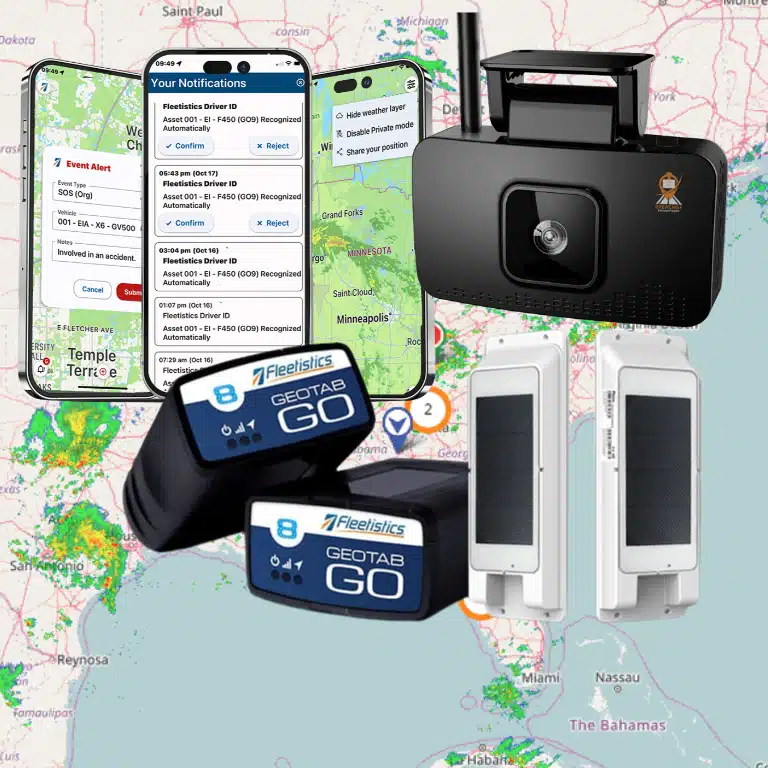
Fleetistics offers GPS tracking, telematics, AI dashcams, compliance tools, asset tracking, analytics, routing, maintenance, and integration support across multiple platform tiers. That flexibility matters because not every fleet needs the same configuration on day one. A modular system lets you start with the highest-value use case and expand when the ROI is proven.
Want a guided evaluation instead of a generic demo? Contact Fleetistics to review your fleet goals, platform options, and expected ROI.
Compare Vendor Support, Not Just Software
The vendor relationship matters as much as the technology. A GPS tracking system can fail to deliver value if the provider disappears after installation, provides limited training, or cannot help managers turn data into better decisions.
Ask each vendor how implementation works. Who helps configure alerts, users, reports, groups, zones, and dashboards? How are drivers introduced to the system? What training is included? Is support available when your managers actually need help? Can the provider assist with complex fleets, integrations, procurement questions, or long-term optimization?
Fleetistics positions GPS tracking as a consultative process, not a one-time device sale. The company supports fleets across the USA, Canada, and Mexico, provides 24/7 support, and helps buyers evaluate solutions before they commit. For public sector fleets, Sourcewell cooperative purchasing can also simplify procurement.
Good support is especially important when behavior change is part of the goal. Removing GPS tracking often causes old behaviors to return because accountability disappears. The right vendor helps your team use the data consistently so improvements stick over time.
Run a Pilot Program the Right Way
A pilot program can save time and money, but only if it is structured correctly. Installing a few devices and casually checking the map is not enough. The pilot should test the operational outcomes you identified at the start.
Choose a representative sample of vehicles, drivers, departments, or routes. Include the people who will actually use the system, not just the executive sponsor. Define what success looks like before the pilot begins. For example, you may want to reduce idling, verify dispatch improvements, confirm ELD workflows, test maintenance alerts, or validate dashcam coaching.
A strong pilot should answer these questions:
- Was installation simple and reliable?
- Can managers find the reports they need?
- Do alerts create action, or do they create noise?
- Do drivers understand the purpose of the system?
- Can the platform measure the ROI areas that matter?
- Does vendor support respond quickly and clearly?
- Can the system scale to more vehicles, assets, and departments?
Fleetistics uses a 60-day Solution Evaluation Process to help fleets validate fit before a full commitment. That matters because buying confidence should come from proof, not pressure. For many fleets, a properly managed evaluation can show payback potential in 90 days or less.
Choose the Right Communication Method: Cellular, Satellite, or Hybrid
GPS tracking systems need a way to transmit data. The best communication method depends on where your fleet operates and how quickly you need updates.
Cellular tracking is the most common option for many commercial fleets. It works well when vehicles operate in areas with reliable mobile coverage. Cellular systems are cost-effective, support frequent updates, and are suitable for most service, delivery, municipal, transportation, and regional fleets.
Satellite tracking is useful for remote areas where cellular coverage is limited or unavailable. It can be important for assets, equipment, or vehicles operating in rural, marine, energy, mining, disaster response, or off-road environments. Satellite systems can cost more, but the added visibility may be worth it when loss of communication creates risk.
Hybrid systems combine communication methods to balance cost and coverage. They may use cellular networks where available and satellite communication when assets move outside normal coverage areas.
Do not choose communication technology based on a brochure. Map it against real operating regions, expected update frequency, asset value, safety risk, and reporting needs.
Look for Long-Term Value Over a Three to Five Year Window
The best GPS tracking system is not just the one that works this month. It should continue producing value over three to five years as your fleet changes.
Long-term ROI compounds when managers keep using the data. Better routing reduces wasted miles. Better driver coaching reduces risk. Better maintenance reduces downtime. Better utilization data helps leaders decide whether to buy, sell, reassign, or right-size assets. Better integrations reduce duplicate administrative work.
This is where platform openness matters. Fleetistics emphasizes an open ecosystem with free APIs and 300+ integrations. That can be important when GPS and telematics data need to connect with dispatch, maintenance, payroll, accounting, ERP, camera, fuel, or business intelligence systems. Data trapped in a closed platform is less useful than data your organization can apply across workflows.
Also consider whether the vendor can support future requirements. Today you may only need vehicle location. Next year you may need AI dashcams, ELD compliance, fuel reporting, maintenance automation, asset tracking, or advanced analytics. A platform that can grow with you reduces the chance of switching systems later.
Use a Scorecard to Make the Final Decision
Once you have gathered requirements, reviewed ROI, completed demos, and tested a pilot, use a simple scorecard. This helps remove emotion from the decision and keeps the buying team focused on business outcomes.
| Evaluation Area | Questions to Ask |
|---|---|
| Operational fit | Does the system solve the specific problems we identified? |
| ROI potential | Can we measure savings in fuel, productivity, safety, maintenance, or compliance? |
| Ease of use | Can managers and drivers use the system without unnecessary friction? |
| Support | Will the vendor help with setup, training, troubleshooting, and optimization? |
| Scalability | Can the platform grow with more vehicles, assets, users, and integrations? |
| Communication coverage | Does cellular, satellite, or hybrid communication match our operating areas? |
| Total cost | Do hardware, installation, subscriptions, training, and support make sense against the ROI? |
The right decision should be easy to explain. If the system supports your goals, proves ROI, fits your workflows, and comes with strong support, it is a better choice than a cheaper system that only solves part of the problem.
The Bottom Line: Choose a GPS Tracking System That Pays You Back
A GPS tracking system should improve how your business operates. It should help managers make better decisions, give drivers clearer expectations, reduce waste, protect assets, improve safety, and support compliance. The cheapest device rarely delivers that full value by itself.
The strongest fleets choose GPS tracking with a process: define operational needs, calculate ROI, understand the difference between tracking and telematics, evaluate support, run a structured pilot, and choose a platform that can grow over time.
Fleetistics helps businesses evaluate GPS tracking, telematics, dashcams, fleet analytics, compliance, asset tracking, and integrations with a consultative process built around measurable ROI.
If you are ready to compare systems or want help building a fleet technology evaluation plan, visit Fleetistics.com or call 855-300-0527 to speak with a consultant.