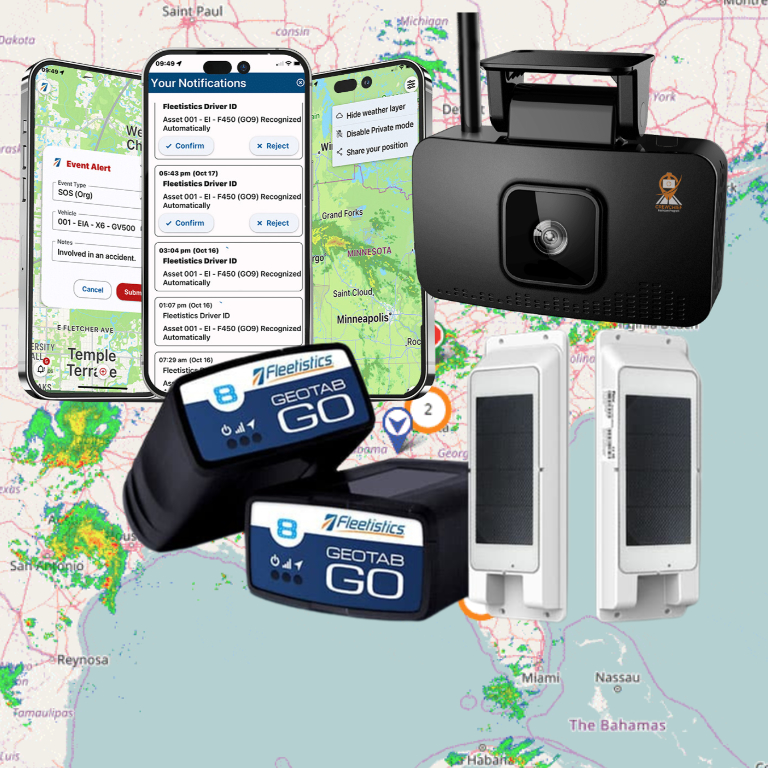

A driver behavior monitoring system combines vehicle telematics, GPS, sensors, and, when appropriate, video to identify driving events such as speeding, harsh braking, rapid acceleration, unsafe following, and distraction. Its value is not a single score. The value is a repeatable process for reviewing context, coaching fairly, and measuring whether risk trends improve.
For fleet managers, the goal is a safety operating loop: define the behaviors that matter, collect consistent evidence, review events with the driver, and use patterns to improve training and policy. That approach is more useful than treating every alert as proof of carelessness or using technology as a substitute for management judgment.
What does a driver behavior monitoring system measure?
A driver behavior monitoring system measures observable driving signals and organizes them into events that a fleet team can review. Depending on the hardware and configuration, those signals may include vehicle speed, acceleration, braking, cornering, following distance, seat belt status, phone distraction, lane movement, and other dashcam-detected behaviors.
The system usually combines several data sources rather than relying on one sensor:
- Vehicle telematics: speed, acceleration, braking, engine data, ignition state, and other vehicle signals.
- GPS and map context: road location, posted-speed context when available, route, intersection, work zone, and trip timing.
- Driver assignment: the driver associated with the vehicle or trip, subject to accurate login and assignment practices.
- Video or image evidence: clips or snapshots that may help confirm distraction, seat belt use, following distance, or what happened before an event.
- Operational context: weather, traffic, road grade, emergency response, customer site conditions, and the reason for the trip.
These signals answer different questions. GPS can show where a vehicle was. An accelerometer can show a sharp change in motion. A camera may show what was happening in the cab or roadway. Combining them helps a manager investigate the event without pretending that any individual signal explains the driver’s intent.
Fleetistics supports a broader fleet safety solution approach that can connect telematics, driver safety tools, and operational data. The right configuration depends on fleet type, vehicle class, routes, risk profile, and how the team intends to use the information.
Which driver behaviors should you track first?
Start with behaviors that are observable, tied to a meaningful safety risk, and actionable through training or policy. Begin with a short list instead of every alert. A focused baseline reduces notification noise and gives drivers a clear explanation of what the program should improve.
| Behavior or event | Useful evidence | Possible management response |
|---|---|---|
| Speeding | Speed, road context, duration, location, and trip conditions | Review thresholds, route context, and speed policy. |
| Harsh braking | Deceleration, time, location, traffic, and video when available | Discuss following distance, scanning, and intersection approach. |
| Rapid acceleration | Acceleration level, road grade, load, and repeated pattern | Coach smooth starts and review dispatch pressure. |
| Unsafe following | Time gap, roadway, traffic flow, and forward-facing evidence | Reinforce space management and defensive driving. |
| Distraction or phone use | In-cab alert, video, trip phase, and driver explanation | Apply a clear phone policy and provide practical alternatives. |
| Seat belt non-use | Vehicle signal or camera event with time and assignment | Address fit, habit, equipment, and policy expectations. |
Prioritize events by the risk your operation can reduce, not by how dramatic an alert sounds. A local service fleet may focus on phone distraction, speeding in neighborhoods, and harsh maneuvering. A long-haul fleet may also examine following distance, fatigue indicators, and trip-specific speed patterns. ELD or hours-of-service topics belong in the program only when they apply to the fleet’s operating context and regulatory obligations.
The National Highway Traffic Safety Administration identifies distracted driving as any activity that diverts attention from driving, including phone use, eating, conversation, and interaction with vehicle systems. A driver behavior program can reinforce a distraction-free driving policy, but it should not overstate what an AI alert can prove. Read the NHTSA distracted driving guidance when building the education portion of a safety program.
How are driving events scored and reviewed?
Event scoring converts multiple observations into a prioritization tool. A score may consider event type, severity, frequency, miles or trips driven, confidence in the detection, and the fleet’s risk priorities. Because vendors use different formulas, managers should treat scores as a consistent internal measure, not a universal grade that can be compared across platforms.
A useful review process separates detection, validation, and action:
- Detect: The platform flags an event based on a configured threshold or a camera and sensor model.
- Validate: A reviewer checks the timestamp, driver assignment, location, vehicle data, video if available, and circumstances around the alert.
- Classify: The reviewer records whether the event is confirmed, inconclusive, or misclassified, with a reason.
- Act: The manager selects coaching, recognition, training, policy clarification, or no action based on the evidence.
- Measure: The team checks later event rates and outcomes over a defined period.
Normalize performance before comparing drivers. A driver with 10 events over 2,000 miles may have a different risk profile from a driver with 10 events over 200 miles. Compare similar routes, vehicle types, trip volumes, and observation periods. A fleet can use rates per 100 miles, 100 trips, or another consistent denominator, as long as the denominator is applied consistently.
Use a driver safety scorecard as a conversation aid, not as an automatic disciplinary decision. Give the driver a chance to add operational context, especially when an event appears inconsistent with the video, road conditions, vehicle load, or dispatch instructions.
How can managers turn monitoring data into coaching?
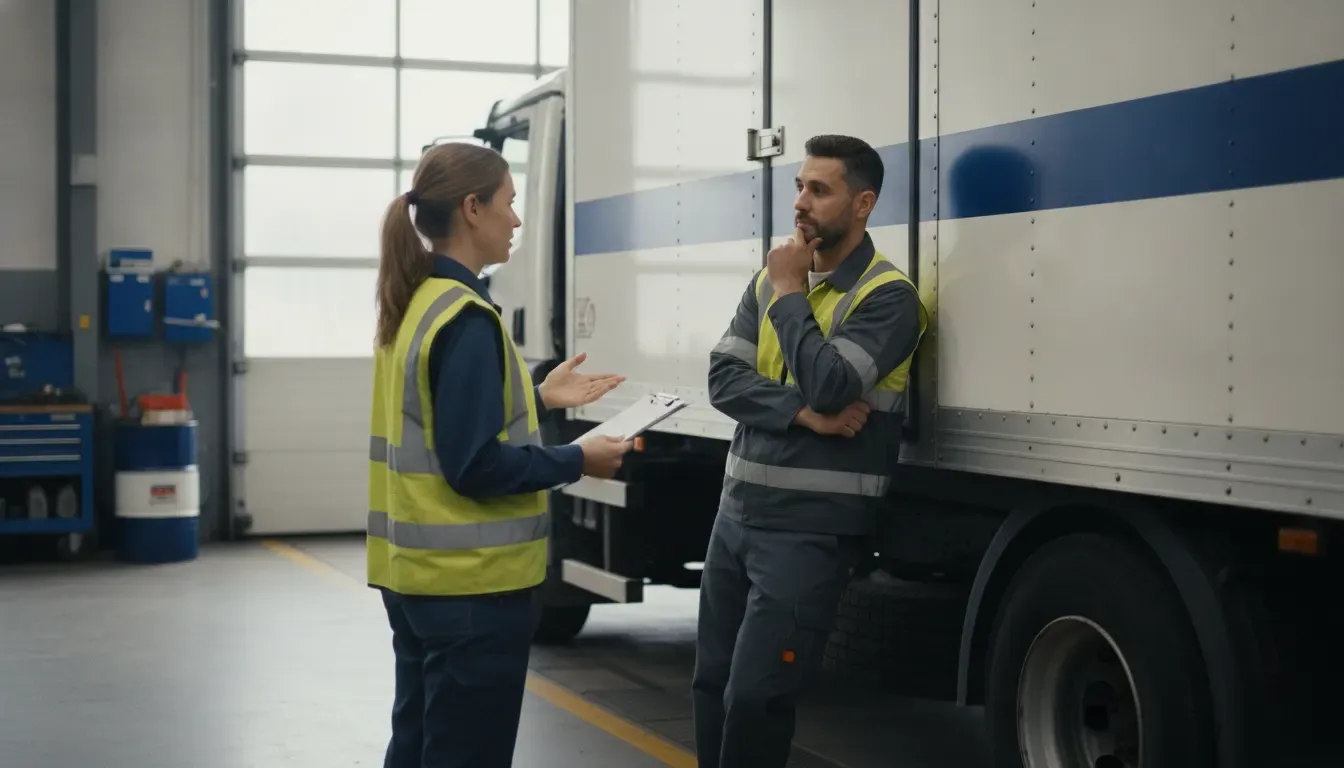
Coaching works when it is specific, timely, and connected to a behavior the driver can control. Instead of presenting a low score as a verdict, review one or two representative events, ask what happened, agree on a safer alternative, and set a follow-up date. The manager should document the conversation and recognize improvement when the trend changes.
A practical coaching conversation can follow this sequence:
- Describe the event: State what the system detected, when it happened, and what evidence was reviewed.
- Ask for context: Invite the driver to explain traffic, weather, roadway, vehicle, customer, or emergency conditions.
- Connect behavior to risk: Explain the likely safety consequence without assigning intent the evidence cannot establish.
- Agree on an action: Choose a specific habit, route adjustment, training module, or policy reminder.
- Set a check-in: Review the same behavior after enough trips have occurred to show a trend.
Coaching should not become a leaderboard that humiliates drivers or rewards under-reporting. A better dashboard includes fleet-level trends, confirmed events by category, coaching completion, repeat-event rate, and improvement over time. It can also highlight drivers with strong improvement so supervisors reinforce the behavior the organization wants to see.
Federal Motor Carrier Safety Administration research on onboard monitoring found that targeted feedback was central to studying whether risky behavior and safety performance improved over time. The lesson for managers is straightforward: monitoring produces value when the program includes useful feedback, not when the fleet simply collects more data. See the FMCSA onboard monitoring system field test for research context.
What employee notice and access controls should a fleet use?
Introduce driver monitoring as a transparent safety process, not hidden surveillance. Before deployment, explain what data is collected, which trips are included, who can see it, how long records are retained, how drivers can question an event, and how data may affect coaching. Have counsel review requirements for the fleet’s locations and workforce.
At minimum, establish these safeguards:
- Written notice: Provide a plain-language explanation before monitoring begins and update it when the program changes.
- Purpose limitation: Use safety data for defined operational purposes instead of expanding monitoring without notice.
- Role-based access: Give dispatchers, supervisors, safety leaders, HR, and executives only the access needed for their responsibilities.
- Retention limits: Keep routine event data and video for a defined period, with documented exceptions for an active incident or legal hold.
- Review and correction: Create a way to challenge driver assignment, request review, and correct a confirmed data error.
- Audit trail: Record sensitive views, downloads, changes, and exports so managers can identify misuse.
- Consistent escalation: Apply the same review and coaching standards across comparable drivers and operating conditions.
Employee buy-in improves when drivers can see that the system is used to reduce preventable risk, support fair coaching, and recognize improvement. Fleetistics’ driver introduction and GPS tracking guidance can help managers plan that conversation. Pair it with a written driver policy that describes expected conduct and the review process.
Why should you avoid interpreting a single event in isolation?
A single alert is a prompt to investigate, not a complete account of what happened. Sensors can be affected by road grade, potholes, weather, traffic, vehicle load, emergency maneuvers, equipment calibration, or an incorrect driver assignment. Video can add context, but it also has limits. Confirm a pattern before making a significant performance decision.
Use a three-part context check:
- Technical context: Was the device connected, calibrated, and reporting the correct vehicle and driver?
- Road context: What were the road, traffic, weather, grade, speed limit, work zone, and surrounding vehicles doing?
- Operational context: Was the driver responding to an emergency, a customer instruction, a dispatch constraint, or a vehicle problem?
Then look for repeated behavior across comparable trips. Repeated confirmed events in the same category are more useful for coaching than an isolated alert. If a score drops suddenly, check for a new route, vehicle, driver assignment process, device configuration, or reporting rule before concluding that behavior changed.
This context-first standard protects drivers and managers. It also improves the quality of the data used to change a policy. For example, a cluster of harsh braking events at one intersection may indicate a routing or signal-timing issue rather than a driver-specific problem.
How do you implement a driver behavior monitoring program?
Implementation should begin with a written definition of success. Decide which safety outcome the fleet wants to improve, which events provide useful evidence, who will review them, and how coaching results will be measured. Then pilot the workflow with a representative group before expanding it across every vehicle and driver.
- Set the objective: Choose a limited safety goal, such as reducing confirmed distraction events or improving following-distance practices.
- Define the event policy: Document thresholds, review windows, severity levels, exceptions, and the evidence required before coaching.
- Confirm the data path: Verify vehicle hardware, driver assignment, GPS, telematics, camera, connectivity, and reporting fields.
- Notify and train drivers: Explain the purpose, controls, access, retention, review process, and how drivers can ask questions.
- Pilot and calibrate: Review false positives, missing context, notification volume, and manager workload before setting final rules.
- Coach consistently: Use the same conversation structure, documentation standard, and follow-up period for comparable cases.
- Review trends: Measure confirmed events by exposure, coaching completion, repeat events, and improvement over time.
- Improve the policy: Change training, routing, vehicle configuration, dispatch expectations, or thresholds when the trend shows a systemic issue.
A connected fleet platform can make that workflow easier to manage as the operation grows. Fleetistics has served fleets since 2001 and helps customers evaluate modular solutions built around vehicle tracking, telematics, AI dashcams, and related fleet-management needs. The company driving policy resource can help leaders document expectations beyond the monitoring tool itself.
Contact Fleetistics to evaluate a driver behavior monitoring system for your fleet
Frequently asked questions
What is a driver behavior monitoring system?
It is a fleet technology system that collects and analyzes vehicle, GPS, sensor, and sometimes video data to identify observable driving events. Managers review those events in context, coach specific behaviors, and track whether safety trends improve.
What behaviors can a driver monitoring system track?
Depending on the hardware and configuration, it may track speeding, harsh braking, rapid acceleration, cornering, unsafe following, seat belt use, distraction, phone use, and other configured events. Available signals vary by vehicle, device, camera, and platform.
Are driver scores enough to discipline a driver?
No. A score is a prioritization signal, not a complete finding of fault or intent. Review the underlying event, confirm the driver and vehicle, consider road and operational context, and apply a consistent process before making a significant employment decision.
How do you get drivers to accept monitoring?
Tell drivers what is collected, why it is collected, who can access it, how long it is retained, and how they can challenge an inaccurate event. Involve drivers in pilot feedback, use the data for coaching and recognition, and apply the policy consistently.
How should fleet managers choose a monitoring system?
Choose a system that measures the behaviors relevant to your risk profile. It should connect events to reliable vehicle and driver context, support practical review and coaching, provide role-based access, and produce trend reports your team can act on. Evaluate the workflow, not only the feature list.
Build a fairer, more useful safety process
Driver behavior monitoring is most effective when technology supports a clear human process. Track a focused set of observable behaviors, validate events before acting, coach with specific evidence, protect employee data, and use trends to improve both driver habits and fleet policies.
Speak with a Fleetistics consultant about your fleet safety goals.