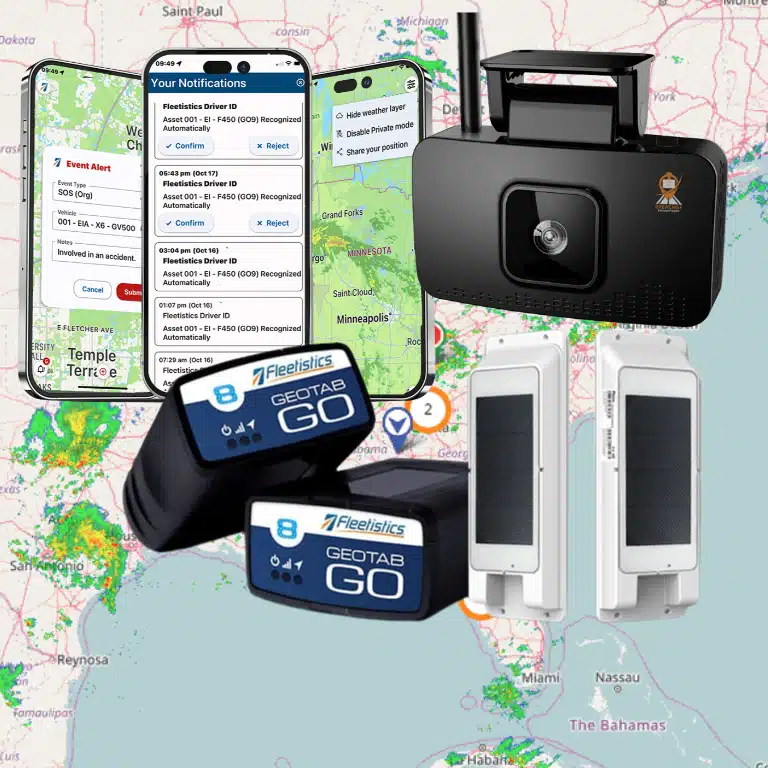

Fleet safety is not a binder of policies that gets reviewed after a crash. It is a working system that connects driver expectations, vehicle data, coaching, and follow-through before a risky event becomes an accident or claim. That matters because large trucks are involved in nearly 10% of fatal traffic incidents in the United States.
Speak with a Fleetistics safety consultant today and learn how to build a safety program that protects your drivers and your bottom line.
A fleet safety program for commercial vehicles reduces preventable risk by combining clear driver standards with telematics, proactive coaching, vehicle inspections, and documented incident response. The strongest programs use data to identify unsafe patterns early, then give managers a consistent way to correct them.
Technology is most effective when it supports a repeatable operating process. Tools such as AI dashcams as part of your fleet safety program can add objective context to coaching and incident reviews, but they work best when paired with accountability. Start by defining what your program must cover and how each element connects to safer daily operations.
Fleet Safety Program For Commercial Vehicles: What Does a Fleet Safety Program Actually Include?
A fleet safety program is more than a driver handbook or a list of compliance requirements. It is a repeatable operating system that connects policies, vehicle inspections, driver coaching, incident review, and measurable follow-up. The goal is to identify risk early, give drivers practical support, and create a defensible record when an incident occurs.
What safety policies should every fleet have?
Start with written expectations that apply consistently across hiring, training, daily operations, and incident response. Define how you screen and onboard drivers, what behaviors are prohibited, when retraining is required, and how supervisors document corrective action. A strong policy also explains how drivers report hazards and near-misses without waiting for a collision to expose the problem.
Vehicle readiness belongs in the same framework. Daily Vehicle Inspection Reports can surface mechanical issues before a vehicle leaves the yard, while scheduled preventative maintenance to improve fleet safety helps keep recurring defects from becoming roadside failures. Your process should specify who reviews inspection results, who authorizes a vehicle hold, and how repairs are closed out.
Formalizing these practices can also strengthen your risk position with insurers. The National Highway Traffic Safety Administration notes that a formal safety program can help fleet managers negotiate lower insurance rates and reduce the financial burden of crash-related claims. NHTSA guidance supports treating safety as an ongoing management process, not a one-time document.
How do telematics support a safety program?
Telematics turns policy into observable action. Real-time alerts can flag speeding, harsh braking, and other defined thresholds while the event is still fresh. Managers can then use the data for targeted coaching instead of relying on vague complaints or waiting for an annual review.
Technology also supports the investigation side of safety. Accident reconstruction, DVIR records, location history, and event alerts help establish what happened and where the process needs improvement. Implementing AI dashcams as part of your fleet safety program adds objective video evidence for incident reviews and contested claims.
Finally, avoid forcing every asset into the same package. A mixed-equipment fleet may need different sensors, alerts, and inspection workflows for trucks, trailers, heavy equipment, or watercraft. Modular solutions let you build the safety program around the risks each vehicle and operation presents.
Contact Fleetistics to design a modular safety program for your fleet that fits your specific equipment mix and operational needs.
Step 1: Establish a Driver Safety Policy (Template Included)
Your policy is the operating standard for every driver, route, and vehicle. Start with a simple template framework that managers can customize by fleet type, then require the same baseline expectations across the organization. Standardizing hiring and initial training ensures each driver understands your safety requirements from day one, rather than learning them informally from coworkers. NHTSA identifies driver training and onboarding as important parts of a commercial fleet safety program.
What to include in the policy
Keep the document practical enough to use during onboarding and specific enough to guide decisions after an incident. At minimum, address:
- Cell phone use: State when phones are prohibited, including whether hands-free use is allowed, and explain the rules for dispatch devices.
- Seatbelt rules: Require seatbelts whenever the vehicle is moving and define the manager response to violations.
- Speed limits: Set expectations for posted limits, weather, work zones, and vehicle-specific limits. Speed thresholds should reflect safe operation, not simply legal maximums.
- DUI and impairment: Prohibit driving under the influence of alcohol, illegal drugs, or impairing medication. Include reporting and testing procedures that comply with applicable law.
- Post-accident procedures: Explain how to protect people, contact emergency services, notify the fleet manager, document the scene, preserve evidence, and complete required reports.
Make expectations visible, then enforce them fairly
Review the policy during hiring, orientation, and recurring training. Give drivers a copy they can access from the field, discuss realistic examples in toolbox talks, and require acknowledgment after material updates. Training should provide ongoing education and corrective feedback, not end after the first day. Keep attendance, acknowledgments, and coaching records so supervisors can show that expectations were communicated consistently.
Build a corrective action path into the template. Define the response for a first event, repeated behavior, and serious violations, while allowing managers to consider context and evidence. Use coaching to correct preventable habits, and invite drivers to report near-misses without fear of automatic punishment. Near-miss reports help identify risks before they become crashes. Pair those reports with monitoring driver behavior to reduce accidents and claims, then review patterns and update the policy when operations or incident data change.

How Do You Deploy Telematics and Dashcam Monitoring?
A written policy sets expectations, but technology shows what happens on the road and gives managers a way to respond before a risky pattern becomes a claim. Combine vehicle telematics with forward-facing or dual-facing dashcams so your team can connect driving behavior, location, and video evidence in one review process.
| Without Technology | With Telematics + Dashcams |
|---|---|
| Managers learn about speeding, harsh braking, or unsafe maneuvers after a complaint, collision, or inspection. | Real-time alerts identify speeding and harsh braking as they occur, giving drivers and supervisors an opportunity to correct behavior sooner. |
| Incident reviews depend on incomplete memories, conflicting accounts, and a traditional he-said-she-said dispute. | AI-powered dashcams provide objective evidence for incident reviews, helping managers understand the context of an event and support drivers when another party is at fault. |
| Supervisors manually collect logbooks, phone reports, and separate records before they can identify a trend. | Automated data brings vehicle location, event details, and video into a repeatable workflow for coaching, investigations, and reporting. |
| Fuel use and driving efficiency are evaluated through estimates or periodic reviews. | Consistent telematics data makes operational changes easier to measure. The City of Seattle’s 4,100-vehicle fleet realized $2 million in fuel savings using Fleetistics solutions. |
Set alert thresholds that support coaching
Start with the behaviors that create the greatest safety exposure for your operation. Configure alerts for speeding, harsh braking, rapid acceleration, following distance, or distracted driving when your selected system supports those events. Avoid turning every notification into a disciplinary action. Use the data to identify repeat patterns, then discuss the event with the driver while the details are still fresh.
This approach makes monitoring part of a practical risk management strategy, not a surveillance exercise. Document the event, the driver’s explanation, and the agreed corrective action. That record can reveal whether the issue comes from training, routing, scheduling, equipment, or an individual habit.
Pair video with the broader safety workflow
Dashcams work best when they connect to your existing driver coaching and incident-review process. Learn more about implementing AI dashcams as part of your fleet safety program, including how video can support objective reviews and more consistent coaching. The goal is not to collect footage for its own sake. It is to turn reliable evidence into faster decisions, fairer investigations, and safer behavior across the fleet.
Review how Fleetistics’ six pillars of fleet management integrate safety with every dimension of fleet operations.
How Do You Automate Scoring, Alerts, and Coaching?
Automation turns scattered driving events into a repeatable improvement process. The goal is not to rank drivers for its own sake. It is to identify risk early, give people useful feedback, and document how your fleet safety program for commercial vehicles responds to unsafe behavior.
- Set behavior thresholds. Start with the events most relevant to your operation, such as speeding, harsh braking, rapid acceleration, excessive idling, and unsafe cornering. Set thresholds by vehicle type, road environment, and business needs rather than applying one blanket score to every driver. Review the rules periodically as routes, equipment, and incident patterns change.
- Configure real-time driver alerts. An alert is most useful when it arrives close to the event. Configure in-cab or mobile notifications for threshold breaches, then make the message specific enough for the driver to act on safely. Real-time telematics alerts can help correct speeding and harsh braking before those habits become normalized. Keep the alert volume practical. Too many notifications encourage drivers and managers to ignore the system.
- Implement automated driver scorecards. Combine event frequency, severity, mileage, and context into a scorecard that managers can review consistently. A score should open a conversation, not end it. Fleetistics emphasizes proactive safety through telematics data and driver coaching, using behavioral information to focus attention where it can make the greatest difference. Data-driven coaching is more useful than a generic warning because it connects feedback to a driver’s actual profile.
- Build coaching around score thresholds. Define what happens at each level. A lower-level trend might trigger a self-review or brief conversation. Repeated or severe events might require targeted training, a ride-along, or a formal corrective plan. Record the behavior, coaching action, and follow-up result so you can measure whether the intervention worked. This matters beyond driving events: Fleetio reports that only 9.5% of fleets say they consistently perform maintenance on time. Showing why automated reminders and accountability should extend across the safety program. See also these driver behavior monitoring practices for a broader view.
Finally, connect video to the workflow when available. Video-based coaching turns an incident from an abstract score into a specific training moment. Managers can review what happened, acknowledge safe decisions, clarify the risk, and agree on the next behavior to practice. That approach supports learning while giving drivers a fairer, more useful explanation of how to improve.
Ready to automate your fleet safety program? Contact Fleetistics to configure scoring, alerts, and coaching workflows that fit your fleet.
Step 4: Track KPIs for Incident Rate, Near-Miss Rate, and Insurance Cost
A safety program becomes easier to manage when you can show whether it is changing outcomes. Track a small group of metrics consistently, then review them by vehicle type, route, location, shift, and driver group. The goal is not to create a scoreboard that punishes drivers. It is to identify exposure early and connect safety improvements to operating costs.
Measure the events that show risk
Incident rate: Calculate preventable incidents per million miles, not just as a raw monthly count. Normalizing the number by miles traveled makes comparisons more useful when fleet volume changes. Break the metric into collision types, severity, and preventability so one minor event does not obscure a serious trend.
Near-miss rate: Record hard-braking events, close calls, unsafe loading situations, and other events that could have become crashes. A rising near-miss rate may indicate better reporting, not worse safety, especially after you introduce a non-punitive reporting process. Review the location and contributing behavior, then use the pattern to guide coaching before an incident occurs.
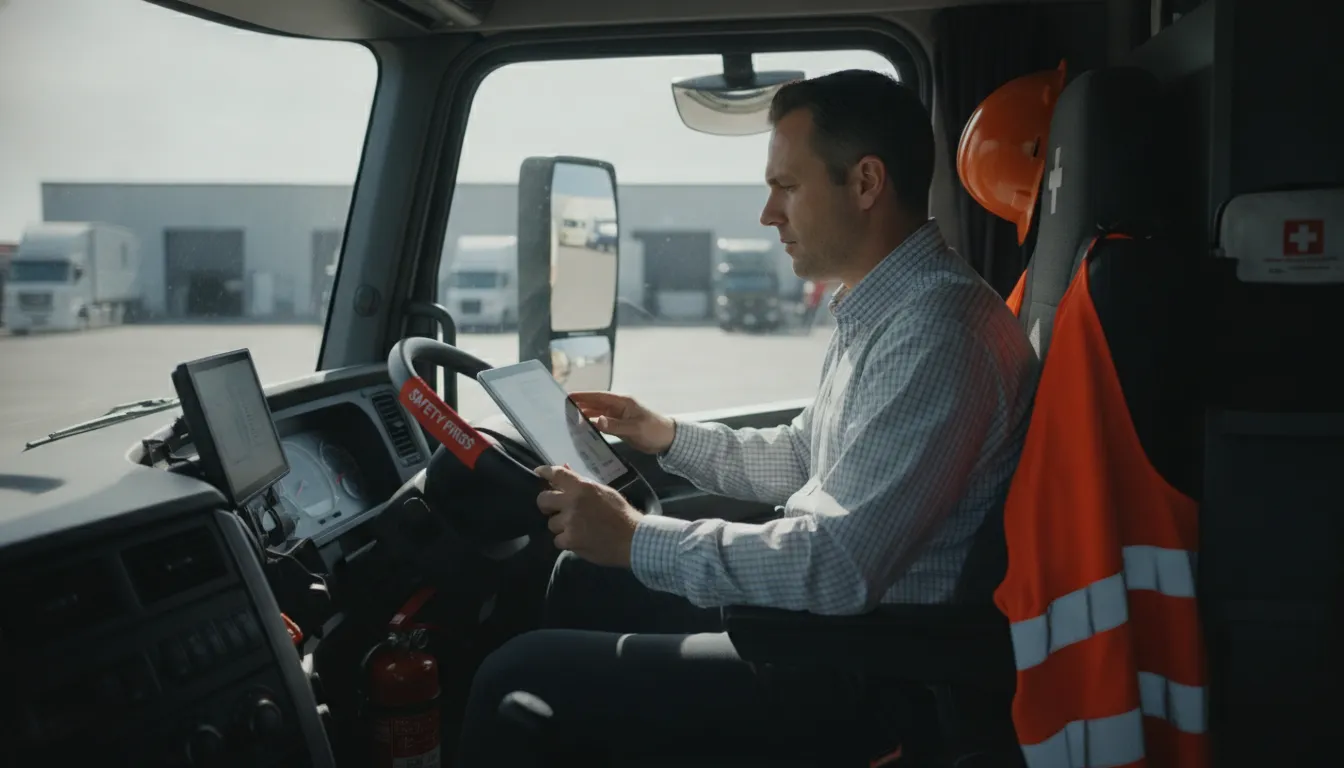
Insurance cost trend: Track premiums, deductibles, claim frequency, claim severity, and time to resolve claims. The average cost of a vehicle-accident loss is approximately $70,000, according to Travelers. Transportation incidents also accounted for 37.7% of work-related deaths in 2022, according to Great American Insurance Group.
Maintenance compliance: Report the percentage of scheduled inspections and repairs completed on time. A vehicle that is safe to operate supports the rest of your safety strategy. Pair this measure with overdue work orders, repeat defects, and roadside failures.
These metrics turn a fleet safety program for commercial vehicles into a measurable business case. A formal program can help reduce liability and give fleet managers evidence when negotiating insurance rates, although savings depend on the carrier, claims history, and program quality. Compare baseline results with quarterly performance, then calculate avoided claims, reduced downtime, and fuel or maintenance savings. Fleetistics points to the City of Seattle fleet as a proof point, with documented $2 million in fuel savings from a 4,100-vehicle operation. Use the same discipline to connect safety data to financial outcomes.
Learn how GPS fleet tracking technology provides the data foundation for incident rate tracking and insurance cost reduction.
How to present safety data to leadership
- Lead with three trends, not a dashboard full of disconnected numbers.
- Show the baseline, current result, and business impact for each metric.
- Pair unfavorable results with an action owner, deadline, and follow-up measure.
- Use a consistent reporting period so leadership can see whether interventions work.
Request a free fleet safety assessment and get measurable KPIs for your fleet program.
How Fleetistics Implements a Fleet Safety Program in 60 Days
Fleetistics uses a structured 60-day Solution Evaluation Process to turn safety goals into an operating program. The timeline creates momentum without forcing every fleet into the same technology stack or training plan.
Days 1-15: Audit and Assessment
The process starts with a review of your current safety policies, incident history, telematics coverage, vehicle mix, and driver behavior baselines. Fleet managers can identify gaps in speeding controls, harsh-braking response, DVIR completion, coaching workflows, and reporting before selecting new tools. This assessment also clarifies which risks deserve immediate attention and which can be addressed as the program matures.
Days 16-30: Solution Design
Next, Fleetistics designs a modular configuration around your fleet size, equipment, routes, and operating priorities. That may include AI-powered dashcams, GPS telematics, automated DVIR workflows, real-time alerts, or driver coaching capabilities. The goal is a practical combination of tools that supports the way your fleet actually operates, rather than adding features your managers will not use. You can also review risk management strategies for your fleet safety program as part of this planning stage.
Days 31-45: Deployment and Training
Once the design is approved, hardware is installed and drivers are onboarded with clear expectations. Managers learn how to review events, prioritize coaching, and use the platform consistently. AI dashcams and coaching programs provide objective context for incident reviews while helping supervisors address risky behavior with specific, documented feedback.
Days 46-60: Monitor and Optimize
The final phase establishes a repeatable improvement cycle. Fleet leaders track safety events, coaching completion, incident trends, and operational measures, then use quarterly reviews to adjust policies, alerts, and training. The City of Seattle’s 4,100-vehicle fleet achieved $2 million in fuel savings using Fleetistics solutions, demonstrating how connected fleet data can support measurable operational improvements.
Fleetistics brings more than 20 years of experience as a Geotab Gold Reseller, along with 24/7 support throughout implementation and ongoing optimization. That combination helps you build a fleet safety program for commercial vehicles that can expand as your people, assets, and risks change.
Speak with a consultant at 855.300.0527 to start your 60-day fleet safety program evaluation.
Frequently Asked Questions
What are the core elements of an effective fleet safety program?
Build the program around a written driver safety policy, consistent onboarding and training, vehicle inspections and maintenance, telematics alerts, incident review, and measurable performance tracking. Include a near-miss reporting process so your team can address hazards before they become crashes.
How do you build a fleet safety program for commercial vehicles?
Start by documenting your highest-risk behaviors, routes, vehicle types, and recurring incident patterns. Set clear standards, train drivers on those standards, then use inspections, telematics, and coaching to reinforce consistent behavior. Build the program in phases, starting with the policies and technology that address your greatest exposure first. The Fleetistics 60-day evaluation process guides fleets through each phase.
What technology supports a fleet safety program?
GPS tracking, AI dashcams, and telematics platforms provide real-time alerts on speeding, harsh braking, and other defined behaviors. Automated scorecards help managers prioritize coaching, while DVIR tools support vehicle readiness. The most effective programs integrate technology into a broader safety framework that includes written policies, driver training, and ongoing performance measurement.
How do AI dashcams improve fleet safety?
AI dashcams provide objective video evidence for incident reviews, reducing the reliance on driver accounts or witness statements. They can also detect distracted driving, following distance issues, and other risky behaviors in real time, prompting in-cab alerts that help drivers correct their actions. When paired with a coaching workflow, dashcam footage becomes a training tool rather than just surveillance.
How do you measure the success of a fleet safety program?
Track incident rates per million miles, near-miss reports, insurance claim frequency and severity, and maintenance compliance. Compare results quarterly against a documented baseline. A successful program shows declining incident frequency, lower claim costs, and measurable improvements in driver scorecards over time.
Speak with a consultant at 855.300.0527 to start building a fleet safety program that reduces accidents and claims across your commercial fleet.