


Healthcare Fleet Tracking for Hospitals
How can healthcare fleet tracking support your team?
Healthcare fleet tracking helps hospitals, patient-transport teams, and emergency medical services see vehicle locations, coordinate routes, support driver safety, and plan maintenance from one system. Fleetistics provides modular GPS tracking and telematics options that can be matched to your fleet, workflows, and data-governance requirements.
Whether you coordinate hospital shuttles, patient transport, or ambulance and EMS vehicles, you can give fleet teams a clearer view of vehicles and help teams make timely decisions without treating one platform configuration as a fit for every operation.

“Fleetistics helped us overhaul our medical transport. Response times are better, and our team feels safer.”
Which healthcare fleet operations can you support?
Fleetistics can help you organize visibility and accountability across:
- Hospital and health-system shuttle fleets, including multi-campus operations.
- Patient transport operations that need clearer vehicle visibility and route coordination.
- Ambulance and emergency medical service vehicles that need location awareness and safety workflows.
- Staff-safety workflows that use configured manual SOS or alert features when supported by the selected hardware.
- Healthcare routing operations that need to review routes, unnecessary miles, and vehicle status.
During a consultation, you can map your routes, devices, users, and reporting needs to a configuration that fits your operation.
Which fleet tracking capabilities matter in healthcare operations?
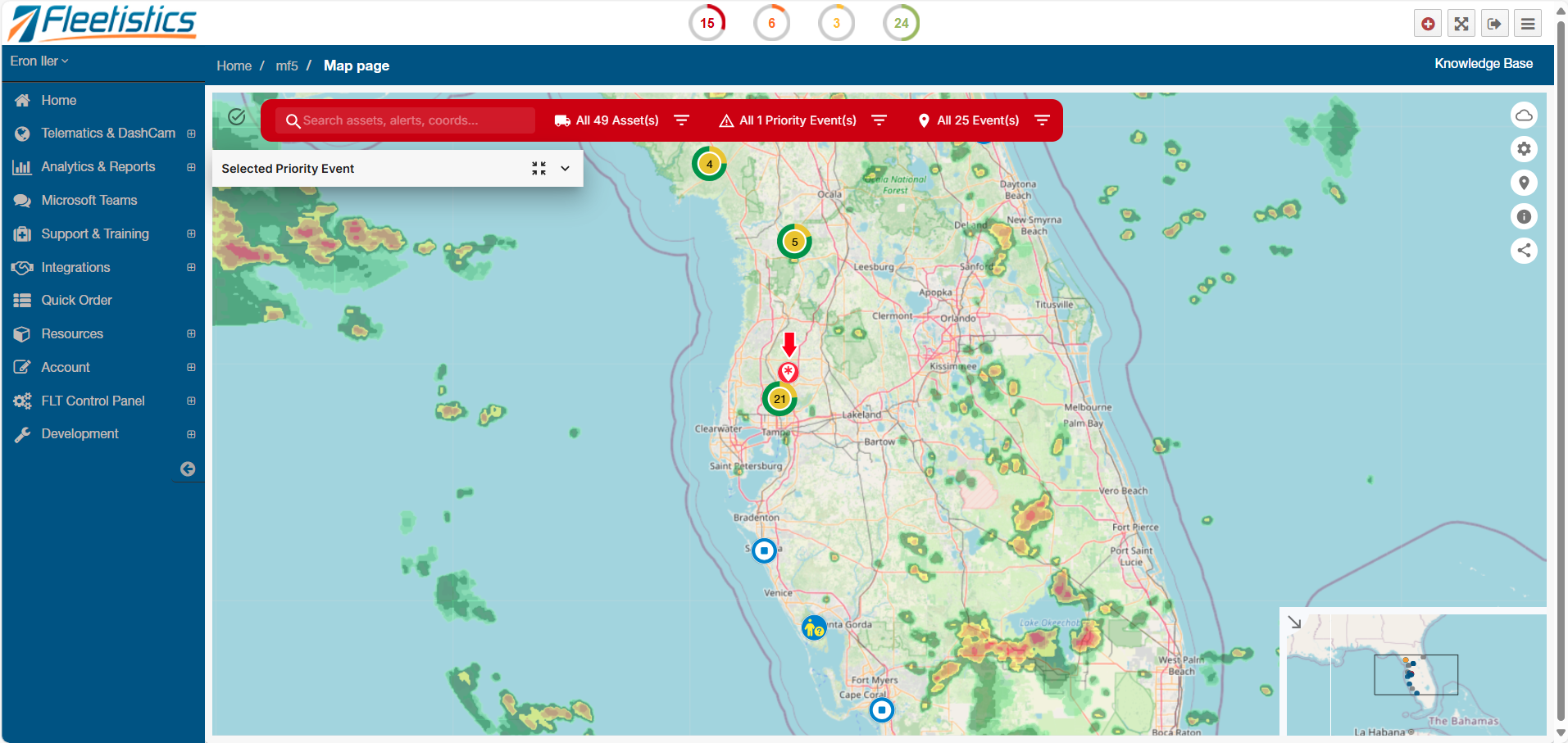
- Live vehicle tracking: See vehicle locations across your care network so fleet teams can coordinate vehicle movements and respond to route changes.
- Route optimization: Review routes and unnecessary miles when coordinating patient transport and facility-to-facility trips.
- Driver safety and coaching: Use available behavior data and coaching workflows to reinforce safe operating practices.
- Maintenance planning and inspections: Organize planned service and inspection workflows to support vehicle availability.
- Multi-site visibility: Give teams a clearer view of vehicles across facilities and reporting workflows.
- Manual SOS and alert workflows: When supported by the selected hardware and workflow, let field staff trigger an alert during a safety event.
How can healthcare fleet tracking improve daily decisions?
Live location data can help fleet teams coordinate vehicles, share status updates, and respond to route changes. Route optimization can help teams review unnecessary miles without promising a fixed savings percentage.
Maintenance reminders and inspection workflows can support planned service, while driver coaching and configurable alerts can help managers reinforce safe operating practices. For multi-facility organizations, a connected fleet platform can help teams organize vehicle information across locations.


How does Fleetistics approach healthcare data and compliance questions?
Fleet tracking can support operational visibility, but it does not replace a healthcare organization’s own privacy, security, or compliance program. Fleetistics documentation describes documented encryption controls, role-based access controls, multi-factor authentication options, and audit trails. Ask a consultant how the proposed hardware, users, integrations, and data flows fit your requirements before deployment.