
A route that looks efficient on a map can still cost money in the field. One late stop can trigger overtime, a missed appointment, extra fuel burn, and an unhappy customer. The best route planning tools help fleet operators make better decisions before drivers leave the yard, then adjust when real conditions change.
For commercial fleets, route planning is not simply about finding the shortest path between two points. It is about assigning the right vehicle and driver, protecting service windows, accounting for vehicle restrictions, reducing unproductive miles, and giving dispatch a clear view of what is happening throughout the day.
What separates route planning from basic navigation
Consumer navigation apps are useful for getting an individual driver around traffic. They are not built to manage a fleet operation with dozens of stops, multiple drivers, customer commitments, break requirements, vehicle capacities, and changing priorities.
A fleet route planning system starts with operational rules. It can organize stops by priority, group nearby work orders, account for service duration, and build routes around available drivers and equipment. The strongest systems connect that plan to live GPS data, so dispatchers can compare the planned route with actual vehicle movement rather than relying on calls, texts, or end-of-day paperwork.
That distinction matters when costs are tight. A driver who makes three unnecessary miles on each stop may not notice the impact. Across 20 vehicles, five days a week, those small gaps become a measurable fuel, labor, and maintenance expense.
The best route planning tools solve the right problem
There is no single best platform for every fleet. A local delivery business with 10 vehicles has different needs than a utility contractor, municipal fleet, or regional field-service organization. The right choice depends on whether routing is primarily a daily dispatch problem, a customer-service problem, a compliance problem, or part of a broader fleet-management strategy.
Multi-stop route optimization
This is the core requirement for fleets handling deliveries, inspections, service calls, pickups, or recurring customer visits. The tool should sequence stops efficiently while considering start locations, work hours, service times, route territories, and appointment windows.
For example, the shortest route may not be the best route if it causes a driver to arrive 30 minutes before a customer site opens. Good optimization tools weigh distance and drive time against real operating constraints. They also make it easy to rerun a route when a high-priority work order is added at noon.
Live visibility and dispatch control
A planned route has limited value if dispatch cannot see when it breaks down. Traffic, a longer-than-expected service call, a vehicle issue, or a customer cancellation can disrupt the day quickly.
Look for live vehicle location, estimated arrival times, route-progress views, and alerts for late arrivals or excessive idling. Dispatchers should be able to identify which driver can realistically absorb an added stop, not simply which vehicle appears closest on a map. The closest vehicle may be committed to a time-sensitive job, carrying the wrong inventory, or nearing the end of a legal work period.
Driver-friendly mobile workflows
Routing technology succeeds only when drivers can use it without friction. A mobile workflow should give the driver the next stop, address, customer instructions, route updates, and a simple method to confirm completion. For field-service fleets, it may also need work-order details, inspection forms, signatures, photos, or proof of service.
The goal is not to add another screen for drivers to manage. It is to reduce phone calls, paper forms, and avoidable confusion. Clear instructions protect productivity while helping drivers stay focused on safe driving.
Connection to telematics and fleet data
The most valuable routing tools are not isolated applications. They connect planned work to actual vehicle data, including location, idle time, speed, harsh driving events, fuel consumption, engine diagnostics, and maintenance status.
That connection changes the conversation from, “Did we send the route?” to, “Did the route reduce operating cost and improve service?” A fleet can identify recurring delays, excessive detours, unauthorized vehicle use, or routes that routinely produce idle time at the first stop. It can also avoid assigning a route to a vehicle with an active maintenance concern.
Features to evaluate before making a decision
Many route planning products appear similar during a demonstration. The differences usually show up after deployment, when dispatchers must handle exceptions and managers need clear financial results. Evaluate these capabilities against your actual operation:
- Constraint-based routing: Confirm the platform can use time windows, driver schedules, vehicle capacity, service durations, territories, and customer priorities.
- Dynamic route changes: Determine how quickly dispatch can add, remove, resequence, or reassign stops during the day.
- GPS and mobile integration: Check whether actual route activity flows back into the same platform used by dispatch, safety, and operations.
- Reporting: Require reports that show planned-versus-actual miles, stops completed, arrival performance, idle time, route exceptions, and labor utilization.
- Integration options: Make sure the system can connect with dispatch software, work-order tools, CRM platforms, fuel-card data, ERP systems, or custom applications where needed.
- Scalability: A small fleet may need affordable, straightforward routing now, while a growing organization may later require compliance workflows, cameras, asset tracking, and API access.
Do not overlook map and vehicle considerations. Fleets operating box trucks, commercial vehicles, or specialized equipment may need routing that accounts for height, weight, restricted roads, or jobsite access. A route that works for a passenger car can create delays, citations, or unsafe decisions for a commercial vehicle.
How to measure route planning ROI
The right investment should produce more than cleaner maps. Establish a baseline before rollout, then measure the results over several weeks or months. Start with miles per completed stop, fuel use, average drive time, idle time, overtime hours, on-time arrival rate, and jobs completed per vehicle per day.
Customer metrics matter as well. If your operation depends on service appointments, track missed windows, customer callbacks, reschedules, and estimated-time-of-arrival accuracy. A route plan that reduces miles but makes technicians late is not an operational win.
For many fleets, the first savings come from fewer deadhead miles and less dispatcher time spent manually building routes. Longer-term value comes from better capacity planning. When managers can see actual route performance, they can decide whether demand requires another vehicle, a revised service territory, different shift times, or simply better scheduling.
A practical buying approach for fleet operators
Start with one representative operating area rather than trying to redesign every route at once. Choose a location with enough daily stops and route complexity to reveal meaningful results. Include dispatchers and drivers in the evaluation. Dispatch knows the exception patterns, while drivers know the access problems, customer habits, and field realities that a map cannot show.
Ask vendors to demonstrate your own sample day: your stop list, your service windows, your vehicle types, and your rules. Generic demonstrations can make nearly any tool look capable. Your data will show whether the system handles the constraints that actually create overtime and missed service.
It is also wise to decide who owns ongoing route rules. Territories, customer hours, driver availability, and priorities change. A platform should make it practical for operations staff to update those rules without depending on a technical resource for every adjustment.
When an integrated fleet platform makes more sense
Standalone routing software can be a reasonable choice when routing is the only urgent need. But it can create another data silo if vehicle location, maintenance, driver behavior, compliance, and work orders live elsewhere.
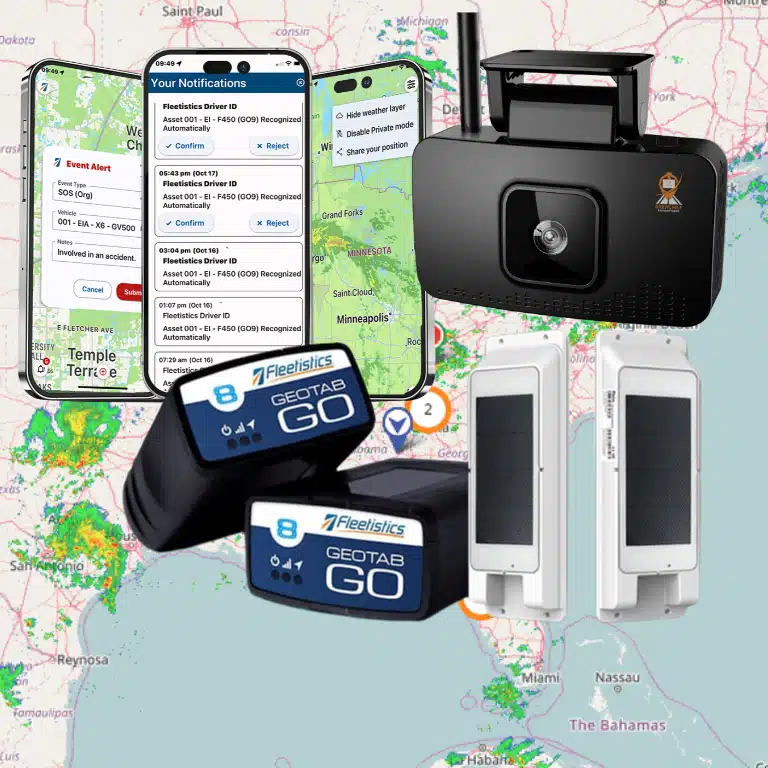
An integrated approach is often stronger for fleets that need both daily dispatch control and broader accountability. Fleetistics, for example, can combine route optimization with GPS tracking, mobile workforce tools, maintenance data, compliance workflows, and analytics in a platform matched to the fleet’s size and operational requirements. That gives managers one operational picture instead of separate systems that must be reconciled after the fact.
The key is to avoid buying more technology than the team can adopt. Small fleets may benefit from essential tracking and route visibility first. Larger or more complex fleets may need configurable workflows, integrations, detailed reporting, and API-based connections from the beginning. Both approaches can deliver ROI when they are tied to a clear operational problem.
The best route planning tools do not replace dispatch judgment or driver experience. They give both teams better information, faster options, and a measurable way to turn every mile into more productive work.