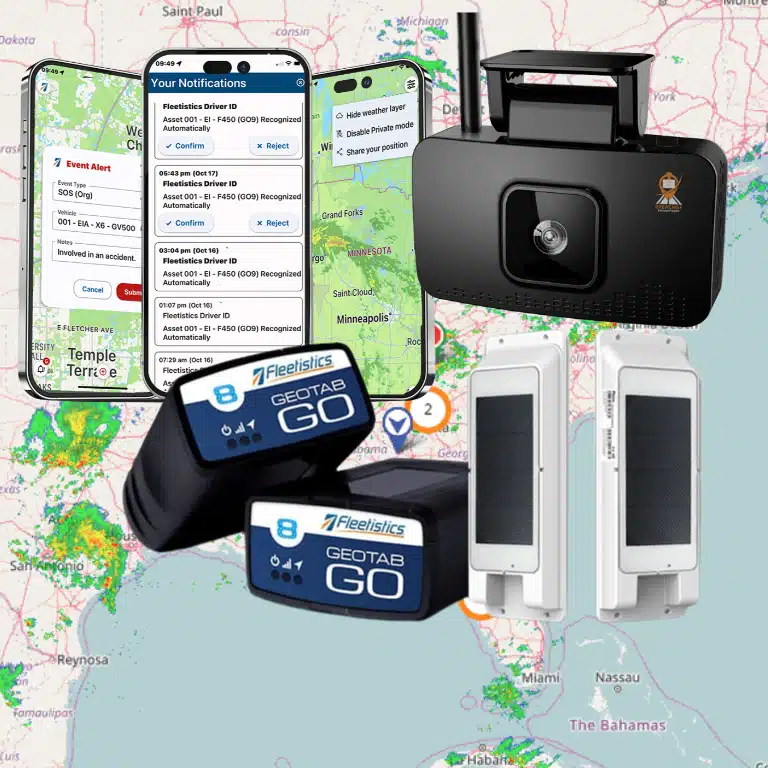


A major hurricane can disrupt a service or delivery business in a matter of hours. When high winds and flooding hit, local infrastructure fails, power lines go down, and cellular networks stop working. For companies that manage fleets of service vans or delivery trucks, the stakes are high. These businesses are expected to help communities recover, yet they must first protect their own personnel, vehicles, and facilities. Without a clear plan, a company can lose its entire fleet, face prolonged downtime, and suffer severe cashflow damage.
Looking for a reliable fleet management platform to keep your business operating in any condition? Speak with a Fleetistics consultant today or call us at 855.300.0527 to learn about our strong fleet tracking and communication solutions.
Why Hurricane Preparedness is Essential for Service and Delivery Fleets
Service and delivery fleets are the backbone of local economies. Whether delivering emergency supplies or repairing downed utilities, these companies are critical. However, they are also highly vulnerable. Vehicles take a long time to replace in the current market. If a storm damages your vehicles, you cannot easily go out and buy a new fleet of service vans. Supply chain delays can keep your trucks off the road for months, which stops your revenue and allows competitors to take your clients.
Additionally, maintaining cashflow after a disaster is a major challenge. When you cannot process invoices or credit cards due to network outages, your cashflow dries up. Proper planning ensures you can keep working, billing, and collecting payments even when the local power grid is down. Since 2001, Fleetistics has helped fleets throughout the USA, Canada, and Mexico prepare for operational challenges and manage risk.
What is Fleet Hurricane Preparedness?
Fleet hurricane preparedness is the systematic process of protecting vehicles, drivers, communication systems, and facilities before a major storm hits. This planning involves securing fuel, establishing backup communications, moving vehicles out of danger, and setting up remote work structures. Preparing your fleet ensures you can recover quickly and serve customers during a crisis.
Top 3 Things to Do for Your Fleet Before a Hurricane
Fleet vehicle protection requires a proactive strategy. Vehicles are some of your most expensive assets, and protecting them must be a top priority before a storm arrives. Here are the three most important actions to take for your fleet before a hurricane makes landfall.
1. Protect Your Vehicles with a Clear Movement and Parking Plan
Vehicles take a long time to replace, and losing them can cripple your business. You must have a clear plan to protect your service trucks and delivery vans. Consider these three options for your fleet:
- Move vehicles to a safer area: Plan in advance who will drive the vehicles to a location outside the storm’s path. Identify safe parking zones, such as high-ground depots or concrete parking structures, well ahead of time.
- Let employees take vehicles home: If your employees live in areas that are out of the storm’s path, let them take their service vehicles home. This distributes your assets, reducing the risk of losing your entire fleet in a single flooded yard.
- Park vehicles next to sturdy buildings: If vehicles must remain on-site, park them close to strong concrete buildings that can block high winds. Park your least valuable vehicles on the outside of the cluster to shield your primary assets from flying debris.
2. Secure Your Fuel Supply in Advance
Fuel shortages are common before and after a hurricane. You cannot run a service or delivery fleet without a dependable fuel supply. Take these steps to secure your fuel:
- Fill every vehicle with fuel: Ensure every van and truck has a full tank of fuel before the storm hits. This gives your fleet maximum range once operations resume.
- Store extra fuel safely: Keep a secure supply of extra fuel at your facility, following all safety guidelines. This provides a backup if local fuel stations lose power or run dry.
- Order fuel in advance: Contact your fuel vendor to arrange deliveries before the storm. Establish priority delivery agreements so your company is among the first to receive fuel after the hurricane passes.
3. Capture Visual Documentation for Insurance
Insurance claims require clear proof of the condition of your assets before the storm. Spend time documenting your fleet and facility:
- Take detailed photos and videos: Capture clear images of every vehicle from multiple angles, showing their current condition, license plates, and any pre-existing wear. Also document your facility, including offices, warehouse space, and equipment.
- Save files to the cloud: Do not store these photos and videos on local computers or physical drives that could be damaged by water or wind. Upload all visual files to a secure cloud platform immediately so you can access them from anywhere.
- Keep an updated asset list: Maintain a digital list of all vehicles, including make, model, VIN, and current mileage, stored safely in the cloud alongside your photos.
Ready to protect your mobile assets? Explore our GPS fleet trackers to monitor vehicle locations in real-time and secure your fleet before the next major storm.
How to Prepare Your Business Infrastructure for a Disaster
Securing your fleet vehicles is only part of the challenge. To maintain operations, you must also prepare your broader business infrastructure. Physical damage and network outages can halt your business if you do not take preventive steps. Follow these key steps to prepare your business before a hurricane:
1. Implement Satellite Communication
Cellular towers are highly vulnerable to high winds and power outages. During a major hurricane, cell service can be down for weeks. You must plan for this total loss of communication. Implementing satellite communication is the only reliable way to keep your team connected. Satellite-enabled mobile phones and receivers allow you to send messages and coordinate emergency responses when standard cellular networks fail.
2. Move Critical Documents to the Cloud
Physical paperwork and local servers can easily be destroyed from flood waters or roof damage. Protect your business records when you move everything to the cloud:
- Digitize important records: Scan customer contracts, vehicle titles, employee files, and financial records.
- Upload files securely: Save all digitized documents to secure cloud storage. This ensures you can access your business data from any internet-connected device, even if your main office is destroyed.
- Back up databases: Set up automated cloud backups for your operational systems, including your fleet dispatch and scheduling software.
3. Establish Alternate Supply Chains
Hurricanes disrupt local and regional supply chains, closing roads and stopping deliveries. Do not rely on a single vendor for critical parts, tires, or supplies. Before a storm is ever named, establish relationships with alternate suppliers located in different regions. This ensures you can obtain necessary supplies even if your primary local vendor is forced to close.
4. Contact Your Insurance Agent
Review your commercial insurance policies annually to ensure you have correct coverage for flood, wind, and business interruption. Before a storm approaches, contact your insurance agent to confirm your policy details. Ask for digital copies of your policies and your agent’s direct contact information, and store these documents in your secure cloud folder.
5. Get Starlink Receivers for Your Fleet
Standard mobile internet will not work if local towers are down. For a relatively small investment of around $400 per vehicle, you can equip your service trucks with mobile Starlink satellite receivers. This allows your team to connect to high-speed internet directly from the field. Having satellite internet on your vehicles makes you the only business in your industry operating in your local area, giving you a major competitive advantage.
6. Create and Test a Remote Work Plan
If your main office loses power or is damaged, your administrative staff must be able to work from home. Create a detailed remote work plan that answers these questions:
- How will work be distributed? Set up cloud-based dispatch systems so coordinators can assign jobs to field technicians remotely.
- How will the team communicate? Establish clear communication channels using cloud messaging systems or satellite-enabled tools.
- How will supplies be distributed? Plan how field employees will obtain necessary parts or fuel if they cannot access the main warehouse. Test this plan with your team before hurricane season begins to ensure everyone knows their role.
7. Secure Your Facilities and Physical Equipment
Before you evacuate or close your office, take physical steps to minimize damage:
- Close all interior doors: This helps contain wind pressure if a window or exterior door fails.
- Get computers off the floor: Move all electronics, desktop computers, and server units off the floor and onto desks or high shelves to protect them from minor flooding.
- Unplug all equipment: Unplug computers, chargers, and heavy machinery to prevent damage from power surges when electricity is restored.
- Seal exterior doors and windows: Use sandbags or storm shutters to block water and wind.
- Take critical computers home: Let employees take their work laptops and small essential equipment home where they can protect them.
- Cover hard-to-replace equipment: Use heavy plastic sheeting to cover large machinery, tools, or physical files that cannot be moved easily.
8. Plan to Pivot After a Disaster
A major storm will change your local market overnight. Your standard service or delivery routes may not be possible, and your typical customers may be temporarily closed. To keep your cashflow going, you must be prepared to pivot your business. For example, a commercial delivery fleet can shift to transporting emergency relief supplies, or a landscaping company can pivot to debris removal and tree clearing. Plan alternative services you can offer immediately after a disaster to keep your cashflow active and support community recovery.
Need to maintain fleet visibility and coordinate drivers during emergencies? Learn how our fleet management software can keep your operations organized in any situation.
Top 3 Things You Can Do to Operate Your Service or Delivery Company After a Hurricane
Once the storm passes, your service or delivery company has an important role to play. However, operating in a disaster area requires specific tools and strategies. Here are the three most effective steps you can take to keep your company operating after a hurricane.
1. Maintain Team Coordination with Satellite-Enabled Mobile Phones
When cellular networks are down, you cannot call or text your drivers using standard mobile networks. To maintain team coordination, provide your key personnel with satellite-enabled mobile phones, such as those offered by T-Mobile. These advanced devices allow your team to send text messages and share locations even when local cell towers are completely inactive. Keeping your dispatchers, managers, and field technicians connected ensures you can distribute work orders and verify employee safety.
2. Process Invoices and Credit Cards in the Field via Starlink
Cashflow is essential after a disaster. If your field technicians cannot submit invoices or process payments on-site, your business will quickly run out of capital. Equip your service vehicles with Starlink receivers to solve this problem. High-speed satellite internet allows your technicians to access cloud-based invoicing systems, process credit cards, and submit completed work orders immediately. While other companies are waiting for cellular service to return, your team will be billing clients and processing payments on the spot.
3. Order Extra Inventory to Maintain Cashflow
Local supply chains will be broken for days or weeks after a major hurricane. If you run out of essential parts, filters, tools, or delivery supplies, your operations will grind to a halt. To prevent this, order extra inventory well in advance of the storm’s arrival. Stocking up on high-demand items ensures your service vans and delivery trucks are fully equipped to handle work orders immediately after the storm passes, without waiting for regional distributors to reopen.
Frequently Asked Questions About Fleet Hurricane Preparedness
How do you protect fleet vehicles during a hurricane?
To protect fleet vehicles, move them out of the storm’s path, allow employees to take vehicles to safe residential areas, or park them close to strong concrete buildings with the least valuable vehicles on the outside of the cluster. Always fill fuel tanks in advance and take clear photos of each asset for insurance documentation.
Why should service fleets use Starlink during a natural disaster?
Starlink provides high-speed satellite internet that works independently of local cellular towers and power grids. This allows field technicians to process credit cards, submit invoices, access cloud documents, and coordinate with dispatchers when standard networks are down. It ensures your business remains operational while competitors are offline.
What is the most important step in fleet hurricane planning?
The most important step is establishing redundant communication and data systems. This includes deploying satellite-enabled mobile devices, securing cloud backups for critical documents, and setting up remote work plans so your administrative team can distribute work orders and manage operations from any safe location.
Keep Your Service Fleet Moving Through the Storm
Hurricane preparedness is not just a safety measure; it is a critical business strategy. Taking proactive steps to protect your vehicles, secure backup satellite communications, and move your business records to the cloud allows you to safeguard your assets and maintain cashflow after a disaster. Since 2001, Fleetistics has supported businesses in the USA, Canada, and Mexico with advanced fleet tracking, telematics equipment, and AI dashcams. Our team is dedicated to helping you manage operational risks and keep your fleet moving, no matter what challenges come your way.
Do not wait for the next storm to prepare your business. Speak with a Fleetistics expert today or call us at 855.300.0527 to learn more about our 60-day Solution Evaluation Process and how we can support your fleet.