


Fleets spend real money on driver safety, camera programs, training, and maintenance. Most teams can tell you their speeding rate, hard-brake events, idle time, and PM compliance in seconds.
Then a pop-up storm rolls in at mile 140, the wind hits a high-profile trailer, visibility drops, the road turns slick, and the day goes sideways.
That’s the paradox. We have advanced safety tech, yet weather-related losses keep showing up in claims, downtime, missed ETAs, cargo issues, and phone calls nobody wants.
Here’s the truth: weather stays a blind spot for many fleets not because anyone ignores it, but because most operations lack the visibility and workflow to manage environmental risk with the same discipline they apply to driver behavior and vehicle health.
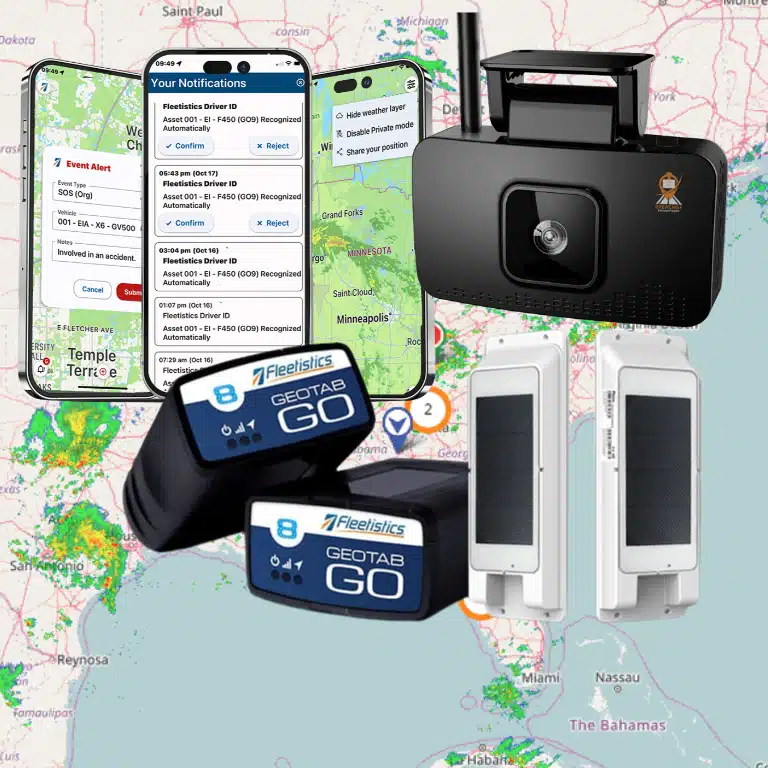
If you want to close that gap without adding another disconnected tool, weather intelligence is available through the Geotab Marketplace using “Order Now,” and weather alerts can surface directly inside the CrewChief mobile experience, including theWeather by CrewChief listing and theCrewChief Mobile App listing. For a direct path to enablement and support, start here.
Weather Risk Is Highly Variable and Difficult to Predict
What Fleet Managers Can Control
Fleet leaders can influence outcomes through repeatable systems:
- Driver training programs
- Fleet Maintenance schedules and inspection routines
- Hours-of-service compliance and coaching
- Route optimization and fuel efficiency planning
- Equipment specs and load practices
These are controllable levers. You can standardize them, report on them, and improve them quarter over quarter.
What They Cannot Easily Control: Dynamic Environmental Conditions
Weather doesn’t care about your SOPs.
A route that looks fine at dispatch can turn risky fast because the hazards are hyper-local and time-sensitive:
- Sudden wind gusts
- Flash flooding
- Black ice
- Pop-up thunderstorms and low visibility
- Extreme heat stressing engines and tires
Even “normal” rain is not normal at highway speed on wet pavement.
The “Flying Blind” Problem
Most fleets still operate with a gap that’s easy to describe and hard to fix:
- Conditions change mid-route
- Dispatch decisions become outdated quickly
- Consumer weather checks don’t scale across the fleet
- Exposure increases in real time while reporting lags behind
If you don’t know what your drivers are driving into, you can’t steer the operation away from the risk.
Traditional Fleet Systems Weren’t Designed for Environmental Risk
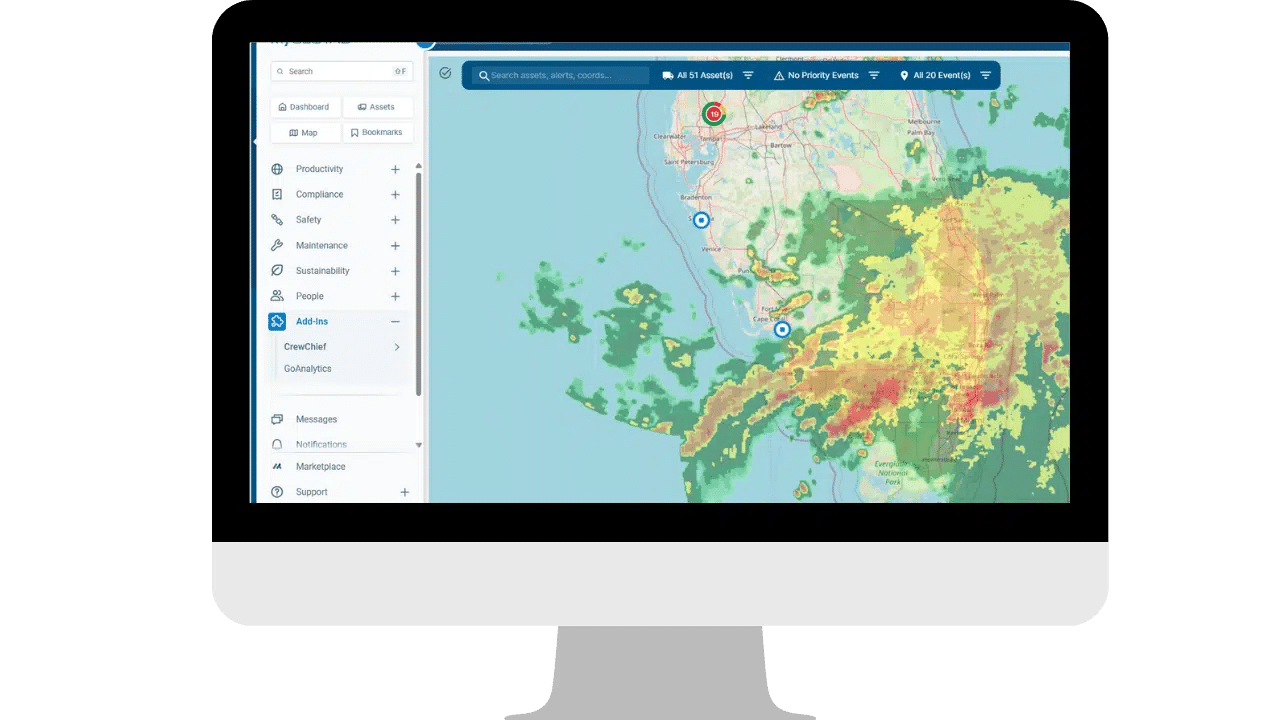
What Current Fleet Technology Tracks
- Speeding
- Harsh braking
- Idling
- Driver behavior
Critical Questions Traditional Systems Can’t Answer
Typical platforms do a great job measuring behavior and equipment:
- Speeding
- Harsh braking and aggressive acceleration
- Idling and engine data
- Driver behavior trends
- Video events from Dashcam Solutions
That’s valuable. It’s also incomplete.
Critical Questions Traditional Systems Can’t Answer
The weather questions fleet teams actually need answered often sound like this:
- Is a driver entering a high-risk weather zone in the next 30–60 minutes?
- Are crosswinds at levels that increase rollover risk for high-profile vehicles?
- Will lightning, hail, or heavy rain impact a loading dock window?
- Is the heat index high enough to raise tire failure risk and roadside calls?
- Will visibility drop below safe thresholds on a key segment of the route?
Most telematics dashboards weren’t built to turn those questions into alerts, routing decisions, and documented actions.
The Technology Gap
Think of risk management as three pillars:
| Risk pillar | What it affects | Typical tools |
| Behavioral risk | Driver decisions | telematics, coaching, cameras |
| Mechanical risk | Vehicle condition | inspections, PMs, diagnostics, Fleet Maintenance |
| Environmental risk | Road + weather conditions | often unmonitored, inconsistently handled |
Many fleets manage two pillars well. The third one stays informal, scattered, and hard to prove later.
Weather Drives Severe Losses — Yet It’s Rarely Measured
Weather isn’t a small factor in roadway incidents. FHWA’s Road Weather program summarizes annual averages (based on NHTSA data analysis) showing roughly 1.26M “weather-related” crashes per year, with thousands of deaths and hundreds of thousands of injuries.
The kicker: a big share happens on wet pavement and during rainfall—not just snow and ice.
Misclassification of Weather-Related Incidents
A lot of environmental risk gets buried under other labels:
- Crashes recorded as “driver error” without context about slick pavement or visibility
- Cargo issues filed as “handling” or “packaging” when temperature swings played a role
- Claims notes that never capture conditions at the exact time and location
When the dataset doesn’t track the hazard, the hazard doesn’t show up in reviews, dashboards, or safety meetings.
The Hidden Impact on Fleet Performance
Even when the incident rate looks “acceptable,” weather can quietly damage performance:
- High-severity collisions and injury exposure
- Cargo spoilage and temperature-driven product loss
- Roadside breakdowns and tow events
- Schedule failures that ripple through customers and receivers
Insurance premium pressure when loss severity rises
If You Can’t Measure It, You Can’t Manage It
Weather becomes “something that happened” instead of “a pattern we can reduce.”
That leads to:
- No weather-specific reporting
- No exposure tracking by corridor, time window, or vehicle type
- No way to connect proactive actions to outcomes
And no proof when leadership or insurers ask, “What are we doing about it?”
Weather Decisions Are Often Left to Drivers
The Unrealistic Expectation
In a lot of fleets, the unspoken plan is: “The driver will figure it out.”
Drivers get asked to:
- Interpret radar apps while managing the road
- Judge wind speeds without fleet thresholds
- Decide when to pull over (and where)
- Navigate storms in real time under delivery pressure
That’s too much to put on one person, especially when they don’t have the full operational picture.
Limitations of Consumer Weather Tools
Consumer weather apps help with personal plans. Fleet operations need more:
- They aren’t built for commercial routing and restrictions
- They don’t provide fleet-wide visibility
- They don’t push threshold-based risk alerts tied to vehicle profiles
- They don’t create a centralized record of “what we knew and what we did”
The Result: Inconsistent and Subjective Decisions
When each driver handles weather differently, outcomes vary:
- Variable safety responses across the same corridor
- More liability exposure due to inconsistent decision-making
- Dispatch becomes reactive, not proactive
This is where “good drivers” still end up in bad conditions. The system didn’t support them.
Insurance Expectations Are Changing
Insurers Now Incentivize Proactive Risk Management
Insurers have always cared about outcomes. More of them now care about demonstrated process.
Weather-related severity can push costs up fast, and carriers pay attention when losses stack. A fleet that can show consistent mitigation decisions, clear policies, and documented actions is in a better position than one that can only say, “We tell drivers to be careful.”
The Financial Blind Spot
Many fleets cannot demonstrate:
- Weather-related incident reductions
- Proactive rerouting decisions
- Environmental exposure tracking
The Cost of Invisibility
- Higher perceived risk profile
- Limited negotiation power
- Rising premiums
Why Weather Has Remained a Blind Spot
Lack of Integrated Environmental Data
Most fleets don’t have:
- Structured workflows for weather-based decisions
- Standardized reporting fields for conditions
- Exposure tracking that connects risk to outcomes
Industry Focus Has Historically Been Elsewhere
For years, the priorities were understandable:
- Behavioral compliance
- Mechanical reliability
- Regulatory requirements
- Utilization and cost control
Weather sat in the “acts of nature” bucket.
The Missing Third Pillar of Risk Management
Behavioral and mechanical risk got systems. Environmental risk got vibes.
That’s not a criticism. It’s a map of where the industry is right now.
Closing the Gap: From Blind Spot to Strategic Advantage
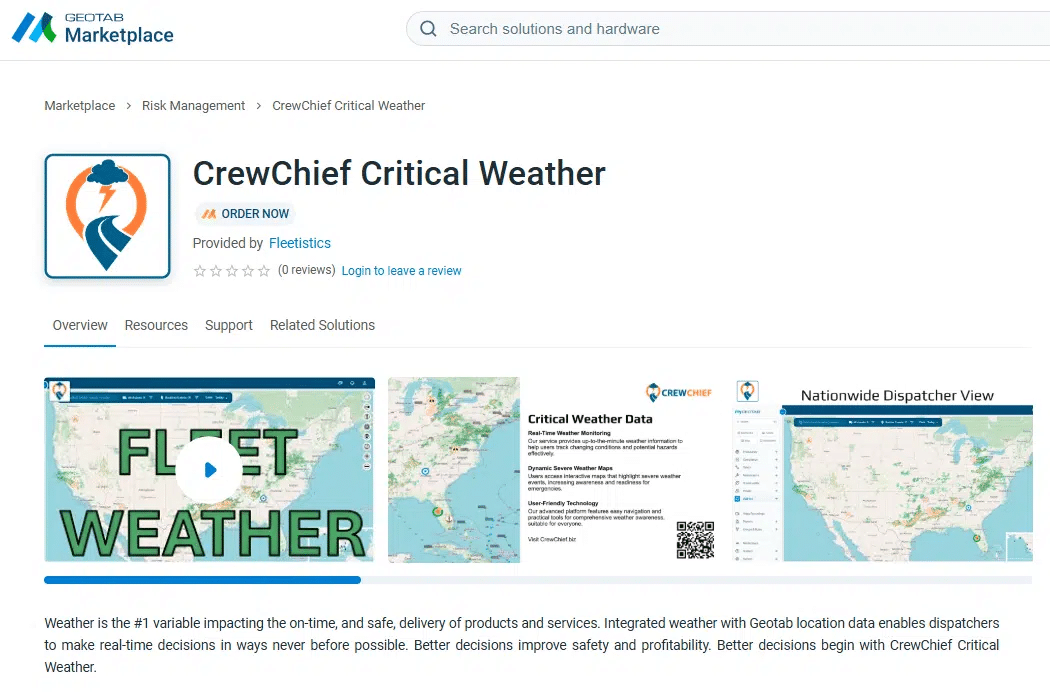
What Proactive Weather Intelligence Enables
When environmental risk gets treated like a measurable operational input, fleets can start to:
- Set real-time hazard alerts (wind, visibility, precip, heat)
- Plan around forecasts instead of reacting mid-route
- Make dynamic routing adjustments when conditions shift
- Document mitigation actions for internal reviews and claims support
- Create consistent thresholds so drivers aren’t guessing
This is where Fleetistics can support a broader safety and operations strategy alongside Dashcam Solutions and Fleet Maintenance workflows—because risk doesn’t live in one dashboard. It lives in the day.
Turning an Unpredictable Hazard into a Manageable Variable
Weather will always change. The goal is not control. The goal is response quality.
A practical approach looks like this:
- Define thresholds (by vehicle type and region)
- Give dispatch a clear playbook for reroutes, delays, and pull-over decisions
- Give drivers consistent guidance that reduces second-guessing
- Capture exposure data so you can learn which corridors and windows drive the most risk
A NOAA study on winter-weather fatalities points to how important partnerships and messaging can be, noting: “We encourage partnerships between the trucking industry and both public and private weather sectors.”
That’s the shift: from “drivers deal with it” to “operations leads it.”
Frequently Asked Questions
Why is weather considered a blind spot in fleet management?
Don’t telematics systems already address weather-related risk?
They help indirectly. Telematics can flag speeding, harsh braking, and instability events that often rise in poor conditions. But telematics alone usually can’t tell you what conditions the driver entered, how conditions evolved, or whether dispatch took proactive steps.
How does weather contribute to severe fleet losses?
FHWA’s Road Weather data highlights that weather-related crashes contribute to large annual totals, including thousands of fatalities and hundreds of thousands of injuries, with wet pavement and rainfall playing a major role.
For fleets, “losses” also include downtime, cargo damage, missed delivery windows, and claim severity.
Why aren’t weather-related incidents clearly tracked in most fleets?
Because many reporting workflows don’t include structured environmental fields, and claims/incident notes often default to driver or equipment categories. If the data model doesn’t capture weather, weather disappears from analysis.
Bottom Line: Weather Is Not Ignored — It’s Under-Equipped
Fleet managers aren’t careless. The industry just hasn’t had the same standard tools and workflows for environmental risk that it built for driver behavior and vehicle health.
Weather is no longer just an operational nuisance. It’s a measurable, manageable risk category. Fleets that close the gap gain resilience, stronger documentation, and a real edge when conditions turn.